House of lords

Harman tries to play ball with Clegg on boundaries

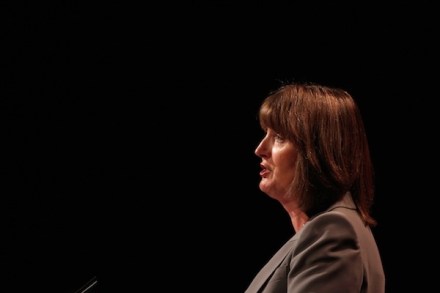
Nick Clegg didn’t mention the boundary reforms once in the statement he gave to the House of Commons on the death of the House of Lords Reform Bill. The Deputy Prime Minister knew he wouldn’t need to wait long for an opportunity to talk about it, though, and he was right: Harriet Harman raised the changes to constituencies as soon as she stood up to respond. Seizing on the Liberal Democrats’ decision to oppose the changes as revenge for the failure of their attempts to reform the upper chamber, Harman told Clegg that Labour thought the work of the Boundary Commission should stop immediately, given the cost of it continuing

How the Lib Dems could be truly mature in government

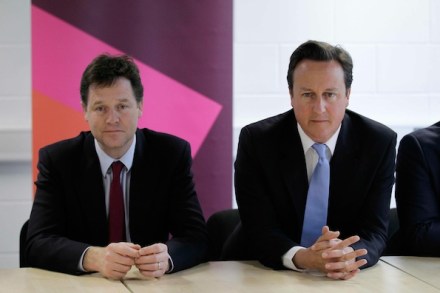
Nick Clegg’s decision to scupper boundary reviews in retaliation for the failure of his Lords reform programme is the very opposite of ‘mature’ government. It is the politics of the sand pit: you have annoyed me, so I’m going to kick your sandcastle down. It’s his way of putting a horse’s head in Cameron’s bed, and the public will be appalled. The coalition has entered a new, destructive phase where Lib Dems will now pride themselves on what Tory measures they can frustrate or destroy (O Levels, profitmaking schools etc). I’ve just been on the Today programme with David Hall Matthews of the Social Liberal Forum, who claimed that Clegg’s

Boundaries and Lords reform: what the two parties said

The Liberal Democrats have spent the past few months building up to yesterday’s announcement that they would trash the boundary reforms following the failure of the House of Lords Reform Bill. As so much of the arguments this morning focus on whether the party is justified in voting down the changes to constituencies, I’ve taken a trip down memory lane to review the key statements from both parties from before the 2010 general election right up to this morning’s Today programme interview with Jeremy Browne. Coffee Housers can judge for themselves whether or not Lords and boundaries are linked. The Liberal Democrat manifesto: Change politics and abolish safe seats by

Cameron continues to stick to boundary reforms

Perhaps the most intriguing part of Nick Clegg’s decision not to support the 2015 boundary changes as a ‘penalty’  for Lords reform not happening is that Downing Street is insisting on pushing on with the matter. I’m told that Number 10 will ‘do everything we can to persuade everyone we can to vote for them.’ When I put it to this senior Cameroon that this was futile given that with Lib Dem ministers and MPs voting against, there was no chance of getting it through the Commons, the source said ‘is it feasible [to get the boundary changes through], yes’. There are two possibilities here. One is that Cameron is

The Lib Dem penalty for a 'breach of contract' on the Lords

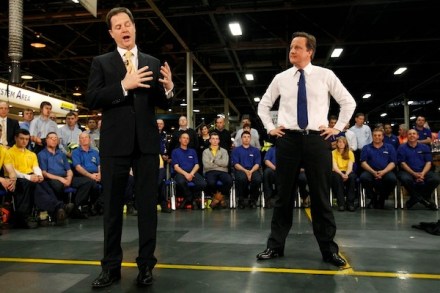
In his statement to the press this afternoon in which he confirmed that the Liberal Democrats were throwing the towel in over reform of the House of Lords, Nick Clegg tried to paint his party as the ‘mature one’. He said the coalition agreement was ‘a contract that keeps the coalition parties working together in the national interest’, and added: ‘My party has held to that contract even when it meant voting for things that we found difficult. The Liberal Democrats are proving themselves to be a mature and competent party of government and I am proud that we have met our obligations.’ Later he pointed out that it was

Killing the boundaries but not the coalition

Nick Clegg will give a statement this afternoon on the House of Lords Reform Bill, and what will happen next. Number 10 was understandably cagey at this morning’s lobby briefing about stealing the Deputy Prime Minister’s thunder before he speaks, but the Prime Minister’s official spokesman gave some answers to questions about the boundary reforms that were still quite telling. Asked about the threats that Liberal Democrats have been making to scupper the reforms as revenge for the failure of the Lords legislation, the spokesman said: ‘It’s something the Commons has already taken a view on, and the process is that it will come back later this year.’ Asked whether

The fictional House of Lords

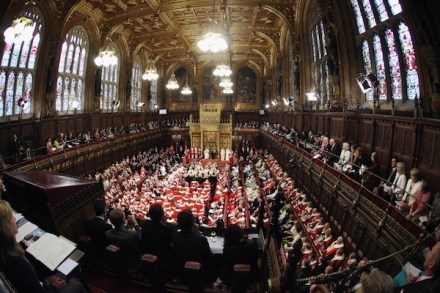
The House of Lords has yet again survived reform. ‘We have been discussing this issue for 100 years and it really is time to make progress,’ the Prime Minister said last month in a pleading, exculpatory tone. What then is the trend in popular culture? Writing for the Times Literary Supplement in 1949, Anthony Powell observed an, ‘ever-widening gap between the popular concept of a peer and the existing reality.’ He found greatest fault with nineteenth century novels and plays, ‘where a lord, silly or sinister, handsome or grotesque, is rarely allowed to strike a balance between extremes of conduct.’  Powell’s nineteenth century examples would certainly have included Gilbert and

Pushing the boundaries | 4 August 2012

The conventional wisdom about the consequences of the failure of Lords reform is that the Liberal Democrats will wreak their revenge for the Conservatives’ ‘breach of contract’ by scuppering the boundary changes. Over the past few months, the party has taken great pains to link the two reforms, and now that it is clear that the first will not go through, all focus is on the second. There is much that still needs to become clear about how this will work; the biggest question of all being how Lib Dem ministers can vote against the changes without being sacked. But don’t expect the whole party to troop through the ‘no’

No sweeteners for Clegg on Lords reform

In recent weeks, Downing Street has been repeatedly told by Tory MPs that if proposals for an elected element in the House of Lords were brought back to the Commons, the next rebellion would be even bigger than the 91 who voted against second reading. Downing Street, as the Telegraph reported this morning, has now accepted that Lords reform will have to be dropped and there is talk of a formal announcement to this effect as early as Monday. But, intriguingly, I understand that David Cameron does not intend to abandon efforts to get the boundary reforms through. This, as Isabel noted this morning, has the potential to cause a

Tory backbench beats Lib Dems in battle of PM's priorities

Let’s forget for a minute about the Lib Dems and their dire threats of ‘consequences’ for the failure of the Lords Reform Bill and focus on the Conservative party. David Cameron has failed to convince his party to support the legislation. He said he needed the summer to try to win the rebels round before he tabled a new programme motion for the Bill, and before the summer is even out, he has decided that he can’t do it. This isn’t just about a hardcore of Conservative MPs who are viscerally opposed to Lords reform, though. There are those who would always have opposed it, but many others who might

Cameron to shelve Lords reform

When the coalition returns from the summer recess, don’t expect a relaxed, post-holiday spirit. David Cameron has failed to convince his backbenchers to support the House of Lords Reform Bill and The Telegraph reports that the Prime Minister will announce that these reforms are to be shelved in the coming days. This triggers that new phase of coalition that Nick Clegg and his colleagues have been warning about: the era of ‘consequences’. Although Conservative ministers have been considering other policies that they could hand to their coalition partners, these will not be enough to appease them: it’s Lords reform or nothing. How this will play out is fascinating: the main

The post-'Cuban missile crisis' coalition compromise

At the top of the coalition there’s a concerted effort to calm tensions, to de-escalate after its ‘Cuban missile crisis’. As part of that, I understand that David Cameron has indicated privately that if the Lib Dems do not get their elected peers, he won’t push the matter of the boundary reforms. I’m told he has no desire to end up in a situation where he’s sacking Lib Dem ministers en masse for voting against the government. Although, officially Number 10 is still stressing that it expects government ministers to vote for them when they come back to the House of Commons. The Prime Minister is, I’m told, currently considering

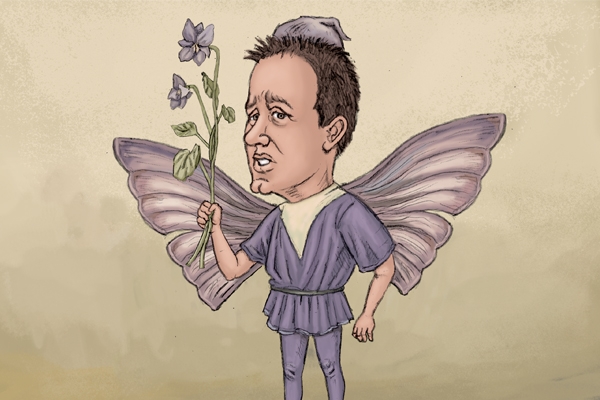
Clegg's 'sensitive little violets' get tough

Two rather interesting reconciliations are taking place today. Ed Miliband is making the first speech of a Labour leader at the Durham Miners’ Gala since 1989. And Nick Clegg has been trying to charm the left of his party into believing that all is well in the Liberal Democrat world. The latter largely involved Clegg trying to encourage the left-leaning Social Liberal Forum’s annual conference to develop a sort of persecution complex. So the audience was told not to ‘underestimate how much the right and the left want to destroy us’, and to remember that ‘if we aren’t going to stick up for ourselves, no-one else will’. It was difficult,

DJ Delingpole

My Spectator comrade James Delingpole has many talents. Among them is his skill as a podcast-presenter for an American conservative website called ‘Ricochet’.  Yesterday he asked me to join him for his latest, deeply irregular, instalment of ‘Radio Free Delingpole’. It was without question the most anarchic 40 minutes I have ever spent on air and  I should never have done it were it not for my love of James and the vast fee he unwisely promised. We covered a fair amount of ground, including the US elections and House of Lords reform, but mention of the Rolling Stones brought the programme to a climax with a row — instigated

Lords rebels meet to kill the bill

The Lords reform rebels held a debrief today following David Cameron’s offer to the 1922 committee, I understand. The meeting, which took place mid-afternoon, was about what the rebels ‘need to do going forward to ensure that the Bill is dead’, one senior source told me. The rebels were not at all impressed by the suggestions that the Prime Minister put to backbenchers last night, and the meeting decided that offering the Liberal Democrats a smaller elected element in the upper house was a ‘Trojan horse’ by which more elected members could be added over time. The source explained that the MPs involved ‘did not want to be awkward’, but

The View from 22 - Cameron on the run

Have the Tories’ manoeuvres over Lords reform signalled the end of the coalition? In this week’s magazine, our leader argues that Tuesday’s rebellion shows that Tories are back in full force, while James Forsyth writes that a coalition break-up date before 2015 is now not a case of if, but when. But Nick Clegg is not the only party leader to suffer from Tuesday’s Lords revolt. In this week’s View from 22 podcast, recently-resigned PPS Conor Burns MP accuses David Cameron of not appealing sufficiently to his own party: You see this so often when you watch interviews on television – someone speaking for the coalition, you see someone speaking

Cameron's attack on Jesse Norman will backfire

Jesse Norman became the hero of the hour yesterday afternoon when the government admitted defeat against the Tory rebels and dropped the programme motion on Lords reform. Norman was keen to claim the victory for his rebel operation, making an early intervention to say: ‘Let me make it clear from the Conservative benches that the very substantial opposition from within the Conservative party, not just that from Labour, was responsible for the withdrawal of the motion. That should be perfectly clear and reflected in the record.’ As leader of the rebel camp, and a member of the 91 who voted against the second reading of the Bill late last night,

Cameron's leadership is bruised by Lords rebellion

‘Shouldn’t we just go home?’ the SNP’s Pete Wishart asked Sir George Young this evening after the Leader of the House revealed the government was dropping its programme motion on the House of Lords. ‘You know it’s all over. They know it’s all over,’ he added. But they didn’t go home, and the Commons has just voted in favour of the second reading 462 votes to 162. Early reports suggest that there were 86 Conservative MPs who defied the whip, which would make this the biggest rebellion in this parliament. Nick Clegg paused from trying very hard not to grimace on the front bench to cheer as Mark Harper told

Cameron will pick party over coalition on Lords reform

The government’s apparent decision to pull the programme motion on the Lords Reform Bill is an admission that it would have lost the vote tonight, and heavily. The rebel numbers have more than held up today and by mid-afternoon even previously loyal MPs were contemplating jumping in to the rebel camp. The question now is what the coalition does next, does it plough on with the bill and try to guillotine it at a later date or quietly drop it. Certainly, the Tory opponents of the bill are in no mood to back down. They are making clear that even if the government comes back offering twenty days of debate

Lords reform is in the long grass

The look on Nick Clegg’s face as he entered the chamber to hear Sir George Young announce the withdrawal of the programme motion said it all. The Deputy Prime Minister knows that Lords reform is now in the long grass and it will only come out of there if either the Tory rebels back down or Labour agree to a programme motion, both of which are unlikely scenarios. Source close to Nick Clegg say that the Prime Minister informed the Deputy Prime Minister today that he needed more time to build consensus on his own side. The public plan is now to try for a programme motion again in the