History

A society celebrating itself

From our UK edition

The years between the middle of the 18th century and the middle of the 19th century, argues Holger Hoock, ‘saw Britain evolve from a substantial international power yet relative artistic backwater into a global naval, commercial and imperial superpower as well as a leading cultural power in Europe. The years between the middle of the 18th century and the middle of the 19th century, argues Holger Hoock, ‘saw Britain evolve from a substantial international power yet relative artistic backwater into a global naval, commercial and imperial superpower as well as a leading cultural power in Europe. These developments … were not unrelated.’ Wowsers.

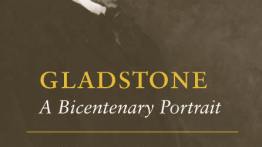
The grandest of old men

From our UK edition

Mr Gladstone’s career in politics was titanic. Mr Gladstone’s career in politics was titanic. He sat for over 60 years in the Commons, was in the cabinet before he was 35, was four times prime minister, almost solved the Irish question, set new standards for the conduct of public business and of foreign policy, and took a leading part in the disruptions both of the Conservative and of the Liberal Party. The post office did get round to issuing a commemorative stamp for his bicentenary, which fell on 29 December; but the press, which used to publish every day in the 1880s a note of his doings, close to the court circular about the Queen’s, has taken it more quietly.

Paris of the gutter

From our UK edition

Port-au-Prince, the Haitian capital, lies on a marshy bay encircled by mountains. It was founded in 1749 by the colonial French and named after a vessel, Le Prince, which anchored there about 1680 (and not, as the dictator ‘Papa Doc’ Duvalier apparently liked to believe, after The Prince by Machiavelli). Thousands subsist in shanties built on landfill at the harbour’s edge; even a light rainfall can put their homes under flood. Uptown, an illusion of space prevails. The presidential palace, a vast lair of power, stands at one end of a palm-fringed plaza. On Tuesday, 12 January, Port-au-Prince teemed as usual with cigarette vendors, bootblacks and marchandes. On the Rue du Commerce, office workers were making last-minute purchases before returning home. It was 4.

Array of luminaries

From our UK edition

In November 1660, on a damp night at Gresham College in London, a young shaver named Christopher Wren gave a lecture on astronomy. In the clearly appreciative audience were 12 ‘prominent gentlemen’, who in discussions afterwards, possibly over a drink or two, decided they would meet every week to talk about science and perform experiments. In a flash, this informal gathering coalesced into a society, which they called ‘a Colledge for the Promoting of Physico-Mathematicall Experimentall Learning’. As Bill Bryson writes in his introduction, ‘nobody had ever done anything quite like this before, or would ever do it half as well again.’ In 1662 Charles II granted them a charter, and the society became the Royal Society.

Elder, but no better

From our UK edition

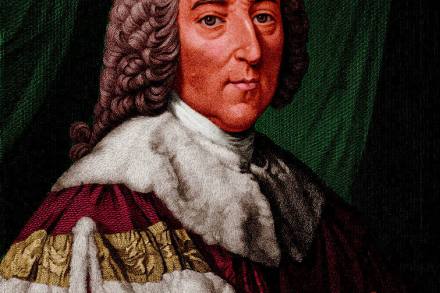
William Pitt the Elder, Earl of Chatham was hailed by Victorian schoolboys as the man who made England great. He was the patriot leader, the minister who steered the country through the Seven Years War, climaxing in the Year of Victories of 1759. General Wolfe heroically captured Quebec, British troops helped Frederick the Great of Prussia smash the French at the battle of Minden, and the British navy decisively defeated the French at Quiberon Bay. England emerged as the greatest power not just in Europe but in the world, and Pitt was the hero. In fact, Pitt’s reputation was wildly inflated. The war was fought by soldiers making decisions on the spot — it had to be, as letters took several weeks to reach England. Pitt neither planned nor financed the war.

Fighting spirit

From our UK edition

The metaphors that come to us when we are sick, trapped in the no-man’s land bet- ween consciousness and oblivion, are often the most vivid of which our minds are capable. The metaphors that come to us when we are sick, trapped in the no-man’s land bet- ween consciousness and oblivion, are often the most vivid of which our minds are capable. No wonder, then, once we are recovered, that the memory of them may prove impossible to banish. It is the measure of those that came to Peter Stothard when he was receiving treatement for what at the time appeared terminal cancer that they should have inspired this haunting, erudite and beautifully written book.

Macabre success story

From our UK edition

Any bright schoolchild could tell, from a glance at his or her atlas, where the Allies were going to land next, after they had conquered Tunis in 1943: it would have to be Sicily. The deception service persuaded the German highest command that Sicily was only the cover for an attack on southern Greece, after which the Balkans could be rolled up. Hitler was always nervous about the Balkans, from which his armaments industry got the bulk of its chrome and, more importantly, his armed forces half their oil; the trick worked.

The Knights of Glin

From our UK edition

In this splendid, monumental slab of a book, Desmond Fitzgerald, the 29th Knight of Glin, has made the chronicle of his family epitomise the whole turbulent history of Ireland since the arrival of the Normans. The survey includes chapters by academic genealogists and other historians, with less formal contributions from the Knight himself and his wife, Madam Olda Fitzgerald. The illustrations are comprehensive: ancient maps and land- scapes and portraits ancient and modern. There are a characteristically misty watercolour by Louis le Brocquy and photographs of architectural embellishments, fine furniture and paradisal gardens.

Addle-pated modernist

From our UK edition

In 1564 a book was published calculating that there were 7,409,127 demons at work in the world, under the administrative control of 79 demon-princes. Eight years later, Michel Eyquem de Montaigne began to write his Essays, a book which still seems to speak to us directly with all the force of rational understanding and an identifiable human personality. If Montaigne marks the beginning of modernity, it is because he tells us exactly what he is like; how he sees the world, fallibly and yet honestly; and because there was no book in the world like it before, and we are still writing books rather like it today. Montaigne, in common with all great authors, has continued to be infinitely applicable.

Continuity under threat

From our UK edition

This handsome and encouraging book is perhaps unfortunate in its title. The suggestion is that the author has been forced to rummage among the wreckage that is England in order to find something, anything, that is still intact. Its origins and intentions are quite the opposite. As Richard Ingrams explains in his short introduction, when he was editor of Private Eye he published a regular feature called ‘Nooks and Corners of the New Barbarism’, written by John Betjeman — a suitable kind of investigation for a satirical magazine.

Strong family feelings

From our UK edition

Mary Kenny’s survey of Ireland’s relations with the British monarchy is characteristically breezy, racy and insightful, with a salty strain of anecdote. Mary Kenny’s survey of Ireland’s relations with the British monarchy is characteristically breezy, racy and insightful, with a salty strain of anecdote. This reflects the secret affection of the Irish bourgeoisie for the royal soap opera, even when this addiction has to be concealed as carefully as a taste for alcohol in a fundamentalist Muslim state. Oddly, her account of secret suburban Catholic covens, communing with royal weddings and jubilees via television, rather trumps my memories of royalist interests among the Protestant (though emphatically not Anglo-Irish) circles of my youth.

Ignoble nobles

From our UK edition

Badly behaved toffs have been a gift to writers since ancient times, and in English from Chaucer to Waugh.

The face of a muffin

From our UK edition

What was it about post-war British cinema? Our films were lit up by a collection of wonderfully idiosyncratic performers. Think Alistair Sim, Terry-Thomas and Robert Morley. Perhaps the most idiosyncratic of them all was Margaret Rutherford. The drama critic, J. C. Trewin once remarked, ‘When you have seen any performance by Margaret Rutherford you are certain to remember it.’ How right he was. She stole Blithe Spirit with her portrayal of the exuberant bicycling medium, Madame Arcati. She was wonderful as Miss Whitchurch, the domineering headmistress of a girls’ school mistakenly billeted at a boys’ school in The Happiest Days of Your Life. And she was a far more colourful and entertaining Miss Marple than the rather grey character in Agatha Christie.

Some sunny day!

From our UK edition

In August 1945 Cyril Patmore of the Royal Scots Fusiliers returned on compassionate leave from India. A few weeks earlier his wife had written to confess that she was expecting a child by an Italian prisoner of war. ‘Why oh why darling did I have to let you down, me who loves you more than life itself?’ she wrote, pleading for forgiveness and a reconciliation. It was in vain. Patmore stabbed his wife to death. ‘I live for my children and my wife,’ he told the police. ‘I hope the children will be well looked after.’ This bleak anecdote introduces a catalogue of disasters. At the end of the war five million Britons, 90 per cent of them male, were in uniform.

Racists, pigs and hysterics

From our UK edition

I cannot remember getting so much pleasure from a book. It is not just its beauty, the handmade paper, the quarter leather, the engraving of the Rhaeadr Falls cut in purple into the cover cloth of something the size of an atlas. These are accidental details (as, I note bemusedly, is the fact that it costs £300 more than the current value of my car). For this, quite simply, is the funniest book I have read in years. Its godfather seems to have been Napoleon, whose wars sealed Europe off to the Romantics. In other words, he deprived them of their fixes of the Sublime, the Picturesque, the Prospects of Infinity; the Emperor deprived them of mountains. So where were they to go?

Not perfect freedom

From our UK edition

‘Servants’ and ‘service’ have not always meant ‘servility’. ‘Servants’ and ‘service’ have not always meant ‘servility’. From the Middle Ages right through to the 16th century, everyone was servant to someone: a lord was servant to the king, a lesser lord to a greater. Children likewise served in the households of their parents’ equals: service was what one did before God, and before one’s superiors, in class, or age. And many servants were for display as much as utility: as the consumer durables of their time, their number gave their masters’ prosperity in physical form.

Sideshow on the lake

From our UK edition

During the night of 9 February 1916, two men were sitting on opposing shores of Lake Tanganyika. The longest lake in the world, it at that time divided German East Africa from the Belgian Congo. One of the men was Herr Kapitänleutnant Gustav von Zimmer, the other was an eccentric British navy officer, Commander Geoffrey Spicer-Simpson. The following morning, Zimmer would launch the Graf von Götzen, a large vessel which floats to this day on the waters of the lake. Spicer-Simson takes a starring role in my narrative non-fiction book, Mimi and Toutou Go Forth (2004).

Squeaks and squawks

From our UK edition

How often, when listening to announcers or weather forecasters or politicians on the radio, do I think, ‘That’s an ugly voice’! This seldom applies to speakers with educated regional accents, such as Scottish, Irish or Yorkshire, but all too often to those from London or the Midlands where good standard English is becoming a rarity. This is not a matter of class; ‘Sloane’ voices are as unappealing as ‘Estuary’ ones; indeed the two sometimes hideously cross-fertilise. Good speech is a matter of clarity and the unselfconscious enjoyment of the spoken language. It was an unexpected and nostalgic pleasure to listen to old recordings of or about the Bloomsbury Group.