Pj Kavanagh

Muddling through

From our UK edition

It so happened that in 1961 I was part of a little group — three of us — which welcomed ‘Mr Jazzman’ to London. That was the code name for Rudolf Nureyev, the dancer, who had that day jetéed over the barrier in Paris and defected to London. He had very little English but he was already amused, and giggling, at what he regarded as the quaintness of Englishness. ‘All the same, all the same’, he kept saying, meaning the rows of terraced houses he had glimpsed as he was swept from London airport to the Brompton Road. A year before this I had crossed on the ferry to the Isle of Wight with my mother-in-law, née Lehmann. She looked about her. ‘What an extraordinarily ugly race we are,’ she remarked.

A man after his time

From our UK edition

Denys Watkins-Pitchford (1905-1990) illustrated dozens of books under his double-barrel and wrote at least 60 of his own under the two initials ‘BB’. Denys Watkins-Pitchford (1905-1990) illustrated dozens of books under his double-barrel and wrote at least 60 of his own under the two initials ‘BB’. This Symposium is a demonstration of how his writing has touched many, varied lives. The son of a vicar, he put his own faith in ‘nature’. Subsidised by his own writing, he followed what is called here ‘the manly pusuits’ — fishing, wildfowling — though why a man exalted to near ecstasy by the beauty of a skein of geese rising from marshes in the dawn should feel it necessary to shoot, to ‘bag’ its leader, is a mystery.

Continuity under threat

From our UK edition

This handsome and encouraging book is perhaps unfortunate in its title. The suggestion is that the author has been forced to rummage among the wreckage that is England in order to find something, anything, that is still intact. Its origins and intentions are quite the opposite. As Richard Ingrams explains in his short introduction, when he was editor of Private Eye he published a regular feature called ‘Nooks and Corners of the New Barbarism’, written by John Betjeman — a suitable kind of investigation for a satirical magazine.

Spirit of place

From our UK edition

A Writer’s Britain: Landscape in Literature, by Margaret Drabble This is a book about the inner landscapes of writers, or the ones they inhabited when young, and how these informed their work and affected their readers. In the process of describing these, Margaret Drabble makes lively connections, parallels and distinctions. The languor and melancholy of Tennyson’s poetry, for example, which so surprisingly suited the Victorian mood, derives from the Lincolnshire of his youth — ‘Gray sand banks and pale sunsets — dreary wind/ Dim shores, dense rains, and heavy-clouded sea!

Nearly guiltless

From our UK edition

No one has ever successfully explained cricket-obsession, and Marcus Berkmann doesn’t even try. He just expresses it, stamping about like Basil Fawlty in exasperation at England’s nearly constant humiliation at the hands of the Australians. He even confesses to a disbeliever that ‘some of my best friends are Australians’, and puzzles at the way they seem to hate us, whereas we rather like them, an affection which they find patronising. ‘A chippiness they really should have got over by now… However you look at it, we just can’t win — which, by astounding coincidence, is what usually happens on the cricket field too.

A balancing act

From our UK edition

If anyone should wince at a hint of aggression in the title of this book — and some Catholics might — let him or her remember or read Charles Kingsley’s Westward Ho! (1855), in which every Spaniard is a sallow coward, every priest a slinking prevaricator and every Protestant Englishman an apple-cheeked exemplar of straightforwardness and truth. At least, that is how I remember it, with astonishment; a high point in 300 years of anti-Catholic propaganda. Tit for tat is never a good idea, but balance is, and this collection of 16 portrait-biographies by different hands can be thought of as a contribution towards fairness.

Tough love

From our UK edition

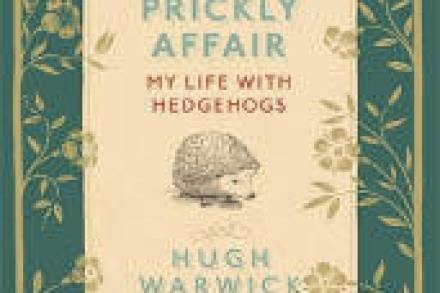
A Prickly Affair, by Hugh Warwick At a time when most of his fellow-mystics deplored this sinful world and longed to leave it, 17th-century Thomas Traherne ecstatically celebrated the world and confirmed his religious faith by observing its wonders. ‘The Ant is a great Miracle in a little room . . . its Limbs and Members are as Miraculous as those of a Lion or Tygre.’ Of late there has been an astonishing number of books that advocate this enthusiasm, this particularity — a book about the behaviour of rooks, a book about a single, nearly tame rook, even ‘conversations’ with particular trees. Now it is hedgehogs.

Nooks for rooks

From our UK edition

Was it Wordsworth who discovered the ‘real’ rural? Later, the Georgian poets celebrated its passing, giving rise to what Edward Thomas called ‘the Norfolk Jacket school of writing’. The poets of the 1930s took up politics instead, and nowadays poets are mostly urban. These scatter-shot generalisations, riddled with exceptions, are only meant as an introduction to the astonishing welter of prose books, not poetry, since the beginning of this new century, which contain the word ‘wild’ in their titles: How To Be Wild, The Wild Places, Wildwood, The Wild Trees. All these lament, either explicitly or by implication, the way we seem to have lost touch with the non-human world.

The pity of it

From our UK edition

This book opens with a bang; things are suggested rather than described, in short paragraphs, mostly dialogue; the impression is of a (very English) Hemingway. A party of six inmates, two orderlies and a newly arrived doctor, Irvine, are being taken on a bus from Dartford Asylum to view a whale beached on the Thames estuary. Dartford Asylum is a real place, containing for the most part men mentally damaged by the war, and the event is carefully dated, Spring 1923. The other passengers shy away from the silent inmates, sometimes even crossing themselves as though from fear of contagion; the bus driver is deliberately unhelpful and the orderlies are insolent to the new doctor. (Did people cross themselves in England in the 1920s?

Llamas but no locals

From our UK edition

Richard Askwith is Associate Editor of the Independent and lives in a small Northamptonshire village; presumably he commutes. After a year’s absence abroad he returns to his village and finds that two loved neighbours have moved, eight houses (out of 94) have been sold, and five more have ‘For Sale’ notices outside them. The pub had closed; the sub-Post Office was closing. (The school and the shop had closed years ago.) … One nearby farm — which hadn’t even had electricity when I first visited it a decade or more ago — had become a state-of-the-art equestrian centre. ‘And what’s wrong with that?’ demands his wife, who is a sensible Chorus throughout this book.

Fighting his corner

From our UK edition

This author said of her biography of the wealthy Siegfried Sassoon, ‘A study of his life is a study of an age’. So is this one, from another aspect, deep down among the poverty of Jewish immigrants at the end of the 19th century, and it is warming to learn how the more successful of these banded together to help the strugglers. The eldest son of Orthodox Russian Jews, the painter and poet Isaac Rosenberg was born in 1890, in the Jewish quarter of Bristol (astonishingly, we are told that the Jewish population of Bristol in 1901 was 328,945). His father was an itinerant salesman, away from home for half the year. He seems to have been a dreamy, sensitive man; painted and drawn by his son he has a rabbinical air.

Thinking like a river

From our UK edition

‘You can tell a river-lover. They cannot help but pause on a bridge to investigate what lies beneath.’ It is hard to imagine anyone not doing that, but our author is a generous soul and wishes to include us all in his passion. I wanted to celebrate the ways in which rivers stirred spirits and set imaginations alight; to learn how they were worshipped, and then abused and overlooked … I needed to make a river journey; the question was, which river? He chooses the River Trent, which cuts across England from west to east, more or less dividing south from north, 170 miles of it before it disappears into the Humber; but he chose it, surely, because he knew nothing about it and wanted to find out.

Hazy like foothills

From our UK edition

As life-expectancy seems to grow longer by the minute, as it were — at least in our part of the globe — it was predictable that some writers would retain their marbles long enough to report ruefully back from the ageing-battlefield. At least two poets have done so very well: Roy Fuller and D. J. Enright; here is another, who, remarkably, kept on sending despatches almost to the end. He did so in a particular way; this collection is called, correctly, Last Poems, but they are in no sense a summing-up of his career. His enjoyable Collected Poems (Sinclair-Stevenson) was published in 1994. The poems here, ‘short, intelligible, witty’ in the words of the Oldie editor Richard Ingrams, were commissioned once a month from 1999 for that magazine.

‘Almost’ religious joy

From our UK edition

Simon Barnes is chief sportswriter for the Times; wearing his other boots he is a fervent eco-warrior, a spell-binding preacher, a missionary. His book is broken into small descriptive sections and each contains a moment, an exaltation at a contact with ‘the wild’. These are perhaps best read in snatches, rather than as a continuum, because their fervour is so intense. By ‘wild’ he means anything that is not ourselves, not human, from gossamer to elephants, and he believes we need this contact precisely in order to be fully human. ‘I divide the whole world into lovers: you are either (a) a lover of nature or (b) a lover of nature who doesn’t know it yet.

All together now

From our UK edition

In my English school our hymns were mostly in Latin which, despite years of instruction, rendered them sufficiently opaque to be appropriate. What few hymns we sang in English seemed rather weepy, which didn’t appeal. Therefore, emerging from that place into a wider England, it was a surprise to discover there was a culture of hymns in good English, some with marvellous tunes, and almost a lingua franca derived from them among those who had dutifully bellowed those tunes and words when young. Nor was this only middle-class — think of the Salvation Army. This little book is a selection of the best of them: 52 hymns, 15 carols, each with a punchy introduction and a few necessary bars of the tune, and that tune’s provenance.

Fresh woods and pastors new

From our UK edition

It is good to be reminded of the left-wing writers of the 1930s who took arms against the injustices of a society in which they were themselves privileged members. Sometimes they were over-hectic preachers — Take off your coat: grow lean:Suffer humiliation: Patrol the passes aloneAnd eat your iron ration. — but there was nobility in their cause. Nevertheless, the question has to be asked: is any biography of a near-contemporary writer anything but an example of the Higher Gossip? Curiosity about the life can masquerade as revived interest in the work. This careful account of one such life can on the whole be absolved.

Richness in diversity

From our UK edition

I seem to have missed the name David Crystal. He is clearly a phonetician, expert in linguistics, but the blurb tells us little about him except that he appears on television. He comes across as a genial cove. In one of his many digressions on the subject of words — this book is composed of them — he tells us of the arrival of that very word ‘blurb’. ‘Just occasionally we can be in on a word-birth.’ In 1907, in New York, an author didn’t like his book-jacket, he wanted it more appealingly lurid. So he ‘sketched out a buxom blonde on one of the jackets and labelled her “Miss Belinda Blurb”.’ The name caught on. The same author later defined what that word came to mean. ‘1.

Guilt and defiance

From our UK edition

It will be news to nobody that England (or ‘the Crown’) and Ireland had been in a state of mutual incomprehension since the time of the first Elizabeth. There had been much cruelty. Sean O’Casey spoke for his countrymen: ‘The English government of Ireland had often been soft-headed but never soft-handed.’ So, when Ireland, a newly made Free State, declared its neutrality at the beginning of the second world war, the explosion of anger on the one hand, and the grim defiance on the other, were to be predicted. What was not to be foreseen, however, were the tangled effects — political, cultural, moral, psychological — of this neutrality on Eire itself.

John Bull as a master of delicacy

From our UK edition

This is a book that tells the reader a great deal about a certain kind of Englishman in his interesting times (1753-1828), and also raises the irritating question — the distinction, if any, between art and craft. Thomas Bewick, wood-engraver, was a ‘provincial’ craftsman who became a great artist. John Ruskin saw this: ‘The plumage in Bewick’s birds is the most masterly thing ever done in woodcutting; it is worked just as Paolo Veronese would have worked in wood if he had taken to it,’ thereby, it seems, promoting Bewick to the artistic top table. However, Ruskin remains loftily puzzled. ‘Ruskin and his followers,’ says Uglow, ‘placed Bewick as a country clod...

Ode to the A202

From our UK edition

A personal note, but relevant: I first picked up this large book at about two o’clock in the afternoon, and began to dip into it, a preliminary reconnaissance. I had an appointment at six with an impatient man, the sort who leaves if you are ten minutes late. When I next looked at my watch, the time was five past six. That is hardly a review, but surely an involuntary recommendation. The first attraction is small poems that begin intriguingly: If we are still together, it is becauseOf the need to weed the garden. You wonder what he means and he tells you, in a further nine lines (‘Eleven-thirty’). Brownjohn is much concerned with such precise timings, is a tidy man, the sort who likes to see chairs exactly aligned against tables.