History

Robbing Peter to pay Paul

From our UK edition

Two hundred years ago Jeremy Bentham wrote a tract which purported to demonstrate that the Christian religion was in effect manufactured by St Paul and not by Jesus. This was actually quite a common ploy at the time: a means by which freethinkers could assail Christian tenets without being prosecuted. And because St Paul’s writings occupy such prominence in the New Testament, and are plainly a major authority for so much Christian theology and understanding, there was reason well in excess of mere subterfuge to justify the procedure. In his restrained and in many ways compelling Introduction to his translations of the New Testament Rabbi Brichto (who died last year) adds a distinctive voice to what is therefore a fairly established debate about the place of Pauline theology.

Bannockburn Should Be Celebrated

From our UK edition

The usually estimable David Maddox has a very strange post up at the Scotsman's politics blog complaining that Alex Salmond wants to exploit the 700th anniversary of Bannockburn. Apparently: While Bannockburn is a battle which Scots should take historic pride in, seeing off an invading English army which had numerical superiority, it nevertheless is symbolic of anti-English feeling which are rife with the SNP and nationalist movement as a whole. So much for the "positive nationalism" which Mr Salmond claims to espouse. It is difficult to escape the feeling that this will be a year long "hate the English" festival in the run-up to a double election in 2015. This is, alas, piffle.

Robin Hood and the Laffer Curve

From our UK edition

I've been assuming that Ridley Scott's interpretation of the Robin Hood saga must be terrible. After all, it's nearly a decade since Black Hawk Down, Scott's last properly good movie. But now AO Scott pops up in the New York Times to suggest, though he may not mean to, that the movie has something going for it after all: You may have heard that Robin Hood stole from the rich and gave to the poor, but that was just liberal media propaganda. This Robin is no socialist bandit practicing freelance wealth redistribution, but rather a manly libertarian rebel striking out against high taxes and a big government scheme to trample the ancient liberties of property owners and provincial nobles. Don’t tread on him!

Genetics, God and antlers

From our UK edition

‘Two things fill the mind with ever new and increasing admiration and awe, the oftener and more steadily we reflect on them: the starry heavens above and the moral law within.’ Oren Harman uses this quote from Immanuel Kant to open one of the chapters of The Price of Altruism, and it’s an observation that — after the steady reflection on moral law that Harman’s book invites and encourages — only seems more true by the end. ‘Two things fill the mind with ever new and increasing admiration and awe, the oftener and more steadily we reflect on them: the starry heavens above and the moral law within.

Not our finest hour

From our UK edition

Ever since Edward II’s deposition and grisly murder in the dungeons of Berkeley Castle in 1327, his reign has always been regarded as a particularly embarrassing interlude in English history. Ever since Edward II’s deposition and grisly murder in the dungeons of Berkeley Castle in 1327, his reign has always been regarded as a particularly embarrassing interlude in English history. In 1908, when there was still some pretence that such subjects had a place in the classroom, teachers were advised that the period should be ‘passed over in discreet silence’. Not only was it one of fruitless civil war; Edward was also thought to have been a homosexual, who doted on favourites and was killed by a red-hot poker thrust into his anus.

The woman behind the god

From our UK edition

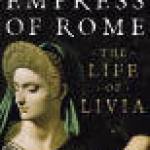
The emperor Augustus was the original god/father. Julius Caesar was often referred to as ‘the divine Julius’, but his nephew (and adopted son) was the first Roman to have temples dedicated to him in his lifetime. If uncle Julius had died a natural death, or in some brave battle, the Roman upper class would never have suffered the decimation (and then some) which Caesar’s ‘son’ and heir visited upon it under the rubric of vengeful piety. His last and greatest enemies had had nothing to do with Caesar’s death. Mark Antony had been Julius’s number two and was actually Octavian’s brother-in-law; Cleopatra had been his uncle’s most passionate love.

The map turns red

From our UK edition

Norman Stone forsook the chair of modern history at Oxford university for Ankara after realising that the ‘conversation at high tables would generally have made the exchanges in the bus- stop in the rain outside seem exhilarating’. Norman Stone forsook the chair of modern history at Oxford university for Ankara after realising that the ‘conversation at high tables would generally have made the exchanges in the bus- stop in the rain outside seem exhilarating’. Dur- ing an earlier incarnation at Cambridge, Stone taught a galaxy of historians. His protégés include David Blackbourn, Harald James and Richard Overy, followed by Niall Ferguson and Andrew Roberts, all bar two now working at Harvard or Princeton.

Ghosts from the Soviet past

From our UK edition

Above all, it is the inhuman scale of things which impresses the visitor to Moscow: the vastness of Red Square, the width of the uncrossable streets, the implacability of the traffic. The city’s history seems equally inhuman, haunted as it is by centuries of tyrants, millions of political prisoners, countless wars. Impossible to navigate and impossible to know, Moscow doesn’t exactly embrace the casual tourist. But Rachel Polonsky was not a casual tourist. A scholar of Russian literature who lived in Moscow for a decade, she knew better than to start looking for the essence of the city in Red Square. Instead, she began on a single street, inside a single flat. The street was her own: Romanov Lane.

Scourge of the ancien régime

From our UK edition

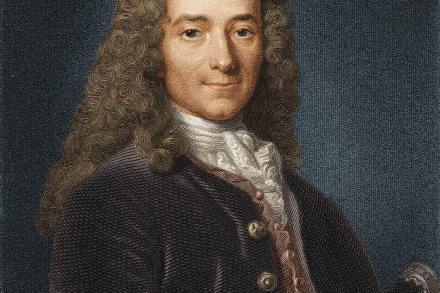
Voltaire’s was a long and amazing life. Voltaire’s was a long and amazing life. He was tragedian, satirist, mathematician, courtier, exile, jailbird, swindler, gardener, plutocrat, watchmaking entrepreneur, penal reform campaigner, celebrity, provocateur, useless loan-shark, serial feuder, coward, astronaut, niece-shagger, spy . . . Except ‘astronaut’, obviously. I made that up to check you were still paying attention. But he did shack up with his niece, the filthy old goat. It seems a shame, then, that for most of us nowadays that long and amazing life is compressed into a couple of quotes from Candide and a few apocryphal stories about his table talk. Ian Davidson’s biography is the corrective: here’s the great man in the round.

Anything for a laugh

From our UK edition

A hundred years ago, when Britannia still ruled the waves, the Royal Navy fell victim to a humiliating hoax, reports of which kept the public amused for a few wintry days in February 1910. Disguised as ‘members of the Abyssinian Royal family’, with woolly wigs, fancy-dress robes and burnt-cork complexions, a gaggle of young people managed to trick naval leaders into receiving them on an official visit aboard the state-of-the-art battleship Dreadnought, Britain’s proudest national emblem. The ridiculous party, which included Virginia Stephen (the future novelist Virginia Woolf), were conducted solemnly round the wonders of the newest naval technology, jabbering in a nonsense language and escaping just as the spirit-gum holding on their beards began to melt.

Serving God and Mammon

From our UK edition

People have written books about America long before the United States declared itself, and we may be forgiven for asking if we really need another. Doesn’t America already loom large enough in our world; hasn’t it all been said before? Well, yes and no. There’s a sense in which we’re all Americans now because that country is ourselves writ large or — as America might see it — set free. And although much of what is said here may have been said before, it’s rarely been said as concisely and well. Nor have the paradoxes that divide, and unite, that great country been so carefully and sympathetically delineated. Tristram Riley-Smith takes his title from the famous Liberty Bell, allegedly rung when the Declaration of Independence was read out.

The role of the state

From our UK edition

Tony Judt is a vivacious and controversial historian. He is Jewish but has turned against Israel. He is a thinker of the Left who has ended up in the USA. And now he has been struck down with a grievous illness, a virulent form of motor neurone disease which has left him paralysed from the neck down. As a result he has composed his latest book in his head and then dictated it to an aide, using the classic memory device of setting the text in different rooms of an elaborate building. This elegant essay is the result. Judt’s illness has left him determined to restate his belief in what he calls social democracy. It is above all aimed at the younger generation. He fears that, because of the dominance of neo-liberalism, they have lost an appreciation of the good that the state can do.

For all time

From our UK edition

To review some new books about Shakespeare is not to note a revival of interest, but simply to let down a bucket into an undammed river. No one really knows the scale of the secondary bibliography. Published sources on any given topic in Shakespeare studies are innumerable and, as James Shapiro reminds us, so are books devoted to the idea that the works were written by someone else. There are two theories to account for why Shakespeare is still so enormously prevalent in cultural life nearly 400 years after he died. The first is the cynical one, that it suited the British empire, and Anglo-Saxon culture in general, to foist the values and standards of one of its own on the rest of the world.

Faith under fire

From our UK edition

Giles St Aubyn, in this long, scholarly book, sets out to chronicle the shifts in the Christian churches from the scientific revolution of the 17th century, and the Enlightenment of the 18th, to the apparent triumph of secularism in the 20th. H. H. Asquith, as leader of the Liberal party, was not an enthusiastic Christian. Nor did the Labour Prime Minister Clement Attlee waste much time on religious concerns, which bored him. What mattered was the NHS and the welfare state, which saved men’s bodies rather than their souls. The Reformation had shattered the universal Catholic church of the Middle Ages, leaving in its wake what the Catholic apologist Blaise Pascal called ‘the thousand bizarre sects of Protestantism’.

In the shadow of Mau Mau

From our UK edition

When the Kenyan human rights campaigner, Maina Kiai, recently addressed the House of Commons, his list of policy recommendations probably surprised many MPs. Be tough on Kenya’s fractious government, he urged. Crack down on British companies which bribe African politicians. And it was well past time, he added, that Britain made a formal apology for Mau Mau. A chasm yawns between the soft-focus memories of a former colonial master and the less happy recollections of the colonised. Never more so than with Mau Mau, the 1950s uprising against white rule which traumatised the Kikuyu community, the country’s biggest tribe, eventually paving the way for independence.

Pretty boy blue

From our UK edition

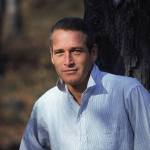
In his memoir Somebody Down Here Likes Me, Too, the boxer Rocky Graziano, on whom Paul Newman based his performance in Somebody Up There Likes Me (1956), describes the actor in perfect Runyonese: I could see right off there ain’t one thing phony about this guy. Maybe there was. He was too good-looking. In fact, the guy is pretty… He’s got bright blue eyes, but when you look in ’em you see a hard look dancing around inside. Only one other guy I see these same eyes on an’ that was another friend of mine, Frank Sinatra. When their blue eyes spot a wise guy, the eyes say, ‘Don’t fuck with me, man!

Obama & Napoleon

From our UK edition

Historical analogies are always fun! Health Care reform was going to be, as Senator Jim DeMint argued, "Obama's Waterloo". Now that it haspassed conservatives are having to rethink that. The eternally optimistic Bill Kristol winds the clock back a bit and argues that, actually, HCR is Obama's Borodino*: Last night’s victory was the culmination of Obama’s health care effort, which has been his version of  Napoleon’s Russia campaign. He won a short-term victory, but one that will turn out to mark an inflection point on the road to defeat, and the beginning of the end of the Democratic party’s dominance** over American politics. Last night was Obama’s Borodino. Obama’s Waterloo will be November 6, 2012. Well, maybe!

Becoming a Victorian

From our UK edition

Winston Churchill was a racist. He said things like ‘I hate people with slit eyes and pig-tails. I don’t like the look of them or the smell of them’. Winston Churchill was a racist. He said things like ‘I hate people with slit eyes and pig-tails. I don’t like the look of them or the smell of them’. In 1931 he described Gandhi as a seditious Middle Temple lawyer, a half-naked fakir and a ‘malignant subversive fanatic’ and in 1954 he told the white Kenyan settler Michael Blundell that he ‘did not really think that black people were as capable or as efficient as white people’, although he said that ‘if I meet a black man and he’s a civilised educated fellow I have no feelings about him at all’.

Exotic Cuban underworld

From our UK edition

Before the revolución of 1959, Havana was, effectively, a mafia fleshpot and colony of Las Vegas. Before the revolución of 1959, Havana was, effectively, a mafia fleshpot and colony of Las Vegas. Graham Greene first visited in 1954, when the dancing girls wore spangled headdresses. The Batista regime was then at its height, and tourists flocked to the Cuban capital for its promise of tropical oblivion. George Greene, the ‘GG’ of the title of this novella, is an English holidaymaker on the prowl in pre-communist Havana. Castro’s revolution is less than four years away — it is the summer of 1955 — and George hurls himself promiscuously into Batista’s grimy sex industry.

Almost all against all

From our UK edition

Early one morning in September 1986 three gunmen patrolling Beirut’s scarred Green Line came across what they believed would be easy pickings. Early one morning in September 1986 three gunmen patrolling Beirut’s scarred Green Line came across what they believed would be easy pickings. David Hirst the diminutive, silver-haired and donnish veteran correspondent was stranded by the side of the road in one of the most notorious areas of the city. Scores of Westerners had already been seized by militant groups allied to Iran and Hirst was pushed at gunpoint into the back of a BMW for what should have been the start of several miserable years handcuffed to a radiator in Beirut’s southern suburbs.