John De-Falbe

Chaos and the old order

From our UK edition

If Gregor von Rezzori is known to English language readers, it is likely to be through his tense, disturbing novel Memoirs of an Anti-Semite (partly written in English), and/or his ravishing memoir Snows of Yesteryear. Rezzori was born in 1914 in Czernowitz in Bukovina, when it belonged to the Austro-Hungarian Empire. After the first world war he became a citizen of Romania, from where, as a so-called ethnic German, he was ‘repatriated’ to Germany during the second world war. From the 1960s he lived in Italy, at Santa Maddalena, the home that he shared with his second wife near Florence, which she has since set up as a writers’ retreat. In the garden there is a porphyry pyramid, a monument to the deceased writer on which is inscribed ‘citizen of Czernopol’.
One-man triumph

From our UK edition

The Companion to British History (Third Edition), by Charles Arnold Baker Readers familiar with the first edition of The Companion to British History (Loncross, 1997) will already know that its value as a reference work proceeds from an inclusive attitude towards its subject. Besides providing the rudiments — monarchs, battles etc — the CBH was particularly strong on the constitution, law, local history, the Empire, anecdote, circumstance, and much else. It was also a useful stand-in for The Dictionary of National Biography. This third edition comes again with the glorious yellow jacket (which Routledge’s second edition discarded), but it has many more entries. We can read, for example, a crisp two-page summary of the Blair and Brown Government.

Memories in a world of forgetting

From our UK edition

It is several years since Anna Funder published Stasiland, her acclaimed book about East Germany. Her new book is a novel concerning a group of German political activists surrounding the writer Ernst Toller, who is now almost forgotten but once was well known and was president of the short-lived Bavarian Republic in 1919 for about a week. Funder’s point of entry is Ruth, who, some 60 years later as a very old lady in Australia, receives in the post a copy of Toller’s auto-biography, I Was A German, with some manuscript amendments made by him in the week before he died, in 1939. Despite the gap in time and place, they are united by their passionate attachment to Ruth’s cousin, Dora Fabian, who was Toller’s amanuensis and the love of his life.

Captain courageous

From our UK edition

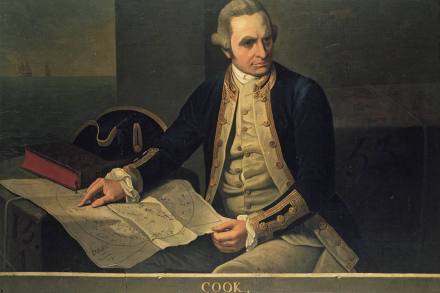
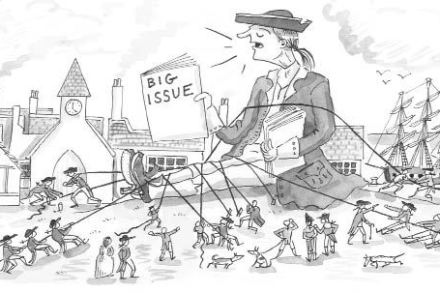
The sum of hard biographical facts about Captain Cook never increases, nor is it expected to. It is the same with Shakespeare. J. C. Beaglehole’s Life of Captain James Cook (1974), which Frank McLynn quotes often, contains most of what is known about Cook’s family life and origins. As the son of a Yorkshire farm labourer, he belonged to a class that was unlikely to leave any record of his childhood. He was clever, and went to live with a Quaker family in Whitby where he worked in the shop. He went to sea in the collier trade at the advanced age of 17, and transferred to the Royal Navy when he was 30. He married seven years later, in 1762, after the Admiralty’s attention was drawn by his successful charting of the Newfoundland coast.

Desk-bound traveller

From our UK edition

With a new novel each year, Robert Edric cannot have much time for courting London’s literary establishment, but does he stay at home in East Yorkshire? The London Satyr is set in 1890s London and to me, a Londoner, it seems not merely researched but felt, as if its author has tramped the streets and occupied the world of his characters. With a new novel each year, Robert Edric cannot have much time for courting London’s literary establishment, but does he stay at home in East Yorkshire? The London Satyr is set in 1890s London and to me, a Londoner, it seems not merely researched but felt, as if its author has tramped the streets and occupied the world of his characters.

The start of the affair

From our UK edition

In this season of Franzen frenzy, spare a thought for André Aciman, an American writer whose name, I think, is so far unmentioned in the daft pursuit of the Great American Novel. In this season of Franzen frenzy, spare a thought for André Aciman, an American writer whose name, I think, is so far unmentioned in the daft pursuit of the Great American Novel. His new novel will achieve only a tiny fraction of Freedom’s sales, but, within its tight parameters, it is perfect. Aciman was not always American. His first book, Out of Egypt (1996), chronicles his extended Jewish family which migrated from Istanbul to Alexandria after the first world war, only to be expelled in the 1960s under Nasser’s regime.

Small but perfectly formed

From our UK edition

Some years ago, Edmund de Waal inherited a remarkable collection of 264 netsuke from his great-uncle Iggie, whom he had got to know 20 years previously while studying pottery and Japanese in Tokyo. Each week the young de Waal visited his urbane, elderly relative and his friend, Jiro. He heard ancient family stories and was introduced to the hare and all the other miniature carvings in ivory or wood, each one ‘a small, tough explosion of exactitude’. When eventually he inherited the netsuke, he felt he had also been ‘handed a responsibility — to them and to the people who have owned them.

Far from idyllic

From our UK edition

We’re Levantines … hold your head up high and say, ‘Yes, I am. What of it? Byzantine and Ottoman…’ We’re Levantines … hold your head up high and say, ‘Yes, I am. What of it? Byzantine and Ottoman…’ These are the words of Lev- ent effendi, a dignified out-of-work teacher, a ‘Turk’ who turns out to have been born to a Greek family in Smyrna in 1922, rescued and raised by Muslim foster parents. ‘Why are you filling his head with this nonsense? This is dangerous talk for a child,’ Kakmi’s mother observes with uncharacteristic restraint.

The lure of the gypsies

From our UK edition

William Blacker ‘set off to explore the newly “liberated” countries of Central Europe immediately after Christmas 1989’. From Berlin he went to Prague, where he wondered, ‘Should I continue eastwards, even as far as Romania? In the end it was old architecture which persuaded me. I had heard of the famous painted monasteries of northern Moldavia.’ Entranced by ‘the Eastern Europe of wooden peasant cottages on the edge of forests inhabited by wolves and bears, of snow and sledges and sheepskin coats, and of country people in embroidered smocks and headscarves,’ he returned the following year and walked among the Saxon villages.

A patriarch and his family

From our UK edition

The title story of this exceptional collection is the only one directly concerned with the presiding figure of K. K. Harouni, a wealthy Pakistani patriarch. In each of the others, a drama quietly unfolds among his extended family and dependents. In ‘Nawabdin Electrician’, Harouni’s Mr Fixit is attacked by a robber while driving his new motorcycle home to his wife and 12 daughters. ‘Saleema’ and ‘Provide, Provide’ describe girls giving themselves to employees. Saleema loses the protection of Rafik, the valet, when he is moved to a different house after his master’s death. ‘Within two years she was finished, began using rocket pills, went on to heroin . . .’ For Zainab, neither marriage nor love helps.

Hope and Glory

From our UK edition

Home, by Marilynne Robinson Marilynne Robinson’s magnificent previous novel, Gilead, was structured as a letter by the elderly, ailing Reverend John Ames to his young son. A persistent theme was the fear that Jack Boughton, the black sheep son of his dearest friend, would exercise a malign influence on his wife and boy after his death. Home is a counterpart rather than a sequel: read independently, it would still be astounding. Narrated in the third person, the novel concerns the home of the widowed Reverend John Boughton, a former Presbyterian minister in Gilead, Iowa.

Night thoughts in an unhappy home

From our UK edition

Man in the Dark by Paul Auster August Brill is a widower whose leg has been smashed by a car. He lies awake at night in the house he shares with his daughter, Miriam, and his granddaughter, Katya, in Vermont. Katya’s boyfriend, Titus, has been murdered, and Miriam ‘has slept alone for the past five years’. It is an unhappy, sleepless household, and Brill tells himself a story to manage the darkness until morning, when he will resume watching old movies with Katya. The story is about a man called Brick, who goes to bed with his wife in New York ‘and when I wake up I’m lying in a hole in the middle of goddamned nowhere’. He is in military uniform. Another soldier helps him out, but even so it is very hard for him to work out what is happening.

Good length delivery

From our UK edition

This short novel was first published in a tiny edition at the end of last year. Since then it has won the McKitterick Prize (for the best first novel by an author over forty), and now it is reissued with a glossy picture on the cover and a quote by Mick Jagger saying that he loved it. Good for him: it is superb. It is narrated by a woman who is having an affair that reaches a crisis during the five days of a Test match. Her focus swings between her husband, who keeps trying to explain the rules of cricket, her lover (‘the loss-adjustor’ — we never learn his name), who won’t explain because it would be like trying to explain a joke, and her 16-year-old stepson, Selwyn, who hasn’t come home.

Flouting the rules

From our UK edition

This intriguing novella tells the story of a drop of oil from its earlier form as the heart of a prehistoric horse to its combustion in the engine of a Ford, where it intersects with the lives of two humans. On one of these, ‘the soot particles of the ex-heart of the horse’ operate as a lethal carcinogenic agent. Related in brisk, incisive prose, the narrative consists of complex mechanistic chains that zoom from macro to micro, with chunks of technical detail that are more usually found in textbooks, or on helpful university websites, than in a novel.

Love among the journalists

From our UK edition

At the centre of James Meek’s new novel — a fine successor to The People’s Act of Love — there is a brilliant scene in which Adam Kellas, a war correspondent, is watching two Taliban lorries driving along a ridge. In the no-man’s-land between is an ancient Soviet tank occupied by Astrid, an American correspondent with whom Kellas has just spent the night, and an Afghan. She is not concerned with the lorries: she has just challenged the man to hit a tree stump in the distance. Kellas asks the Afghan commander beside him, who is infuriated by the tomfoolery, why he doesn’t instruct the tank to fire at the lorries. The commander replies that he doesn’t want to risk his men ‘when the Americans are going to win the war for us anyway’.

A one off

From our UK edition

Late in My Tango with Barbara Strozzi, Phil Ockerman, the main narrator, goes to Diamond Heart in Scotland, ‘a centre of dynamic calm in which mind and spirit gather energy for the next forward move’. He is the stand-in writer to teach a course on ‘The Search For Page One’. If Russell Hoban finds it difficult to get started on a novel then I suspect he refers back to something like this: Girl meets Boy; people may be drawn in more than one direction at once; they often have their own agendas: love is not simple. Will he/she, won’t he/she? Characters from other books wander in to say hello; images recur. Phil reminds us that we were introduced to Diamond Heart in Her Name Was Lola — ‘Bloomsbury, 2003’.

Once happy havens

From our UK edition

Leon Sciaky was born in Salonica in 1893, when the city was still a provincial Ottoman town. His family were grain merchants, Sephardic Jews who had been settled there for 400 years and still spoke Ladino at home. In concise, elegant prose, he describes in this memoir a childhood of Oriental pace and comforts, surrounded by Muslims and Christians, in which Turks, Macedonians, Bulgarians, Serbs and Greeks appeared to live in harmony. Among many beautiful passages about how life once was in the region, there is one of a visit with his grandfather to an outlying village which seems to belong to the Middle Ages, or Eden; at any rate, a world that has long since vanished.

Shifting hearts, shifting sands

From our UK edition

A man of about 60 who had read the American edition of this novel — it was published there a couple of months ago — told me lately that it was a ‘grown-up book’. Among other things, I take him to mean that besides recognising the difficulties of love, it embraces them; and that love is not the exclusive domain of the young and frisky. Toby Maytree is a poet who lives by the beach on Cape Cod. He ‘hauls houses’ for a living, but he has an insatiably inquisitive mind: ‘He pitched into the world for plunder, probed it with torches, filled his arms and brain with pieces botched — to what end? Every fact was a rune.’ Lou speaks ‘three languages and held her tongue in all of them’.

Radium and the nature of love

From our UK edition

For 16 years, from 1878, Blanche Wittman was a patient in the infamous Salpêtrière Hospital in Paris, diagnosed by the famous Dr Charcot as a hysteric. Putting Blanche on display in a cataleptic state, Charcot explained to audiences that he hoped to reveal, through her ‘a certain system, a secret code, which … could point the way to the meaning of life’. He was no quack (he was the first person to identify multiple sclerosis); Freud was his assistant for a time; and Blanche not only admired him but also, it appears, loved him, and the love was returned. After leaving the hospital, Blanche was taken on by Marie Curie as an assistant to work in the Paris laboratory where, in 1898, radium was discovered.

The maze of the mind

From our UK edition

With the publication last year of Your Face Tomorrow 1: Fever and Spear, the first volume of a trilogy and his eighth translated work of fiction, it was plain that Javier Marías was embarking on a project which required readers to leave behind all conventional ideas of what a novel is. At one point in the book the narrator cleans up a drop of blood. On the last page, someone rings his doorbell. There are no other events. But for patient readers with a speculative cast of mind and a taste for stylistic adventure it seemed to be a work of genius. The second volume, Dance and Dream, confirms this. Jacques Deza is a Spaniard living in London. Because of his acute powers of insight into other people, he has been taken on by a mysterious MI6- like agency to evaluate other people.