James Grande

Was it misfortune or carelessness?

From our UK edition

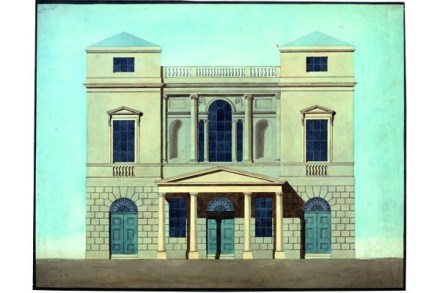
James Wyatt was considered by George III to be ‘the first architect of the kingdom’, but he was also the unluckiest, or perhaps most careless, architect of his day. Fonthill Abbey, the Gothic extravaganza he designed for William Beckford, collapsed after just 25 years. He started building a new palace for the king at Kew, which was later blown up by George IV. His Tudor-Gothic remodelling of the Palace of Westminster went massively over budget, was deeply unpopular and employed a combination of timber and plaster that proved spectacularly flammable in 1834. And the commission that made Wyatt’s name, the assembly rooms of the Oxford Street Pantheon, was only 20 years old when it was devastated by fire.
Another taboo subject

From our UK edition

Lionel Shriver finished The New Republic in 1998. ‘At that time’, she writes in a foreword, ‘my sales record was poisonous’ and American publishers showed little interest in novels about terrorism. Both things changed: the next novel she wrote was the phenomenally successful We Need to Talk About Kevin, while ‘post-9/11, Americans became if anything too interested in terrorism.’ The New Republic stayed in a drawer, ‘because a book that treated this issue with a light touch would have been perceived as in poor taste.’ This explanation is not entirely convincing.

Chinese whispers

From our UK edition

River of Smoke begins with the storm that struck the convict ship the Ibis at the end of Amitav Ghosh’s 2008 Man Booker-shortlisted Sea of Poppies. River of Smoke begins with the storm that struck the convict ship the Ibis at the end of Amitav Ghosh’s 2008 Man Booker-shortlisted Sea of Poppies. Redruth, the vessel of a Cornish plant-hunter, Frederick ‘Fitcher’ Penrose, sails in to Port Louis, Mauritius, two days after the Ibis, while the Anahita, belonging to Bahram Modi, a Bombay opium merchant, encounters the same storm on the other side of the Indian Ocean. Counting the cost of their voyages, characters from all three ships make their way to the Chinese port of Canton.

Lancelot of the lake

From our UK edition

Tom Stoppard’s Arcadia offers two contrasting views on a ‘Capability’ Brown landscape at the imagined Sidley Park. Tom Stoppard’s Arcadia offers two contrasting views on a ‘Capability’ Brown landscape at the imagined Sidley Park. Lady Croom, the 19th-century owner, praises its harmonious natural style, even down to ‘the right amount of sheep tastefully arranged’. Two hundred years later, a garden historian laments the destruction of the ‘sublime geometry’ of 17th-century formal gardens: ‘paradise in the age of reason’, before being ‘ploughed under by Capability Brown’.