History

“The right hero” – Douglas Murray reviews Jesse Norman’s Burke biography.

From our UK edition

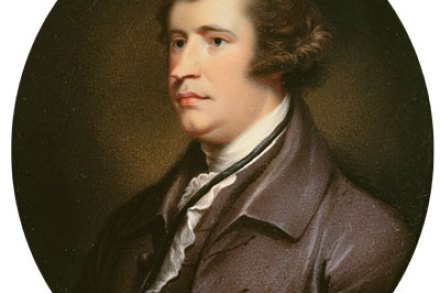
Edmund Burke is one of the most difficult thinkers to write about. His philosophy defies easy summary. His career, while noble, was not glittering. Many details that he exhausted himself over — such as the impeachment of Warren Hastings — were arcana before he was dead. And hardest of all is that Burke’s prose style is among the best in the language. Writing about Burke’s prose is like singing about Maria Callas’s voice. On each re-acquaintance with it you wonder why you don’t read Burke all the time. There was hardly a subject he tackled which he did not master, and not a register that he did not perfect. In A Letter to a Noble Lord he writes of one detractor: The Duke of Bedford is the Leviathan among all the creatures of the Crown.

The Glorious Revolution and small ‘c’ conservatism

From our UK edition

From a dialogue  between a non-juring clergyman and his wife by Edward 'Ned' Ward Wife: Why will you prove so obstinate, my dear, And rather choose to starve, than yield to swear? Why give up all the comforts of your life, Expose to want your children and your wife; Hug your own ruin through a holy pride, Which interest calls you now to lay aside; And common safety, that prevailing plea, Justifies those who wisely do agree? Consider, therefore, and in time comply, You may, perhaps, on some mistakes rely; And then, how fatal 'twould hereafter be, That error should beget our misery?

Dreams and Nightmares: Europe in the twentieth century

From our UK edition

So much abuse has been heaped on the European Union in recent years that it is easy to forget that Europe and the EU are not the same thing. Geert Mak reminds us of this fact. He is one of the most celebrated journalists and commentators in the Netherlands. Mak – widely read, multi-lingual and endlessly curious – considers the whole of Europe to be his home. He has won awards for his books in Germany, as well as in his native Holland, and been inducted into the Legion d’Honneur in France. He is also, on the side, a bit of an anglophile. In 1999, with millennial fever rising, Mak was commissioned by the centre-left Dutch newspaper NRC Handelsblad to set off on an epic journey.

The Young Titan, by Michael Shelden; Churchill’s First War, by Con Coughlin – review

From our UK edition

One evening in 1906, shortly after the election that brought Campbell-Bannerman’s Liberals into power, an understandably nervous Eddie Marsh, a middle-ranking civil servant in the Colonial Office, paid a social call on the Dowager Countess of Lytton.  The previous day Marsh had gone through a tricky first meeting with the new number two in the department, and it had been a surprise to him on going into the office that morning to hear that he was wanted as his private secretary.  ‘Desperate, Marsh begged the dowager countess for guidance,’ writes Michael Shelden in his Young Titan: She had known Winston and Jennie for many years... She had also been acquainted with Lord Randolph.

Perilous Question, by Antonia Fraser— review

From our UK edition

There are times when a major drama in the House of Commons really does change the course of British history. The period 1974–79, dramatised in the play This House, was one such. The crisis over the Great Reform Bill was another. Not so long ago, every schoolboy knew that the 1832 Reform Act gave the vote to the middle classes. Nowadays, thanks to the collapse of history teaching, very few schoolboys or girls know anything about it at all. Antonia Fraser has written a compelling and timely book on this almost forgotten political battle. The story begins with the election of 1830, which was called because of the accession of King William IV. The Tories, who had been in power for virtually 60 years, scraped in with a flaky majority.

More Niallism: Keynes opposed Versailles because he was a screaming queen

From our UK edition

When I heard that Niall Ferguson had said that JM Keynes advocated reckless economic policies because he was gay and childless, and hence had no concern for the future, I wrote: 'If true, this represents Ferguson's degeneration from historian to shock jock'. The reports were true, but I was wrong. There has been no degeneration. Ferguson has always been this crass and crassly inaccurate. Donald Markwell, Warden of Rhodes House until last year, pointed me to his John Maynard Keynes and International Relations for the gruesome details. Markwell had to devote time and space to the ugly task of dissecting an attack on Keynes by Ferguson in a 1995 edition of the Spectator.

Interview: David Graeber, leading figure of Occupy

From our UK edition

The anarchist movement in the United States has had the support of leading libertarian intellectuals, such as Noam Chomsky; but it has lacked a figure who could transform its guiding principles into something resembling a political movement. In the autumn of 2011, David Graeber seemed to be the man who could drag anarchism into mainstream politics. Graeber, along with other leading figures in the Occupy movement, coined the term ‘we are the 99 percent’. The catchphrase caught on, and within weeks — with the assistance of social media — Occupy transformed a small group of idealists with little support into a radical network occupying 800 cities around the world.

Brendan Simms: A strong, united Europe is in Britain’s interest

From our UK edition

Since the collapse of the Byzantine Empire, European history has been dominated by two themes: the centrality of Germany and the primacy of foreign policy. This is the argument of Brendan Simms’ new book, Europe: the struggle for supremacy 1453 to the present. Simms is a professor of the History of International Relations at Cambridge University and his decidedly European focus has allowed him to craft a detailed yet expansive account in the style of Paul Kennedy’s Rise and Fall of the Great Powers. One afternoon we sat down at Penguin’s offices on the Strand to discuss these issues, as well as their relevance to the current European Union debate.

Eleven Days in August, by Matthew Cobb – review

From our UK edition

It is fair to assume that Professor Matthew Cobb has often been asked if he is related to Professor Richard Cobb since he begins the acknowledgements of his new book by announcing that he is not. Richard Cobb wrote books about France — where he was known as l’étonnant Cobb and, according to his obituary in the Independent, ‘once greeted the dawn nude, in the company of a dozen similarly unattired men and women, in the fountains of the Place de la Concorde’ — and he had a son called Matthew; and Matthew Cobb’s father was called Richard, so the question is understandable. It must also be annoying, though, because Richard Cobb was such a stylish writer, while Matthew Cobb is less so.

Margaret Thatcher: The Authorized Biography, by Charles Moore, and Not for Turning, by Robin Harris – review

From our UK edition

It is a measure of Lady Thatcher’s standing that her death has been followed not only by the mealy-mouthed compliments from political opponents which are normally forthcoming on such occasions but also by robust denunciations. Nobody would have sung ‘Ding, dong, the Wizard is dead!’ after the deaths of Jim Callaghan, John Major or Alec Douglas-Home. Even the more controversial Harold Wilson got a bland send-off in his obituaries. Ted Heath was asked by a journalist whether it was true that, when he heard of Margaret Thatcher’s eviction from the party leadership, he had exclaimed ‘Rejoice! Rejoice!’. No, he replied, after some deliberation. ‘What I said was “Rejoice! Rejoice! Rejoice!

The Devonshires, by Roy Hattersley – review

From our UK edition

Recalling being taken as a teenager on repeated outings to see Chatsworth, Roy Hattersley disarmingly confesses that in those days ‘I was impressed by neither the pictures nor the furniture’. Over the past three years, while working in the Chatsworth archives on this history of its owners, the Cavendish Dukes of Devonshire, Hattersley would break off from research to roam the rooms and reacquaint himself with the house’s treasures. Yet if he is now more appreciative of its contents, he is not completely under the spell of Chatsworth’s past occupants. The ‘founding mother’ of the Devonshire dynasty was the Tudor virago known as Bess of Hardwick.

CND cannot rewrite its own history

From our UK edition

Last week I recorded an edition of Hardtalk for the BBC which has gone out today.  It is a discussion with Kate Hudson, the General Secretary of the Campaign for Nuclear Disarmament (CND), on the future of nuclear weaponry. The discussion is available on iplayer here. A couple of observations. Firstly, I seem to have been responsible for a rare ‘corpsing’ during a Hardtalk recording. Kate Hudson took a comment by me about the ‘decades’ CND had been fighting a losing battle as an ungallant remark on her age. It was not meant as such, but did lead to a temporary break-down in discussions, for which apologies. On a more substantial matter, I see that the BBC has left on the cutting-room floor what I think was an important point.

What it’s like to escape from Colditz

From our UK edition

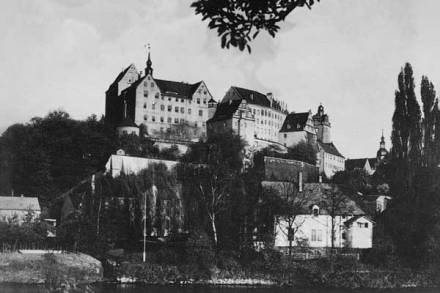
Colditz: Here I am, stuck in the same ventilation shaft that Pat Reid used to escape through just over 70 years ago. It’s a tiny letterbox-shaped hole, about three feet in length, one of the few natural holes through the castle’s monstrously thick outer walls. Captain Pat Reid and his fellow escapers had to strip off naked in order to shimmy through. It’s a cold day and even unclothed I’m far too well-fed to get through the gap, though Steffi, our well-informed guide, tells us ‘two English boys managed it last year, though you have to go through on your back, otherwise your knees get stuck’.

Ceremonies of Bravery: Oscar Wilde, Carlos Blacker, and the Dreyfus Affair by J. Robert Maguire – review

From our UK edition

The life of Oscar Wilde is so wearily familiar that we assume that there is nothing new to think or say about him. This book proves us wrong. Carlos Blacker - the central figure of  J. Robert Maguire's research for more than half a century - rates, at best, a bare mention in Wilde's many biographies. Yet, as Maguire conclusively demonstrates, he is no footnote. Blacker, a handsome man of Latin extraction, knew Wilde in the days of his London pomp, was a witness at the writer's wedding to the long-suffering Constance Lloyd, and often saw his friend on a daily basis.

The Secret Lives of Books – occasional tales from the Bodleian

From our UK edition

Does monotropa hypopithys, or yellow bird’s nest, still grow in Mickleham, Surrey, in the woods once owned by Sir Lucas Pepys the celebrity physician who, in ministering to King George III, ‘found the stool more eloquent than the pulse?’ The question is prompted by the Bodleian’s recent acquisition of a ‘Catalogus Plantarum’ kept in the 1790s by an anonymous Botanist who roamed the south of England looking for specimens and noting them down with meticulous care in an exact italic.

Falling out of love, William Shakespeare’s Sonnet 97 – discovering poetry

From our UK edition

How like a winter hath my absence been From thee, the pleasure of the fleeting year! What freezings have I felt, what dark days seen, What old December’s bareness everywhere! And yet this time removed was summer’s time, The teeming autumn big with rich increase Bearing the wanton burden of the prime, Like widowed wombs after their lord’s decease. Yet this abundant issue seemed to me But hope of orphans and unfathered fruit, For summer and his pleasures wait on thee And thou away, the very birds are mute: Or if they sing, ‘tis with so dull a cheer That leaves look pale, dreading the winter’s near. Spring is a strange time for a break-up. ‘Rejoice!’ says the earth, ‘the world is full of hope!’.

Interview with a writer: Kevin Maher

From our UK edition

Kevin Maher’s debut novel The Fields is set in the suburban streets of south Dublin in 1984. The story is narrated by Jim Finnegan: an innocent 13-year-old boy who lives in a carefree world that consists of hanging out in the local park and going on nightly bike rides with his geeky friend Gary. But shortly after his fourteenth birthday, Jim’s life drastically changes when he falls in love with a beautiful 18-year-old woman, Saidhbh Donoghue. After a brief honeymoon period their relationship turns sour when the young couple are forced to take a boat to Britain to arrange for Saidhbh to have an abortion.

The Young Van Dyck edited by Alejandro Vergara and Friso Lammertse – review

From our UK edition

Precocious genius will never fail to impress. But it is also very hard to relate to. Aged 14, Anthony Van Dyck painted a Portrait of a Seventy-Year-Old man that looked like a portrait by a seventy-year-old man, signed it, and marked it with his age, the idea being that the younger you are, the more impressive you are. And Van Dyck was impressive. Looking at the work he produced in his teenage years, it’s hard not to think of Julius Caesar, sniveling before a statue of Alexander the Great because he achieved so much, so young. Frankly, I feel like a loser. Which is why The Young Van Dyck, edited by Alejandro Vergara and Friso Lammertse, is a welcome read.

Zero Six Bravo proves that too much secrecy over Special Forces is a bad thing

From our UK edition

Zero Six Bravo tells of 60 Special Forces operators forced to remain silent in the face of accusations of ‘cowardice’ and ‘running away from the Iraqis’ in the 2003 war. In the face of such savage media criticism, and being branded as ‘incompetent cowards’ who ran an ‘operation cluster f___’ in Iraq, the men who served in this epic mission had no way to tell their own side of the story and clear their names. Why? For two main reasons. First, because the MOD operates a policy of ‘neither confirm nor deny’ anything regarding UK Special Forces. This extends to neither confirming nor denying the very existence of such elite units, let alone giving any details of operations.