History

War is not to be envied

From our UK edition

Donald Anderson is a former US Air Force Colonel and current professor of English Literature at the US Air Force Academy. His new book, Gathering Noise from my Life: A Camouflaged Memoir, is a controlled crash, like all landings. It skips and judders, the wheels skidding across the tarmac, until finally the plane is at rest. One line aphorisms such as, ‘William Burroughs was for thieving and against paraphrasing altogether,’ are followed by paragraphs which, every so often, glide into anecdotes mingling observations of war with memories of a small town upbringing in Butte, Montana.

Young Romantics quiz

From our UK edition

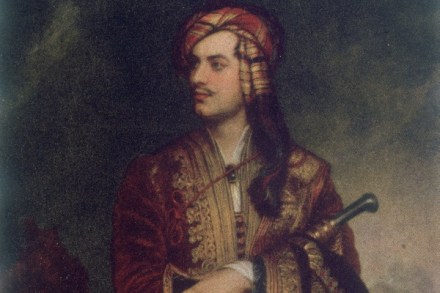
Byron may have been mad, bad and dangerous to know, but how’s your knowledge of the rest of the Young Romantics? Are you a connoisseur of Keats, or a specialist on Shelley? Take this light-hearted quiz to find out how much you really know about this dazzling generation of English poets. There are four possible answers to the questions below, and one of them relates to Byron, Keats or Shelley. There’s a point for every correct answer, and some bonus points to be won as well, if you can spot a few Romantic red herrings I’ve hidden in here too… Answers should be emailed to dblackburn @ spectator.co.uk. The winner will receive a signed first edition of Lynn Shepherd’s new book A Treacherous Likeness. Answers will be published next Wednesday.

Richard III should be reburied under Leicester council’s car park

From our UK edition

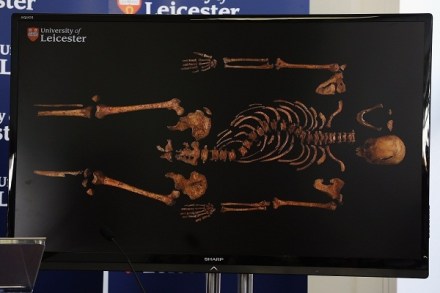
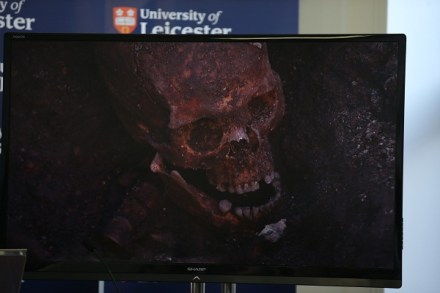
Anyone who watched last night's Channel 4 Documentary Richard III: The King Under the Car Park will need no reminding that members of the Richard III Society tend to be delusional fantasists rather than serious historians. Although we should doubtless be grateful to the Society for funding the dig that discovered the monarch's bones, that very fact tends to slant the coverage of Richard's resurrection. There has been much talk about 're-writing history' and countering 'Tudor propaganda'; but the inconvenient truth (for Ricardians) is that the late king's spine was indeed twisted by scoliosis and one of his shoulders was noticeably higher than the other. Those particular pieces of Tudor and Shakespearian “spin” were no more than the plain truth.

Reading Richard III

From our UK edition

The confirmation that bones found beneath a Leicester car park are ‘beyond reasonable doubt’ those of Richard III has launched a deluge of familiar puns. ‘A hearse! A hearse! My kingdom for a hearse!’ say numerous wags on Twitter. I wonder if Richard III would be remembered so widely today were it not for Shakespeare. The character of the play, who speaks some of the most famous lines in English, is descended from the portrait drawn by Sir Thomas More in an uncompleted history written at various points throughout the 1510s. Many historians argue that More wrote the book to please the Tudors.

Discovering poetry: John Dryden, Jacobite superstar

From our UK edition

From Dryden’s translation of Virgil’s Aeneid Arms and the man I sing who forced by fate And haughty Juno's unrelenting hate Expelled and exiled left the Trojan shore. Long labours both by sea and land he bore And in the doubtful war; before he won The Latian realm and built the destined town, His banished Gods restored to rites divine, And settled sure succession in his line: From whence the race of Alban Fathers come, And the long glories of majestic Rome.     O Muse! the causes and the crimes relate, What goddess was provoked, and whence her hate, For what offence the Queen of Heaven began To persecute so brave, so just a man! Involved his anxious life in endless cares, Exposed to wants, and hurried into wars!

Abraham Lincoln ‘somehow’ became the great redeemer

From our UK edition

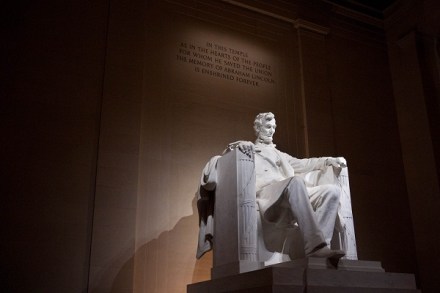
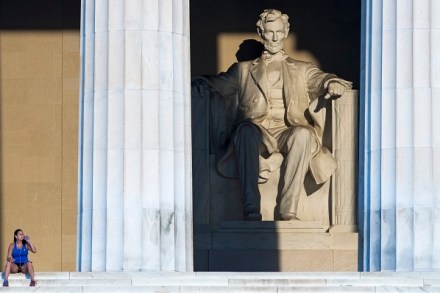
Abraham Lincoln, in Walt Whitman’s celebrated phrase, contained multitudes. M.E. Synon showed yesterday quite how many there might have been. There is evidence of prejudice, callousness and corruption. Yet there is also the 13th amendment (1865): the basis, whatever the wider context of its adoption, of Lincoln’s right to be called the Great Emancipator. Steven Spielberg’s Lincoln is a film of a book: Team of Rivals: The Political Genius of Abraham Lincoln by Doris Kearns Goodwin, a blockbuster that paints a little more of the good Lincoln than the bad, but which accepts Lincoln's complexity freely by describing a determined politician at work. Daniel Day-Lewis’s often mesmerising, twinkling Lincoln is not wholly angelic.

Abraham Lincoln, the ‘specious humbug’

From our UK edition

This post by M.E. Synon is the first in a series about Stephen Spielberg's Lincoln. A counter-argument will be published tomorrow, followed by a comparison of screen and literary adaptations of the last months of Abraham Lincoln's life. Last week in Dublin there was the European premiere of Spielberg’s film on Lincoln. Why Dublin? Because the star Daniel Day-Lewis lives in Ireland and he wanted the premiere as a fundraiser for an Irish charity.

Discovering poetry: Henry VIII’s Camelot

From our UK edition

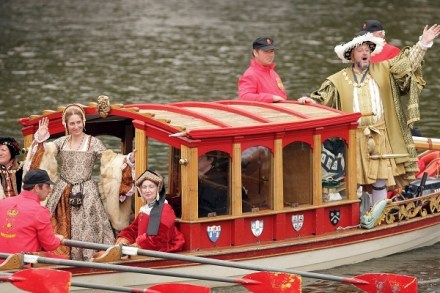
‘Pastime with good company’, attributed to Henry VIII Pastime with good company I love and shall until I die. Grudge who list, but none deny, So God be pleased, thus live will I. For my pastance, Hunt, sing and dance, My heart is set. All goodly sport For my comfort Who shall me let? Youth must have some dalliance, Of good or ill some pastance. Company me thinks the best All thoughts and fancies to digest. For idleness Is chief mistress Of vices all. Then who can say But mirth and play Is best of all? Company with honesty Is virtue, vices to flee; Company is good and ill, But everyman has his free will. The best ensue, The worst eschew! My mind shall be Virtue to use, Vice to refuse; Thus shall I use me.

The Duchess of Cambridge, defining a portrait

From our UK edition

Poor Kate Middleton. In the royal tradition of artistic and literary representation, what defines her at this moment in time? The creepy feature on her wardrobe statistics in February’s Vogue? Or Paul Emsley’s even creepier official portrait revealed last week? Emsley’s Vaseline lens ‘Gaussian girl’ take on the future consort would have been appropriate had she the complexion of Doris Day, whose preference for the blurred lens was renowned. The fact we all know that Kate’s skin is like butter, her eyes sparkly, and demeanour jollier than her hockey stick makes her first official portrait instantly bewildering. Just imagine, though, if we didn’t know any of those things.

Historical directories: Street View for time-travellers – Spectator Blogs

From our UK edition

Fancy a walk into London's past? How about a stroll down Fleet Street in 1895? Or Oxford Street in 1899? It can be done. I can't promise pictures, but I can offer more detail on the residents of each building than Google would risk publishing today. The secret: from the mid-1830s, a man named Frederic Kelly employed agents to call at every address in London and to record the people or businesses within. Kelly was a postal official, and his agents, at least to begin with, were postmen. There was some scandal about that. Because this wasn't an official census, conducted every ten years and then locked away for a century; this was a commercial operation, conducted annually and sold in a big fat book, the Post Office London Directory.

‘Turboparalysis’ Revisited

From our UK edition

The word ‘turboparalysis’, coined by Michael Lind (who has a brilliant piece on the subject in the Spectator Christmas double issue), is paradoxical, even illogical. And yet it is clear, perfect for our times. Lind defines his term as: ‘a prolonged condition of furious motion without movement in any particular direction, a situation in which the engine roars and the wheels spin but the vehicle refuses to move.’ Turboparalysis is a new word; but its sense is familiar. We are often warned that we ‘risk repeating the mistakes of the 1930s’. Comparison between eras is always awkward.

Newtown, Connecticut: A Very American Tragedy – Spectator Blogs

From our UK edition

I've not written anything for a few days because, well, I've been trying to organise what I think about the awfulness of the shootings in Newtown, Connecticut. Trying, also, to find a way of writing about it that seems appropriate. There are moments, I think, when a too-polished piece of prose risks seeming distastefully narcissistic, too close to being from the School of Martin Amis. I remember Amis describing the "sharking" trajectory of the second plane hitting the World Trade Center more than a decade ago and thinking that, as apt and vivid as the image was, there was something unpleasant about it. Something that suggested the author was too admiring of his own imagery. The event made self-consciously fine writing seem superfluous and even oddly obscene.

An assassination at Christmas

From our UK edition

In the upper outer corridor of the Summer Palace, with its views of the palm fringed courtyard below, the young man was waiting with his gun. It was a no frills 7.65 Ruby automatic pistol, one of thousands a Spanish small arms manufacturer had supplied the French Army during the First World. Some of the offices along the narrow corridor were already deserted for the holiday. Nonetheless he had been assured that, however long his Christmas Eve lunch, the admiral would be back because he would want to read his latest telegrams. At about 3.30pm he heard footsteps, the murmur of voices then, rather surprisingly perhaps, laughter.

The History Kids

From our UK edition

Martin Kettle has a column in today's Guardian lamenting the inadequacy of the teaching of English history in schools today. He suggests that "the English people are increasingly cut off from their own history." Is this so? Possibly! But then he makes the mistake of presuming the English are unusually unfortunate in this respect. To wit: It is a fair bet that today's young Scots know more about Scotland's history, today's young Welsh more about Wales, and today's young Irish more about Ireland than today's young English know about England. In fact the nature of their own historical experiences may mean that the Scots, the Welsh and the Irish also know more about England's history than the English do. I suspect most of this is pretty unlikely.

Cosmo Lang, his part in Edward VIII’s downfall

From our UK edition

In December 1936, following the Abdication of Edward VIII, a rhyme circulated about the Archbishop of Canterbury, Cosmo Lang: 'My Lord Archbishop, what a scold you are! And when your man is down, how bold you are! Of Christian charity how scant you are! And, auld Lang swine, how full of cant you are!' Lang had made a particularly ill-judged broadcast three days after the Abdication, which caused considerable offence. The widespread view of Lang is that he impotently wrung his hands on the sidelines before the Abdication, after which he made his disastrous broadcast. A different view was taken by the Duke of Windsor in his memoirs: ‘Behind [the Prime Minister, Baldwin] ... was a shadowy hovering presence, the Archbishop of Canterbury ...

Henry Jermyn – the hidden power behind Charles II’s throne

From our UK edition

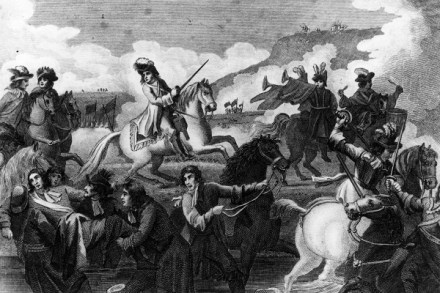
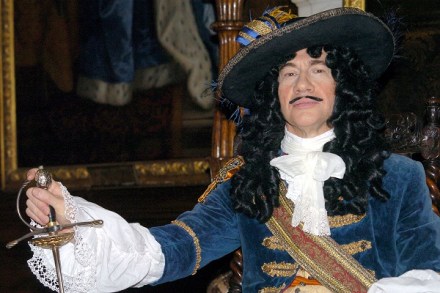
350 years ago, Charles II ruled over a Britain whose destiny – as a world power or a defeated backwater – was intricately tied to its relations with Europe. The King’s chief minister was the Lord Chancellor Edward Hyde, Earl of Clarendon. Sober and high-principled, Clarendon favoured alliance with the Hapsburg powers of Spain and Austria simply because they were the most powerful rivals of France. But Charles II did not pursue such a policy consistently. Throughout his reign, Britain’s relations with France vacillated between open hostility and close friendship. Why? A close study of the original records reveals a triangle of very human relationships at work in the Stuart court.

300 years of hating party politics

From our UK edition

‘Whig and Tory Scratch and Bite’, by Aaron Hill Whig and Tory scratch and bite, Just as hungry dogs we see: Toss a bone 'twixt two, they fight, Throw a couple, they agree. Tribal party politics are three-hundred years old in Britain. So is the fashion for satire which aspires to rise above it all. The British people have been dealing with political parties since the 1670s. It was then that a faction led by the Earl of Shaftesbury tried to have Parliament pass a law to prevent Charles II’s brother James from succeeding to the throne. Charles had no legitimate children so James was next in line.

The Atlantic, the ocean that made the modern world

From our UK edition

Just as the classical world was built around the Mediterranean, the modern world was built around the Atlantic. The Romans called the Med ‘Mare Nostrum’ – Our Sea. The Atlantic, on the other hand, was a place of contest for centuries. European nations fought for supremacy and plunder upon it, traded for wealth across it, and scrambled for territory around it. According to John K. Thornton, author of A Cultural History of the Atlantic World 1250-1820, the creation of an ‘Atlantic World’ was driven by the hunger of European states for hard cash. Money was needed to support the fantastically expensive armies which, from the late Middle Ages onwards, European nations were obliged to maintain as they engaged in a prolonged arms race.

Secrecy and the State in Modern Britain

From our UK edition

In his new book Classified: Secrecy and The State In Modern Britain, Dr Christopher Moran gives an account of the British state's long obsession with secrecy, and the various methods it used to prevent information leaking into the public domain. Using a number of hitherto declassified documents, unpublished letters, as well as various interviews with key officials and journalists, Moran’s book explores the subtle approach used by the British government in their attempt to silence members of the civil service, and journalists, from speaking out about information that was deemed classified.

The Church of England is becoming a church in England

From our UK edition

This morning’s newspapers (and indeed the airwaves) are full of apocalyptic predictions about the future of the Church of England. The failure of the General Synod to ordain women bishops has surprised plenty of bishops, many of whom express their ‘deep sadness’ about the affair to the (£) Times’ Ruth Gledhill. Yet the threat of schism on this issue is not wholly surprising, not least because the Anglican Church has rarely taken happily to reform. From the storms over Matthew Parker’s 39 Articles to this latest controversy, the C of E’s evolution has often been fractious. However, as a relatively faithful parishioner of the CofE, this affair does surprise me in one respect.