History

Magic, by Ricky Jay – review

From our UK edition

People, they say, want different things from a book over the summer than they do the rest of the year. If, by chance, you are looking for a book that will both give you a hernia and teach you how to make a bridge disappear, this could be just the thing for you. The motorbike messenger who delivered my copy of Magic had to come in for a glass of water and complained that the effort of carrying it had made his legs bowed. It is, quite simply, the largest book I have ever tried to read — the literary equivalent of the Great Bed of Ware. So what’s inside it? An awful lot of pictures, beautifully reproduced, interspersed with essays on the history of magic.

Glorious Misadventures, by Owen Mathews – review

From our UK edition

So: Russia’s imperial possessions on the Pacific North West of America. Remember those? No. Me neither. Something vague about the Russians flogging a bit of Alaska to the United States in the middle of the 19th century perhaps. But until I’d read this book I didn’t know that at one point Continental Russian America, not counting the Aleutian Islands, stretched 1,400 miles from its Eastern Tip (today called Cape Prince of Wales, by little Diomede Island in the Bering Strait) to its southwestern boundary near Sitka. If laid on top of the Continental United States, the territory — which closely corresponds to the modern state of Alaska — would stretch from California to Florida.

A secret sperm donor service in post-first world war London

From our UK edition

These days there are sophisticated and scientific solutions to the dismal problem of unwanted childlessness — there are IVF, Viagra and well-established egg and sperm donor services. We think of these as recent advantages and give thanks for the modern age. But what only very few people are aware of is that long before sperm donation was practically or ethically possible, in the early 20th century, a secret sperm donation service existed for those women most in need. Helena Wright was a renowned doctor, bestselling author, campaigner and educator who overcame the establishment to pioneer contraceptive medicine in England and throughout the world. Kind, intelligent, funny and attractive, Helena had a way with words and a devoted set of friends.

The Ghosts of Happy Valley, by Juliet Barnes – review

From our UK edition

Rift Valley, Kenya The other day when I told the headmaster of a top British public school that I came from Kenya, he quipped, ‘Ah, still living in Happy Valley?’ We will never shake it off, this idea of a Happy Valley in the equatorial highlands where aristocrats supposedly indulged in orgies and drugs — what Cyril Connolly dubbed the three As: Altitude, Alcohol and Adultery. It culminated in Joss Erroll’s 1941 murder. ‘Perhaps Africa was to blame,’ Connolly wrote. ‘It insinuates violence.’ It is 30 years ago that James Fox, inspired by Connolly, resurrected these tawdry events in his book White Mischief. It has never been out of print since.

Plato – slave-owning aristocrat or homosexual mystic?

From our UK edition

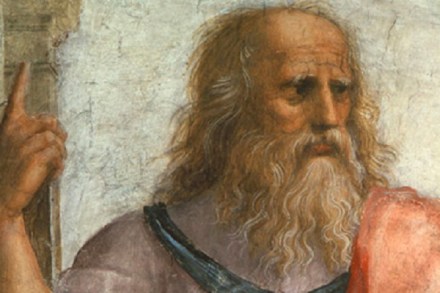
For over two millennia, the writings of Plato had been at the very core of a Western education. Yet  by the dawn of the 21st century, Plato appeared marginalized to the benign pedantry of Classics departments — engagement with his ideas having been spurned by many philosophers and educators over the preceding decades. To many his call to search for truth — and to live according to it — is no longer seen as applicable to our relativistic age. Neel Burton's Plato: Letters to My Son attempts to rescue Plato from irrelevance and guide another generation of readers and leaders along the path of self-knowledge. To understand the thrill of Burton's timely intervention, it is essential to grasp why Plato has fallen out of fashion.

Some brilliant book reviews

From our UK edition

As ever, the Spectator carries some splendid and erudite book reviews this week. There are contributions from stellar writers and thinkers such as Margaret MacMillan, Susan Hill, Alexander Chancellor and John Sutherland. Here is a selection. Margaret MacMillan is captivated by Edwardian Opulence: British Art at the Dawn of the Twentieth Century, a ‘lovely lush book’ edited by Angus Trumble.

Niccolo Machiavelli, by Corrado Vivanti; The Garments of Court and Palace, by Philip Bobbitt

From our UK edition

One more anniversary, one more cache of commemorative books. This time we are celebrating the half-millennium since Niccolò Machiavelli produced his notorious work, The Prince. He wrote it after a significant career blip in 1512, when the Florentine Republic fell and the Medici regained power. Machiavelli was not merely sacked from his job — secretary to the Republic — but also accused of conspiracy, imprisoned and horribly tortured. In 1513, he was released into exile, and went to live on his family farm, south of Florence. There he walked, consorted with ‘vulgarity’ (the locals) and read classical writers, including Livy, Tacitus, Sallust, Plutarch, Suetonius and Procopius.

Edwardian Opulence, edited by Angus Trumble – review

From our UK edition

She sits there on the cover exuding sex and wealth and a certain knowingness. Mrs Lionel Phillips, who came from a modest background in South Africa, had the good sense to marry one of the ‘Rand Lords’ who made their piles in the new gold and diamond fields. She and her husband bought their way into society in Britain, accumulating houses and furniture and having themselves painted, as in this wonderful portrait, by the fashionable Giovanni Boldini. That of Mr Phillips is more subdued, even sombre.   The face, said the Athenaeum, ‘is amazing in its unscrupulous vulgarity’. Well, one might think, the anonymous critic could have taken a look around him.

The Annals of Unsolved Crime, by Edward Jay Epstein – review

From our UK edition

Edward Jay Epstein is an American investigative journalist, now in his late seventies, who has spent at least half a century trying to find answers to the troubling theories and nagging questions that always swirl around notorious crimes. The more famous the crime, the harder it is to get at the truth, especially if the crime has political consequences. For example, John Wilkes Booth, who murdered Abraham Lincoln in 1865, was quickly proven to have been part of a conspiracy involving leaders of the defeated Confederate states; but when a reunited country was later seeking reconciliation, it was found expedient to suppress this fact and portray him instead as a deranged individual who had acted alone.

The week in books | 19 July 2013

From our UK edition

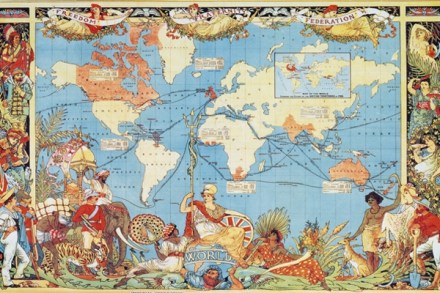
The best way to weather the heat wave is to head for the shade with a copy of the new issue of the Spectator, in which you will you find some diverting book reviews to while away an hour or two. Here is a selection: Philip Hensher treads carefully around Winston Churchill’s imperialism, the subject of Lawrence James’ Churchill and Empire: Portrait of an Imperialist. Hensher writes: ‘It is important for historians to make an effort to understand individuals by the standards of their own day, and not ours. There is a dismal school that finds it rewarding to debate whether Napoleon was homophobic or not, but for the most part we have to try to understand where a figure’s standards of judgment and thought stood in relation to the spectrum of opinion of his own day.

Korea – the 60 year war

From our UK edition

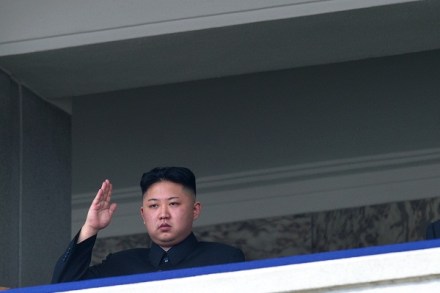
In the early morning hours of June 25, 1950 the opening shots of the Korean War were fired. At the time, few could have predicted how seminal this event would be in shaping world history. While the Korean War itself was only fought over a period of three years, no peace agreement was ever reached. In her new book ‘Brothers At War’, Sheila Miyoshi Jager provides a compelling historical analysis of a conflict that set the agenda for much of the Cold War.  Sheila Miyoshi Jager is Luce Associate Professor and Director of East Asian Studies at Oberlin College, Ohio. She has written extensively on modern and contemporary Korean politics and history. Would you describe the various phases of the Korean War?

Foreign Policy Begins at Home, by Richard N. Haass – review

From our UK edition

A year or so after the ‘liberation’ of Iraq, an unnamed senior Bush administration official (later revealed to be Karl Rove) boasted: ‘We are an empire now, and when we act, we create our own reality.’ Yet a decade later, America’s power and influence has diminished considerably and the American people are suffering from foreign policy fatigue. The greenback is weak, the debt mountain is of Himalayan proportions, the credit rating is downgraded and economic growth is exceptionally sluggish for a nation that is four years out of a recession. The Chinese own more and more of the US debt and they show no inclination to heed Washington’s demands to revalue the yuan or end their cyber-espionage or prevent North Korea from using nuclear weapons.

Music & Monarchy, by David Starkey – review

From our UK edition

British royalty, considered from a purely mechanistic angle, cannot function adequately without music. Deprived of marching bands, trumpeters and choristers or even of those ever so well-mannered regimental ensembles which dispense selections from favourite musicals at an investiture or a garden party, the royal performance would lose much of its authenticity. Playing the king in this country has always depended on being able to do the whole shtick to the right tunes. If, from time to time, a genuinely gifted or truly inspired composer should become available, so much the better. Dash and panache for parties and parades, decorous gloom for funerals and the occasional wedding anthem or victory Te Deum sound more like the real thing when knocked off by a Purcell, a Handel or an Elgar.

Dark Actors, by Robert Lewis – review

From our UK edition

No book about Dr David Kelly could start anywhere other than at the end. Kelly is found, dead, in a wood near his Oxfordshire home. A public inquiry, headed by Lord Hutton, concludes that Britain’s leading germ warfare expert has committed suicide. Those who question the procedure or the verdict are scorned as conspiracy theorists. Four years later, in response to a Freedom of Information Act request, the police reveal that there are ‘no fingerprints whatsoever’ on Kelly’s knife, on the tablet packets in his coat pocket or on the water bottle found nearby. This single stark fact — which was simply not mentioned at the public inquiry — seriously undermines the suicide verdict. There are countless other odd and perplexing aspects to the story.

Against Their Will, by Allen M. Hornblum – review

From our UK edition

After the Morecambe Bay Hospital scandal a new era opens of compassion, -whistle-blowing, naming names and possible prosecutions. But what about 70-odd years of harming children in ‘care’ homes, and prisoners, with toxin injections, -radioactive blasts, electro-shocks to the brain and frontal lobotomies — all done in the interests of medical advance by leading American doctors and scientists, one of whom was -awarded a Nobel Prize? Furthermore, what if the CIA sponsored such work in the interest of defending the US against Soviet threats?

Henry Addington thought Robert Peel was bad. What would he have made of David Cameron?

From our UK edition

Henry Addington, first Viscount Sidmouth, was briefly and, on the whole, ingloriously Prime Minister at the beginning of the nineteenth century and then spent nearly ten years as Home Secretary at a time when Britain seemed as close as it had ever been to violent revolution. In both capacities he displayed an unwavering conservatism which seemed inexcusable to his political opponents and sometimes even caused disquiet among his supporters. He was a relic of the eighteenth century who signally failed to adjust to the realities of the nineteenth: when the Great Reform Bill was passed in 1832 it seemed to him bound to lead within a few years to the collapse of civilised society. 'I hope,' he told Lord Grey, 'God will forgive you on account of this Bill. I don't think I can.

George Packer interview: The American Dream is dangerous because people yearn for it to be true

From our UK edition

George Packer is a staff writer at The New Yorker and the author of The Assassins Gate: America in Iraq, a book that received several prizes. Packer’s other non-fiction books include, The Village of Waiting and Blood of the Liberals, the latter winning the 2001 Robert F. Kennedy Book Award. He is also the author of two novels, The Half Man and Central Square.  Packer’s latest book, The Unwinding: An Inner History of the New America, is a work of non-fiction that attempts to document the massive political and economic changes that have taken place in the last three decades in the United States.

Laughing at sin

From our UK edition

Francis Quarles, An emblem on books 'The world’s a book, writ by the eternal art Of the great Maker, printed in man’s heart; ‘Tis falsely printed, though divinely penned, And all the erratas will appear at the end.' I like this witty little poem. The idea is simple – just as books have their printing errors listed on the last page, we’ll have all our sins listed to us at the Last Judgement. As a joke, it says a lot about the way seventeenth-century people thought about human nature. Today, I think, the whole Last Judgement thing is a bit off-putting to most people. No-one likes to be told they’re sinful. Except that four hundred year ago it seems they did. Couldn’t get enough of it, in fact.

Boliver, by Marie Arana – review

From our UK edition

So here we go again into a heart of darkness:  the humbug and horror which is the history of Spanish South America ever since Columbus landed on the island of Hispaniola. Now modern Haiti and the Dominican Republic, the island’s population had within a few decades of Columbus’ arrival, through genocide and disease, been reduced to barely 200. And that was just the beginning. No Christian nation has ever trailed such a shameful colonial past, which is why the colonists must feel the need to assemble what they see as its glories. This, the 2,684th book about Simon Bolívar, is subtitled ‘The Epic Life of the Man Who Liberated South America’. But liberated it for whom?