Jonathan Ruffer

We must save this Tudor masterpiece for the nation

From our UK edition

Last month there was rejoicing that Joshua Reynolds’s ‘Portrait of Omai’ had been saved for this country at a cost of £50 million. My hat was in the air with everyone else’s. But much less attention has been given to another artwork that is in need of rescuing, one of far greater national and artistic importance: an object that proclaims the birth of the Church of England – and is available for less than a tenth of the cost of ‘Omai’. It has been described as the ‘Holy Grail of Tudor tapestry’ ‘Saint Paul Directing the Burning of the Heathen Books’ by Pieter Coecke van Aelst is a monumental tapestry, nearly 20ft long and 12ft high. It is the sole survivor of a series of nine tapestries that Henry VIII commissioned in the mid-1530s on the life of Saint Paul.

When cautious-looking investments are the riskiest option

From our UK edition

When can a famine taste pretty good? The answer is when you are eating the cattle which have just died of thirst. And that’s where we are today in the investment market. The famine is a lack of income — cash held in a completely safe bank, or in short-term government securities, earns almost nothing. Where’s the feast? The answer is in yield-bearing investments, into which savings are pouring — they produce a modicum of yield, to be sure — but that is dwarfed by the capital gains which have accompanied them. Those who have already made this switch are understandably rather pleased, and often rather pleased with themselves.

Beauty, philanthropy and Auckland Castle

From our UK edition

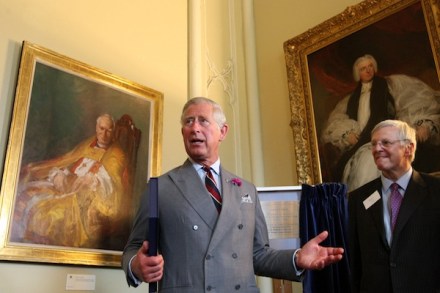
Three years ago, on an Ignatian retreat in Wales, two of the staff were taken ill — a priest and a kitchen maid, Maria. At Eucharist, we were given regular updates on the progress of the priest, but radio silence when it came to Maria. Inwardly furious, I raged at the inequality: ‘Who will look after the little guy?’ I thought. A rhetorical question to God is apt to bring about a practical answer, and I determined to change the course of my life, from working in finance to striving for regeneration in the deprived areas of the north-east of England. But to my great surprise I find myself occupied with bringing the Bishop’s Palace at Auckland Castle back to life.

Give – and you shall receive

From our UK edition

Does the banker deserve his bonus? Of course he doesn’t, but the problem is that the wrong sort of people point it out. The envious and the angry combine at shaking their fists at the super-wealthy; the politicians rehearse the arguments more in sorrow than anger. The rich are impervious to criticism from the unlucky outsider: opprobrium doesn’t work and it hardens them, closing the fist around their wealth. What cannot be said effectively in anger can nevertheless be said in love. The great calling to mankind is that we love one another, and it is in giving that we find its clearest expression. It is more blessed to give than to receive — and the reason is that ‘where your treasure is, there is your heart also’.

The global currency crisis is still to come

From our UK edition

Now that businessmen from Kazakhstan to California speak a single language, it’s perhaps not surprising that we endured a Babel of borrowing over the past ten years. And like all towers which reach too high, it fell — and great was the fall of it. So great, in fact, that the financial world was overwhelmed. The debris of dislocation and default rained down upon the fortress of the financial system, smashing it to matchwood. Shocking: but all, it seems, is not lost. With screeching tyres a jeep has come into view. Who’s that at the wheel? Why, it’s King Canute! And with him, Gordon Brown, Ben Bernanke, Hank Paulson and the Prime Minister of Iceland, together commanding that all will be well; all must be well.

The debt crisis is far from over

From our UK edition

There is a lot of borrowing around these days. How can we judge this? Last year, total securities issuance came in at $11.5 trillion, about 25 per cent of world GDP according to IMF estimates. This statistic is every bit as batty — and as true — as the tabloid headline in 1989 that the Japanese Imperial Palace in Tokyo was worth the same as California. The proximate cause of the unprecedented growth in debt was the interlocking but very different priorities of two empires at different stages of their development. China has needed to head off the social unrest brought about by the urbanisation of its population at a rate of 20 million a year. The United States’ priority is to burn incense at the altar of consumerism.