History

Russian Roulette, by Giles Milton – review

From our UK edition

Had Onan not spilled his seed upon the ground, he might have invented invisible ink. The possibility had not occurred to me until I read this account of the start of Britain’s intelligence services. Even then the implications seemed so startling as to be barely credible — that the entire trade in espionage, including the serried ranks of Cheltenham’s GCHQ, the massed battalions at Fort Meade’s National Security Agency, the MI5s, 6s and other shadowy digits, not to mention literature’s denizens, from Ashenden and Greenmantle to James Bond and George Smiley, owed its origin to solitary sex. Yet the source given on page 48 of Russian Roulette appears impeccable.

A Classless Society, by Alwyn W. Turner – review

From our UK edition

The title of Alwyn W. Turner’s book could deter readers. Even the Hollywood film The Secret Lives of Dentists promised more excitement. John Major sought the creation of a classless society in the 1990s. He confused this with equality of opportunity and social mobility. Efforts to engineer classlessness always end in tears. George Orwell was right: some animals are more equal than others — even in death. Orwell shares an Oxfordshire churchyard with Herbert Asquith. It was an insipid decade when managerialism triumphed over leadership. Ideas and intellectual rigour were kept in check, and institutions were repeatedly assaulted.

What might link Cleopatra, Augustus, Constantine, Barbarossa, Tamerlane and the Farnese?

From our UK edition

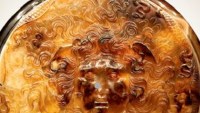
The stone called sardonyx looks a lot more fragile than it actually is. It’s luminous like glass, but hard like steel, which explains why so much of it has survived from ancient times. Fame being a relative word, one might describe Medusa’s Gaze: The Extraordinary Journey of the Tazza Farnese by Marina Belozerskaya as a biography of the most famous sardonyx object in the world, the Tazza Farnese, an ancient libation bowl made to hold offerings to the gods. At least one of the many people who inherited it aimed to change that function. Around the time Romanos II, son of Constantine VII, was ruler over Byzantium, someone drilled through its middle to transform it into a Christian chalice.

The Good Nurse, by Charles Graeber – review

From our UK edition

Charles Cullen, an American nurse, murdered several hundred patients by the administration in overdose of restricted drugs. Hospitals should be safe places but they are actually rather dangerous: mistakes are made, accidents happen, medics may be careless or just exhausted. But although many patients die when they should have recovered, very few die at the hands of a psychopathic serial killer — so far as we know. The trouble is, we often don’t know. There could be a Cullen working and murdering in a hospital near you. Look up ‘Healthcare professionals convicted of murdering patients’ on the internet and you find 39, and note the ‘convicted’. Many have merely been suspected but escaped conviction because of lack of evidence. Alarmist?

The Rainborowes, by Adrian Tinniswood – review

From our UK edition

Adrian Tinniswood, so gifted and spirited a communicator of serious history to a wide readership, here brings a number of themes from his previous books together. The Verneys recounted the individual experiences of 17th-century members of a leading Buckinghamshire family. The Rainborowes, set in the same period, applies the same technique to a less substantial family of Londoners. As in his study of the great fire of London in 1666, By Permission of Heaven, Tinniswood takes us into the daily life of the capital, though here his emphasis is on the suburban world of commercial enterprise and religious dissent from which the Rainborowes emerged. Tinniswood’s previous book, Pirates of Barbary, showed Europeans doing battle with the corsairs of the Mediterranean.

Final call for Propaganda: Power and Persuasion at the British Library

From our UK edition

For the first time in years, I thought of Tony Hancock. In the ‘Blood Donor’ episode of Hancock’s Half Hour, Hancock exits a doctors’ surgery singing the words ‘coughs and sneezes spread diseases, catch the germs in your handkerchief’ to the tune of Deutschland, Deutschland Ueber Alles. I have only seen this clip once or twice, but evidently it made a lasting impression because there it was, in my mind’s ear, on being confronted by a 1940s anti-flu poster at the British Library’s propaganda exhibition. Propaganda: Power and Persuasion features more persuasion than power. Goebbels and Uncle Sam are represented, but do not dominate. Indeed, the curators challenge the notion that propaganda is negative or a necessary evil when at war.

Amartya Sen interview: India must fulfil Tagore’s vision, not Gandhi’s

From our UK edition

Amartya Sen is Thomas W. Lamont University Professor and Professor of Economics and Philosophy at Harvard University. Sen’s previous books include: Development as Freedom; Rationality and Freedom; The Argumentative Indian; Identity and Violence, and The Idea of Justice. In 1998 Sen won the Nobel Prize in Economics. Much of the work done by the Indian economist has focused on poverty, specifically looking at developing new methods to predict and fight famines. His research also discusses ways to measure poverty, so that more effective social programs can be designed to prevent it. Sen has recently co-written a book with fellow economist, Jean Drèze, called An Uncertain Glory: India and its Contradictions.

The week in books – a 19th century career woman, the courtesan of the camellias, Vasily Grossman and why France is turning into the USA

From our UK edition

The forecast is bad. Football is back. Gloom strikes. Cure the malaise by reading the book reviews in this week’s Spectator. Here's a selection: Richard Davenport-Hines introduces the celebrated American novelist and businesswoman Willa Cather to a British audience: ‘Cather was a pioneering career woman who in the late 1890s supported herself as a magazine editor and then as newseditor at the Pittsburgh Leader — an unprecedented post for a woman. She was later a successful managing director ofMcClure’s Magazine. With her gumption and vitality, she was a stalwart among women facing the ‘rough-and-tumble’ of competitive work.

The Coronation Chair and the Stone of Scone, by Warwick Rodwell – review

From our UK edition

The Coronation Chair currently stands all spruced up, following last year’s conservation, under a crimson canopy, by the west entrance to Westminster Abbey. The sovereign has used this throne during the actual ceremony almost continuously since the coronation of Henry IV (1399). The oldest dated piece of English furniture (1297-1300) made by a known artist (Walter of Durham) to survive has been given the comprehensive study it deserves by Warwick Rodwell, with supplementary chapters on its most recent conservation by Marie Louise Sauerberg and its current display by Ptolemy Dean.

Anne Boleyn’s last secret

From our UK edition

With his wife, Anne Boleyn, in the Tower, Henry VIII considered every detail of her coming death, poring over plans for the scaffold. As he did so he made a unique decision. Anne, alone among all victims of the Tudors, was to be beheaded with a sword and not the traditional axe. The question that has, until now, remained unanswered is — why? Historians have suggested that Henry chose the sword because Anne had spent time in France, where the nobility were executed this way, or because it offered a more dignified end. But Henry did not care about Anne’s feelings. Anne was told she was to be beheaded on the morning of 18 May, and then kept waiting until noon before being told she was to die the next day.

Winston Churchill was a very human leader, says Churchill and Empire author Lawrence James

From our UK edition

More books have been written about Winston Churchill than perhaps any other figure in British history. Do we really need another volume added to the existing library? In Churchill and Empire, the historian Lawrence James makes a strong case for justifying another book for Churchillian bibliophiles. The narrative begins by looking back at Churchill’s career as a young army officer in the late nineteenth century, where he served in conflicts in India, South Africa and Sudan. It ends with Churchill’s slightly deluded view of Britain’s place in global politics as the Second World War is ending: when the British Empire is disintegrating and America is the most dominant superpower on the planet.

The week in books – Tudors, thinkers, dreamers and boozers

From our UK edition

The book reviews in this week’s issue of the Spectator is worth the cover price. Here is a selection of quotes from some of them. The historian Anne Somerset enjoys Leanda de Lisle’s ‘different perspective’ on the Tudor dynasty. She reminds us that these self-invented parvenus had ‘vile and barbarous’ origins. ‘When Henry VII’s surviving son inherited the throne as Henry VIII, he continued his father’s policy of judicially murdering anyone close enough to the throne to imperil the claims of his immediate family. Yet the dynasty’s future remained precarious, for Henry’s six marriages produced only a single male heir.

Tudor, by Leanda de Lisle – review

From our UK edition

As parvenus, the Tudors were unsurpassed. In the early 15th century no one would have predicted that within a couple of generations these minor Welsh land-owners would mount the English throne and rule the kingdom for more than 100 years. Notwithstanding their ‘vile and barbarous’ origins, their name would become synonymous with historical glamour and the ruthless exercise of regal power. The family started their precipitous ascent when young Owen Tudor was taken to England by his father and secured himself a position as a chamber servant to Henry V’s widow, Catherine de Valois. Having opportunely tripped and fallen into her lap while dancing, he secretly married her and had four children.

Sorry – the Vikings really were that bad

From our UK edition

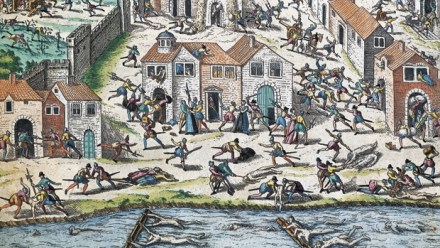
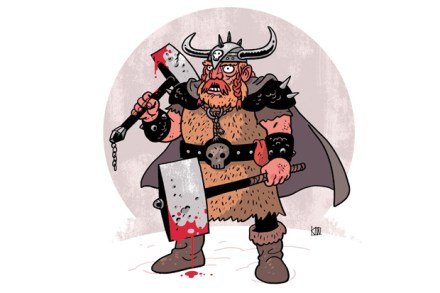
Sometimes the really obvious take on history turns out to be the right one. For generations, we all assumed that the atrocities perpetrated by the Germans in Belgium at the outset of the first world war and enthusiastically reported in the British press were Allied propaganda. Yet recent research suggests that quite a lot of it was true. Well, the same goes for the Vikings. For almost half a century, the academic line on Vikings has been that our old idea of them as raping, pillaging bastards who’d sack a monastery as soon as look at it was a childishly transparent bit of propaganda, perpetuated by Christian monks who were obviously biased against the pagan Northmen.

The Life and Death of the Spanish Republic, by Henry Buckley – review

From our UK edition

With Spain’s economic crisis in the forefront of global news, it would be fascinating to see what a reporter of Henry Buckley’s stature would have made of its current predicament. He was the Daily Telegraph’s man in Madrid from 1929, who for a decade furiously filed dispatches from all corners of the country as its young democracy sparked, and eventually burst into civil war — finding time to swap stories with Hemingway over whiskies in between. His eyewitness account of this conflict was never to see the light of day in book form after the London warehouse storing the copies awaiting distribution was bombed in 1940.

Island, by J. Edward Chamberlin – review

From our UK edition

‘Tom Island’ — that was the name I was given once by a girl I met on an island in the Tyrrhenian Sea. Of course, she broke my heart in due course. Turned out to be a lesbian, or so she claimed. But I liked the nickname, and as I think about it now, my life seems to be defined by islands of one sort or another (even putting aside England, which isn’t one). I live, at least part of the time, on the Greek island of Corfu. (It’s de rigueur, these days, for writers to ‘divide their time’ rather than be so dull as to live in just one place. I divide my time between Corfu and Chiswick.

Spectator event: An evening with Simon Schama on the history of the Jews

From our UK edition

There was a row earlier today when a leading figure in the EDL linked (inadvertently, he says) to a website of anti-Semitic sympathies. It is dispiriting that, more often than not, Judaism and Jewish people only receive mainstream media coverage when there is a public spat about anti-Semitism, for there is so much more to their history than persecution. As it happens, Simon Schama will be telling this, for want of a better phrase, “alternative history” in a BBC TV series this autumn. But readers of the Spectator don’t have to wait for the telly or the DVD because Schama will be giving us an exclusive talk at Cadogan Hall in London on Tuesday 17th September.

Gibraltar – 200 years of history in the Spectator

From our UK edition

The most dramatic part of Lothar-Günther Buchheim’s unmatched submarine novel, Das Boot, takes place beneath the Straits of Gibraltar, when Buchheim's U-boat is ordered from the Atlantic to the Mediterranean. ‘How can we get through?’ Asks one of the luckless crew, certain that Gibraltar’s massive defences will be the death of them. At least 9 U-boats were destroyed making that perilous run during the Second World War. The story of Gibraltar is not merely a tale of garrisons and gunships. The Spectator’s unique archive provides some insight into the life of the colony over the last 200 years, especially at times when the Rock became embroiled in Spanish intrigue or when it was threatened by Madrid’s aggression.