History

‘Unity at home and strength abroad’. Britain prepares for WW1 by postponing Irish home rule

From our UK edition

The outbreak of war between Austria-Hungary and Serbia in July 1914 forced British politicians to postpone the Amending Bill for Irish home rule. This was momentous because Nationalists and Unionists had been on the verge of civil war (see picture above) over the amendments, which concerned the exclusion of the six counties of Ulster. The Spectator noted, gravely, that a continental war appeared to be unavoidable, so the nation must pull together. ‘Unity at home and strength abroad,’ it demanded.

In Iraq, ancient Christianity lies in ruins. But who cares?

From our UK edition

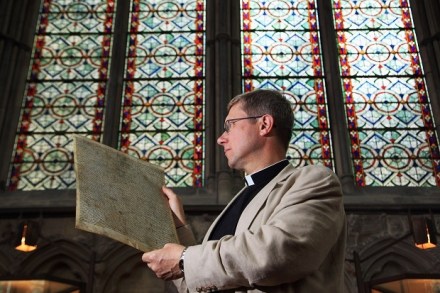
The Mar Behnam monastery outside Mosul, seized by ISIS just over a week ago, bears an inscription in the Turkic language of the Mongols who invaded Iraq in the 13th century. It asks for ‘the peace of Mar [Saint] Behnam to come down and rest on the Khan, his elders and his wives’. Why should Mongols revere Behnam, a convert to Christianity who was martyred by the region’s Zoroastrian ruler in the fourth century? The answer is that the Church of East to which Behnam converted had been the world’s greatest Christian Church. Its missionaries were firmly established in China by the seventh century. It was independent of both Rome and Byzantium, teaching that Christ’s human and divine natures were separate — a doctrine known as Nestorianism.

Michael Fallon marks century of Muslim service in British armed forces

From our UK edition

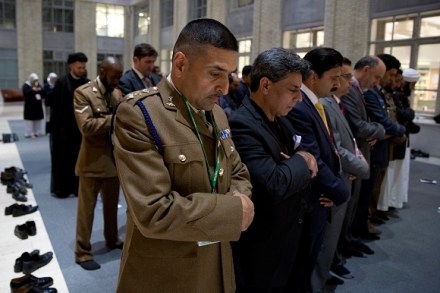
After nineteen hours without food, nor even a drop of water, the prospect of the single succulent date which breaks the fast looms ever larger in the mind as sunset nears. A few minutes after nine o’clock last night, similar scenes were doubtless playing out in mosques and Muslim homes around Britain. But this event was a little different. As the imam’s prayer rang out across the high ceilinged courtyard, many of those kneeling to pray were in khaki uniforms while others wore headscarves. The Ministry of Defence had invited Muslim soldiers and civic Muslim groups to break their Ramadan fast with a celebratory feast in the Whitehall citadel of the British defence establishment.

Why we’ll mostly be supporting Germany on Sunday

From our UK edition

If you’re walking through any built-up area in England between 8 and 10pm this Sunday and you hear a cheer you can be pretty sure it means one thing – Germany have scored yet again. One of the great myths we were fed as children in the 1980s and ‘90s was that the English don’t like the Germans, and in particular the living representatives of all things Teutonic on earth, the German national football team. We love ‘em, and I imagine most English people will be supporting Germany on Sunday. I remember being stuck in the countryside in 2006 and watching the Argentina-Germany quarter-final in a pub; the place went wild when Germany equalised and then won.

From jailbird to social butterfly – the return of Conrad Black

From our UK edition

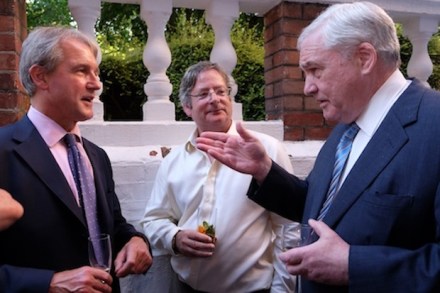
The former proprietor of this magazine, Conrad Black, is in London at the moment with his gorgeous wife Barbara, and I’ve got very bad news for those of his enemies who predicted that he’d be a social pariah when he got out of jail. At lunches, parties and dinners I’ve attended this week in his honour, he and Barbara have been feted by the leader of one of Britain’s largest political parties, a household-name supermodel, a former foreign policy adviser to a revered prime minister, members of the royal family, a senior industrialist, a former Commonwealth prime minister, a former British foreign secretary, several House of Lords colleagues of his and Britain’s most respected publisher, and that’s even before he arrives at the Speccie party this week.

How Napoleon won at Waterloo

From our UK edition

In a one-horse town called Hestrud, on the Franco-Belgian border, there’s a monument which encapsulates Europe’s enduring fascination with Napoleon. The story carved upon this plinth is more like poetry than reportage. As Napoleon passed through here, on his way to Waterloo, he struck up a conversation with a bold little boy called Cyprien Joseph Charlet. ‘You think victory will always follow you, but it always disappears,’ this audacious lad told him, apparently. ‘If I were you, I’d stay at home. Tomorrow your star will surely dim.’ Well, that’s the story, anyway. Fact or fiction, or a bit of both? In a way, it hardly matters.

Caught between Marx and a monster

From our UK edition

‘Curious to see Mrs Aveling addressing the enormous crowd, curious to see the eyes of the women fixed upon her as she spoke of the miseries of the dockers’ homes, pleasant to see her point her black-gloved finger at the oppression, and pleasant to hear the hearty cheer with which her speech was given.’ So Labour MP Robert Cunninghame Graham described Karl Marx’s youngest daughter, Eleanor, giving a speech to 100,000 demonstrators in Hyde Park at the height of the 1889 dock strike. ‘Brilliant, devoted and beautiful,’ agreed the trade union leader Ben Tillett. ‘During our great strike she worked unceasingly — a vivid and vital personality, with great force of character, courage and ability.

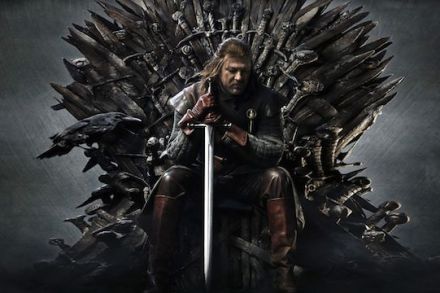
Looking for a Game of Thrones substitute? Vikings is the closest you’ll get – but it ain’t close

From our UK edition

Did you know that the 8th-century Kingdom of Northumbria was the epicentre of an international exotic reptile trade? I only discovered this myself from watching episode six of Vikings (History Channel, Tuesday) and being introduced to the snake-pit maintained by King Aelle. What particularly impressed me were not just the variety of pythons and boas at the bottom of the pit but also their excellent state of health.

The delicious return of Gin Lane

From our UK edition

In 1751, William Hogarth was asked to create two prints: one depicting the evils of gin, the other the virtues of beer. Hogarth must have received a pat on the back from the brewers who commissioned him, because ‘Gin Lane’ cast gin as the greatest of all evils. It ruined mothers, and caused starvation, insanity and suicide. In ‘Beer Street’, industry and commerce thrive — and everyone is a picture of health. Gin drinking did get severely out of hand in the 18th century. In one notorious case, a woman named Judith Dufour collected her two-year-old child from the workhouse, strangled him, dumped the body and sold his clothes for 1s 4d to buy gin (the detail from ‘Gin Lane’ above is Hogarth’s version of her).

Thug, rapist, poetic visionary: the contradictory Earl of Rochester

From our UK edition

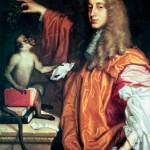
Despite being an earl, Rochester is very nearly a major poet. His poems and letters were torn up by a zealous mother after his death, bent on destroying anything obscene or scandalous. A good deal was lost, but a lot was passed from hand to hand, copied and recopied (it was never printed in Rochester’s lifetime). His full development as a poet cannot be traced, but some of what survives is tantalisingly rich, and has fascinated many subsequent writers. He is one of those rare poets who come to mean much more to later generations. ‘Upon Nothing’ bears a bleak relationship to the end of Pope’s ‘Dunciad’, and, very powerfully, to Hardy’s poem on the sinking of the Titanic, ‘The Convergence of the Twain’.

The bits of Magna Carta that David Cameron won’t want taught in schools

From our UK edition

The not-so-great charter David Cameron wants every child to be taught about Magna Carta. Some bits he might want to leave out: — ‘If one who has borrowed from the Jews any sum, great or small, die before that loan be repaid, the debt shall not bear interest while the heir is under age.’ — ‘No one shall be arrested or imprisoned upon the appeal of a woman, for the death of any other than her husband.’ Foul play Is there a correlation between bad behaviour from a country’s football team and violence in the country as a whole? WORST-BEHAVED TEAMS IN EUROPE Homicides per 100,000 people Ukraine 4.3 Romania 1.7 Croatia 1.2 Iceland 0.3 Bulgaria 1.

‘Britishness’ debate: can you do Magna Carta without also doing God?

From our UK edition

Was anyone terribly surprised by the Social Attitudes Survey published today suggesting that most people thought that, in order to be British, you should be able to speak English? Some 95 per cent thought so; the only curiosity being that in 2006 the figure was as low as 86 per cent. Nor indeed is it terribly odd that, as the authors point out, the threshold for Britishness is getting higher. As the survey from January points out, three in four people think immigration numbers should be reduced; the question of identity has to be seen in that context. One interesting aspect of the survey is the decrease in the numbers of people who think Christianity is an important component of Britishness – fewer than a quarter do so, down from 32 per cent in 1995 – or nearly a third.

Prepare for another year of our empty lives without Game of Thrones

From our UK edition

So farewell, then, Tywin Lannister, you truly were the people’s Hand of the King. But this being Game of Thrones, it was never going to last, and now you’ve been shot with a crossbow by your dwarf son while sitting on the toilet. Not how you envisioned it all ending, I imagine. The final episode of season 4 has left us bereft at the thought of another year to fill with our empty, meaningless lives; it saw Jon Snow going off to kill Mance Rayder, the rather likeable leader of the Wildlings, a suicide mission that would entail Snow breaking the rule of hospitality, which is especially sacred in Westeros (as it was in most of the ancient world from which George RR Martin drew his books).

The starchy, conservative lawyer who freed every slave in England

From our UK edition

Americans make movies about slavery and its abolition. In the past two years we’ve seen the Oscar-winning Twelve Years a Slave, based on a 19th-century slave narrative, and Django Unchained, with Christoph Waltz as a bounty-hunter who, uniquely among bounty-hunters of the period, did not make his living from capturing fugitive slaves. Spielberg’s Lincoln was about the Great Emancipator himself, as was the less historically rigorous Abraham Lincoln: Vampire Hunter. But the abolition of slavery in England has never received the same attention. Perhaps it is because abolition here came not through blood and glory, but through the common law; or perhaps because emancipation does not frame constitutional debates here in the same way it does in the States.

Why do so many of our MPs feel the need to write books?

From our UK edition

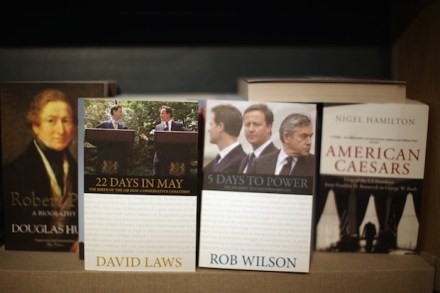
It sometimes feels like there is a never-ending flood of books written by politicians delivered to the Spectator offices. Almost every week a new one – or the invitation to a book launch of a new one – comes through the door. As I type, for example, I can see Fraser’s invitation to the launch of Tristram Hunt’s Ten Cities that Made an Empire (which Hunt was promoting on yesterday morning’s Start the Week), and a copy of Kwasi Kwarteng’s War and Gold on the bookshelf beside me. But what I want to know is, how do all these MPs have the time to write books, when they ought to be working for their constituents? Not that Kwasi or Tristram should have the blame focused on them.

I dread the thought of my children being taught ‘British values’

From our UK edition

I’ve been off the past week poncing around Rome in a frilly shirt, and so am naturally gloomy about coming home. Just to make it worse, I return to hear of the death of my childhood hero and news that schools are now going to be teaching ‘British values’, following the Birmingham Trojan Horse scandal. Many are shocked about what happened in the city. After all, who would have thought that importing millions of people from totally different cultures would cause so many problems? You’d literally have to be Nostradamus to see that one coming.

Three cheers for all those who fought fascism, from Cable Street to Berlin

From our UK edition

70 years have passed since, in the words of General Dwight D. Eisenhower, 'Allied naval forces, supported by strong air forces, began landing Allied armies on the northern coast of France.' Operation Overlord, or D-Day as the invasion is known to posterity, was astonishing in every sense; not least because weather conditions on 5/6th June 1944 were far from ideal to execute an amphibious landing against a well-entrenched enemy. Even military men were surprised by the comparatively light casualties (4,413 killed); many had anticipated a bloodbath. Major General Sir Frederick Barton Maurice (a retired soldier who later turned to teaching military history at the University of London) wrote in the Spectator at the end of August 1944: 'The campaign of Normandy is unique.

Tracey Emin’s knickers – a short history of contemporary British art

From our UK edition

Tracey Emin’s bed is to be sold at auction this summer with a guide price of £800,000 to £1.2 million, although the man who sold it to Charles Saatchi has said it’s priceless. Emin was part of the British art movement in the ‘90s that gave Richard Dorment trouble at dinner parties; this scene is an occupational hazard of being an art critic, he said. ‘The beautiful person I'm sitting next to has bluntly informed me that modern art is rubbish. We're only on the soup, and a long evening stretches ahead. Whether or not we round this dangerous corner depends on my neighbour's tone of voice, which can range from raw aggression to lively interest. If it is confrontation she is after, the rule is: change the subject as fast as possible.

Celebrating the death of smallpox – and a short history of vaccination

From our UK edition

The World Health Organisation is voting on whether to destroy the last few remaining samples of the smallpox virus. Smallpox is the only virus that affects humans that’s ever been eradicated, but it took nearly 200 years from the discovery of the smallpox vaccination in 1796 to eradication in 1979. In the 19th century the British government hesitated about bringing in mandatory vaccination, proposing an amendment to the law that would make allowances for conscientious objectors. The Spectator thought that was a terrible idea. ‘Because these people have the sincerity to sacrifice their own children, we are to let them spread the disease everywhere.

Yorkshire village bans Nazis. Why didn’t Neville Chamberlain think of that?

From our UK edition

D-Day would have been effected with far less trouble if, at the time, we had insisted on the same rules that pertain in Haworth’s annual commemoration of the event. The Yorkshire village holds what is now called a “1940s Weekend” – don’t mention the war – and people who wear Nazi uniforms, or the SS insignia, have been told that they are not welcome. This is because the uniforms “give offence”. Previously, people turned up dressed as Nazi soldiers and others as allied soldiers – much as actually happened the first time the event was staged, on the beaches of Normandy in 1944. But some people complained about the uniforms and so signs have gone up all around the town telling them they’re not welcome.