History

The Krays, Dennis Nilsen – and Chris Grayling: a conversation with Sir Ivan Lawrence QC

From our UK edition

I’m standing with Sir Ivan Lawrence QC in a narrow room at his Pump Court chambers, examining an oil painting sent to him from Broadmoor by his former client the late Ronnie Kray. It is a naive depiction of a house in a field which could, at first glance, be the work of a worryingly forceful five-year-old. Yet what it lacks in finesse it makes up for in emphasis: the signature ‘R Kray’ is daubed in thumping capitals. Sir Ivan defended Kray in his 1969 murder trial over the killing of George Cornell in the Blind Beggar pub in Whitechapel. Cornell, a member of the rival Richardson gang, had reportedly called Ronnie ‘a fat poofter’. Although Ronnie was duly convicted and sentenced to life, he retained respect for his counsel.

This Winter Journey goes far beyond expectation

From our UK edition

You can tell a lot about a book from its bibliography. It’s the non-fiction equivalent of skipping to the final page of a novel. Turn to the end of Ian Bostridge’s Schubert’s Winter Journey — a study of the composer’s celebrated song cycle Winterreise — and you’ll find monographs on ornithology, weeping as a cultural phenomenon and wood sculpture in Renaissance Germany, essays on Samuel Beckett and the history of the mail coach, and the rather forbidding ‘Regulation of floral organ abscission in Arabidopsis thaliana’. Intrigued? Who wouldn’t be? As academic disciplines go, musicology was a slow starter.

Elizabeth is about to become Britain’s longest-reigning queen. Here’s how she’s changed monarchy

From our UK edition

On 24 September 1896 Queen Victoria was given a present of a paper knife, and expressed herself ‘much delighted’. The handle was set with overlapping gold coins each bearing the portrait of a British monarch. The uppermost coin bore an image of Victoria herself; the one beneath it, that of her grandfather George III. As Victoria recorded in her journal, 23 September 1896 was ‘the day on which I have reigned longer, by a day, than any English sovereign’. She had exceeded George III’s record of 21,644 days on the throne and, unlike her grandfather, remained of sound mind (if you overlook her taste in interior decoration and her views on women’s rights).

Game of thrones: five kings spanning five centuries launch a new series on royalty

From our UK edition

It is a strange paradox of our egalitarian age that a progressive publisher like Penguin should commission — at considerable expense, since the series editor Simon Winder has netted some top academic authors — brief lives of all 44 English, and later British, monarchs, from Athelstan to his distant descendent, our own Queen Elizabeth. The 45th book in the series is devoted to our sole non-royal ruler, Oliver Cromwell. The biographies — each costing £10.99 — though not exactly ‘potted’, are necessarily squeezed by space — none is longer than 150 pages — into extended essays that can be comfortably devoured in a couple of hours; ideal for a railway journey or a short-haul flight in our cash-rich, time-poor era.

Bob Dylan and the illusion of modern times

From our UK edition

I was talking the other day to a young woman who knows a lot about the history of rock. We shared an enthusiasm for Bob Dylan’s later work — especially Blood on the Tracks (1975). As we talked, it occurred to me that Dylan recorded this ‘late’ effort 40 years ago, only 13 years into his career. So why do we treat it as belonging more to our time than, say, his folk ballads from the early 1960s? Some baby-boomer journalist must have decided around 1970 that something Dylan did in 1965 or 1966 — maybe his switch to electric instruments or his motorcycle accident — marked a critical break in history. We stupidly accept this view of things: Dylan is now in his sixth decade as a symbol of American youth. But time does keep moving on.

The Queen’s achievement

From our UK edition

There will be much reason to celebrate Her Majesty the Queen becoming the longest-reigning monarch in British history. Although it has been well over a century since monarchs have had regular, direct, significant influence on political decision-making in Britain, the influence the Queen has on the tone, values and sense of identity of the nation is still profound. And even politically she can make subterranean waves if she wants; her enjoining of the Scots to ‘think very carefully’ before casting their ballots in the independence referendum was taken as implying that she was opposed to it. (Rightly, it seemed, when David Cameron’s remark about her ‘purring’ with satisfaction at the result was picked up by a stray microphone.

When a cricket ball cost Britain an heir to the throne

From our UK edition

A fatal shot The sad death of Australian batsman Philip Hughes was a reminder that a cricket ball can kill. A blow on the cricket field may even have cost us an heir to the throne. — One of the earliest suspected victims was Frederick, Prince of Wales, the son of George II, who is first recorded as having played cricket in 1733 when he put up a team against Sir William Gage, in a match played on Mouley Hurst, Surrey. — In 1751, a few weeks after his 44th birthday, he was said to be suffering from an abscess in the chest caused by a blow by a cricket ball, or possibly a real tennis ball. He then caught a chill and developed pleurisy. He died on 31 March after the abscess burst.

What makes mankind behave so atrociously? Ian Buruma and Joanna Bourke investigate

From our UK edition

The first interaction between two men recorded in the Bible involves a murder. In the earliest classic of English literature, one of the murderer’s descendants has his arm ripped from its socket by a young warrior who celebrates his gruesome victory by drinking himself blotto; the next day, our hero wakes up (not hungover, apparently) and kills his opponent’s mother. Not my cup of tea, Beowulf, or, perhaps, yours. But this is what literature was like until the 18th century or so, when the stakes were lowered and people began writing about inheritances, bishoprics and low-key adultery.

Is France now the sick man of Europe? It is if it’s taking Eric Zemmour seriously

From our UK edition

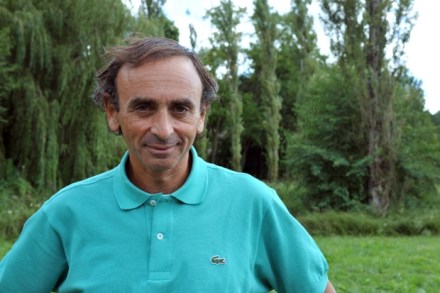
For the Figaro journalist and TV commentator Eric Zemmour, whose Le Suicide français has been topping the bestseller lists in France, France is ‘the sick man of Europe’. The land of liberty was once admired by the whole world. Then came May ’68, feminism, immigration, consumerism and homosexuality. On the surface, nothing has changed; espressos are still being plonked down on zinc counters, and ‘the legs of Parisian women still turn heads’. But ‘the soul has gone’. Gays and Muslims are taking over, and France is ‘dissolving in the icy waters of individualism and self-hatred’. The blurb calls Le Suicide français an ‘analyse’, but there is nothing analytical about it.

Ever wondered what Joan of Arc’s breasts were like? Wonder no more

From our UK edition

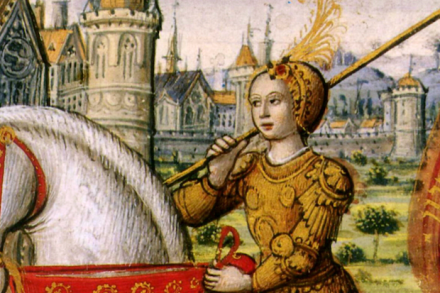
Just as she arrived a bit late to the Hundred Years War – about three quarters of the way through – Joan of Arc takes a while to appear in historian Helen Castor's biography. In fact she only turns up, with a small band of men, on page 86 in Chinon, the bolt hole of the king, when he’s apparently on the verge of quitting France because it had all got too much. Given that he was originally third in line, had been in opposition to his slightly simple father, Charles VI, le bien-aimé, and was now fighting his mother, Henry V of England, as well as the Burgundians who had had control of Paris since 1418, it’s hardly surprising that he’d had enough.

Spectator letters: Mindfulness, addiction, and dinner with Richard Nixon

From our UK edition

Mind games Sir: I hope that people are not unduly put off by Melanie McDonagh’s misrepresentation of mindfulness as a cop-out for navel-gazers who lack the moral fibre to engage in ‘proper’ religion (‘The cult of mindfulness’, 1 November). She describes it as a ‘practice of self-obsession’, but it is the opposite: it creates a space in which the self can be seen for what it is as it hops around, generating superfluous judgments. You begin to obsess less about what your ‘self’ compulsively comes up with, and to approach life from a more anchored perspective. May I invite those who think that sounds bogus and flaky to engage in a short experiment?

Should ‘suicide’ mean pig-killing?

From our UK edition

There was a marvellous man in Shakespeare’s day known as John Smyth the Sebaptist. ‘In an act so deeply shocking as to be denied by Baptist historians for two and a half centuries,’ Stephen Wright, the expert on separatist clergy wrote, ‘he rebaptised first himself and then his followers, and set out his new views in The Character of the Beast (1610).’ His former confederate Richard Bernard fired a counterblast in that year showing (to his own satisfaction) that ‘the Church of England is Apostolicall, the Separation Schismaticall’. Reading a word like sebaptist we take the prefix se- to indicate a reflexive act, a self-baptism, as we would if reading French or Spanish. But that is not how ancient Romans used se-.

What went so wrong for Vaclav Havel?

From our UK edition

The unforgettable moment a quarter of a century ago when the Berlin Wall came down was the most vivid drama in that dizzying year of revolutions in 1989 when the Soviet empire fell to its knees. But another event a month later and 250 miles away in Prague was equally poignant. As the playwright/philosopher Václav Havel was sworn in as president of Czechoslovakia and declared in one of the most moving speeches I have heard, ‘Citizens, your government has returned to you’, it was clear that if history hadn’t exactly come to an end, the world had changed utterly. In his own country Havel’s reputation has nosedived since those giddy days, though it flickered briefly after his death two years ago.

Blue Note’s 75 years of hot jazz

From our UK edition

This is a big book, a monumental text with 800 illustrations, 400 of them in colour, to be contemplated more easily on a lectern than in bed, celebrating the 75-year history of the greatest record company devoted solely to the variegated music called jazz. Blue Note Records, with headquarters in Manhattan, originated in the romantic imagination of a privileged adolescent, a Jewish architect’s son (the Jewishness was significant), who was born and brought up in Christopher Isherwood’s neighbourhood in Berlin, which regarded itself, with justification, as Europe’s capital of jazz in the hedonistic heyday of the Weimar republic. Alfred Lion precociously consorted with the city’s artists, musicians and all-round bohemian intellectuals.

The idiot diet – nonsense vs common sense in ‘Paleo’ nutrition

From our UK edition

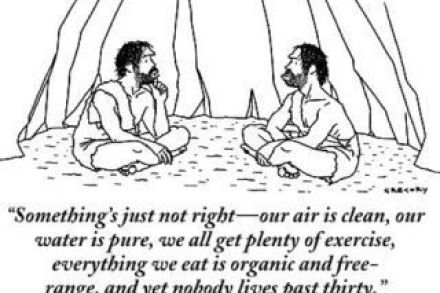
Looking for real power? Get a jump-start on the future of global fuel at The Spectator's energy conference on 1 December. Tickets are still available here. There's a great New Yorker cartoon - two cavemen, sitting in a cave, looking suitably homo habilis or something, all sloping foreheads and protruding jaw. The caption reads: 'Something's just not right - our air is clean, our water is pure, we all get plenty of exercise, everything we eat is organic and free-range, and yet nobody lives past thirty.' I think of it whenever someone trots out a living-close-to-the-soil, modern-lives-are-killing-us mantra about how we should stop eating cooked food or only wear natural fibres or whatever.

Liberate women…from the rotten dictatorial group-think of ‘feminism’

From our UK edition

Good on David Cameron for refusing to wear that hideous T-shirt. Feminists these days spend an awful lot of time telling people what to think and what to wear. It’s easy to forget the heady days of feminism’s innocence, when it lobbied for freedom, the freedom for women to operate telegraphs, for example. The deft fingers of women were to set in action the wires of the telegraph with as much swift dexterity as they do those of the piano. They were to write messages about iron and steel and stocks and shares with the same easy celerity that they corresponded about the last new ribbon or baby's first tooth.

Save Isis (the dog on Downton Abbey… not the terrorists in Iraq and Syria)

From our UK edition

Downton Abbey fans are on high alert that something drastic might be about to happen to the loyal labrador of the house, 'Isis'. On this week's episode she was pointed out as looking ‘terribly listless’, with Lord Grantham subsequently agreeing to have the vet check her out. Surely this can’t have anything to do with her name? After all, it would be slightly unfair for poor old Isis to suffer simply because of a misfortune of nomenclature. What has she ever done to deserve an untimely death, save follow Lord Grantham devotedly around Downton? Isis’s predecessor was, after all, named Pharoah, so she continues the pyramidic scheme.

What are 16-year-olds supposed to learn by making posters?

From our UK edition

My niece, Lara, 15, has a mind like a surgical blade. On any subject, from calculus to The X Factor, she finds the heart of the issue and dissects it with alarming ease. Lara makes mincemeat of homework, trailing A grades, which is why it was so odd to find her stumped two weeks ago. The trouble was with her English language GCSE. As part of her coursework (controlled assessment) she had to comment on a pamphlet, produced by a charity, about volunteering. On the cover of the pamphlet was a slogan in a pink circle, and Lara’s dilemma was this. She said: I’ll get points if I write that the circle symbolises something, an unbroken ring of trust, or the fullness of life. But I mean, the truth is, someone at the charity just chose a circle at random, didn’t they? So what should I say?

Bourbon from Bush, envy from Nixon… and running into Herbert Hoover: encounters with eight presidents

From our UK edition

I feel a bit of a fraud writing about the ‘presidents I knew’, since journalists do not really get to know the great figures they interview or shake hands with. Indeed the relationship between journalist and great personage is about as false as any relationship can be, since each is trying to make use of the other. So in all likelihood my dreamed relationship with President Herbert Hoover — which began and ended in 1933 when I was aged 11 and only lasted for about a minute — came nearer to being a genuine human relationship than all the other journalistic ones later — which included Harry Truman, Dwight Eisenhower, Jack Kennedy, Richard Nixon, LBJ, Ronald Reagan and George H.W. Bush. Quite a mouthful. My Hoover story — to the best of my childish memory — happened like this.

Keep calm and address Ebola: a brief history of pandemics at The Spectator

From our UK edition

Ebola clinics in many parts of West Africa are full, so more and more people are being told to stay at home and take Paracetamol and fluids if they become infected. It means if someone in your family gets Ebola, you all have to stay in the house, which is effectively a death sentence. At the moment, the disease is killing 70 per cent of the people it infects, but that’s likely to go up. People who need other medical treatment can’t get it, and in Sierra Leone 40 per cent of farmland has been abandoned. Western governments are building secure military encampments for health workers, fearing civil unrest and angry mobs. In 1898, there were plague riots in India after authorities brought in sanitary measures, including quarantine camps.