History

Woke history is making big inroads in America’s high schools

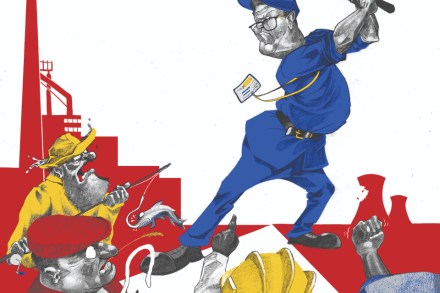
Like growing numbers of public high school students across the country, many California kids are receiving classroom instruction in how race, class, gender, sexuality and citizenship status are tools of oppression, power and privilege. They are taught about colonialism, state violence, racism, intergenerational trauma, heteropatriarchy and the common thread that links them: 'whiteness'. Students are then graded on how well they apply these concepts in writing assignments, performances and community organizing projects. At Santa Monica High School, for example, students organize and carry out 'a systematized campaign' for social justice that can take the form of a protest, a leaflet, a workshop, play or research project.

woke history

Will history survive?

The news that the University of Notre Dame, responding to complaints by some students, would ‘shroud’ its 12 134-year-old murals depicting Christopher Columbus was disappointing. It was not surprising, however, to anyone who has been paying attention to the widespread attack on America’s past wherever social justice warriors congregate. Notre Dame may not be particularly friendly to its Catholic heritage, but its president, the Rev. John Jenkins, turned jesuitical when queried about the censorship. He said, apparently without irony, that his decision to cover the murals was not intended to conceal anything, but rather to tell ‘the full story’ of Columbus’s activities.

history

A date with Venus in Tahiti

There is something about the Transit of Venus that touches the imagination in ways that are not all to do with astronomy. The last Transit occurred in 2012, and if nobody who watched it will ever see another, the sight of that small black dot, making its almost imperceptible progress across the disc of the sun, offered, across the span of 243 years, an oddly moving connection with the scientists and sailors who quartered the globe and, sometimes, risked their lives in 1769 to attempt the first comprehensive observations of the event. There is no shortage any more of ‘global events’ — a good, old fashioned footballing brawl between England and Colombia will stop the planet — but in the more localised world of the 18th century it was another matter.

endeavour

The artist who breathes Technicolor life into historic photographs

There is something of The Wizard of Oz about Marina Amaral’s photographs. She whisks us from black-and-white Kansas to shimmering Technicolor Oz. When Howard Carter leans over Tutankhamun’s open sarcophagus (1922), he does so in the glare of pharaonic gold. A photograph of fallen American soldiers on the Gettysburg battlefield (1863) shocks the more when we see the colour of the blood soaking through shirts. The Javanese dancers who performed at the Exposition Universelle in Paris (1889) are gorgeous in madder pinks, jades and golds.

Russia’s obsession with securing a warm-water port changed the history of Central Asia

In the 13th century, having overrun and terrorised Europe as far as Budapest, and in the process possibly bringing with them the flea which caused the Black Death, the heirs to Genghis Khan and the Golden Horde had also conquered territory to the east as far as the Korean peninsular. The assiduous Swiss scholar and explorer Christoph Baumer chronicles the ensuing sagas of the remaining individual khanates in great detail. But by the 16th century it is clear that although a few pockets still flourished, producing impressive buildings and works of art, these erstwhile mighty nomadic clans had sunk to a point where they had disappeared from the consciousness of the outside world.