History

George Osborne’s midlife crisis

From our UK edition

There should be a term in anthropology for what happens to a certain type of Tory male in middle age. The type who after decades of espousing often unpopular causes suddenly attempts to ingratiate himself with the masses. Ordinarily this breakdown expresses itself in a desire to legalise drugs, but it can take other forms. If you become the chairman of the British Museum, there is one rather obvious way to try to please people Anyway, the moment that George Osborne was made chairman of the British Museum I expected what has come to pass. Osborne has long been a prime candidate for a Tory midlife crisis. He always had too much of the ‘pleaser’ about his personality, despite not being remotely pleasing.

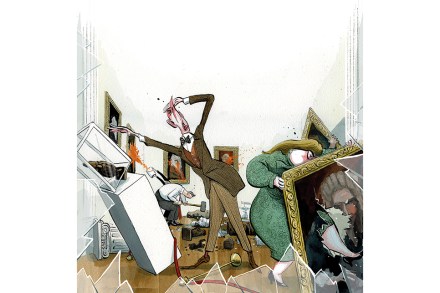
Our great art institutions have reduced British history to a scrapheap of shame

From our UK edition

Let’s indulge in some identity politics for a second: I am from Hong Kong, born as a subject of the last major colony of the British Empire, minority-ethnic, descended from Chinese refugees, now living here in exile. This summer, both the National Portrait Gallery and Tate Britain are presenting new displays that are meant to reflect the ‘inclusive’ and ‘diverse’ identities of Britain. Supposedly, I fit nicely among their target audience. In reality, as an immigrant looking to be included in this nation, I am perplexed by my visits.

The atomic bomb saved Japanese lives, too

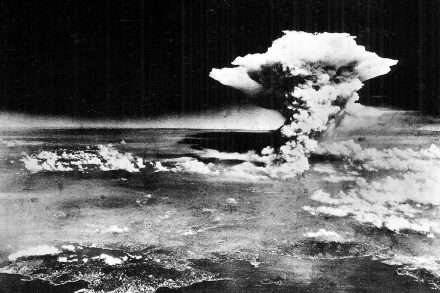
It’s August 6, which means that it is the anniversary of the atomic bombing of Hiroshima.   Every year at this time there are a spate of articles about that horrific event. Some of the articles are condemnatory; some hand-wringing; some are defiantly supportive.  This year, the recent release of Christopher Nolan’s new movie about J. Robert Oppenheimer and the making of the atomic bomb has given the controversy over the development and deployment of that awesome weapon a new urgency.   Something else that has contributed to the fraught atmosphere is the war in Ukraine. After all, one side in that conflict, Russia, controls the world’s largest arsenal of nuclear weapons, more than 6,000 warheads. My friend Roger L.

hiroshima atomic bomb japanese

The rise of conspiracy history

From our UK edition

Readers would doubtless find it hard to believe that the late Queen and the Duke of Edinburgh kidnapped and killed indigenous children while on a state visit to Canada in 1964. Yet this story circulated for years in Canada along with other horror stories of the rape, torture and murder of indigenous children at the hands of depraved priests and nuns. The bodies, it was said, were thrown into furnaces or secretly buried at dead of night. These accusations were linked to boarding schools run by various religious bodies first established in the 19th century and finally closed in the 1990s. A Truth and Reconciliation Commission was set up in 2008, and millions of dollars were given by the government to search for clandestine mass graves. None was found.

Roman politicians were the ultimate gossips

From our UK edition

The ancients were as fascinated by rumour as, to judge by recent events in Russia and the BBC, we are. Homer called rumour ‘the messenger of Zeus’, with a fondness for racing through crowds. Virgil described it as a winged monster, with an unsleeping eye under every feather, a mouth and tongue never silent and an ear always pricked, combining truth with lies and distortions. Ovid saw it as a sort of clearing-house ‘from which the whole world is in view’ – a structure of echoing brass, with thousands of entrances and exits, echoing back, and so increasing the volume of, the ‘murmured whisperings’ it picked up. Roman politicians were well aware that rumour was an important force in creating public opinion.

Milan Kundera’s ‘transcendental buffoonery’

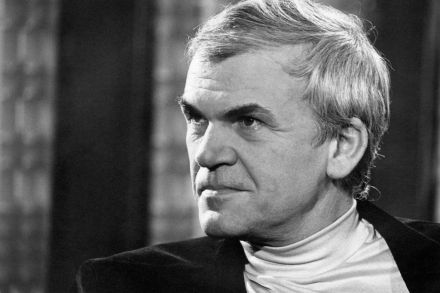
I was just leaving France when I got the news that that the Czech novelist Milan Kundera had died, aged ninety-four. He had emigrated to Paris in 1975, when he was forty-six, a refugee from the crackdown in Prague following the Russian obliteration of the Prague Spring in 1968. He died in his adopted city on July 11, full of honors but also, or so it seems to me, largely forgotten.  I had not been following Kundera’s work for many years. But there was a moment, in the 1980s, when he was the talk of the posh, intellectual literary town. I wrote a longish essay about him for the New Criterion in 1986. I draw on that work here.  Kundera was in his late thirties when he published his first novel, The Joke, in Prague in 1967.

milan kundera

Ancient lessons in oracy

From our UK edition

It is encouraging to see Sir Keir Starmer taking a leaf out of the ancients’ book by putting oracy (from Latin orator) on the curriculum. Indeed, on the ancient curriculum, there was little else of such importance. State education did not exist. It was an entirely private operation, designed to supply the elite with the skills necessary to win arguments in political and legal forums. (They alone had the time for such an activity; our ‘school’ derives from scholê, the Greek for ‘leisure’). It began with the young relentlessly analysing language in minute technical detail, e.g.

What, if anything, have dictators over the centuries had in common?

From our UK edition

Big Caesars and Little Caesars is an entertaining jumble with no obvious beginning, middle, end, or indeed argument. But there is an intriguing book buried underneath it which asks more or less this: where does Boris Johnson stand in the historical procession of would-be strongmen or, as Ferdinand Mount calls them, ‘Caesars’? How successful was Johnson’s attempt – overshadowed by the Brexit noise, his personal scandals and his Bertie Wooster act – to turn Britain into a more authoritarian state? Even when Caesars are kicked out, they weaken a country’s institutions Mount, now 84, comes at this from a long Tory past that in recent years he has seemed to disown.

John F. Kennedy’s trip worth remembering

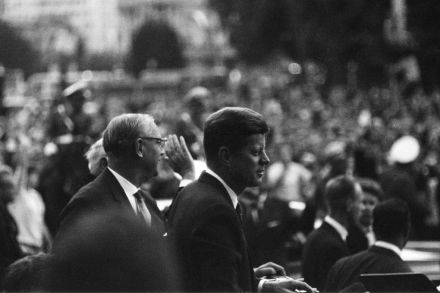
Sloppy Joe Biden may face strong political headwinds with just seven months to go before the first presidential primary, but at least he’s in good company. Assessing the Washington landscape in mid-June 1963, when John F. Kennedy set off on a European tour designed to bolster not only the NATO alliance but his own poll numbers, the British ambassador David Ormsby-Gore cabled back to London: He will be leaving behind a disquieting domestic situation, [with] economic troubles to the fore... The Negro leaders are beginning to talk about large scale civil disobedience on a nation-wide basis... Moreover, the racial crisis is causing new difficulties for [Kennedy’s] legislative program...

Kennedy in Berlin
test scores

Why civics test scores are falling in American schools

Twenty years ago, one of the most popular bits on late-night television was “Jaywalking,” where Tonight Show host Jay Leno quizzed passersby on world events, geography, history and more. He would ask random people on the street about literature, who the vice president was, or who we fought in World War Two. The clips that made the cut inevitably involved embarrassingly ignorant answers. Today, America is a nation of Jaywalking Allstars; whereas it was once a punchline for someone to be that ignorant, ignorance is now the norm. In early May, news emerged about record low scores for history and civics for eighth grade students nationwide.

Jeremy Clarke would have felt at home in Pompeii

From our UK edition

Classical literature has the reputation of being pretty serious stuff, far removed from the world that Jeremy Clarke inhabited. But he would have felt perfectly at home in Pompeii. Take the conversation decorating the grave monument of the bar-owners Lucius Calidius Eroticus and Fannia Voluptas (beat that, Frankie Howerd!): ‘Innkeeper! The bill!’ ‘You’ve had a sextarius of wine, and bread: one as. Relish, two asses.’ ‘Right.’ ‘The girl, eight asses.’ ‘Right.’ ‘Hay for the mule, two asses.’ ‘That mule – it’ll be the ruin of me.’ Jeremy would also surely have admired the lifestyle and works of the scandalous author Petronius, whom the historian Tacitus described as follows: ‘He slept during the day and spent the nights in business and pleasure.

Netflix’s Queen Cleopatra girlbosses against historical fact

The most controversial aspect of Netflix’s new drama-documentary Queen Cleopatra — not least in Egypt — was the casting of a black actress, Adele James, in the title role. After all, one of the few things that seems certain about Cleopatra’s early life is that she was a Macedonian Greek. Luckily, though, the show had a powerful counterargument to this awkward and Eurocentric fact. As the African-American professor Shelley P. Haley put it with a QED-style flourish, back when she was girl, her beloved (if uneducated) grandmother once said to her: "I don’t care what they tell you in school, Cleopatra was black.

queen cleopatra netflix

King Charles and the implications of oaths

From our UK edition

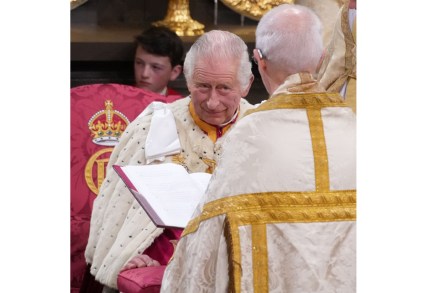
After much debate it was decided that the people would not be ordered to reciprocate the King’s oath of allegiance. This was wise. As ancient Greeks knew, oaths have serious implications. For them, to take an oath was in effect ‘to invoke powers greater than oneself to uphold the truth of a declaration, by putting a curse upon oneself if it was false’. The Trojan war – the subject of the West’s first work of literature – happened only because Tyndareos, stepfather of Helen, compelled all her Greek suitors, on oath, to go to war on anyone who seduced her from her husband – which the Trojan Paris proceeded to do. Betraying that oath (Achilles was too young to swear it) would have meant divine punishment in the future. But the practice was open to abuse.

What happens when coronations go awry

From our UK edition

Despite weeks of preparation and rehearsal, coronations don’t always go according to plan. Indeed, a botched coronation or one plagued by misfortune can be taken by the superstitious as a poor augury for coming reigns – sometimes justifiably. Case in point: the celebrations of Tsar Nicholas II and Alexandra Feodorovna in Moscow’s Dormition Cathedral on 14 May 1896. While the hours-long ceremony for the last Tsar and Tsarina went off without a hitch, the following national holiday and public feast in Khodynka Field led to a stampede where at least 1,300 died and 1,300 more were left with serious injuries. The cause?

For sale: Jane Austen’s birthplace

From our UK edition

‘There is nothing like staying at home for real comfort,’ wrote the eminently quotable Jane Austen in Emma, in 1815. ‘Nobody can be more devoted to home than I am.’   If the incomparable Regency writer and social critic could see Steventon House, on the site of her birthplace and childhood home in Hampshire, she would doubtless approve. Although it’s not quite on the scale of the manicured estates that feature so largely in her property-obsessed novels, the Grade II listed 1820s home is all Georgian elegance, with 7,000 sq ft of living space, beautifully proportioned high-ceilinged receptions and fine period features including decorative fireplaces, cornicing, and working shutters.

The legacy of Chaim Topol

From our UK edition

In 1969, for my seventh birthday, I was taken – dragged, probably – ‘up west’ to the theatre to see a musical. As I recall, it didn’t fill me with joy to be going, but it turned out to be fantastic. The songs, the acting, the dancing: it was great fun. Then we went for pasta in Soho, which was also a special event in those days. More importantly, though, I think it was the first time I became truly aware of a vital part of my identity: that I was here because decades earlier my great-grandfather had arrived on these shores, driven out of his native Russia by a pogrom, the ethnic cleansing of Jews across that vast country.

The difficulties of writing historical fiction

I was dozing, a little hungover, on the morning flight from Prague to London, when I saw them for the first time. Ten men on a beach, dragging a landing craft up the sands. Where? Can’t tell yet. When? The fourteenth century. Who? Don’t know, but they look like trouble. I woke up. Through my AirPods I heard the Blur singer Damon Albarn growling the final song from their 1997 album Blur. “In these towns, the English army grinds their teeth into glass / You know you’ll get a kicking tonight...” I opened my laptop and started making notes. The men came surprisingly well-formed. They were soldiers of fortune in the Hundred Years’ War. They already had names. Faces. Talents. Foibles. Yearnings. Secrets. I wrote down as much as they could tell me before the plane landed.

historical fiction

The dangerous myth-making in the Banshees of Inisherin

From our UK edition

I never made it to the end of Martin McDonagh’s The Banshees of Inisherin, which won four Baftas on Sunday and has been tipped for further success at the Oscars next month. Inisherin is a fictional place that apparently translates as 'Island Ireland'. I know it’s probably churlish of me, but, being Irish, I was turned off by the film’s maudlin sentimentality mixed with self-obsession, self-harm, child abuse, wanton violence, dead pets and suicidal ideation. It bothered me that the film trotted out as many Oirish stereotypes as were in Gone With the Wind, released in 1939. Let me list some of the most obvious of these at the outset.

How the British saved India’s classical history

From our UK edition

In India, a generation has been brought up on the academic Edward Said’s unhistorical prejudices towards the British and what he called the ‘colonial gaze’. In his eyes, British Orientalists were guilty of what is now termed ‘cultural appropriation’.  To his followers it therefore may come as a surprise to learn that it was British Orientalists who in fact rediscovered India’s classical history and heritage and made it available to the rest of the world.  Sir William Jones, a brilliant polymath, contributed more than any other individual to India’s national renaissance. Alongside his day job as a judge in Calcutta, Jones mastered Sanskrit, translated Indian classics and used it to unlock the glories of India’s long forgotten Hindu and Buddhist past.

Is this Britain’s most historic house?

From our UK edition

Hyperbole in estate agents’ brochures isn’t unusual – but when it comes to a write-up for Great Tangley Manor, which has gone on the market for £8.95 million, overkill is almost impossible. Believed to be the UK’s oldest continuously inhabited property – its Saxon foundations date from 1016 – the Grade I-listed moated manor house, in the village of Wonersh in the Surrey Hills Area of Outstanding Natural Beauty, comes with an extraordinary roll call of associated famous names. From the spheres of royalty, art, literature, garden design and even America’s Gilded Age, all have played their part in shaping secluded Great Tangley into a country house with a compelling story.