History

The difficulties of writing historical fiction

I was dozing, a little hungover, on the morning flight from Prague to London, when I saw them for the first time. Ten men on a beach, dragging a landing craft up the sands. Where? Can’t tell yet. When? The fourteenth century. Who? Don’t know, but they look like trouble. I woke up. Through my AirPods I heard the Blur singer Damon Albarn growling the final song from their 1997 album Blur. “In these towns, the English army grinds their teeth into glass / You know you’ll get a kicking tonight...” I opened my laptop and started making notes. The men came surprisingly well-formed. They were soldiers of fortune in the Hundred Years’ War. They already had names. Faces. Talents. Foibles. Yearnings. Secrets. I wrote down as much as they could tell me before the plane landed.

historical fiction

Titanic was the original White Lotus

When James Cameron’s Titanic sailed into US theaters twenty-five years ago, smashing box office records in the process, it subversively made the argument that the villain in the film was not the iceberg, but its first-class passengers. While it wasn't a satire like The White Lotus, Cameron's film feels like one of the pioneers of the over-the-top "eat the rich" criticism that produced the viral "send them to White Lotus" memes. One of those memes should have included the cartoonishly repellent Cal Hockley, played perfectly by Billy Zane — the epitome of bourgeois arrogance.

titanic

Ancient Apocalypse and the end of history programs

For those with a love of history who remember what the History Channel once was, its current state is a travesty. What was once populated with interesting documentaries is now home to Ancient Aliens and Swamp People. Despite the channel being quite literally called the History Channel, history was not bringing in the dough. Now Netflix is joining the party. In early November 2022, the streaming platform released Graham Hancock’s eight-episode series, Ancient Apocalypse. Hancock believes that there was an advanced civilization that was destroyed at the end of the last Ice Age, around 10,800 BC. Its members supposedly circumnavigated the globe, built wondrous feats of architecture, and may have left signs for future civilizations warning of coming catastrophes.

The last roadside ice cream stands in America

When I’m out on small New Jersey roads — sometimes Virginia roads, but I don’t see them there as often — I always take an extra second to look at ice cream stands. You know the place: a basic, boxy building with a little awning, an ornamented, angular front, one or two counters to order, and more often than not no inside seating or even a customer entrance. The staff are usually high-schoolers, maybe retirees. The prices, like everything, have crept up, but they’re still wallet-friendly. They’re refreshingly un-trendy, too. Nobody manhandles your ice cream on a frozen rock. I love these places. I have many fond memories of my parents pulling off the road for ice cream, sitting at a simple table on gravel under an awning and enjoying a treat. Simplicity. Contentment.

A visit to the Renaissance Faire

There exists a magical place where not only are you free to identify as who or whatever you wish, but you’re also encouraged to adopt a persona that defies reality. You aren’t restricted to the narrow LGBQTIA+ choices our unimaginative liberal elites have imposed, either. Nay, in this ultra-diverse, inclusive land, you’re expected to dream beyond this century — this planet even — and transition uninhibited into whatever strikes your fantasy. No, not the “metaverse”; I’m referring to the time-honored American tradition of the Renaissance Faire, where history buffs, fantasy nerds, down-and-out actors, and normal suburban families converge to create a giant freakshow that is innocent fun at its best.

renaissance

The end of history

Read chronicles of ancient peasant life, or examine photographs taken a century ago. Behold castes, tortures, and endless annals of servitude and uncertain order. Backbreaking work and darkness fill short lives in a cruel world of grandees, subjects, and slaves. The injustices and trials of 21st-century life in this thing we call the US and West pale by comparison. Did this freedom and plenty just happen by accident? Or should we rethink what seemed to be political, economic and social triumphs as crimes against nature, and for good measure reimagine world history as a global casualty of Anglo-European rapacity? History is in trouble. Less-than-progressive staff at historical societies, archives, and libraries have been retired or purged.

The culture war over the Middle Ages

There is a war afoot, here in late civilization, over the meaning and legacy of the Middle Ages. Two distinct fronts have emerged from either side of our political spectrum. On the left, in the academy, medievalism is being diversified out of existence, its defining Western characteristics relegating it to a smaller place in a global mosaic. On the right, a certain breed of new conservative is reclaiming the Middle Ages as a keystone period in which order and reason ruled, instead of the swivel-headed “scientism” of pure observation brought on by the Enlightenment. The ground upon which this battle is joined is the traditional Anglosphere understanding of the medieval period, roughly the fifth to fifteenth centuries ad, a period most commonly thought of as the “Dark Ages.

Middle Ages

Picking daffodils with my ancestors

Pennsylvania winters can be unyielding. Though the extreme, single-digit temperatures and mounds of sometimes-onerous (but always beautiful) snow come and go, the bleak, overcast skies tend to overstay their welcome, hanging around like a monochromatic weight on one’s psyche. “Western Pennsylvania is known for two things,” UPMC psychiatrist Dr. Lawson Bernstein told CBS News, “producing linebackers and one of the highest prevalence of Seasonal Affective Disorder (SAD) in the entire country.” Sigh. While I grumbled this morning about having to continue bundling up well into spring (it was 36 degrees), a bunch of cheery golden blossoms near the edge of the woods reminded me this was no time to feel sorry my myself.

Working out isn’t so new after all

One of the things I did during my nine-month hiatus from Prufrock, the email newsletter I send three times a week (if you aren’t a subscriber, why not give it a try?) was to cycle the Blue Ridge Parkway twice. I started in Cherokee, North Carolina, rode to the start of Skyline Drive, Virginia, and back. It took two weeks — one at the beginning of the summer and one at the end — and I clocked over 900 miles and 100,000 feet of climbing. It was something I had wanted to do for a long time. I loved it and will never do it again. Cycling is an ideal way to experience a landscape. You feel the ups and the downs. Walking has a pleasure of its own, but with cycling you can experience an entire region — in all its subtle variety — in a single day.

Writing and the conservative impulse

Radicals often think of writing primarily as an act of provocation — a bullet in the chest of the bourgeoisie. No doubt, writing can provoke, and one doesn’t need to be a radical to know this, as any reader of Tom Wolfe will tell you. But to provoke in writing, particularly literary writing, is at once to provoke and to conserve a provocation. To write is a tacit acknowledgment that something is worth keeping. Otherwise, one could simply shout. What else does writing conserve? All sorts of things, of course, but in literature, it conserves feelings, perceptions, the lives and actions of people or a way of life. It conserves ideas that one hopes won’t be burned to a crisp on the streets of Avignon.

The Tudor roots of wokecraft

In January 2019, I received an email from an administrator at Georgetown University, where I was a graduate student. She and my department chair wanted to meet with me to “discuss concerns that have been raised by some of your peers about classroom comments and behavior.” This meeting, they told me, would “function as the start of a conversation.” They didn’t say where the conversation might lead. I concluded that the next step would be a formal disciplinary hearing. I was terrified. Three-quarters through a two-year program, I was in danger of being forced to leave without a degree. And for what? I scanned my memory for deviant statements. There were a few: I’d alluded in print to certain essential biological differences between men and women.

reformation

Adieu, Teddy Roosevelt

It is a custom to offer a blindfold to prisoners facing a firing squad. Just so, the authorities covered the statue of Teddy Roosevelt that has stood in front of the American Museum of Natural History before it is carted off to its new home in North Dakota. Everywhere one turns, America’s past is being dismantled. Just last month, a statue of Thomas Jefferson that had graced New York’s City Hall for 187 year was removed.  At schools and colleges across the country, images are being covered or removed, buildings renamed, history rewritten. It’s open season on the past. Back in June 2020, I wrote about the decision to remove the statue of Roosevelt from in front of the institution he help to found.

roosevelt

Have Americans got George III all wrong?

Americans are rarely accused of underestimating themselves, but might they in fact be a greater people than they think? That thought has regularly occurred to me over the past three years while I was researching and writing my new biography of their last king, George III, and especially when I read Richard Brookhiser’s insightful comment in his recent book Give Me Liberty, where he points out that Britain’s thirteen American colonies in the 1760s and early 1770s were among “the freest societies in the world.

George iii

All Greek to us

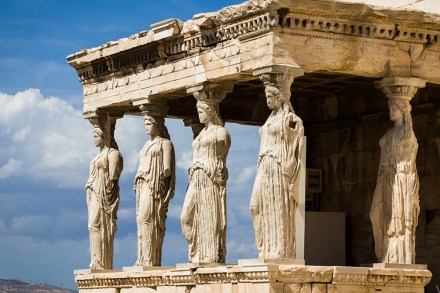
We are traveling through a shower of Greek anniversaries, triumphant and calamitous. Last year marked the 25th centenary of the Battle of Salamis in 480 BC, when 300 Greek warships defeated a Persian armada four times larger and ended the Persian empire’s expansion into Europe. This year marks the bicentenary of the beginning of the Greek War of Independence from the Ottoman empire in 1821, which resulted in the first European nation-state to be founded on the Enlightenment values of the American Constitution. Next year will mark the centenary of Greece’s defeat in Asia Minor in 1922, which ended the modern Greek state’s aspirations to absorb all the lands where Greeks lived and had lived since antiquity, an event still referred to as ‘the catastrophe’.

greek

Joe Biden’s history tour from hell

Breaking news from off the wires this morning. Apparently the guy who almost punched out a Detroit factory worker on the campaign trail may not be our most adept of presidents. That Joe Biden's administration is flailing has suddenly dawned on our establishment as though a miraculous epiphany. Think a kind of political Fatima, only instead of the sun moving across the sky it's just that TikTok influencer with the long nails prancing about the clear blue. How bad has it gotten for the White House? Even Chuck Todd thinks Biden has a 'pretty big credibility crisis on his hands.' And Chuck Todd once let Dr Fauci interview him. The abruptness of this realization does seem weird.

biden

An orange or an egg? Determining the shape of the world

Thirty-two years ago, the young Nicholas Crane, who would go on to become one of England’s most esteemed television geographers, set out to woo a young woman by spiriting her off to the unfailingly romantic landscape of Chimborazo and Cotopaxi. The couple spent their high-altitude idyll walking the hills in hobnail boots, making river passage in dugout canoes and boarding a Quito-bound steam train through the Andes, run by the estimable Empresa de Ferrocariles Ecuatorianos. Their journey had its moments: at one stage both parties were to be found at 13,000 feet, crusted with ice and huddled overnight from the gales inside a pair of plastic trash bags; they then got themselves lost for a while among a wilderness of huge and very active volcanoes.

crane

Spells and bindings

In 1791, Isaac D’Israeli, father of future prime minister Benjamin, published his most famous work, the Curiosities of Literature, a collection of freewheeling mini-essays on whatever literary topics happened to tickle their author’s fancy: ‘Titles of Books’, ‘Noblemen Turned Critics’, ‘On the Custom of Saluting after Sneezing’, ‘Cicero’s Puns’. One of its joys is its capaciousness — completely unsystematic, yet seeming somehow to touch a little on everything. The book is long, but the essays are rarely more than a couple of pages, sometimes less.

library

COVID-19 vs the American spirit of resistance

If the coronavirus were as deadly as the bubonic plague, which killed about a third of the population of Europe in the 1340s, there would be no doubt about the need for extreme measures. But this virus spares far more people than it kills, and is sometimes mild to the point of invisibility, even as it proves lethal to others. It’s almost as though nature had calibrated the virus exactly to the point where risk-avoiders saw the lockdown as vital for survival while risk-accepters saw it as so economically destructive as to be worse than the disease itself. America is polarized not just politically but in its attitude to risk.

resistance

The 1619 Project is the 2019 Project — and the 2020 Project

It is increasingly clear that the 1619 Project, foisted on the American public in August by the New York Times, was ill advised. Fatuous, tendentious and tedious, 1619 is more advocacy than history, and is intended mainly to stoke the woke and to keep race on the front burner in the upcoming 2020 elections. No close observer of the Times over the past few years would have expected otherwise, for in its domestic coverage it reads at times more like a Midtown edition of the Amsterdam News than a national newspaper of record. While still indispensable in some ways, its editorial slant and, indeed, news coverage have become unmoored.

1619 project hannah-jones