History

A date with Venus

There is something about the Transit of Venus that touches the imagination in ways that are not all to do with astronomy. The last Transit occurred in 2012, and if nobody who watched it will ever see another, the sight of that small black dot, making its almost imperceptible progress across the disc of the sun, offered, across the span of 243 years, an oddly moving connection with the scientists and sailors who quartered the globe and, sometimes, risked their lives in 1769 to attempt the first comprehensive observations of the event. There is no shortage any more of ‘global events’ — a good, old fashioned footballing brawl between England and Colombia will stop the planet — but in the more localised world of the 18th century it was another matter.

A pearl of great price

From our UK edition

Objectivity seems to be difficult for historians writing about Britain’s long and complicated relationship with India, and this makes the even-handedness David Gilmour achieves in books such as The Ruling Caste both unusual and welcome. In his enlightening and wonderfully detailed new portrait of The British in India, he states that he is ‘not seeking to make judgments or to contribute to any debate about the virtues and failings of imperialism’, although a brief Envoi supplies some ‘concluding reflections’ on what he acknowledges is a controversial subject.

The History Boys of Brexit

From our UK edition

What do Boris Johnson, Jacob Rees-Mogg and Dominic Cummings all have in common? They are Brexiteers, of course. Yet little is it known that they all studied history or classics at university. Add to this list John Redwood, Bill Cash, Daniel Hannan, Owen Paterson and Douglas Carswell — some of the most influential Eurosceptic MPs from the past 30 years. Michael Gove may have studied English literature, but as education secretary he sought to establish a ‘narrative of British progress’ in the history curriculum. Boris has written a biography of Winston Churchill and Nick Timothy has written a biography of Joseph Chamberlain. Even two of the so-called ‘Bad Boys of Brexit’, Arron Banks and Nigel Farage, are self-proclaimed history buffs.

Entertaining cousin Nicky

From our UK edition

First it was McMafia. After which it was the Skripals. Then the World Cup. Come the end of the year even Buckingham Palace is getting in on the act with a new exhibition, Russia: Royalty & the Romanovs (‘Through war, alliance and dynastic marriage the relationships between Britain and Russia and their royal families are explored from Peter the Great’s visit to London in 1698 through to Nicholas II’).This is the year we were all reminded of our close relationship with the Russians. Some of us, of course, are more closely related than others.

The artist who breathes Technicolor life into historic photographs

There is something of The Wizard of Oz about Marina Amaral’s photographs. She whisks us from black-and-white Kansas to shimmering Technicolor Oz. When Howard Carter leans over Tutankhamun’s open sarcophagus (1922), he does so in the glare of pharaonic gold. A photograph of fallen American soldiers on the Gettysburg battlefield (1863) shocks the more when we see the colour of the blood soaking through shirts. The Javanese dancers who performed at the Exposition Universelle in Paris (1889) are gorgeous in madder pinks, jades and golds.

Colouring in the past

There is something of The Wizard of Oz about Marina Amaral’s photographs. She whisks us from black-and-white Kansas to shimmering Technicolor Oz. When Howard Carter leans over Tutankhamun’s open sarcophagus (1922), he does so in the glare of pharaonic gold. A photograph of fallen American soldiers on the Gettysburg battlefield (1863) shocks the more when we see the colour of the blood soaking through shirts. The Javanese dancers who performed at the Exposition Universelle in Paris (1889) are gorgeous in madder pinks, jades and golds.

A Tudor feast

From our UK edition

Sargeant’s Mess (2018) is a tourist catcher’s net in restaurant form by the Tower of London (c. 1078). It has views of the wide, fat Thames — an old man now, like Falstaff — on its slow journey to Southend-on-Sea. The City of London grows like a glass parasite, but it can’t do anything about the Conqueror’s keep. It is partly made of Norman stone — a joke for historians only? — and it won’t be gentrified, amended, or moved. The Tower squats inside those insanely over-repointed medieval walls like a dowager abutting a conservatory. It will never, and I say this happily, be a block of flats, or an Apple shop, or a Starbucks. Henry VIII added the cupolas, and they are very gay, but that was it.

When the boat comes in

From our UK edition

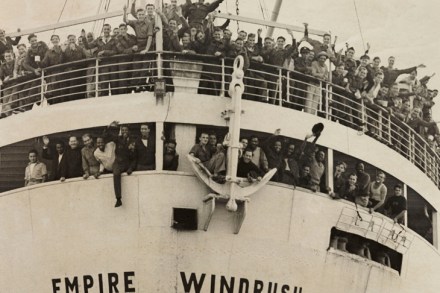
There was one of those moments late on Sunday night when a voice is so arresting (either through tone, timbre, or from what’s being said) that you just have to stop what you’re doing and listen, really concentrate, anxious not to miss a word. Floella Benjamin was on the Westminster Hour on Radio 4 talking about the 70th anniversary of the arrival of the Empire Windrush at Tilbury Docks with 500 passengers from the Caribbean. Nothing unusual about that; it’s an anniversary that’s been given a lot of coverage. But then she started talking about her own experience of coming to the UK by boat, in 1960, with her three siblings, travelling by themselves across the Atlantic to join their parents, who had gone on ahead with two of their children to find work.

Russia’s obsession with securing a warm-water port changed the history of Central Asia

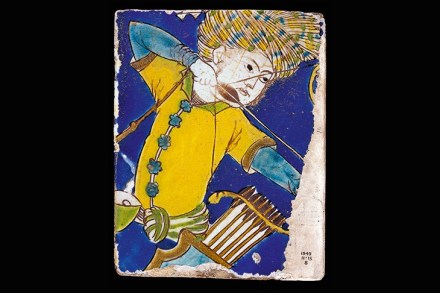
In the 13th century, having overrun and terrorised Europe as far as Budapest, and in the process possibly bringing with them the flea which caused the Black Death, the heirs to Genghis Khan and the Golden Horde had also conquered territory to the east as far as the Korean peninsular. The assiduous Swiss scholar and explorer Christoph Baumer chronicles the ensuing sagas of the remaining individual khanates in great detail. But by the 16th century it is clear that although a few pockets still flourished, producing impressive buildings and works of art, these erstwhile mighty nomadic clans had sunk to a point where they had disappeared from the consciousness of the outside world.

Swallowed by the Russian Bear

In the 13th century, having overrun and terrorised Europe as far as Budapest, and in the process possibly bringing with them the flea which caused the Black Death, the heirs to Genghis Khan and the Golden Horde had also conquered territory to the east as far as the Korean peninsular. The assiduous Swiss scholar and explorer Christoph Baumer chronicles the ensuing sagas of the remaining individual khanates in great detail. But by the 16th century it is clear that although a few pockets still flourished, producing impressive buildings and works of art, these erstwhile mighty nomadic clans had sunk to a point where they had disappeared from the consciousness of the outside world.

Getting to know the General | 14 June 2018

From our UK edition

When General de Gaulle published the first volume of his war memoirs in 1954, he signed only four presentation copies: for the Pope, the Comte de Paris (France’s royalist pretender), the President of the French Republic and Queen Elizabeth II. One of his associates remarked: ‘All de Gaulle’ was in that gesture. But what was de Gaulle? Catholic? Conservative? Romantic? Arrogant? All these, surely, and not least ideologically eclectic. His political beliefs were not only enigmatic but were often vague in his own mind. When he took the world stage in June 1940 it was unclear whether he was a royalist, a Christian Democrat or even a proto-fascist. This uncertainty was a major reason why many were suspicious of him — most damagingly, Franklin Delano Roosevelt.

Trigger-happy madcap

From our UK edition

This is a biography that begins with a bang, swiftly followed by puddles of blood, shrieks of ‘Murder!’ and a chase through the foggy streets of Victorian London. On 8 December 1854, a French émigré was walking through Fitzrovia, close to the heart of radical London, having recently left a pistol-shooting range in Westminster. He had a companion: a mysterious woman with a letter in her pocket and unknown intentions in her heart. It was a cold, wet night. At just past eight o’clock, they arrived at 73 Warren Street, a narrow town house near Tottenham Court Road, where George Moore (a soda water manufacturer who had employed the émigré as an engineer) lived, and were shown into the plush parlour to wait for him.

Prejudice and Popery

Once won, rights and freedoms are taken for granted. We all find it difficult to imagine life before the Married Women’s Property Act, when everything belonging to a wife — goods, chattels, children — automatically became the sole property of her husband. Those born since the 1960s can’t really envisage what it was like for practising homosexuals in those days. By a similar token, the mind can scarcely take in the fact that in Penal times, Catholics could not buy or sell land; or that it was an imprisonable offence for Catholics to run a school. It was a legal offence to dress as a monk or a nun out of doors.

Analysing the dream

From our UK edition

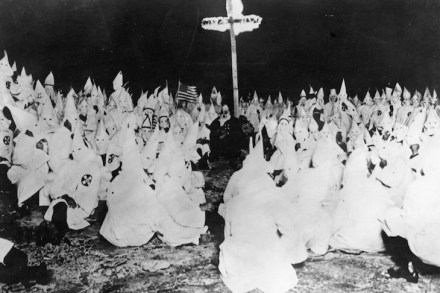
The figure of Donald Trump looms over Sarah Churchwell’s new history of American national identity, which highlights the ugliest features of the country’s ingrained traditions of intolerance and bigotry. But it is the current president’s father, Fred, who first leaps off the page in a startling cameo appearance. On Memorial Day 1927, as Churchwell recounts, the white supremacist, anti-Catholic and anti-Semitic Ku Klux Klan organised a march in New York City’s borough of Queens, home to the German-American Trump family, whose patriarch, Friedrich Trump, had emigrated to the United States in 1885.

Trailing clouds of perfume

From our UK edition

In his robust new biography of Alcibiades, David Stuttard describes how the mercurial Greek general shocked his contemporaries by adopting Persian customs: Certainly, he embraced their lifestyle, tying his hair up in a bun, curling his well-oiled beard (a symbol of machismo in the Persian court), dousing himself in the perfumes for which Sardis was so famous, and dressing not just in sumptuous robes and beautifully fringed tunics of linen, wool and mohair (deep-dyed in vibrant reds and vivid yellows, and adorned with ornaments in glittering gold foil), but in those other garments so associated by Athenians with decadent, eastern effeminacy: trousers. I’ll be honest.

Splendour and squalor

From our UK edition

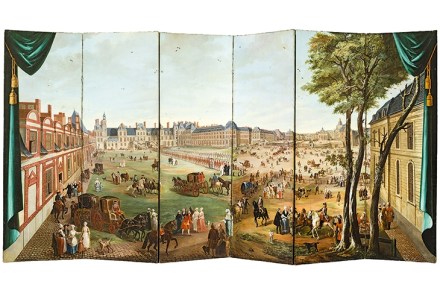
The château at Versailles remained the grandest palace in the whole of Europe from the moment that Louis XIV established his court there in May 1682 until his great grandson Louis XVI was forced to leave by a mob of 30,000 in October 1789. Such was its reputation that Lord Chesterfield earnestly advised his son that ‘an hour at Versailles is now worth more to you than three hours in your closet with the best books that were ever written’. Embassies came from as far afield as Siam and Persia. Leather-bound engravings of the palace served as diplomatic gifts and spread its reputation throughout Europe. Every sovereign, leafing through his copy, simply had to recreate his own Versailles.

The Great War, viewed from all sides

From our UK edition

The historiography of the Great War is stupendous, the effects of the conflict being so far-reaching that even today historians are finding angles hitherto unexplored that they can make books out of; or, at the lower end of the scale, they are content to retell the old story in a different way. What we have been short of in the English canon is a view of the war not just from the other side, but from all sides: it was, as Colonel Repington termed it, ‘the first world war’, and not simply four years of carnage between the British and the Germans. Jörn Leonhard’s epic and magnificent work — unquestionably, for me, the best single-volume history of the war I have ever read — tries, with some success, to embrace everything.

Blood and bile

From our UK edition

Are books becoming an adjunct to TV? Both of these are good reads, but both feel influenced by — and yearning for — television. Medieval Bodies could be the script for a landmark BBC Four series, while the author of How to Behave Badly in Renaissance Britain came to prominence as farthingale consultant on programmes such as Tudor Monastery Farm. She can tell you everything you never wanted to know about codpieces. Medieval Bodies skips between English, Welsh, Hebraic and Islamic medicine with ease, touching on caliphs and kings, Mamluks and djinns. One gem here is the inventor Ismail al-Jazari, the Heath Robinson of 13th-century Baghdad.

Preachers, princes and psychopaths

From our UK edition

On 23 May 1618, Bohemian Protestants pushed two Catholic governors and their secretary through the windows of Prague Castle, in protest at the anti-Protestantism of Bohemia’s King Ferdinand, soon to be elected Emperor Ferdinand II. The defenestration was only injurious to dignity, and had farcical aspects, a rebel shouting: ‘We shall see if your Mary can help you!’, only to exclaim, ‘By God, his Mary has helped!’ when the men landed in a midden. This sparked what C. V. Wedgwood termed ‘the outstanding example in European history of meaningless conflict’ — the bloodiest campaign ever waged on German soil.

A heavy cross to bear

From our UK edition

‘The Victoria Cross,’ gushed a mid-19th-century contributor to the Art Journal, ‘is thoroughly English in every particular. Given alike to the highest and the lowest in rank, but given always with a cautious and discriminating hand... the Victoria Cross is an epic poem’. Like all epic poems, the VC has its tragedies. For some that tragedy lay on the field of battle; for others, as Brian Izzard details in his often depressing new book, it lay in the life that followed. The original Royal Warrant by which Victoria instituted her eponymous medal stipulated that it was to be given only for service ‘in the presence of the enemy’ for some ‘signal act of valour, or devotion to country’.