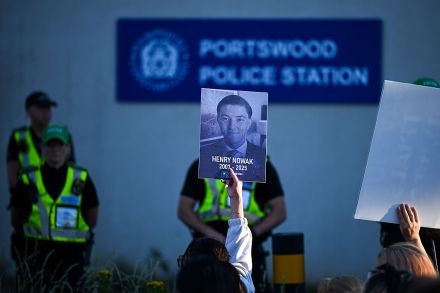
Henry Nowak

The New York Times’s twisted reporting of Henry Nowak’s murder

Last week’s headline in the New York Times was obfuscating: ‘In the UK, a Violent Cycle: Hateful Attacks, Right-Wing Agitation and Riots.’ Because hatred is now irrevocably associated with the ‘right-wing’, innocent American newspaper readers will have presumed that these agitating, rioting reactionaries were also the authors of the ‘hateful attacks’. The New York Times and the PBS News Hour delivered such twisted, incomplete and minimised versions of recent incendiary events in the UK that I was obliged to tell the stories of Henry Nowak and Stephen Ogilvie to more than one ordinarily up-to-date American friend, because the salient details had been omitted from left-leaning reports.
Britain imported a problem it refuses to name

I get the sense that the political and media class badly miss Katie Hopkins. Back when the reality TV star was still a regular on Britain's screens and in our newspapers, she could be relied upon to be the focus of attention whenever the people in charge didn’t want the public’s attention to be focused where it ought to be. So when a British soldier was decapitated on the streets of London, or a suicide bomber went off at a pop concert packed with teenage girls, Ms. Hopkins could be found saying something that a lot of people were thinking – only in a more colorful or unwise way.

The truth about two-tiering

What has been remarkable about Henry Nowak’s case was not the story itself, tragic though it is, but the potency of it to spark public anxiety. The anxiety is born of an in-built and nascent popular resistance to the idea that certain groups, the victims of unconscious bias, need special consideration in order to counteract that potential disadvantage. The expression ‘two-tier’ has in the Nowak case been applied to policing, but the principle is more general, and lies behind (for instance) campaigns to nudge public attitudes (and sometimes public policy) towards the disabled, older jobseekers, plus a ‘group’ which in fact comprises half of us: women. You can call it positive discrimination.

The posh are persecuted for their accents

Mark Nowak, father of the murdered Henry Nowak, spoke powerfully in public after Vickrum Digwa was convicted of the crime. He said there was ‘no moment when the pain stops’ and he thought there never would be. This prompted a comparison in my mind. Last month, Daphne Hamilton-Fairley died, aged 95. Our families were neighbours and friends in Bayswater in the late 1950s, and kept in touch after we moved to the country. Daphne’s husband, Gordon, was a most distinguished oncologist at Bart’s. One morning in 1975, he was walking in Campden Hill Square. His dogs sniffed under a car. A bomb planted there exploded, killing Gordon (and the dogs). The IRA had intended to blow up the MP Sir Hugh Fraser, husband of the famous Lady Antonia, who lived next door.

Why gentlemen relish Kemi

As seen in the Telegraph Two thoughts on the sad and controversial death of Henry Nowak. The first is about Kemi. Wow. She really is The One. While Nigel Farage has angrily stomped about, demanding certain laws and policies be changed to stop something like that happening again, Mrs Badenoch instead forensically called for people to be mindful of their language. Mummy has done it again. Little do they know that until 2020 there were no racial tensions in this country at all And here is thought two: I despise Americans, and the Americanisation of our culture. Nowak’s death has opened the floodgates to all sorts of barking, ill-informed commentary from the Yanks about this seat of Mars.

Why America is sounding the alarm about Britain and Europe

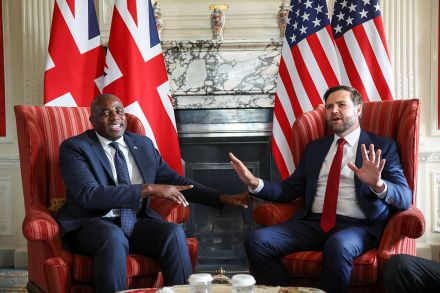
Back in November, the State Department warned that “mass migration poses an existential threat to western civilization and undermines the stability of key American allies.” In February, in his address to the Munich Security Conference, Secretary of State Marco Rubio expanded on that theme. After the Berlin Wall fell, Rubio noted, many in the West thought “the end of history” had finally arrived. Utopia was nigh. Western nations opened their borders, forsook spending on defense in order to bolster the welfare state and “outsourced” their national sovereignty. This was, Rubio warned, to ignore both human nature as well as the lessons of “over 5,000 years of recorded human history. And it has cost us dearly.

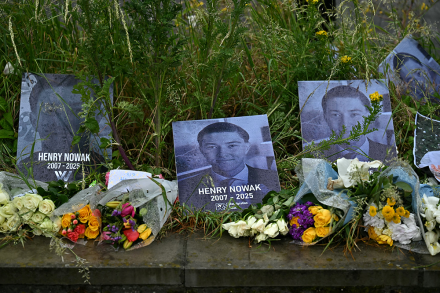
Henry Nowak

Why can’t Elon Musk leave Britain alone?

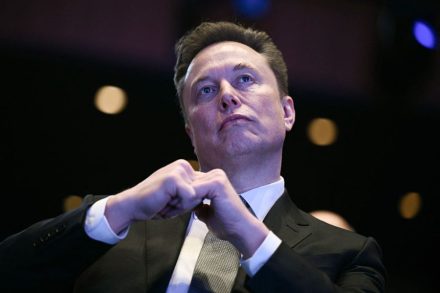
Why is Elon Musk so obsessed with what’s going on in Britain? The billionaire owner of Tesla and X has been busy posting on his social media platform about the murder of Henry Nowak and what it says about the state of British policing. What does Musk actually know about policing in this country? What the tech mogul definitely does know about is how to stir the pot. According to a report in the Financial Times, Musk has written more than 110 posts, retweets and replies about British politics since last Wednesday on X. This is almost three times the share devoted to his company SpaceX, which is valued at $1.8 trillion ahead of its highly anticipated IPO next week.

elon musk

Henry Nowak and the politics of deflection

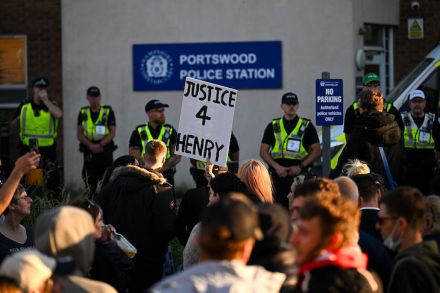
While Britain is still reeling from the horrific murder of 18-year-old student Henry Nowak, an astonishing article has appeared in El País, Spain’s largest national newspaper. Rather than focus on the failures of the police officers, or the institutional bias within the force, the headline steers its readers away from the case and towards the outlet’s own obsessions. The headline translates as "Farage’s far right stirs up hatred in the UK after a young man is stabbed to death by a Sikh man." As Alejo Schapire (an Argentine journalist based in France) has pointed out, this is the first and only article produced by El País on the subject of the Nowak killing. Instead of an image of the victim, the newspaper has opted for a photograph of Nigel Farage.

henry nowak

Henry Nowak and the dangers of ‘anti-racist’ dogma

‘I can’t breathe.’ When those chilling words were uttered by George Floyd in 2020, they provoked global outrage. The combination of the horrific manner of Floyd’s choking by the police officer Derek Chauvin, the pressure cooker of lockdown and the historical tensions around American race relations led to worldwide protests; despite Floyd’s death being 4,000 miles away in Minnesota, Keir Starmer felt compelled to take the knee in solidarity. ‘I can’t breathe.’ These were also the dying words of Henry Nowak, an 18-year-old student in Southampton murdered by the 23-year-old Vickrum Digwa. Nowak was coming back from a night out when he was stabbed by Digwa five times with a ceremonial knife. When the police were called, Digwa accused Nowak of having been racist.

Portrait of the week: Sturgeon speaks, Henry Nowak’s killer is jailed and Mandelson messages are released

Home Vickrum Digwa, 23, was jailed for life with a minimum term of 21 years for the murder of Henry Nowak, 18, who was stabbed several times; the victim was handcuffed and arrested while he was telling police he had been stabbed and saying ‘I can’t breathe’. Sir Keir Starmer, the Prime Minister, said that he ‘felt sick’ watching bodycam footage of the incident. Nicola Sturgeon, in a remarkable interview with the BBC about the embezzlement of £400,310.65 by her now-estranged husband, Peter Murrell, said she expected ‘a legal process to recover the money from Peter’, but she emphasised that: ‘I am not guilty of that embezzlement, so nothing that belongs to me should be part of that.

The lessons from Henry Nowak’s murder

I wonder how many readers have ever heard of the name Kriss Donald? The young Glaswegian was just 15 years old in 2004 when he was kidnapped by a local gang of Pakistani men. The group selected him because he was white and they had some beef with a group of white men with whom Donald had no connection at all. After driving around for hours, the gang – led by one Imran Shahid – stabbed Donald repeatedly before dousing his body in petrol and setting him alight. I also wonder how many readers have heard of the name Tony Timpa? The white, unarmed Texan was 32 in 2016 when he suffered some sort of mental breakdown in public. Instead of assisting him, police arrived at the scene and restrained him in such a way that he died.