Health

Could a secretive Swiss clinic cure my bad habits?

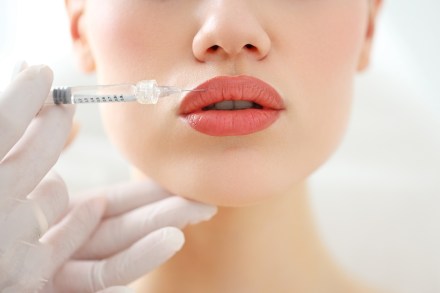
Having just turned 65, I enjoyed a week of firsts. My first ever facial and my first ever yoga class progressed to my first ever impedancemetry session, my first ever photobiomodulation session, my first ever hyberbaric chamber session, my first ever cryotherapy session, my first ever sensory deprivation session, my first ever neurofeedback session and my first ever revitalising wave session. I was at the Nescens Clinic Centre for Aesthetic and Regenerative Medicine near Geneva, marking my milestone birthday by attempting to defy age. It was Mrs Ray’s idea. Concerned that I was beginning to look and act like the old soak that I am, she wanted them to break my bad habits and help me shed ten years.

How to spot a troublesome Airbnb review

The guest who thought our farm was in the town centre was very cross indeed. She got out of her car by the old fountain and stood hands on hips surveying the meadows sloping from the big old house towards the rugged mountains beyond. She was wearing knee-length khaki safari shorts, so you’d have thought she’d be pleased to pitch up in the middle of nowhere. But she looked askance at the rolling hills and affected to be shocked by the reality of what was clearly pictured and described on the booking site. She asked how she and her husband were supposed to walk to their drinks party in town that evening. Could they walk there? Not really, I said. Not unless the party was tomorrow evening and they had good hiking boots. ‘Taxi?’ she asked. So we had to explain.

For the NHS, it’s Wes or bust

Labour swept to power on a pledge to ‘save the NHS’. As shadow health secretary, Wes Streeting said he would go ‘further than New Labour ever did’ to clear the health service’s backlog and, to achieve this, he claimed old taboos would be torn up, including the use of the private sector to improve services. Failure to clear the backlog now will be hugely politically consequential for this government. Partly because of how important the NHS is to the voting public, but more so because of the emotional resonance the service and its ‘free-at-the-point-of-use’ model has for Labour, both its MPs and its supporters. If the party that founded the NHS cannot save it, who can? That is why the NHS has been mostly immune to Rachel Reeves’s new austerity.

Portrait of the week: Welfare rebellions, Glastonbury chants and Lucy Letby arrests

Home Sir Keir Starmer, the Prime Minister, in the face of a rebellion by 120 backbenchers over the welfare bill, undertook to limit to new claimants restrictions on personal independence payments (Pip). Modelling by the Department for Work and Pensions predicted that 150,000 people might be pushed into ‘relative poverty’ by the revised welfare cuts, compared with 250,000 before. Still fearing defeat, the government made more last-minute concessions, postponing changes to Pip rules until after a review by Sir Stephen Timms, the disability minister. The government then won the second reading by 335 to 260, with 49 Labour MPs voting against. It was not clear that the eviscerated bill would reduce spending.

Why must B&B guests give us advice?

‘You could mow all this lawn here and it would look a treat,’ said the arborist, returning from a stroll around the grounds, which were looking resplendent in the sunshine. ‘Yes, yes, mow the grass. Good idea,’ I said, for the builder boyfriend has told me I have to agree with the customers. No matter what they say, no matter how obvious their suggestions, just smile and say ‘Good idea.’ Old houses are like horses. Passing strangers feel ownership of them. Once they encounter them, they proclaim how they would care for them, because they decide from their soulful look that the owners must be neglecting them – when the truth is the owners slave day and night for them, getting nothing but a good kicking for their trouble.

Must my fish and chips come with a side of geopolitics?

‘Our boys went to Lebanon and trained Hezbollah!’ shouted the drunk Irish lad in the fish and chip shop as an Indian man behind the counter silently fried chips. ‘Chucky ar la!’ the lad shouted, or Tiocfaidh ar la, to correctly spell in Irish the slogan of the IRA, meaning ‘Our day will come.’ And he went on shouting this, over and over, as the Indian fellow stared down into the fryer, and the Friday night customers formed a queue in this small fast-food joint in a West Cork harbour town. The Irish lad was not getting the message that the Hindu chap frying chips was probably not a massive Hezbollah or Hamas supporter, and he carried on shouting about Gaza and inviting the man behind the counter to join in with him.

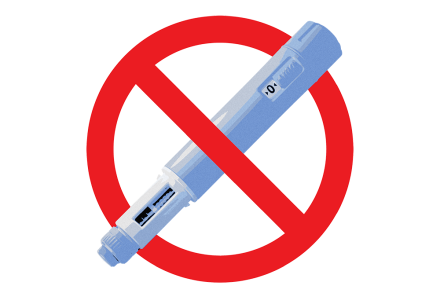
Should we give weight loss jabs to children?

I have seen the future of food. And some of you won’t like it. On a research trip to the Netherlands last week, along with the fellow partners of my firm, Bramble, I took a speedboat tour of the port of Rotterdam. One of the most awesome sights was the so-called ‘Innocent Blender’ – a vast smoothie-making fortress, box-shaped and silver – glinting over the water. This is where the British-based, Coca-Cola-owned company makes its ‘tasty little drinks’. The factory location makes sense: most of Europe’s imported fruit comes via Rotterdam. Massive tankers – 600ft long and filled with 40,000 tons of chilled orange juice from Brazil – move through constantly. The Blender is completely electric, runs on renewable energy and uses robots to purée, bottle and package.

Speed traps are designed to make you fail

The builder boyfriend returned from a trip to London to inform me he was being done for speeding at 32mph, for crying out loud. He was flashed by a camera crawling uphill in a 30 zone going through the almost middle-of-nowhere in the Ashdown Forest, on his way to visit his sister in Sussex for the weekend. A few weeks after I completed a speed awareness course for doing an improbably incorrect 40mph on a dual carriageway during a trip to see my parents in Coventry, we were going round the same rigmarole with him. He showed me his letter from the Sussex Police on his return to Ireland. It was slightly less obnoxious than the one from West Midlands Police, but it amounted to the same thing: a £100 fine, sorry speed course.

The £486 driving licence con

By changing the address on my driving licence, I was somehow signed up to something that began charging my credit card £39 a month and was going to carry on charging for ever. It was Barclaycard that spotted it and warned me it was a ‘scam’ in a text alert. Had I really agreed to a recurring payment to a company called British Drive? I had no idea what British Drive was, and at first suspected it was an insurance policy, or the firm that organised my recent speeding course. Eventually, I realised it could be something to do with going on to the DVLA website – or so I thought – to change my driving licence address. I tried to cancel the payment on the Barclaycard app but it wouldn’t cancel.

The sorry state of our public conveniences

Britain’s public loos are a national embarrassment. If you are in any doubt, head to Liverpool Street Station and spend a penny. It’s unquestionably the most odious and unpleasant public lavatory anywhere in the supposedly civilised world. It has to be experienced to be believed, but suffice it to say that the level of cleanliness on display would make a Medicine Sans Frontier doctor fresh from West Africa recoil in fear and reach for their PPE. The floor is usually awash in various places with unknown fluids. The long shared trough installed for handwashing is so disgusting that you wouldn’t clean your dog in it. The supposedly automatic taps barely dispense water. The soap dispensers are equally hit and miss.

Aren’t women wonderful?

The mole specialist was wearing a pink Chanel-looking suit and pink diamanté shoes. By mole specialist, I don’t mean someone turned up dressed in Chanel to deal with moles on our land. I mean I went to see a top London dermatologist about a mole I was worried about, and when I walked into her office she looked so fabulous all I wanted to do was talk to her about her Jackie O miniskirt and jacket, given a twist with the sparkly stilettos. Before I could do that, however, she complimented me on my long striped coat. ‘Villa Gallo,’ I said, sitting down in front of her desk on the first floor of a smart building in Chelsea. ‘And can I say, your shoes are divine.

In defence of benzos

In the latest series of The White Lotus – a moral fable about the narcissism and toxicity of the privileged class – Parker Posey plays Victoria Ratliff, a Southern matriarch routinely spaced out on the tranquilliser lorazepam. Her daughter Piper asks why she needs it. ‘Certain social situations make me anxious,’ she drawls. When her husband Timothy (Jason Isaacs) gets word that his crooked financial empire is about to crumble, he starts necking Victoria’s pills in secret before swiping the bottle. My ears always prick up at the mention of lorazepam because, like Timothy Ratliff, I have taken it illicitly to manage anxiety. However, I was not stealing it from my wife, but receiving it in the post from my mother.

Is it time to clean up my act?

I was having a drink in the Bishops’ Bar in the House of Lords last month when I was introduced to a 92-year-old peer called Lord McColl of Dulwich. I asked him if he’d known my father, Michael, who was made a life peer in 1978. Had they overlapped? He told me he hadn’t merely known him; he’d operated on him. If I have mild indigestion I think I’ve got stomach cancer; if I get a headache I decide it’s a brain tumour I realised with a start that the man I was talking to was the famous surgeon Ian McColl, who was made a life peer in the Queen’s birthday honours list in 1989. As professor of surgery at Guy’s Hospital, he treated my father for bowel cancer in 1983, an operation so successful that Michael had gone on to live for another 19 years.

I was convinced by the cholesterol sceptics

It’s never a good thing when your cardiologist sounds alarmed on the phone. Come in tomorrow, he said: we’ll get you on the table. He wasn’t talking about cracking my chest, thank Christ, but threading a wire in through a vein to get a look at the heart, blow up a tiny balloon to stretch the artery, and maybe leave behind a metal tube or three. I wasn’t keen on that last part. Then I thought: serves me right. I should have avoided all those bacon sandwiches and steaks fried in butter. ‘The wages of sin is death.’ Probably should have taken the statins, too. But if you are, understandably, unwilling to take a fistful of pills every day for the rest of your life, there are some medical mavericks to confirm your decision.

I am facing a future in a wheelchair

I’ve always liked the old Winston Churchill maxim ‘Never stand up when you can sit down, and never sit down when you can lie down’. After a month lying down in hospital, contemplating life without the use of my legs, I now utter a laugh which I hope is suitably hollow. O, my lovely legs! By the time I was 14, they were the longest in my class; by the time I was 17 they had embarked on the merry dance that has been my ‘journey’, propelling me forever onwards towards enough fun, love and money for nine lifetimes. Now I feel like a mermaid – without the sexiness – and my shameless gams are but a floppy old mono-thing.

The highs and lows of Dry January

The first week of Dry January was relatively easy. Not falling asleep in front of the television was a pleasant change, as was waking up in the morning with a clear head. I started to remember things I usually forget, such as where I’d left my keys, and began to work through my ‘to do’ list, getting round to jobs I’d been putting off for months. It wasn’t that my willpower increased. It was that making myself perform tedious administrative tasks took less effort. My inner clerk woke up. The novelty of being calm and even-tempered wears off pretty quickly Two weeks in and I’m beginning to get bored. High on the list of benefits of being teetotal, according to the finger-waggers, is that your mood stabilises – and I’ve definitely noticed that.

How real is your ADHD?

Why does everyone suddenly seem to have ADHD? It’s a question that many of us working in mental health have been asking each other recently. Just a decade or so ago I rarely saw anyone in clinic with ‘attention deficit hyperactivity disorder’; now I see at least one case a day. It’s bewildering. Have all these people simply been undiagnosed for years? Is ADHD a medical fad? No one yet knows. The increased awareness of mental health problems has been a boon for private doctors. It’s a gold mine ADHD used to be mainly diagnosed in children, but more and more people are now getting a diagnosis in adulthood.

Good riddance to 2024

January. When the assisted dying bill comes in, I’ll be first in the queue. Non-stop nosebleeds, Covid-esque symptoms, leg cramps, a cough resistant to antibiotics, and unremunerated press interviews for my Burton/Taylor book. In the old days I’d be in New York, running amok with publicity handmaidens, going on television and racking up bills in the Gramercy Park Hotel. Now everything is done from the back-bedroom here in Hastings, where I dwell in the slum district, my window overlooking immigrants doing their laundry. Paul Bailey went to the trouble of getting his name removed from my acknowledgements. That’s real hatred February. First anniversary of my myocardial infarction, when I collapsed in Morrisons car park.

Why didn’t I read the comments sooner?

I adhere to a pretty iron-clad rule: not only do I avoid the bumper cars of social media, but I don’t read the comments after my columns. Many other journalists avidly lap up reader responses to their work, and there’s certainly something to be said for confronting detractors, thus learning to anticipate counter-arguments and to guard against misinterpretation. But for me – I doubt this makes me unusual – one scornful put-down has a more lasting effect than ten gushing compliments. Forbidding myself from hitting that bottom tab is a matter of self-protection. While writing, I don’t want to lose my nerve, and too keen an awareness of your (potentially hostile) audience can be inhibiting, as if someone is reading over your shoulder.

Wild Wes: Streeting is causing trouble for Starmer

Avote on assisted dying was supposed to be one of the easiest reforms for Keir Starmer’s government. To many, including the Prime Minister himself, a law allowing terminally ill patients to choose to die would be a self-evidently progressive and historically significant change. It would mean Britain could transcend the objections of a religious minority and join Canada, the Netherlands and other countries in a modern, more enlightened era. In the assisted dying debate, the PM appears a mere onlooker, while Streeting is taking the lead Starmer didn’t want to have to order his MPs to vote for assisted dying. The strategy instead was to use a private members’ bill, brought by the Labour backbencher Kim Leadbeater.