Greece

Walking to Byzantium

From our US edition

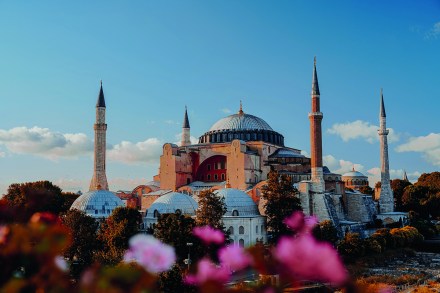
I decided to walk from Athens to Byzantium — Constantinople, the medieval Queen of Cities, lately Istanbul. I had a little red tent and a vision of noble penury that evoked the ghosts of Cyriaco of Ancona (d. 1452) and Paddy Leigh Fermor (d. 2011). My girlfriend said she'd join me later. The lines that now smudge my map look more like the flight of a woozy bluebottle than the traces of a man with a plan. My earliest memories of the trek are melancholy.

Byzantium

The high and low life of John Craxton

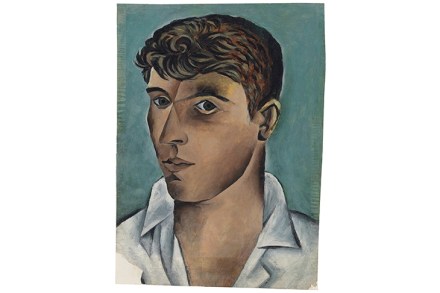
Charm is a weasel word; it can evoke the superficial and insincere, and engender suspicion and mistrust. But charm in its most authentic sense was surely the defining quality of the painter John Craxton, and it flavours this lively and richly coloured account of his life. Ian Collins only met the elderly Craxton — by now sporting the moustaches, shepherd’s stick and general demeanour of a Cretan chieftain — in the last decade of his life (he lived to 88), and was immediately seduced by his joie de vivre and his fund of recondite knowledge, stories and jokes, and drawn into Craxton’s charmed circle.

What Europe can learn from Greece’s alliance with Israel

In the 21st chapter of his magisterial 1948 history of the Second World War, Winston Churchill began with an arresting statement: ‘The Greeks rival the Jews in being the most politically-minded race in the world.’ In his distinctive tongue-in-cheek yet insightful style, he explained:  ‘Wherever there are three Jews there will be found two Prime Ministers and one leader of the Opposition. The same is true of this other famous ancient race, whose stormy and endless struggle for life stretches back to the fountain springs of human thought.’ Seventy-three years after they were written, these racial generalisations may ring dissonant in certain 21st century ears.

Greece and Britain’s long history of fighting autocracy

As I write, it is mid-morning in Athens and fighter jets are roaring overhead. My windows rattle, the sky splinters, and out they burst, strafing the blue with lines of white. It is a celebratory deployment. Today, Greece marks 200 years since the start of the war of independence from Ottoman rule. In Syntagma (Constitution) Square, home to the Hellenic Parliament, assorted military and political bigwigs gather to celebrate. Medals gleam. The lack of crowds gives the scene an incongruous, surreal quality. Over here, the end of lockdown remains a long way off. On TV this morning, I watched Prince Charles, who is in Athens for the occasion, stumble through a few words of Greek. Last night, he gave a speech (in English) to much acclaim.

Greek PM’s lockdown larks

To break your own lockdown rules once could be seen as a mistake, to do it twice might suggest a hint of arrogance. Although who could blame Greek PM Kyriakos Mitsotakis when faced slap-up Mediterranean lunch on an Aegean island? Well, it seems quite a few Greeks can and do.  The centre-right politician was also snapped in December, stood side-by-side with a group motocross racers sans masks (against his own rules) — at a time when his government was inforcing a €300 fine for those who left their homes on non-essential journeys. https://www.youtube.com/watch?

The myth of American freedom

Gstaad Imagine a beautiful, sexy woman, an Ava Gardner or a Lily James, with a wart on the end of her nose. It stands out, whereas on an ugly mien it would go almost unnoticed. Noise in stunning and peaceful surroundings disturbs more than it would in grating, jarring cities. Last week, on a gorgeous sunny afternoon, after yet another record snowfall, I was cross-country skiing and stopped for a picnic lunch with Lara and Patricia, two married friends of mine who had left me miles behind. They were using the new skating method of cross-country skiing (I remain traditional, gliding on the double track). A cloudless and very blue sky accentuated the beauty of the landscape.

Salamis tactics

From our US edition

The 2,500th anniversary of the Battle of Salamis — the decisive naval battle of 480 BC in which the Greek fleet, vastly outnumbered, devastated the invading Persian armada in the straits near Athens — fell on September 29. So we went to take another look at the nautical objects in the Piraeus Archaeological Museum. It is not exactly a small museum — it is housed in a high-ceilinged, two-story building in the port of Piraeus, next to the remains of a Hellenistic theater — but it receives few visitors. Even Piraeus taxi drivers don’t always know where to find it. Tourists usually give Piraeus a miss; they tend to be ‘museumed-out’ from the big museums up the road in Athens.

piraeus salamis

My bid to boost my carbon footprint

Inspired by Harry and Meghan I decided to get on a plane. I hadn’t been anywhere for so long it was becoming ridiculous, and neither had my other half. No kids, no trips, no new cars… ‘If my carbon footprint gets any lower I’m going to have to eat coal,’ the builder boyfriend said, putting things into perspective. These celebs and royals are never going to stop lecturing us about taking flights we’re not taking. And they are never going to stop taking all the flights themselves. So one is inevitably going to become bitter unless one takes action. And the action I decided to take was a late deal to Lefkada in Greece. ‘If we split it between three credit cards I think we can just about manage,’ I told the BB, and he agreed.

The fall of Golden Dawn

Next week, the biggest Nazi-related trial since Nuremberg will come to a close. Following the murder of Greek musician Pavlos Fyssas by a member of the neo-Nazi party Golden Dawn seven years ago, the entire leadership and dozens of members were charged under counter-terrorism legislation with running an organised crime syndicate. The case file, which runs at more than 3,000 pages, includes charges of murder, arson, possession of guns and explosives, and even trafficking. A combination of the famously sclerotic Greek justice system and circumstance held up the trial for years. The pandemic and the lockdown that followed it pushed the verdict back even further. But now, at last, it’s nearly over. The party’s troubles extend beyond the courts.

Will Turkey and Greece clash over a tiny island?

From our US edition

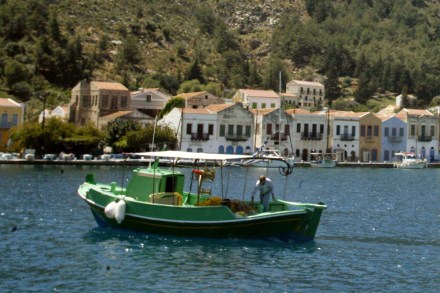
An obscure Mediterranean flashpoint may soon come to a crisis; that would be the minuscule and remote Greek island of Kastellorizo (or Megisti; Meis in Turkish). Like many other Greek islands, it lies much closer to the Turkish than the Greek mainland (1 mile vs. 357 miles). Unlike other small Greek islands, its location between Rhodes and Cyprus bestows outsized military and economic importance on it.Were Kastellorizo, with a population of under 500, to enjoy the full rights bestowed on it by the 1982 UN Convention on the Law of the Sea, Greece can claim a 200-nautical mile exclusive economic zone (EEZ) that leaves Turkey with a cramped EEZ along its shores; take away Kastellorizo and the Turkish EEZ more than doubles in size.

kastellorizo

Med alert: Greece and Turkey are in a battle for hegemony

No one should fool themselves about the nature of Recep Tayyip Erdogan’s vision for Turkey. It’s an imperialist project that would see Turkey’s hegemony stretch from the Mediterranean Sea and Libya all the way to Iran. Erdogan’s plans for his country’s expansion are evident in the current stand-off in the eastern Mediterranean between Turkey and Greece. Turkish frigates are accompanying a research vessel, the Oruc Reis, as it enters disputed waters to carry out a seismic survey in search of natural gas. In its path lies a joint force of Greek and French warships, attempting to prevent the Turkish from venturing further. The two sides have almost come to blows — two frigates accidentally collided this month.

The doctor’s dilemma

From our US edition

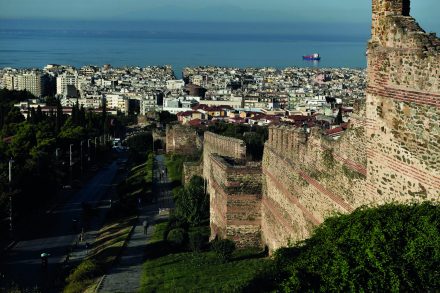
The facts are stark, if little known. Before World War Two, the Jewish community of Thessaloniki, Greece (Salonica, in its old Ottoman name) numbered over 50,000. Jews were this Mediterranean port city’s most numerous ethnic minority and had shared in many of its past glories. When the war was over, only 5,000, less than 10 percent, of the Salonica Jews survived. Between March 15 and August 10, 1943, the local Greek police, supervised by the SS, arranged the deportation of 45,000 men, women and children in 19 convoys, most of them bound for death at Auschwitz-Birkenau. My grandmother’s family was among them. Talking Until Nightfall is a grim and gripping family saga. It compiles the testimonies of three generations of the Matarasso family.

How busy have restaurants been this summer?

The other Argos The Argos catalogue, known as the ‘Book of Dreams’, is no longer to appear in printed form. How did the shop get its name? Founder Richard Tompkins happened to be on holiday in the city of Argos, on the Peloponnese peninsula in Greece, when he came up with the idea for it. The city, which dates back to around 1200 bc, offers a number of treasures of its own, including: — An ancient theatre, seating 20,000 people and dating back to the 3rd century bc — The Agora, developed in the 6th century bc — The arched municipal market, Argos’s own monument to retail, dating from 1889 Dying out The overall mortality rate in England and Wales was below average in June, in spite of high numbers of Covid deaths still being recorded.

The luxurious lives of Sparta’s women

History is full of ‘ifs’ and the Spartan story fuller than most. If the 300 had not made their famous stand against a vast Persian army at Thermopylae in 480 BC, or if Helen of Troy, originally from Sparta, had not been abducted, we might not remember them today. If their young men had not been brought up so strictly the word ‘spartan’ might not have entered our vocabulary; nor, had they not valued brevity in an age that revered oratory, the word ‘laconic’ — from Laconia, a Spartan province. And if the Spartans had not remained such an enigma, there would be no need for this book. It is Thermopylae that speaks loudest to us.

The way Greece has conducted itself in this pandemic is an example to us all

Aristophanes was a comic genius long before the Marx Brothers, but he also gave good advice to the Athenians: stop the war! In his play Lysistrata he had the women going on strike — no more nookie — until the men stopped fighting. During the plague that killed the greatest Athenian of them all, Pericles, Aristophanes advised the young to isolate, meditate and masturbate, advice still valid to this day. Greece, with roughly the same population as Switzerland and faced with a surge of migrants turned loose by the dreaded Turks, has handled the crisis well. The American media is using the virus crisis in order to attack Trump, but the Greek people will not tolerate such craven opportunism and dishonesty.

Breaking the deadlock

It is said that our political system is ‘broken’ simply because the passions aroused by Brexit have effectively created a hung parliament. So what to do about it? Athenians would have dealt with the problem by ostracism. Its purpose was to send one citizen into exile. Once a year Athenian citizens (all males over 18) meeting in assembly got the chance to vote for an ostracism. It was held by citizens inscribing the name of their candidate on a potsherd (ostrakon). As long as at least 6,000 votes were cast, the man with the most votes was sent into exile for ten years. He did not suffer disgrace, lose citizenship or property, just his ability to reside in Athens. About 10,000 such ostraka survive. Some citizens spoilt them.

High life | 8 August 2019

Athens I am struggling up the slippery marble steps of the Acropolis with the Geldofs and the Bismarcks. We gaze upwards towards the façade of the Parthenon, whose simplicity has excited architects and conquerors for 2,000 years. There are no straight lines, everything curving upwards towards the centre. The whole structure tilts slightly towards the west end, the side you first see as you arrive, hot and winded. Yet every column seems perfectly straight, an optical illusion as real as the glory that once was Athens. The crowds are shabby and rather ugly — fat people speaking Spanish or Chinese, their children munching candy and ignoring the most beautiful structure ever built by man. The Parthenon’s subtleties are many: it arches, leans, swells and breathes.

Lunchtime on Hydra

The Pirate Bar is an oddity, even for this column: a bar and restaurant themed in homage to a pirate, whom I consider to be generic, and Leonard Cohen. It is in Hydra, a three-hour boat ride from Piraeus, and Cohen’s home in the 1960s with his muse — this means unpaid female servant who also provides sex — Marianne Ihlen. He bought a house on the hill with an inheritance from his grandmother. Thus are famous hippies made — with inherited money. Hydra is known as Leonard Cohen Island. The locals don’t mind living on Leonard Cohen Island. ‘Cohen?’ asked a native, as I loitered on the steps of his house on the hill. ‘He was my friend.’ The pharmacist was also his friend.

High life | 18 July 2019

Athens Standing right below the Acropolis, where pure democracy began because public officials were elected by lot, I try to imagine if random political selection would be a good thing today. The answer is a resounding yes. Both Socrates and Aristotle questioned fundamental norms and values, and if they were alive today they would certainly question our acceptance of career politicians who have never had any other profession. (Corbyn, Biden… I could go on.) Socrates was sceptical about many things, especially the arts, because he believed they led us away from the truth. Yet nowadays so-called ‘artists’ influence public opinion as never before. The fact that even numbskull rappers have a say and can affect public opinion means that election by lot should be a must.

Tantrums and tabbouleh

Ergon House is an epicurean boutique hotel in downtown Athens. (I quote the blurb — I never write ‘boutique’ willingly.) Did Pericles know that Athens had a downtown? I shall dispense with the politics, except to say that we should return the Parthenon friezes, for it’s lonely on the Acropolis, and only a fool would insult Athena, the most interesting of the Olympian gods because she was less of a shagger than Zeus. Likewise, the next time the Venetians complain about cruise ships ruining their mouldering city, remind them that they blew up the Acropolis during a war with the Turks. During the Grand Tour it looked like a Cornish garden, but nowadays they are trying. They lay rubble in rows, or in stacks, and put plastic tape around them.