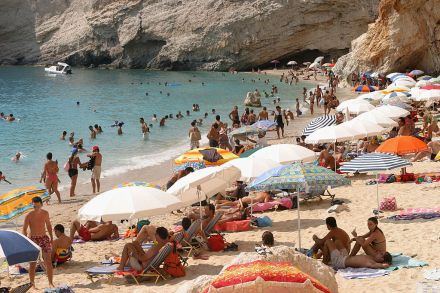
Greece

Greece is the word this dinner party season

If I were offered the option of eating just one country’s cuisine forevermore, it would have to be Greek. Even on a rainy day in north London, just one bite of souvlaki is enough to conjure sun-drenched landscapes, fresh olive oil and vibrant Mediterranean flavours.  Clearly plenty of others agree. Greek restaurants seem to be popping up all over London – with at least five opening in the past two months. There’s more to come with the much-anticipated opening of Zylia in Covent Garden next month, from Greek chef Nick Molyviatis (formerly of Borough Market hotspots Oma and Agora) and Cypriot restaurateur Barry Karacostas. No wonder lifestyle platform SheerLuxe was cooing about ‘London’s love affair with Greek food’ earlier this month.

Beware the restless, shifty liars

I have only been to Alexandria once, some years ago, when Hosni Mubarak was still in power, but it struck me as a sad city. Of course the library was not the library. The lighthouse was not the lighthouse. The city was not the city. I looked around for the remnants of the Greeks who had made it their own, but there seemed little left of them. Is there a cause we are financing so considerable it is decent to pass the cheque on to the next generations? Alexandria was on my mind again this week while reading a new biography of the city’s most famous modern poet, Constantine Cavafy (1863-1933). He was part of that world which migrated across the Mediterranean.

Scuzz Nation, the death of English literature & are you a bad house guest?

40 min listen

Scuzz Nation: Britain’s slow and grubby declineIf you want to understand why voters flocked to Reform last week, Gus Carter says, look no further than Goat Man. In one ward in Runcorn, ‘residents found that no one would listen when a neighbour filled his derelict house with goats and burned the animals’ manure in his garden’. This embodies Scuzz Nation – a ‘grubbier and more unpleasant’ Britain, ‘where decay happens faster than repair, where crime largely goes unpunished, and where the social fabric has been slashed, graffitied and left by the side of the road’. On the podcast, Gus speaks to Dr Lawrence Newport, founder of Crush Crime, to diagnose the issues facing Britain – and offer some solutions to stop the rot. (01:28) Next: is it demeaning to study Dickens?

Hell is having house guests

Since we moved into our house in the Cyclades a few years ago, I’ve come to accept that if you own a home on the beach in Greece with plenty of spare rooms, people will come to stay. But what is it about house guests abroad? Do they need fresh towels at home every time they wash their hands? Do they have to have three cooked meals a day? Do they have chauffeurs in normal life, or do they become allergic to driving only when they are on holiday? ‘We didn’t bother renting a car because we don’t want to go anywhere.’ If you want to make a host’s shoulders slump, saying this will do the trick. If I sound mean-spirited it might be because I’m not a natural hostess to start with.

What Ovid in exile was missing

A notable recent trend in popular history is the revival of interest in the ancient world. Mary Beard, Tom Holland, Bettany Hughes and Peter Stothard are just some of the historians whose books and television series have cashed in on our thirst for knowledge of distant forebears and their civilisations. Now Owen Rees joins the merry band with a strikingly original take on the subject. He argues that our interest in classical history focuses almost entirely on the Graeco-Roman world, specifically on the capital centres of those cultures. We therefore miss much of what was going on at the periphery of empires, with their vibrant cities and peoples.

Winning was all that counted in the ancient Olympics

It is agreed that the National Lottery revolutionised British athletics, pouring money into the training of athletes with potential, especially in expensive sports like rowing. In the ancient Olympics, only the equine events demanded serious financial outlay – in theory any male could run, jump, throw or fight – but though we hear of goatherds and ploughboys winning events, the games were still the playgrounds of the rich. The point is that reaching the highest level of any sport requires time, training and doctors, i.e. money. Further, sport, like education, requires leisure, and only the rich could afford that. But the rewards in terms of public fame and acclaim were very high.

Hunter Biden and the teaching of virtue

Joe Biden, President of the United States, may not have any criminal charges on his record, but his son Hunter does. When ancient Greeks discussed whether aretê (‘virtue, moral excellence, goodness, bravery’) could be taught, or not, such examples came into play. Plato discussed the problem in a dialogue in which Socrates raised the question with the famous sophist Protagoras who claimed to be able to teach anything to make people better. Socrates’s example was Pericles: here was a man of supreme aretê, but his two useless sons simply ‘browsed randomly about like cattle, hoping to bump into it’. Protagoras answered as follows.

Aristotle’s advice for young protestors

In his Art of Rhetoric, Aristotle (384-322 bc) sets about identifying the various headings under which you can be persuasive about any topic. One of the topics is the nature of the young, and as today’s students pick up their loud hailers to make demands about events more than 2,000 miles away in alien cultures which despise most of them, there is much of interest in the similarities and differences. In general, Aristotle says, the young, not having lived long, are inevitably ignorant and lack experience. So they are inclined to do whatever they feel like doing, and are easily satisfied because their wants are not overwhelming. They also lack guile and are trusting, because they have not experienced double-dealing; they tend to assume all men are honest.

Were the Greeks right about justice?

The Sentencing Council, consisting of various legal authorities, has told judges and magistrates to consider, when sentencing the young, their ‘difficult and/or deprived backgrounds or personal circumstances’. To what end? To induct the young into proper moral behaviour, Aristotle thought that family discipline should go hand in hand with the community’s laws, customs and education. But it was also possible for the young to receive bad training, on which Aristotle thundered: ‘It makes no small difference whether we form habits of one kind or another from our very youth; it makes a very great difference, or rather, it makes all the difference.

Conrad Black adheres firmly to the ‘great man’ view of history

George Orwell has a story that when Sir Walter Raleigh published the first volume of his projected history of the world while in prison, he witnessed a brawl outside his rooms in the Bloody Tower which resulted in the death of a workman. Despite diligent enquiries, Raleigh was unable to discover the cause of the quarrel. Reasoning that if he could not even ascertain the facts behind what he had observed he could hardly accurately report what had happened in distant lands centuries earlier, he burned his notes for the second volume and abandoned the entire project. No such doubts assail the 79-year-old Conrad Black, sometime proprietor of The Spectator, who, like Raleigh, has written the first of a projected three-volume global history.

Rich, beautiful and vital: John Craxton, at Pallant House Gallery, reviewed

The sensuality of the light in John Craxton’s painting ‘Two Figures and Setting Sun’ (1952-67) has to be seen to be believed. Viewing this large work in Pallant House, you feel its full force. Craxton was concerned with a scene’s essence, rather than simply its appearance and here he achieves not merely an effect but affect. In spite of most of the light being painted in yellows and oranges rather than white, the contrast and refraction of the rays produce a blinding sensation much like staring into the sun on a hot day.   It was as a chorister at Chichester Cathedral that Craxton’s daily encounter with two 12th-century Romanesque bas-reliefs taught him the timelessness of great art; that, even though it was from the distant past, something fresh and modern endured.

The day I have dreaded has finally arrived: my birthday

Coronis Trafficking in enchantment, I sailed west to Coronis, the most perfect private isle on this planet. At times I think I’m in the realm of fantasy, such is the beauty of the place, the perfection of its function, yet a nouveau riche, Bezos or Zuckerberg, say, would most likely find it not up to par because of its understatement. The island is greener than green, with olive trees and pines and vegetable gardens all planted by the owners, stone bungalows hidden from view, a great main house even more hidden from view, a discreet beach clubhouse, all in a wholesome, nostalgic setting poignantly evocative of a time before Succession-tinged vulgarity. Then came the day I had been in fear of: my birthday.

Why on earth did The Spectator support Brexit?

The temperature has hit 40°C in Crete, where I am writing this, and although there have been no fires, nothing is quite how it ought to be. I can’t work out whether this is a great opportunity to get a tan or, effectively, the end of the world. My 60-year-old taxi driver tells me that unfeasibly hot summers were a regular occurrence when he was young and that there’s nothing to worry about. But, he adds, he’ll be dead soon anyway so why should he care? Right or wrong, this is the paradox at the heart of the climate change debate. Older people, who could be held responsible for the destruction of the planet, don’t need to worry. And young people, who have so much more to lose, don’t really have a say. We invented plastic. They live with it.

Greece’s age-old obsession with fire

Patmos While green Rhodes and greener Corfu burn away, arid Patmos remains fireproof because rock and soil do not a bonfire make. The Almighty granted some islands plenty of water, and other ones no H2O whatsoever. Most of the Cycladic isles lug in drinking water from the mainland, and make do with treated unsalted seawater for planting. The Ionian isles have springs and rivers and also fires, some of them started by firebugs who hope to gain – I have never figured this one out – from the blaze. It’s all very confusing, especially as the temperatures are rising and the energy to party diminishes by the hour. Everything was hunky-dory until my daughter decided to give a party in my house The Greeks have always been obsessed with fire.

Why I chose virtue over vice

Patmos A funny thing happened on my way to this beautiful place, an island without druggies, nightclub creeps, clip joints or hookers. I stopped in Athens for about five hours in order to look over old haunts and just walk around places I’d known as a youth, when I noticed something incredible: none of the youngsters I encountered were texting, nor were they glued to their mobiles and bumping into people. Sure, some were on their phones, but the majority of them were talking and gesticulating like normal humans used to do before the technology curse rained down on us. Well, as they say, nothing lasts for ever, and once I was on Patmos friends informed me that what I had noticed in Athens was Alice in Wonderland stuff.

Where to find a taste of Greece in London

Last time I visited Toronto, Canada, I stayed in Greektown, home to one of the largest Greek communities in North America. Several scenes from My Big Fat Greek Wedding were filmed here, and street signs are in Greek as well as English. On the day I arrived, jetlagged and disorientated, I happened upon a restaurant that was so authentically Greek I imagined I could smell the pine trees and hear the soft chirp of crickets. A couple of elderly men sat drinking ouzo at the bar, and rather than being led to a table I was taken into the kitchen where Maria (reader, that was her name, what can I do?) was stirring various pots, including a green bean and tomato dish (fasolakia giaxni) and meatballs (soutzoukakia).

Will The Parthenon Project seize the Elgin Marbles?

Thirty-five years ago, the late Christopher Hitchens published a book about the Elgin Marbles. Unsurprisingly, it was a polemical work; he was passionately campaigning for the return of the sculptures to Athens. But that was not the reason why I wrote a scathing review of it for The Spectator. Parts of it were plagiarised, as I showed, from the classic book by William St Clair; and in some places Hitchens dealt with the awkward fact that the evidence did not fit his claims by abbreviating the quotations, filtering out the unwanted bits. Hitchens replied with a thunderously disdainful attack on me in the letters page. I said to the then editor, Charles Moore, that I feared that if I met Hitchens at a Spectator party he would punch me on the nose.

The curse of the jet-ski

An F. Scott Fitzgerald biographer by the name of David S. Brown refers to America’s promotion of deviancy (my words) as ‘the great post-Appomattox launch toward materialism’. I liked that line and was thinking about it as I left the boat in the early morning and walked into an almost perfect Greek village square for a coffee. There were some French people blabbing away with their usual hand gestures, Greeks discussing politics at high volume, and then an American couple, both quite attractive, each with a Mac in front of them and absolutely impervious to anyone or anything in their immediate surroundings. Talk about a launch towards materialism. The two of them never once looked up from their screens.

Why you should swap Mykonos for Milos

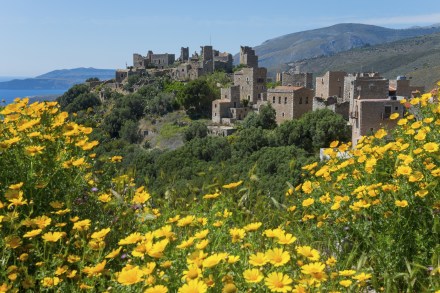
Choosing an island in the Cyclades is a familiar summer conundrum for those who love Greece. The array of choice is so dizzying that many opt for the safety of well-known options: Santorini and Mykonos. But if you’re seeking something off the beaten track, why not venture away from the tourist centrals? With a population of roughly 5,000, Milos strikes the perfect balance between adventure and unspoilt natural beauty. Situated between Piraeus and Crete, the 150km2 horseshoe-shaped island is the rising star of this group of well-trammelled islands. It gained significant attention from tourists in the last decade, with 2019 recognised as its best year before the inevitable shake-up of the pandemic, a local says.

In praise of Greek royalty

New York Prince Pavlos, heir to the Greek throne, turned 55 recently and I threw a small dinner for him. Pavlos is a hell of a prince, father, husband and businessman. He’s tall, good-looking, a gent in every way, intelligent, hard-working and has never put a foot wrong. Neither has any member of his immediate family. Compared with them, the rest of European royals seem wanting, but then I’m prejudiced. The Greek royals are Danes, and the oldest reigning clan of Europe. Unlike another royal family whose name escapes me – it is the Platinum Jubilee issue after all – the Hellenic one has had no divorces, no scandals, and if physical looks mattered, the Greek royals would be the ruling family of Europe. At present Pavlos comes to the dojo after work and trains hard.