Government

We must reclaim the word ‘progressive’

I’ve grown tired of hearing the term progressive used to describe people and policies that embody anything but progress. The word suggests a movement toward liberty, reason and human dignity. But what now passes for “progressive” ideology is a regressive assault on foundational principles: race-based social engineering, denial of biological truth, hostility toward the rule of law and an obsession with censorship disguised as compassion.Progress gave us the abolition of slavery, universal suffrage, constitutional government and equal protection under the law. It was built on Enlightenment ideals – reason, open inquiry and the primacy of the individual over tribe. The ideologues now claiming the label have rejected those very foundations.

Why abolishing DEI is only a partial revolution

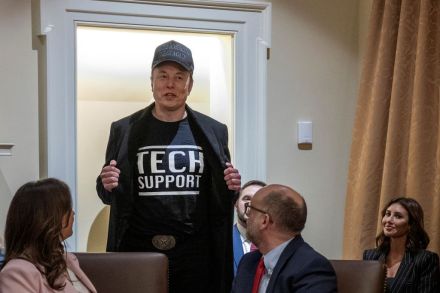
Elon Musk’s Department of Government Efficiency (DoGE) continues merrily to chop programs and departments left, right and center. Federal diversity, equity and inclusion officials were suspended on his first day in office, prior to being given their marching orders. Government employees have been ordered to justify their existence by explaining what, if anything, they achieved last week. All of this ought to be a positive influence on how the US is governed. Some will claim it to be an ideological war waged by the Trump administration. Yet it is really just the same process that private corporations undergo constantly in their search for greater efficiency and profits. Yet there is a chink in Trump’s strategy.

DEI
government

Cut the bureaucracy — and the chainsaw

I retain a requisite amount of contempt for government-run institutions and the bureaucrats with whom I have to deal on occasion. Every interaction with them makes me want to pull my hair out. Government websites function as if they haven’t been updated since dial-up. I would rather go to the dentist than the DMV. It’s as if each employee has been specially hand-picked to make you hate the government more. These are features of the system, not bugs. Take the TSA, the organization which seems to derive the most joy out of making things difficult for parents flying with toddlers. In an effort to thwart these desperate adults chaperoning tiny terrorists, the agency will inexplicably change up the protocol for strollers every single time.

The looming Lenin comeback

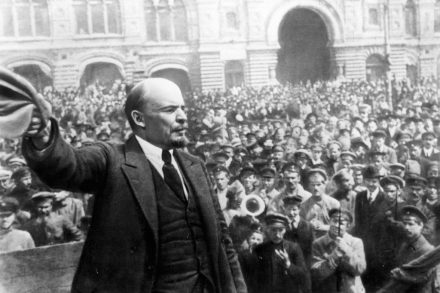
The year 2024 marks the centenary of Vladimir Lenin’s death. In April of that year, the consummate communist, having blighted as many lives as he could, finally shuffled off his mortal coil, aged fifty-three.“That was young,” you may say. But I reply, “Not nearly young enough.” As we embark on what is sure to be an eventful year, it is worth pausing to remember the hideous legacy of that ice-cold totalitarian. What I have in mind is not so much Lenin’s butcher’s bill as his more general modus operandi. Estimates of the number of people Lenin had tortured, maimed and murdered vary, but are always well into the millions. But what is somehow even creepier is his model of government.

lenin

How AI could shrink government

Recent advances in artificial intelligence have led many observers to worry that computers will soon replace far more jobs than imagined just a few years ago. The World Economic Forum now predicts that over 85 million positions could be lost to automation by the year 2025, many in law, medicine, accounting and other fields once thought immune to electronic substitution. Industry experts like IBM CEO Arvind Krishna argue that the worries about this dramatic change are vastly overblown. Like every past technological innovation, he says, AI will eventually create many more employment opportunities than it eliminates, producing jobs in which a person’s productivity will be enhanced by his or her ability to use smart and dexterous machines.

ai artificial intelligence

Jack Teixeira and our crisis of trust

Despite all the precautions and double-checks, at some level everything ends up a matter of trust. And in the case of Air National Guardsman Jack Teixeira, much of that trust was violated. Why couldn't the military trust him? Why do we have to trust him? The documents against Jack Teixeira, the twenty-one-year-old airman first class who is accused of leaking classified documents, indicate that he was granted a top secret security clearance in 2021, which was required for his job as a computer network technician in the Massachusetts Air National Guard. While that may sound like an exceptional degree of access for such a junior service member, having top secret/SCI (sensitive compartmentalized information) clearance in that kind of job is standard.

jack teixeira

How taxpayer money was used to silence speech

Here's a simple question: how much American taxpayer money is being spent to silence, censor, and blacklist opinions? Legacy media reporting on the House Oversight Committee's initial look into the actions of Twitter during the 2020 elections focused mostly on questions surrounding Hunter Biden's laptop. The committee's investigative reports, however, ought to hone in on the most disturbing aspect of this story: social media giants were routinely directed and coerced into censoring and silencing American citizens by entities funded by those same taxpayers.

tax dollars free speech censorship disinformation

The art of politics: what ministers hang on their walls

If I am ever appointed to one of Britain’s Great Offices of State — stranger things have happened to Spectator hacks — the first thing I’d do is furnish my office. A raid on the Government Art Collection is a perk of being a minister, and better than the car and the driver. A few Hogarth engravings, a set of David Jones’s ‘Ancient Mariner’ etchings, Cedric Morris’s ‘Irises and Tulips’, Edward Bawden’s ‘The Coal Exchange’...I’d have liked to nab Winifred Nicholson’s ‘Flower Piece’, if only Carrie, the new Mrs Boris, hadn’t got there first. A Freedom of Information request from The Spectator has lifted the little red velvet curtains on which works of art ministers have got from the vaults.

art

Everyone is a libertarian at the end of a pandemic

There are lots of libertarians at the end of a pandemic — and for good reason. For more than a year now Americans have watched the actions of dysfunctional government officials play out like the worst reality show of all time. If the ineptitude wasn’t so infuriating, it might make for entertaining TV. There was the episode when the smug governor who asked his constituents to stay home got caught dining at French Laundry. Or what about the one when the White House coronavirus response coordinator broke her own travel restrictions to winterize her vacation home — and got ratted out by members of her own family? The past 12 months have showcased non-stop hypocrisy from our federal and local officials.

libertarian

Burke’s work

Edmund Burke wrote the authoritative Western defense of cultural traditionalism in modernity, Reflections on the Revolution in France. How could he also compose a tract called Thoughts and Details on Scarcity, in which the same writer provided steadfast support for Enlightenment, market-based principles that were perceived by contemporaries as a threat to settled social conventions?Burke’s opposition to state intervention in the domestic agricultural economy bursts through in his very first statement in Thoughts and Details. ‘Of all things, an indiscreet tampering with the trade of provisions is the most dangerous,’ he writes, ‘and it is always worst in the time when men are most disposed to it: that is, in the time of scarcity.

burke