Government

17 reasons to love Brexit

From our UK edition

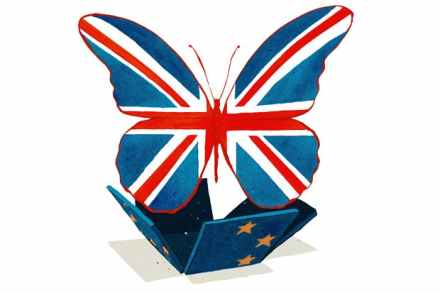
‘But what are you going to do with the powers?’ the minister asked, while I negotiated devolution of powers to London when Boris was mayor. The government wouldn’t grant powers unless we explained how we would use them. And that is what is missing in the Brexit non-debate. We are ‘taking back control’ — but we haven’t really thought what we will do with that control once we have it. It is true there has been discussion of trade deals, transforming the Common Agricultural Policy and the colour of our passports. But if that was all we could do, even most Brexiteers wouldn’t have considered it worth it. So, what could we do once we Brexit? Well actually, given how extensive EU law is, an awful lot.

The economics of fish and chips

From our UK edition

When you pay £8 for fish and chips, where does the money go? That's the question one restaurant has been busy answering after a customer left a two-star review on Facebook. It wasn't that there was anything wrong with the food – in fact it was 'lovely' and the staff were 'amazing'. But Debbie Davies still felt the need to complain to Oxton Bar and Kitchen over the price for the meal – £8. Happily, staff at the restaurant were happy to provide clarity: 'Ok Debbie. Where do I begin? Out of that £8, our nasty government is charging you 20% vat which we collect by law on their behalf, so we’re left with £6.66.

Crunch time

From our UK edition

For anyone considering a career in economic forecasting, the Bank of England’s inflation report for August 2007 ought to be required reading. A graph illustrating its Monetary Policy Committee’s ‘best collective judgment’ of annual economic growth two years ahead is fixed around a central prediction of 2.5 per cent, with extreme boundaries of 0.8 per cent and 4.2 per cent. But after two years, economic growth was running at –5.6 per cent, and the economy had just completed its fifth consecutive quarter of negative growth. The finest minds of Threadneedle Street could not see two years ahead.

A threadbare Queen’s Speech isn’t such a bad thing

From our UK edition

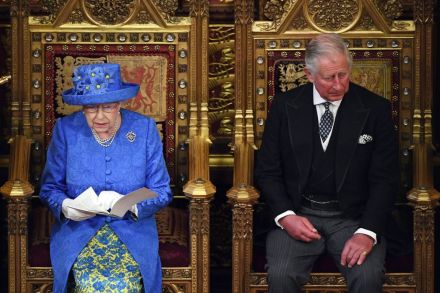
Can you remember what was in this week’s Queen’s Speech? Boris Johnson couldn’t on the day it was unveiled, making a total mess of trying to sell it on Radio 4’s PM programme. But as the week draws to an end, the main question about the Speech is whether it will pass unamended, not whether the legislation it includes will make much of a difference.  But is a ‘threadbare speech’ really such a bad thing? Governments of all hues suffer from a compulsive disorder that leads them to legislate merely for the sake of it.

Political tinkering has turned pensions into a quagmire

From our UK edition

It is not usually feasible to put the great and good of the financial services industry together in a room and get them to agree on anything. Typically, they squabble like alley cats, arguing about everything on and off the agenda, even  the state of the weather. Occasionally, blows are traded. Yet a few days ago, I witnessed something of a financial miracle taking place in a swanky restaurant (1 Lombard Street) in the heart of the City of London. Fourteen individuals, representing different areas of the pensions industry, actually agreeing on a pensions agenda that the next government should follow. I was taken aback as I chewed furiously away on my vegetarian sausages while swallowing gallons of black coffee. Miracles, not misselling, in the City of London? Whatever next?

No ordinary judge

From our UK edition

Justice McCardie was anything but a conventional High Court judge. He left school at 15 and was called to the bar at 25. After ten years of provincial practice he turned down the offer from Joseph Chamberlain of a safe Conservative seat, although politics was then the conventional highway to the bench (unlike now when it is a cul de sac). He also rejected an offer of silk, after withdrawing an earlier application which he thought the lord chancellor had been too slow to consider, and was, on the initiative of H.H. Asquith, the then liberal prime minister, appointed to the bench at 47 — the youngest of his generation — and the first junior to receive such promotion for over a century.

Dome truths

From our UK edition

It was 50 years ago today, Sergeant Pepper taught the band to play. The result was a popular masterpiece. Thirty years later, a less accomplished, tone-deaf group of individuals collaborated on the Millennium Dome, and the result was an expensive, sniggerable calamity. For a while, I was one of them. Of course, it was not really a ‘Dome’ at all, since a dome is a sophisticated self-supporting masonry structure and this was just a big, stupid, hemispherical fabric tent. But ‘Millennium Tent’ did not have rhetorical resonance sufficient to burnish the already very bright and shiny egos of its perpetrators during the Blair Dawn. In any organisation, lots of stuff goes wrong a lot of the time, as Murphy’s Law states.

Why binding shareholder votes on pay should be a manifesto promise

From our UK edition

Will executive pay pop up in Theresa May’s manifesto? An objective of her snap election is to secure a larger majority on the basis of a smaller burden of manifesto promises than she inherited from David Cameron. But in her only leadership campaign speech last July, her reference to ‘an irrational, unhealthy and growing gap between what those companies pay their workers and what they pay their bosses’ was one of the phrases that caught the most attention. Back then, she was in favour of imposing annual binding shareholder votes on boardroom remuneration, as well as spotlighting the ratio between chief executives’ and average workers’ pay, and even forcing companies to accept workers’ representatives on boards.

Government rows back on plans to raise probate fees

From our UK edition

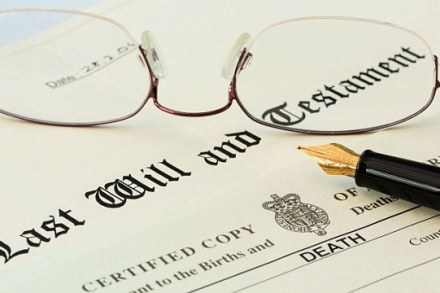
'In this world nothing can be said to be certain, except death and taxes.' This famous quote, attributed to Benjamin Franklin, holds as true today as it did at the time of writing in 1789. Given that versions of this sentiment date back to the early 18th century, and continue to be in use in 2017, it seems that death and taxes are two of mankind's main preoccupations. And so it came as no surprise that a government plan to hike probate fees paid by bereaved families met with fierce opposition. Under the proposed changes, probate fees had been due to rise from £155 or £215 to up to £20,000 for some estates in England and Wales from May. Now, following the Prime Minister's decision to hold a snap election in June, these increases have been scrapped.

NS&I’s 2.2 per cent bond is the best of a bad bunch

From our UK edition

The government has made good on its Autumn Statement pledge to introduce a new ‘market-leading’ bond through National Savings & Investments (NS&I) – it’s just a shame the market is still in the doldrums. The Investment Guaranteed Growth Bond will pay 2.2 per cent to savers depositing between £100 and £3,000. Launching the NS&I bond on Tuesday, economic secretary to the Treasury Simon Kirby said: 'With its market-leading rate of 2.2 per cent, the Investment Bond will provide a valuable boost for savers who have been affected by low interest rates.' The Treasury also pointed out that the average three-year fixed-term product has a rate of 1.24 per cent so 'the new offering is significantly higher than others currently on the market'.

Crackdown on rogue landlords comes into force

From our UK edition

If you've ever rented a property, chances are you've a horror story or two up your sleeve. I remember the north London flat with mushrooms growing in the shower. Then there was the house in the south of the city with mildew on the bathroom walls. And the landlord who refused to return my deposit because I had a cat - despite telling me months earlier that pets were no problem. So I welcome the news that local authorities are to be given powers to crack down on rogue landlords who shirk their responsibilities. Under government rules, which came into force yesterday, landlords who commit a range of housing offences could be subject to fines of up to £30,000 (as an alternative to prosecution).

The Spectator’s Notes | 30 March 2017

From our UK edition

An email from the high-minded Carnegie Endowment, marking the triggering of Article 50 and the 60th anniversary of the Treaty of Rome, speaks of ‘The Closing of the European Mind’. ‘The cult of the protective sovereign nation-state,’ it goes on, ‘will not provide convincing solutions to 21st-century challenges, which are inherently transnational.’ This is true, in a way. Lots of modern challenges cannot be solved by the nation-state alone. But is there anyone — even including the ‘Anywheres’ defined recently by David Goodhart — who would be happy to inhabit a space completely unprotected by a sovereign state?

Making sense of the housing white paper

From our UK edition

Young people, their faces pressed against an estate agent’s window, gaze at all the lovely homes they’ll never, ever be able to buy. That’s the image the communities minister Sajid Javid conjured up while unveiling the government’s long-awaited housing white paper week. This snapshot of young housebuyers' despair was meant to symbolise a broken housing market where, on average, house prices are nearly eight times average salaries. 'If we don’t act now,' the communities minister said, 'a whole generation could be left behind'. So what did the government propose in its white paper for England, initially intended for publication late last year and then in January 2017?

The shameful hypocrisy of Sweden’s ‘first feminist government’

From our UK edition

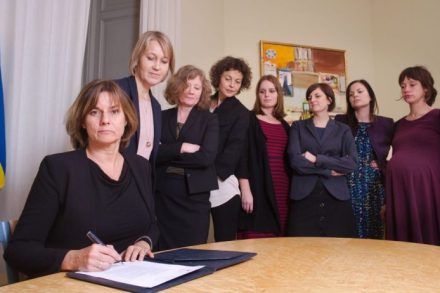
A couple of weeks ago I named the Labour MP Tulip Siddiq as my pious political hypocrite of the week, mainly for being silent on her bigoted aunty while strikingly vocal about a total stranger. I’m afraid that I was so overwhelmed by applicants for last week’s award that I have only just emerged from the pile of entries. However, I am now in a position to reveal the latest recipients of this increasingly coveted prize. Pipping even Speaker John Bercow to the award are the brave sisters of the Swedish government. Here is a photo from earlier this month of Isabella Lovin (Sweden’s Deputy Prime Minister, Minister for International Development Cooperation and Climate and spokesperson of Sweden’s Green Party).

We no longer have a pensions system, just a mess caused by the Treasury

From our UK edition

Back in the 1980s, when I was embarking on a lifetime of sweat, toil and tears in order to bring home the bacon, I lived in a pensions desert. I couldn’t see, feel or feed one (a pension, that is) for miles around. During this decade, against a backdrop of privatisations, a rampant Prime Minister (Margaret Thatcher), Michael Jackson’s Thriller and Madonna’s virgins, I was privileged to work for four employers. A major chartered accountancy practice, a big and little publisher and a now defunct building society. Not one offered me the opportunity to save into a company pension.

VAT: a back door money spinner that generates billions for the government

From our UK edition

If conspiracy theorists turned their attention to the economy rather than, I don’t know, aliens or Hillary Clinton, surely it would not take long for them to notice the peculiar rise in the tax take from VAT. VAT sounds innocuous enough, perhaps because no one really knows why it is there or what 'Value Added' actually means. But it’s not really innocuous. To a government that makes much of its supposed generosity on income tax through, for example, increasing personal allowances, VAT is becoming the back door money spinner du jour. VAT has all the hallmarks of a brilliantly unfair tax. Unlike income tax, it is often invisible or well hidden.

Revealed: the Institute for Government’s Europhile links

From our UK edition

This week the Times splashed on a report by the Institute for Government branding Theresa May's Brexit plans 'chaotic and dysfunctional'. The research group claimed that Whitehall is overwhelmed by the size of the task ahead and expressed concerns about its feasibility. However, while many Bremoaners have leapt on its findings as proof that the government's Brexit approach is shambolic, Mr S suggests they take a close look at the group behind it. With a board composed of the likes of Neil Kinnock's former Chief of Staff at the European Commission, Sir Andrew Cahn, and a range of Labour MPs and peers, it can't be considered the most neutral outlet. What's more, the Institute for Government received a core grant of £3.

Breaking the Bank

From our UK edition

The exchange of letters this week between Mark Carney and Philip Hammond made it very clear who the supplicant was. The Governor of the Bank of England informed the Chancellor of the Exchequer that he was prepared to extend his term by one year. Carney pointed out that while the personal circumstances that had made him want to limit his term to five years had not changed, this country’s circumstances had. So he would be here a little longer. Things had seemed very different a few weeks ago, when Theresa May bemoaned the consequences of the Bank’s monetary policy in her party conference speech. ‘A change has got to come,’ she had warned. ‘And we are going to deliver it.

Blinded with science

From our UK edition

We’re continually assured that government policies are grounded in evidence, whether it’s an anti-bullying programme in Finland, an alcohol awareness initiative in Texas or climate change responses around the globe. Science itself, we’re told, is guiding our footsteps. There's just one problem: science is in deep trouble. Last year, Richard Horton, editor of The Lancet, admitted that "much of the scientific literature, perhaps half, may simply be untrue." In his words, "science has taken a turn toward darkness." Medical research, psychology, and economics are all in the grip of a 'reproducibility crisis.' A pharmaceutical company attempting to confirm the findings of 53 landmark cancer studies was successful in only six instances, a failure rate of 89pc.

Meet Boris Mark II

From our UK edition

The make-up lady at the BBC’s Millbank studio in Westminster has noticed a change in Boris Johnson’s look. ‘His hair is much smarter now,’ she told me as she slapped anti-shine talc on my pate for the Daily Politics show. ‘But he still messes it up a bit after I’ve combed it.’ Boris Mark II has entered the fray. As his conference speech this week showed, he’s still making the gags but they play second fiddle to his more serious aspirations — as a successful Foreign Secretary and, ultimately, PM. Like some rare species of blond cockroach, Boris survived the post-referendum nuclear fallout while the other Bullingdon boys and the Notting Hill Set were wiped off the face of the earth.