Government

Can the Kremlin afford to fix Russia’s oil crisis?

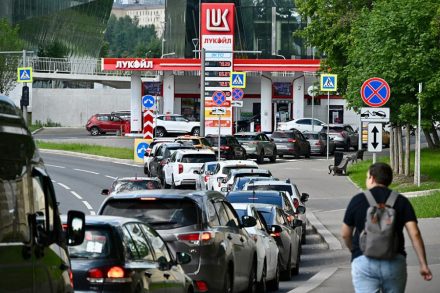
For a country that pumps roughly nine million barrels of oil a day – the third highest of any country in the world – Russia has managed to achieve something genuinely remarkable: it cannot keep its own gas stations stocked. More than half of its regions are now reporting shortages, the consequence of a Ukrainian drone campaign that has struck with increasing frequency and precision at the refinery infrastructure on which the country's civilian economy depends. The sometimes hours-long lines that have appeared – even in Moscow, for what may be the first time in the war – carry a symbolic weight that no amount of official reassurance from the Kremlin has managed to dispel. How this has come about is obvious enough.
oil

The insoluble link between government and crime

From our UK edition

In the 18th century, the cash-strapped British crown imposed customs duties on tea imports that rose as high as 119 per cent. Unsurprisingly, such huge tariffs sparked a smuggling boom in coastal towns such as Deal, in Kent, where the cliffs were pockmarked with secret tunnels and half the inhabitants lived off profits from such illicit activities. When the government tried to crack down in 1781, it had to send in a 1,000-strong militia, headed by 100 men on horseback. Yet smuggling may have accounted for more than half of England’s trade at the time – and it often involved respected figures in communities who regularly bribed officials. This underlines how the imposition of taxes creates illegal markets that can eat into state revenues and corrupt society.

We must reclaim the word ‘progressive’

I’ve grown tired of hearing the term progressive used to describe people and policies that embody anything but progress. The word suggests a movement toward liberty, reason and human dignity. But what now passes for “progressive” ideology is a regressive assault on foundational principles: race-based social engineering, denial of biological truth, hostility toward the rule of law and an obsession with censorship disguised as compassion.Progress gave us the abolition of slavery, universal suffrage, constitutional government and equal protection under the law. It was built on Enlightenment ideals – reason, open inquiry and the primacy of the individual over tribe. The ideologues now claiming the label have rejected those very foundations.

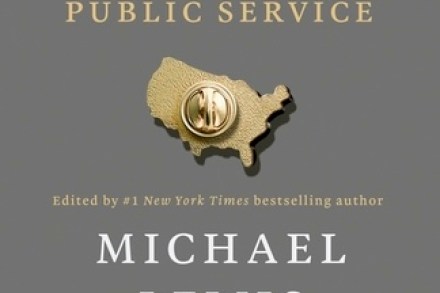
Who is Government? edited by Michael Lewis

From our UK edition

40 min listen

My guest in this week's Book Club podcast is the novelist and journalist John Lanchester, one of the contributors to Michael Lewis’s very timely new anthology of reportage on the United States federal government, Who Is Government?: The Untold Story of Public Service. Can the public learn to love a bureaucrat? John tells me why he thinks the workings of government are misunderstood and under appreciated, why we should marvel at the making of the consumer price index, and why he thinks Elon Musk has ‘the wrong handle of the shopping bag’.

Why abolishing DEI is only a partial revolution

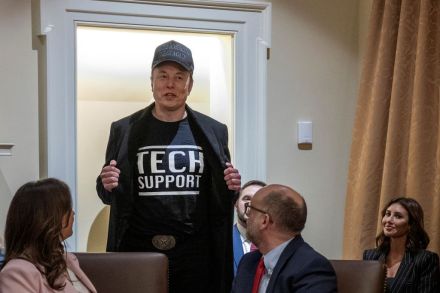
Elon Musk’s Department of Government Efficiency (DoGE) continues merrily to chop programs and departments left, right and center. Federal diversity, equity and inclusion officials were suspended on his first day in office, prior to being given their marching orders. Government employees have been ordered to justify their existence by explaining what, if anything, they achieved last week. All of this ought to be a positive influence on how the US is governed. Some will claim it to be an ideological war waged by the Trump administration. Yet it is really just the same process that private corporations undergo constantly in their search for greater efficiency and profits. Yet there is a chink in Trump’s strategy.

DEI
government

Cut the bureaucracy — and the chainsaw

I retain a requisite amount of contempt for government-run institutions and the bureaucrats with whom I have to deal on occasion. Every interaction with them makes me want to pull my hair out. Government websites function as if they haven’t been updated since dial-up. I would rather go to the dentist than the DMV. It’s as if each employee has been specially hand-picked to make you hate the government more. These are features of the system, not bugs. Take the TSA, the organization which seems to derive the most joy out of making things difficult for parents flying with toddlers. In an effort to thwart these desperate adults chaperoning tiny terrorists, the agency will inexplicably change up the protocol for strollers every single time.

How the Whips’ office really works

From our UK edition

35 min listen

Simon Hart joins James Heale to talk about his new book Ungovernable: The Political Diaries of a Chief Whip. Having stepped down at the 2024 election, Simon has become the first former Chief Whip to publish his diaries. What are his reflections on the Conservatives' time in office? Simon explains why his decision to resign under Boris Johnson was so difficult, why the Rwanda vote under Rishi Sunak was their finest hour, and why the Whips' office is really the government's HR department. Just how Ungovernable was the Tory Party? Produced by Patrick Gibbons.

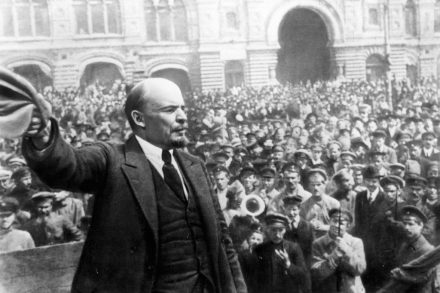
The looming Lenin comeback

The year 2024 marks the centenary of Vladimir Lenin’s death. In April of that year, the consummate communist, having blighted as many lives as he could, finally shuffled off his mortal coil, aged fifty-three.“That was young,” you may say. But I reply, “Not nearly young enough.” As we embark on what is sure to be an eventful year, it is worth pausing to remember the hideous legacy of that ice-cold totalitarian. What I have in mind is not so much Lenin’s butcher’s bill as his more general modus operandi. Estimates of the number of people Lenin had tortured, maimed and murdered vary, but are always well into the millions. But what is somehow even creepier is his model of government.

lenin

Good riddance to neoliberalism

From our UK edition

I listened to a fascinating debate on the BBC’s The World This Weekend about the ideological origins of that thing, populism. The agreeably thuggish Javier Milei had just taken the reins of Argentina and, perhaps a little late in the day, the TW2 (as it is known in BBC circles) production team had noticed that almost every election held anywhere these days – except perhaps Australia and here – tends to result in a win for a party which is either overtly populist, as in Argentina, or is called populist by its opponents and the BBC. What the hell is going on, they wondered, only ten years too late. Who did they choose to ‘debate’ the issue? Prince Harry and Wolf from Gladiators? The suave game-show presenter Ben Shephard and Herbie the Skateboarding Duck?

How AI could shrink government

Recent advances in artificial intelligence have led many observers to worry that computers will soon replace far more jobs than imagined just a few years ago. The World Economic Forum now predicts that over 85 million positions could be lost to automation by the year 2025, many in law, medicine, accounting and other fields once thought immune to electronic substitution. Industry experts like IBM CEO Arvind Krishna argue that the worries about this dramatic change are vastly overblown. Like every past technological innovation, he says, AI will eventually create many more employment opportunities than it eliminates, producing jobs in which a person’s productivity will be enhanced by his or her ability to use smart and dexterous machines.

ai artificial intelligence

Jack Teixeira and our crisis of trust

Despite all the precautions and double-checks, at some level everything ends up a matter of trust. And in the case of Air National Guardsman Jack Teixeira, much of that trust was violated. Why couldn't the military trust him? Why do we have to trust him? The documents against Jack Teixeira, the twenty-one-year-old airman first class who is accused of leaking classified documents, indicate that he was granted a top secret security clearance in 2021, which was required for his job as a computer network technician in the Massachusetts Air National Guard. While that may sound like an exceptional degree of access for such a junior service member, having top secret/SCI (sensitive compartmentalized information) clearance in that kind of job is standard.

jack teixeira

How taxpayer money was used to silence speech

Here's a simple question: how much American taxpayer money is being spent to silence, censor, and blacklist opinions? Legacy media reporting on the House Oversight Committee's initial look into the actions of Twitter during the 2020 elections focused mostly on questions surrounding Hunter Biden's laptop. The committee's investigative reports, however, ought to hone in on the most disturbing aspect of this story: social media giants were routinely directed and coerced into censoring and silencing American citizens by entities funded by those same taxpayers.

tax dollars free speech censorship disinformation

Qatargate and the dubious moral authority of NGOs 

From our UK edition

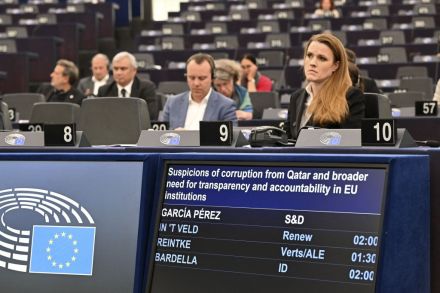
The Qatargate scandal haunting the European Union is not merely about corrupt politicians and officials. The deplorable role of a non-governmental organisation is at the heart of the scandal, which highlights the interlocking of NGOs and EU parliamentarians and decision makers. The most interesting feature of the corruption scandal surrounding the detention of the EU parliament’s vice-president Eva Kaili and politicians and EU apparatchiks is their connection to a supposedly squeaky-clean NGO called Fight Impunity. The current president of the organisation is Pier Antonio Panzeri, 67, a former Italian leftist MEP. He was arrested after €600,000 in bank notes was found in his house in Brussels.

How to be PM: ten rules for the next Tory leader to live by

From our UK edition

You’ve just become prime minister. The public finances are in a mess, the Bank of England has stoked inflation, cutting taxes may make it worse, energy prices are through the roof, people are hurting so you can’t cut social spending, the Health Service is lengthening its waiting lists despite record budgets. What can you do? Given that you will be hearing a lot from people who do governing all day, here are ten things to remember on behalf of the rest of us – the governed: Assume all public bodies have the same goal – and it isn’t what it says on the tin. You might think the Committee for the Promotion of Postage Stamp Collections is obsessed with postage stamps, or the Sewage Treatment Works Agency is fascinated by sewage.

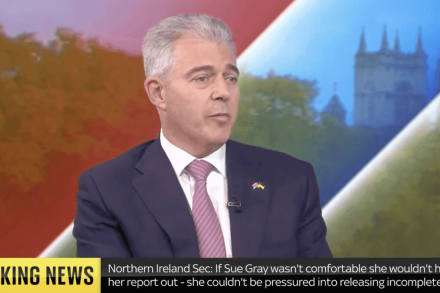
Sunday shows round-up: Minister ‘absolutely confident’ No. 10 did not pressure Sue Gray

From our UK edition

Andrei Kelin – Russian war crimes allegations are ‘a fabrication’ Clive Myrie took the reins of the BBC’s Sunday Morning show, and the centrepiece was a pre-recorded interview with the Russian ambassador Andrei Kelin. Myrie confronted Kelin with evidence of war crimes by Russian soldiers in Ukraine, as in the town of Bucha and the razing of Mariupol. Kelin spent the interview stonewalling most of Myrie’s claims: https://www.youtube.com/watch?v=dGIN1qtMhrg Brandon Lewis – If we don’t stand up to Russia now, what’s next? Myrie went on to interview the Northern Ireland Secretary Brandon Lewis. He asked Lewis if the UK government was prepared to ask Ukraine to cede territory to Russia in order to end the war: https://www.youtube.

Javid says no to restrictions – for now

From our UK edition

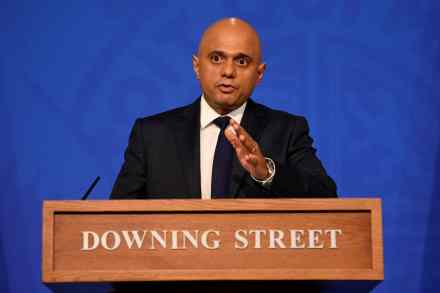
Is the government considering activating its 'plan B' Covid plans? Not yet.  After the Business Secretary played down talk of new restrictions this morning, Sajid Javid used today’s press conference to confirm that he would not be implementing the back-up plan ‘at this point’. However, the Health Secretary suggested that further measures – namely vaccine passports, work-from-home orders and mask mandates – could not be ruled out if the data substantially worsens. The main message from the press conference: get vaccinated There was a marked change in tone from Javid since the days soon after his appointment as Health Secretary when he declared that there was 'no going back'.

Time to ditch the pension triple-lock for good

From our UK edition

Perhaps it’s finally dawned on the government that they have an intergenerational inequality problem on their hands. The decision to suspend the pension triple-lock for one year to avoid an 8 per cent increase to the state pension would suggest so. Asset wealth is already excessively concentrated in the over-55s. To even this spendthrift government, a massive bump in pensions while the rest of the economy languishes is a step too far. But that’s exactly what happens every year anyway under the triple-lock. The policy means that even when the rest of the economy stagnates, pensioners receive a boost. It is a feature of the system, not a bug, which came into place as part of the coalition in 2010 and has quite clearly run its course.

Boris should keep copying Blair

From our UK edition

Having written here at least once before that Boris Johnson is the heir to Blair, my first thought on the Prime Minister's tax-to-spend announcement on the NHS and social care is a petty one: I told you so. The striking thing about making the Boris-Blair comparison is how resistant some people are to it. Among Bozza fans on the Leave-voting right, there is often fury at the suggestion that their man, the hero of Brexit, is anything like the Europhile they used to call ‘Bliar’. On the left, there is an almost pathological determination to believe that a Tory PM must, by definition, be a small-state free-marketeer intent on starving and privatising public services. That latter point is why Labour people sometimes struggle to respond to Johnson.

The art of politics: what ministers hang on their walls

If I am ever appointed to one of Britain’s Great Offices of State — stranger things have happened to Spectator hacks — the first thing I’d do is furnish my office. A raid on the Government Art Collection is a perk of being a minister, and better than the car and the driver. A few Hogarth engravings, a set of David Jones’s ‘Ancient Mariner’ etchings, Cedric Morris’s ‘Irises and Tulips’, Edward Bawden’s ‘The Coal Exchange’...I’d have liked to nab Winifred Nicholson’s ‘Flower Piece’, if only Carrie, the new Mrs Boris, hadn’t got there first. A Freedom of Information request from The Spectator has lifted the little red velvet curtains on which works of art ministers have got from the vaults.

art

The art of politics: what ministers hang on their walls

From our UK edition

On the walls of the Chancellor’s office hangs a print of Eric Ravilious’s lithograph ‘Working Controls while Submerged’ (1941). Two engineers in blue overalls heave the levers of a submarine. A third slumps asleep on a bench. An image, perhaps, of the ship of state, several hundred feet underwater, but by no means sunk yet. We might picture Rishi Sunak in the Treasury control room, changing the gears, working the pumps, keeping the country bumping along even at the bottom of the economic ocean. Or perhaps Sunak looks at his four framed screen-prints by the artist Justine Smith — ‘Pound’, ‘Euro’, ‘Dollar’, ‘Yen’ — and thinks: if only it were so easy just to print money.