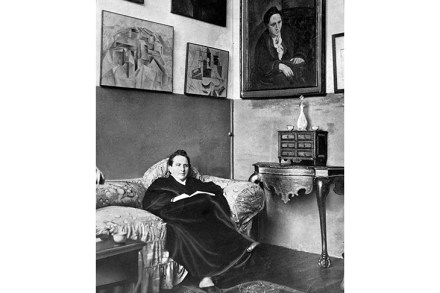
Gertrude stein

Francesca Wade’s Gertrude Stein biography is a study in frustration

From our US edition

There came a point in time when Gertrude Stein was more famous for being Gertrude Stein than for anything she’d written. The American writer, born in Oakland, California, in 1874, moved to Paris in 1902 and devised a style of writing that privileged the sounds of words over narrative or plot, a process of discovery inspired by the art she discovered in the city. The non-representational canvases of Picasso and Cézanne, who became her close friends, made more of an impact on her emerging style than any writer: colors and shapes told a story of their own beyond any apparent subject or setting. She engaged in constant battles of wits with publishers and editors, eventually resorting to publishing her writing herself instead.
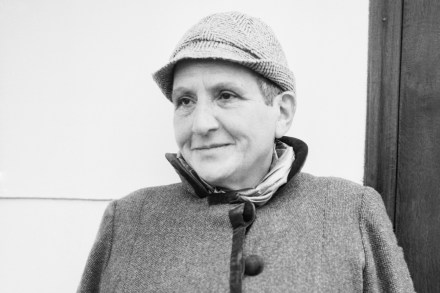
Stein

‘Genius’ is a dangerously misused word

For several centuries, the word ‘celebrity’ meant fame. A couple of hundred years ago, it acquired a secondary meaning of a person overendowed with that quality, and this has now largely driven out the previous usage. In parallel, the same journey has been travelled by ‘genius’. Once an essence that attached to works or deeds, it now also refers to people – celebrities of accomplishment, no field too trivial. Helen Lewis teases out the consequences of this shift and makes a modest plea for its reversal.

The beautiful people turn their private jets towards Davos

From our US edition

Larry Fink is unhappy. The grand panjandrum of BlackRock, the world’s largest and most odoriferously PC pile of pelf, can’t understand why the Lilliputians of the world are singling him out for abuse. Having jetted in on his private plane to the World Economic Forum (WEF) at Davos in order to join the squads of beautiful people warning about the environmental dangers of gas stoves, the moral virtue of eating bugs not meat, and the need to “recalibrate” our understanding of free speech, the poor little rich boy is pouting because people are waking up to the totalitarian reality of what the WEF stands for. What is that reality?

A play for bureaucrats: David Hare’s Straight Line Crazy reviewed

It’s good of Nicholas Hytner to let Londoners see David Hare’s new play before it travels to Broadway where it belongs. Few Brits will know the subject, Robert Moses, an urban planner of the 1920s who built the roads and bridges that gave New Yorkers access to seaside resorts in Long Island. This is a play for bureaucrats. Nit-picking and box-ticking are the main points of interest. Squiggles on forms. Correct signatures at the bottom of proof-read documents. Hare is copying George Bernard Shaw and his script is a celebration of rhetoric above all other qualities. Dialogue-junkies will enjoy the screeds of quickfire chatter that keep the play motoring along. And like Shaw, Hare omits many of the elements that make a drama feel lifelike.

When Paris was the only place to be

For more than 100 years Paris has been as much a symbol and a myth as a geographical reality. The enchantment dates back to the end of the 19th century, when ‘le bordel de l’Europe’, in words quoted by Marie-José Gransard, was transformed into ‘la capitale de l’amour’. In Twentieth Century Paris she traces the growth of the community of mostly foreign artists and writers who created this international brand. By the 1890s Paris had recovered from defeat by Prussia and the atrocity of Bismarck’s bombardment in 1870 and had become the capital of more than ‘l’amour’.It ran a colonial empire powerful enough to deprive the Kaiser of his ‘place in the sun’.