Germany

Why does Germany look so weak on Russia?

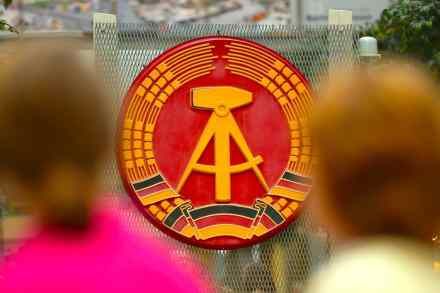
A recent survey of Germans done by Forsa, amongst the most reputable polling institutions in that country, shows that at least in one way, the Cold War has not quite ended. A majority of West German respondents (52 percent) blame Russia for escalating the conflict with Ukraine, while a plurality of East German participants (43 percent) blame the United States. All respondents, meanwhile, plead for peace in the region and expressed fear of a looming war between Europe and Russia. The political repercussions here are very real. The generation born in the late 1960s, having been completely educated in the East German communist dictatorship, currently constitutes the most significant single voting block in the East.

Levelling up: don’t copy the Germans

From our UK edition

‘Germany has succeeded in levelling up where we have not,’ Boris Johnson claimed back in July last year, when talk of pork pie putsches lay far off in the future. But as the government unveils its levelling up plans today, the promise of a German-style investment package is unlikely to materialise. And that’s probably a good thing. Germany’s economic and social reunification is not the miracle it is claimed to be. In many ways, East Germany and the left-behind regions of Britain have similar economic problems, if for different reasons. When the Berlin wall fell in 1989, East Germany’s largely nationalised economy was sold-out to private investors at breakneck speed. Industrial production fell by two thirds within the first two years.

Germany’s diplomatic game doesn’t make sense

From our UK edition

Amidst the heavy criticism of Germany’s lack of commitment in the Ukraine crisis, the German foreign minister Annalena Baerbock argued in a speech to the German parliament on Thursday that alliance systems were a bit like a football team. ‘You don’t need 11 centre-forwards who all do the same thing; you need 11 players who get on with one another and who, most importantly, have the same game plan in mind.’ In other words, western alliance systems such as Nato should assign different roles and responsibilities to member states that are best suited to their individual strengths and weaknesses – horses for courses, to stay within the sporting imagery.

In the pipeline: would Germany side with Russia in a conflict?

From our UK edition

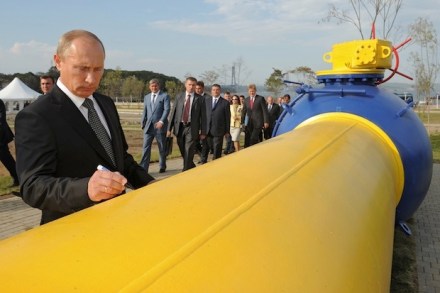
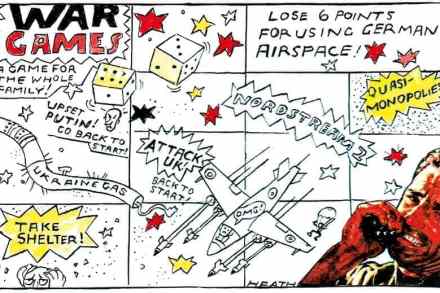
If Russia were to invade Ukraine, would Germany side with the Russians? For most of our post-war history, that would have been an absurd question, but things are changing fast in Europe. In the wake of recent events, it would not be irrational for Vladimir Putin to bet that if push came to shove, he could count on German neutrality — or even support. The Ukraine crisis continues apace, with up to 100,000 Russian troops now gathered near its border. The obvious question is: what would happen if Putin were to invade? It would split the EU, exposing its energy dependence on Russia, ruin what is left of transatlantic relations and force Germany to choose sides.

France has the most to lose from Britain’s turn away from Europe

From our UK edition

It was Napoleon who declared that ‘a state has the politics of its geography’. We do well to remember that in taking stock of European international relations as we speculate on a new year and beyond. By Europe is meant the European continent, ‘from the Atlantic to the Urals’, in de Gaulle’s words. Not the 27-member European Union, which Brussels linguistically and imperialistically conflates with the 44 sovereign states that the UN defines as Europe. Of those 44 states, four are still the European great powers, as they have been since at least 1870: Britain, Germany, France, and Russia. They are still the continent’s most populous, wealthiest (except Russia), and militarily prepared (except Germany).

Escaping from South Africa during the Omicron panic

One of the most gripping scenes in the classic film Casablanca is at the very beginning, when many of the characters who would feature in the story are seen together in a busy city plaza. Suddenly silent as a small Lisbon-bound plane passes overhead, they all look up, and the audience can see in their faces the cumulating stress of not knowing when, or even if, they would get out of wartime Morocco and fly to America. I never imagined I would experience anything remotely like that until just a few days ago when my twenty-eight-year-old son Zachary and I were wrapping up a long-planned and, due to the coronavirus, frequently postponed vacation to South Africa.

omicron

Germany’s new coalition is a recipe for stagnation

From our UK edition

A new, fresh leader. Bold radical ideas. And a programme for rebooting an economy that, for all its formidable strengths, is, to put it kindly, a little stuck in the 20th century. Later today, Germany is set to anoint its first new Chancellor in 15 years, and, at the very least, you might expect some new ideas. The trouble is, there is little sign of them from Olaf Scholz. Instead, the country is opting for the euro-zone’s slow lane, falling behind a rapidly reforming Italy and France. After two months of complex negotiations, following an inconclusive election in September, the Social Democrat leader Olaf Scholz will finally present his coalition agreement later today.

Covid could paralyse the new German coalition

From our UK edition

An iron curtain has descended on Europe, and once again, it goes right through the middle of Germany. The average national infection rate is currently exploding, but the real story is not the average, but the vast gap between east and west, with another gap between the north and south. The north-west of Germany is like the rest of the western EU, cases growing but not at such an alarming rate. But the south-east is like central and eastern Europe. Hospitals are overflowing. Berlin has ceased all non-emergency operations. Germany’s formidable and numerous intensive care units are now for the first time in the pandemic experiencing bottlenecks, for which they have made no emergency planning. The politics behind this is potentially quite dangerous.

The fifth wave could break Macron

From our UK edition

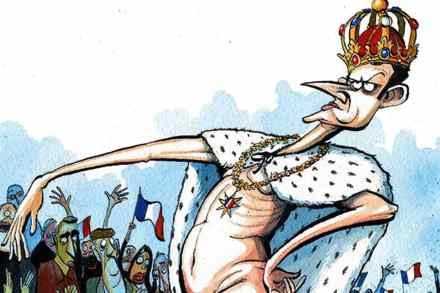
The fifth Covid wave has started in Europe. Some governments are already imposing lockdowns and wage cuts for the unvaccinated as hospitals are filling up. Mass protests against restrictions are popping up, some peaceful like in Austria, others turning violent like in the Netherlands and Belgium. A nationwide lockdown in Germany is unlikely, but local lockdowns may happen if hospitalisation rates continue to shoot up. Some patients in Bavaria have already been sent to Italian hospitals due to under-capacity, a reversal of what happened in the first wave. France is still counting on getting through the fifth wave with no restrictions. With only five months to go before the presidential elections, these decisions will decide the fate of Emmanuel Macron.

Germany’s ‘day of fate’ is a reminder of the country’s troubled past

From our UK edition

The 9 November is often called Germany’s Schicksalstag – Day of Fate. The date punctuates the fabric of the country’s calamitous search for a political identity like no other: from its origins as a constitutional monarchy, through democracy, dictatorship and division. As every year, today too marks a point of introspection for my compatriots. Let's hope they use it well: German democracy has come a long way, but it is far from perfect. On 9 November 1918, Germany’s first democratic experiment as a nation state ended in spectacular failure. Only the third German Kaiser since the country’s inception in 1871, Kaiser Wilhelm was forced to abdicate, and with him fell the German Empire.

Why did neo-Nazis patrol the German border?

From our UK edition

Just after midnight last Sunday, around 50 vigilantes gathered in east Germany to ‘patrol’ the country’s border with Poland. They were there to stop illegal immigrants, armed as they did so with batons, a machete, a bayonet and pepper spray. They were discovered by local police forces, but a certain nervousness from the authorities was palpable as they pleaded with residents in the eastern border regions to not take the law into their own hands. While the array of confiscated weapons suggests a well thought out plan, these ‘patrols’ are by no means coherent. The largest single group was reportedly stopped by the police in the border village of Groß Gastrose and contained just 30 people.

Merkel knows how to stop Polexit. The EU won’t listen

From our UK edition

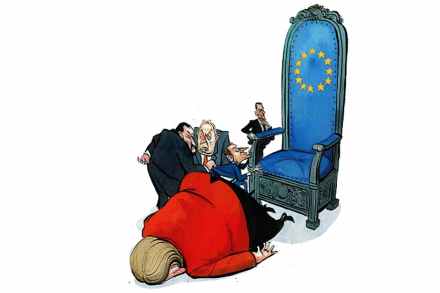
The EU is notoriously bad at learning from its own mistakes, mostly because it is unable to recognise these mistakes in the first place. A notable exception is austerity. There is now a consensus that it was a disaster, which blighted Europe’s economic resilience for a generation. A mistake the EU has not recognised yet is its role in Brexit: how it negotiated with David Cameron, and how it sided with the second referendum after the election, thus helping to create the political backlash that has destroyed even the faintest hope of a rapprochement with the UK. In what may be her last European Council, Angela Merkel yesterday spoke truth to power when she warned her fellow leaders not to treat Poland in the same way.

Is the European centre collapsing?

From our UK edition

There's a growing tension in the European bloc between those unhappy with Brussels’s increasing interventionism and by those who feel the EU does not intervene enough. The biggest casualty in this escalating conflict could well be the centre-right which, until now, has largely held the fractured bloc together. It’s been a tough few weeks for the European People’s Party, the biggest political group in the European parliament. The group is now preparing for the departure of its long-time talisman Angela Merkel from frontline politics.

Can the German military celebrate its history?

From our UK edition

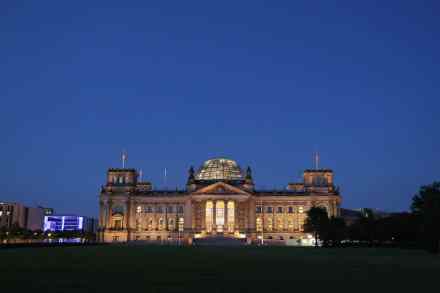
Picture German troops marching in front of the Reichstag in Berlin. Their polished black boots hit the ground in rhythm with the drums. Night has fallen and the soldiers are carrying burning torches that cast an eerie glow over the spectacle. But these aren’t Nazis. This ceremony was held last Wednesday in honour of Germany’s Afghan campaign. The inevitable furore has overshadowed the purpose of the event — to remember the 59 German fallen — exposing the dilemma of the German armed forces: can they have a sense of history and tradition despite their unforgivable role in Nazi crimes? German politicians have been busy debating the purpose of the Afghan campaign since the Reichstag march.

The EU’s rule of law crisis lets Britain change the Brexit deal

From our UK edition

Following Germany’s example, courts in Poland have rejected the supremacy of EU law. That is the principle that, if you join the EU, you give away part of your sovereignty to it and you have to do what the European Court says. I have written before about the precedent set in Germany. Both states now say that their constitution trumps EU law and the rulings of the EU courts. Legally speaking, this declaration is simply untrue – as should be known to anybody who read and signed the Lisbon Treaty, joining the EU. The United Kingdom always upheld this legal truth. If we wanted our sovereignty back, we had to leave the EU. That was a political choice and isn’t therefore something I write about. It is fair to also highlight that the EU is far from blameless.

Greta Thunberg didn’t win the German elections

Greta Thunberg is back in business. Previously slowed down by European pandemic restrictions, the Fridays For Future movement has now hit the streets, starting in Berlin. 'We must not give up, there is no going back now,' Thunberg told thousands of local protesters. The appeals and influence of her movement have translated, at least somewhat, into a stronger climate-focused youth vote in last month's German elections. The Green party has made significant advances in Parliament, becoming one of the kingmakers in upcoming coalition talks. Yet Germany’s environmentalists aren’t the only ones who outperformed their previous results. The liberal-democrat FDP scored 23 percent of Germany’s first-time voters, the same amount as the Greens.

greta

Von der Leyen is the real winner of the German elections

From our UK edition

The bald guy who leads the Social Democrats. The earnest looking Green lady. Or perhaps the guy in the charcoal-grey suit who leads the oddly named Free Democrats — free from what exactly? — who may end up picking the next chancellor. Lots of commentators will argue for a long time about who is the real winner of the German elections. But in fact there can be no real dispute about who has come out in a far stronger position. The President of the European Commission Ursula von der Leyen. A power vacuum in Berlin will be filled by a hyper-active, ambitious Commission There are two reasons for this. First, she is now by far the most powerful German politician.

The German elections are good news for Macron

From our UK edition

The German election result means that a three party coalition will almost certainly be needed to form a government. Olaf Scholz, the SPD leader, has made clear just now that he is going to try and form a coalition with the Greens and the Free Democrats. Whoever succeeds her will take time to build up the authority that Merkel had in these meetings Scholz has a strong claim on the chancellery. The SPD came first in the election and polls consistently showed that he was Germans’ preferred choice for candidate. Despite being from a different party, Scholz successfully positioned himself as the Merkel continuity candidate. The results might suggest a shift to the left among the German electorate. But German voters clearly want more Merkelism.

Who will succeed Merkel?

From our UK edition

The results of the German election have shifted somewhat since last night's exit poll. What we know for sure is that a red-red-green coalition — between the centre-left SPD, far-left Die Linke and the Greens — is short of a majority, which is contrary to what every single opinion poll projected in the last few weeks That is the single biggest news from the German elections. It deprives SPD leader Olaf Scholz of what he would have needed to force the free-market liberals of the FDP and Greens into a coalition, also known as the traffic light coalition. A coalition involving Die Linke could have been leveraged to sharpen minds, the threat of socialists and anti-capitalists having access to the chancellery. That threat is now gone and Scholz's negotiating position is weakened.

German voters set for a tense night

From our UK edition

The German elections have turned out to be an unexpected nail-biter. Since the exit polls were released earlier this evening the result has been too close to call. Angela Merkel’s CDU/CSU and their coalition partners, the SPD, are both predicted to have received 25 per cent of the vote each, which means it will remain unclear throughout the evening who has won as the votes continue to be counted. Despite the close result, the mood in the Christian Democratic camp is subdued. Angela Merkel’s would-be successor Armin Laschet has received the worst result his party has achieved in its history. The exit polls showed that 1.4 million of their voters switched to the Social Democrats this time and a further 900,000 migrated to the Green Party.