Germany

Zelensky has snubbed Germany’s President

From our UK edition

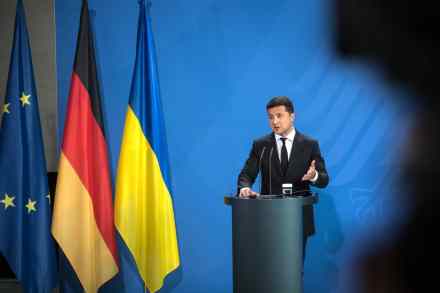
When Volodymyr Zelensky told the German President Frank-Walter Steinmeier yesterday that he did not want to see him in Kyiv, it hit his delegation like a slap in the face. The political class in Berlin still underestimates the depths of mistrust caused by Germany’s Russia policy. Whether trust with Eastern Europe can be rebuilt will depend on Berlin’s support for Ukraine – and certainly not on empty words, gestures and visits. Steinmeier had been on a state visit to Poland when Zelensky’s message reached him. He had travelled there in order to meet with President Andrzej Duda – in itself no easy encounter. Tensions between the two countries run higher than many in Germany realise.

Boris and Scholz parade the new Europe

From our UK edition

Russia's invasion of Ukraine has changed Europe forever. That was the argument that Boris Johnson made on Friday when he held a joint press conference with German Chancellor Olaf Scholz. One of the changes Johnson was keen to emphasise was that European leaders are united in their support of Ukraine and against Putin. This, he argued, was one of the ways in which the Russian President had failed: he had sought to create divisions in Europe, but had 'demonstrably failed'. 'The Europe we knew just six weeks ago no longer exists: Putin's invasion strikes at the very foundations of the security of our continent,' he said, adding: 'Putin has steeled our resolve, sharpened our focus, and he has forced Europe to begin to rearm to guarantee our shared security.

Germany’s progressives have a Putin problem

From our UK edition

Eighty-nine years ago this week, the German Social Democrats in the Reichstag cast the only votes opposing Adolf Hitler’s dictatorial power grab, the Enabling Act. Today’s SPD members often cite that moment as the proudest in their party’s 146-year history. With a memory like that, there is something awkward about the current SPD Chancellor’s position. Olaf Scholz is now having to come to terms with decades of SPD appeasement towards the dictator in Moscow. Before Putin’s invasion, Russian doves could be found across the German political spectrum, but Scholz's now-ruling SPD has an especially long and developed history of Kremlin cosiness.

Is Germany already backsliding on Russia?

From our UK edition

Just three weeks after Chancellor Olaf Scholz announced that Germany would directly arm Ukraine, Europe’s economic powerhouse is running out of weapons to send. 'We’re delivering Stingers. We’re delivering Strelas. The Defence Minister has looked at what we can deliver but honesty also requires us to say: we don’t have enough,' Foreign Minister Annalena Baerbock told the Bundestag last week. 'If we could conjure up more weapons to send, then we would.' Scholz then appeared to revert to an old German habit: trumpeting the importance of diplomacy as an end in itself.

Angela Merkel’s legacy crumbles

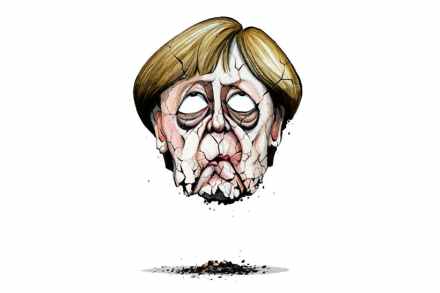
Angela Merkel is one of the most recognizable names in modern politics and probably the only German chancellor since post-war leader Konrad Adenauer that Americans will remember. Merkel was the leader of the center-right CDU party and head of the German government for a full 16 years, making her one of the longest-serving chancellors in German history as well as the first woman to hold the post. Now the full scale of her disastrous reign is becoming clear. Following the nuclear power plant incident at Fukushima in 2011, Merkel began Germany's "Energiewende" (energy shift), intending to phase out of all of Germany's nuclear plants in favor of renewables.

merkel retirement

Putin the reckless gambler

Vladimir Putin’s two-week-long war in Ukraine is not going as planned. What the Russian strongman thought would be a romp of the Ukrainian army in a matter of days has turned into a slow-motion train-wreck, with thousands of Russian soldiers killed in battle, images of burned-out tank husks littering the roads and Russia’s economy circling the drain. CIA director William Burns told the House Intelligence Committee today that Putin is increasingly frustrated about the level of progress achieved thus far in the campaign. "He was confident that he had modernized his military and they were capable of quick, decisive victory at minimum cost,” Burns said during his testimony. “He’s been proven wrong on every count.

vladimir putin alexei navalny

Germany’s attitude to Russia is changing. Does it go far enough?

From our UK edition

It’s hard to overstate the pace of the change now under way in Germany. A country that had been defined by its reluctance to deploy military force is now sending lethal weapons to Ukraine and promising €100 billion more in defence spending. The Nord Stream 2 pipeline, which would have ferried more Russian gas to Germany, has been abandoned. Germany has accepted Russia’s exclusion from the Swift banking system, in spite of the collateral economic damage. All of this adds up to the biggest policy shift that I can remember. Perhaps the most significant change is in the tone of German public debate. Take last weekend’s gathering of 100,000 on Berlin’s streets: it was not your usual anti-war protest.

Putin is making the EU great again

The Europeans have been jolted awake from their deep Pax Americana slumber, when the continent was largely content to eat the spoils of economic prosperity and allow the United States to do the heavy lifting on all things security. And we have Vladimir Putin to thank for it. Russia’s nearly week-long invasion of Ukraine has shocked the conscience of many who believed Europe would never return to the dark days of large-scale land warfare.

A new Europe is emerging from this crisis

From our UK edition

With every hour that Kiev holds out, the geopolitics of Europe changes more. Germany, which so values its prohibition on sending weapons into warzones, has just announced that it is sending 1,000 anti-tank weapons and 500 Stinger missiles to support the Ukrainian forces. I expect that defence spending will rise considerably in the coming years Germany is also allowing other Nato members to export arms with German-made parts to Ukraine — which will make a material difference to the supplies that the Ukrainian government receives. Yesterday evening, it was announced that Russian banks are going to be cut off from Swift.

It’s time for Germany to stand up to Russia

From our UK edition

In his novel The Loyal Subject, which appeared on the eve of the first world war, Heinrich Mann, the brother of Thomas, satirised Wilhelmine Germany as a hotbed of chauvinistic nationalism. The servile nationalism that Mann mocked could not be further from the ethos of the Federal Republic of Germany today. So pervasive is Germany’s eirenic disposition that on Thursday, as Russian president Vladimir Putin ravaged Ukraine, Lieutenant General Alfons Mais, the head of the German army, took the unusual step of turning to LinkedIn to ventilate his exasperation at the impotence of his own fighting forces. ‘In my 41st year of peace-time service, I would not have thought that I would have to experience a war,’ Mais stated on Thursday.

Europe’s ‘green’ transition put it at Russia’s mercy

Germany’s “halt” on the certification of the Nord Stream 2 pipeline on Tuesday is a classic case of too little, too late — a fact made all the more painfully clear in light of Russia’s invasion of Ukraine. Oil and gas still flow through Nord Stream 1 and many other Russian pipelines to Europe, and the continent has no choice but to keep importing the fossil fuels that finance Vladimir Putin’s offensive. We all saw this coming. Europe’s supposed “green” energy transition disregarded energy security and common sense, and Ukraine is now paying the price. The world will never tackle climate change if it's in a constant state of geopolitical energy insecurity, relying on authoritarian regimes like Russia and China to meet its basic needs.

Head of Germany’s army admits: we’re not ready for war

From our UK edition

You wake up in the morning and realise: there is war in Europe. Yesterday the army held a ‘Day of Values’. The core question was ‘what do we serve for?’ It has never been easier to explain this to the generation that did not live through the Cold War. In my 41st year of peacetime service I would not have believed that I would have to experience another war. And the Bundeswehr, the army that I am privileged to lead, is more or less empty handed. The policy options we can offer in support of the alliance are extremely limited. We all saw it coming and we were not able to get through with our arguments, to draw the conclusions from the Crimean annexation and implement them. This does not feel good! I'm pissed off!

The moral courage of P.J. O’Rourke

From our UK edition

Was it Socrates who said that chaos was the natural state of mankind, and tyranny the usual remedy? Actually it was Santayana, and boy, did he ever get it right. My friend Christopher Mills has given me a terrific book, The Wages of Destruction by Adam Tooze, about the making and breaking of the Nazi economy. I thought I knew everything there is to know about that period, but I hadn’t thought of global economic realities, the ones that actually won the war. Germany’s limited territory and lack of natural resources led to war. Germans had been starving since the end of the Great War, and needed the corn of Ukraine and the oil deposits of Romania in order to feed themselves and keep warm. Once in power, all Hitler needed to do was deal; instead, well, you know the rest.

It’s too late to break Europe’s gas reliance on Russia

From our UK edition

So, Nord Stream 2 will not be plugged into Germany’s gas grid. A little surprisingly, Chancellor Olaf Scholz has been first out of the blocks this morning in the western economic response to Putin’s recognition of breakaway states in eastern Ukraine. The block is not total: what Scholz says is that the certification process for the pipeline will be halted — leaving open the possibility that it might, after all, be connected if Putin starts to behave himself, or Germany becomes especially desperate for gas. Nevertheless, it is a significant move which will have an economic impact on Russia. But it is astonishing that the project was ever allowed to come this far in the first place.

How the Ukraine crisis ends

From our UK edition

Vladimir Putin does not think in the way the West does. Of course sanctions will hurt. But so what? He may be wrong in his strategic calculations, but he is not, as Boris Johnson claimed over the weekend, irrational. Putin is an old-school strategist. This is one of the reasons that sanctions will not have the desired impact. An import ban on Russian gas would definitely hurt the Russian economy, but that seems highly unlikely. Italian President Mario Draghi said on Friday that we should not touch gas. It is now the guy who sits in Moscow, rather than Draghi, who is willing to do ‘whatever it takes’. An import ban on the latest iPhones does not have the same deterrent effect as a continental gas shortage. Don’t fool yourself about the impact of sanctions.

Is Germany finally standing up to Russia and China?

From our UK edition

When German chancellor Olaf Scholz met Russian president Vladimir Putin yesterday, the visuals said it all. As he had done with Emmanuel Macron, Putin kept his visitor at arm’s length, or rather at five metres’ length. Sitting at opposite ends of the Kremlin’s infamous long table, the two men were as physically far away from each other as they were on content. But Scholz did not seem intimidated by this. On the contrary. At the press conference that followed, he was assertive, even feisty. Are we seeing the beginnings of a post-Merkel foreign policy shift in Berlin?

Why does Germany look so weak on Russia?

A recent survey of Germans done by Forsa, amongst the most reputable polling institutions in that country, shows that at least in one way, the Cold War has not quite ended. A majority of West German respondents (52 percent) blame Russia for escalating the conflict with Ukraine, while a plurality of East German participants (43 percent) blame the United States. All respondents, meanwhile, plead for peace in the region and expressed fear of a looming war between Europe and Russia. The political repercussions here are very real. The generation born in the late 1960s, having been completely educated in the East German communist dictatorship, currently constitutes the most significant single voting block in the East.

Levelling up: don’t copy the Germans

From our UK edition

‘Germany has succeeded in levelling up where we have not,’ Boris Johnson claimed back in July last year, when talk of pork pie putsches lay far off in the future. But as the government unveils its levelling up plans today, the promise of a German-style investment package is unlikely to materialise. And that’s probably a good thing. Germany’s economic and social reunification is not the miracle it is claimed to be. In many ways, East Germany and the left-behind regions of Britain have similar economic problems, if for different reasons. When the Berlin wall fell in 1989, East Germany’s largely nationalised economy was sold-out to private investors at breakneck speed. Industrial production fell by two thirds within the first two years.

Germany’s diplomatic game doesn’t make sense

From our UK edition

Amidst the heavy criticism of Germany’s lack of commitment in the Ukraine crisis, the German foreign minister Annalena Baerbock argued in a speech to the German parliament on Thursday that alliance systems were a bit like a football team. ‘You don’t need 11 centre-forwards who all do the same thing; you need 11 players who get on with one another and who, most importantly, have the same game plan in mind.’ In other words, western alliance systems such as Nato should assign different roles and responsibilities to member states that are best suited to their individual strengths and weaknesses – horses for courses, to stay within the sporting imagery.

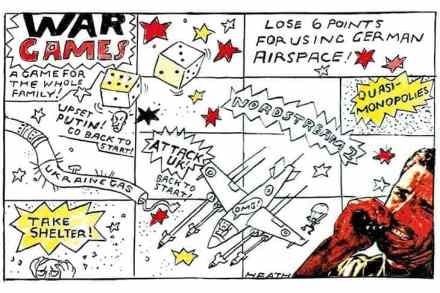
In the pipeline: would Germany side with Russia in a conflict?

From our UK edition

If Russia were to invade Ukraine, would Germany side with the Russians? For most of our post-war history, that would have been an absurd question, but things are changing fast in Europe. In the wake of recent events, it would not be irrational for Vladimir Putin to bet that if push came to shove, he could count on German neutrality — or even support. The Ukraine crisis continues apace, with up to 100,000 Russian troops now gathered near its border. The obvious question is: what would happen if Putin were to invade? It would split the EU, exposing its energy dependence on Russia, ruin what is left of transatlantic relations and force Germany to choose sides.