Germany

The sad circus of the German election

From our UK edition

The German election campaign has been entirely lacking in substance. Laschet, Baerbock, Scholz: none seem to grip the public’s attention. None are good enough to stand out, yet none are bad enough to drop out as the media and the opposition struggle to land definitive blows. Amid the monotony of political circus and sclerosis, the German press’s tactics are becoming increasingly outlandish, as two 11-year-old children asking questions about land requisition processes on television showed. A particular segment on the talk show Late Night Berlin is responsible: the idea is that children ask politicians questions.

Could a left-wing coalition end up running Germany?

From our UK edition

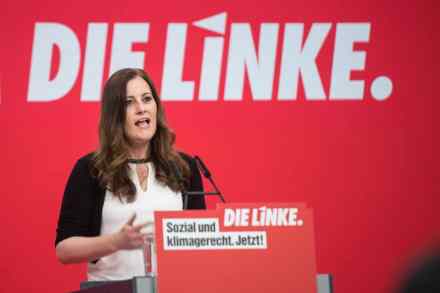
A spectre is haunting Germany — the spectre of the left. As Merkel’s Christian Democrats fall further behind in the closing weeks of the federal elections, there is now a real possibility of a left-wing coalition forming that might include the far-left party Die Linke. ‘They will never commit to Nato,’ barked Armin Laschet, leader of Merkel’s CDU and her would-be successor in a televised debate with his rivals last Sunday. He demanded to know if Olaf Scholz, chancellor candidate for the social democratic SPD, and the Greens’ Annalena Baerbock would rule out a coalition with Die Linke. Neither did.

How the pandemic pushed up inflation

From our UK edition

Eurozone core inflation came in at 1.6 per cent in August, while headline inflation hit 3 per cent. In Germany, at least, the all-important national metric went up by a notch — to 3.9 per cent. The recorded inflation data are, to some extent, a bounce-back recovery effect — coupled with the rise in German VAT — which will distort inflation numbers from July until December. But there has been a 2.7 per cent rise in industrial goods, minus energy, which is partly a supply chain effect that could prove persistent. Food, alcohol and tobacco are up 2 per cent but services only 1.1 per cent. It is services that are keeping inflation numbers pinned down — for now, anyway. Interestingly, both France and Italy are registering inflation rates of over 2 per cent.

How Germany’s Free Democratic party capitalised on the AfD’s misfortunes

From our UK edition

One of the most remarkable stories to come out of Germany in the last year has been the rise of the Free Democratic Party (FDP). Having struggled for relevance in 2020, the party has transformed itself into a political force that could decide the makeup of the next government – and maybe even anoint Angela Merkel's successor as Chancellor. The FDP's success follows an almost eight-year long self-reinvention in which the party has sometimes resembled a cult of personality centred around its charismatic chairman, Christian Lindner. It was Lindner who began the party's revival after a shattering 2013 defeat led to the loss of all its seats in the Bundestag, Germany's highest parliament, and a phase of intense soul-searching and rebranding.

The Prince of Prussia’s Nazi problem

From our UK edition

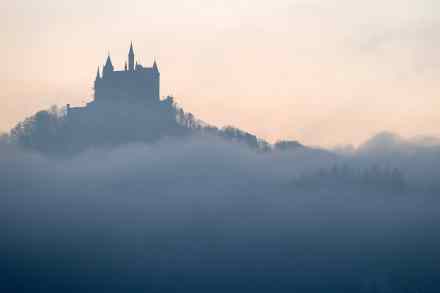
Perched on a mountain top overlooking the Swabian Alps, Hohenzollern Castle, with its picturesque towers, seems like something out of a fairytale. It is a relic from a bygone era. When the proud owner is at home, his flag waves defiantly in the wind, but it bears the colours of a kingdom that no longer exists: the black-and-white of Prussia. Georg Friedrich, Prince of Prussia, is the current head of the House of Hohenzollern. It is strange to look at the smiling businessman in the tailored suits and think of him as a Kaiser. But the 45-year-old father of four would be exactly that had the German monarchy not fallen. His dynasty can trace its roots back to the 11th century.

Fact check: what caused the German floods?

From our UK edition

As a study in how hysteria develops, the reporting of World Weather Attribution study into last month’s floods in the Rhineland could hardly be bettered. You will no doubt have heard or seen headlines over the past couple of days claiming that climate change made the floods ‘up to nine times’ more likely. Some even ran without the ‘up to’ — such as the Times, which reported with apparent confidence: 'Deadly floods nine times likelier in warmer climate'. What ordinary readers are less likely to have done is to have read the study itself. Needless to say, it paints a very different picture of the event and any causal link with climate change.

Germany is facing political stagnation

From our UK edition

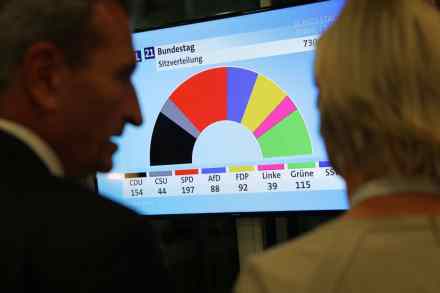
Jamaica, Germany, Kenya or traffic lights? The names of the potential German coalitions — and their corresponding party colours — can be quite exotic. But as the vote has begun to split in the run up to the federal elections next month, the possible combinations that will make up Germany’s government have grown. The race is still wide open. Coalitions were purposefully built into Germany’s post-war democracy — the voting system mixes first-past-the-post with proportional representation to ensure a workable splintering. With one notable exception in 1957, no political party has received the votes of over half of the electorate outright. It usually falls to the party with the most votes to find a coalition partner to form a majority government.

How the gender debate is dividing Germany

From our UK edition

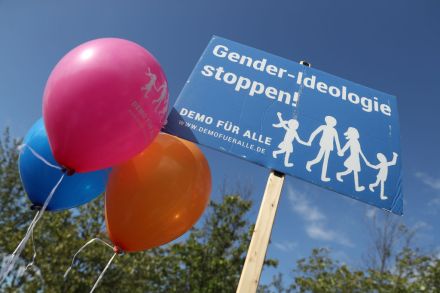
Pronoun politics can be something of a minefield. But if you think the gender debate is confusing, spare a thought for our German cousins. The quirks of the language make it hard to avoid causing offence, even for those determined to tread carefully. German, as with French and Spanish, has different noun endings for masculine and feminine words. For example, eine Ärztin specifically refers to a female doctor and ein Arzt to a male doctor. The masculine form is used most frequently and as a sort of gender catch-all. And it's here that the issue arises. The language has, to be fair, adapted to cater for modern sensitivities. In modern German, the title Fräulein (Miss) is no longer widely used, following criticism from feminists in the second half of the 20th century.

The German Greens can’t make up their mind on Afghanistan

From our UK edition

The situation in Afghanistan has suddenly dominated the debate in the middle of a sluggish German election campaign. Candidates to succeed Angela Merkel are having to declare their positions. Military intervention is out of the question without US backing. The question then becomes a repeat of the Syrian crisis: will Germany once again open its doors to potentially hundreds of thousands of refugees and migrants? It’s an unequivocal ‘nein’ from the government. ‘There will not be another 2015’ came the strong response from the ruling coalition of Angela Merkel’s CDU/CSU and the SPD. The Green party, currently in opposition but the second strongest party in most polls, are fudging the issue.

Europe will suffer as Germany drifts

From our UK edition

Over the last 15 years Germany has come to be seen by many in Europe as a paragon of political stability. Whereas other countries have suffered rising unemployment, unmanageable levels of public debt or a rising wave of far-right support, Germany’s perennial chancellor Merkel demonstrated that her talents as a political fixer were superior to any challenge. Never very keen on taking the long term view of politics, she cultivated the most essential art of politics: survival. There were certainly moments of real danger for her. The Euro and migrant crises triggered discontent both in her party and the electorate at large. But she never lost her nerve and in the end she was always able to sit the challenges out. Of course a price had to be paid for such triumphs.

The beauty of wine from the Rhine

From our UK edition

In an apparently benign — almost prelapsarian — setting, the Rhine is an epitome of the human condition. Scenery is rarely more beautiful or more glorious. Yet it can be equally hazardous. This is a river that arouses mysticism, and its temptations. By swimming in those waters, men seek to affirm their unity with the cosmos and their triumph over the natural world. But every year, a fair few swimmers end up in the mortuary. Their quest for mastery over nature ends with ashes to ashes, dust to dust. Almost as soon as men first emerged from caves, they began to beautify their dwellings near the Rhine, as well as exploiting its fertility.

The EU is failing to stand up for eastern Europe

From our UK edition

Will the EU stand up for eastern Europe? This question is now being asked by Ukraine following the announcement of a deal between Germany and the USA which paves the way for the completion of the controversial Nord Stream 2 gas pipeline between Russia and western Europe. The deal reached by Merkel and Biden may have placated critics in Washington, but it has failed to allay eastern European concerns over the security implications of the project. The state most affected by Nord Stream 2, Ukraine, has now requested urgent consultations with the European Commission and the German government, adding an air of legal weight to its complaints by invoking provisions of its ‘Association Agreement’ with the EU.

How will Merkel cope with retirement?

From our UK edition

Retirement sounds pretty nice. The ONS says that pensioners spend an average of seven hours and ten minutes a day on leisure activities. Over seven hours. That’s a lot of time for nice things. Yet the prospect of retirement can bring a certain dread. According to a YouGov survey, only around half of people about to retire look forward to it. The reality of having nothing to do is as terrifying as it is thrilling. So how do you feel when you have not held any old job, but one that kept you busy 24/7, one that let you meet hundreds of people every day and one that gave you an enormous sense of purpose? Angela Merkel faces that prospect. She has been the German chancellor for 16 years. No time for hobbies, no time for idle thoughts, no time for herself.

Could Germany’s flood disaster have been prevented?

From our UK edition

As the floods which have devastated homes and caused over 150 deaths recede in the Rhineland, three types of political implications have already emerged. People are talking about climate change – for the first time during the campaign. Armin Laschet, Merkel’s successor, failed to rise to the occasion when he was caught laughing as the German President Frank-Walter Steinmeier addressed grieving families in the Rhineland. And it also emerged that flood warnings were issued, but were not passed on to the population. Germany is still in shock, especially because other parts of the country have since flooded. South-eastern Bavaria has now suffered the worst floods ever recorded, with massive destruction of infrastructure.

Is climate change to blame for Germany’s flooding?

From our UK edition

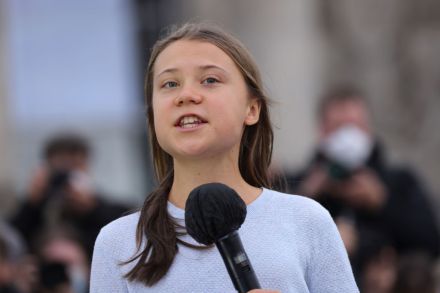
Greta Thunberg has declared the floods in Germany, Belgium and the Netherlands to be the product of man-made climate change, adding ‘We’re at the very beginning of a climate and ecological emergency, and extreme weather events will only become more and more frequent.’ Well, that’s sorted out that one, then. We hardly need Angela Merkel or the Prime Minister of the Netherlands, Mark Rutte, to confirm it for us. Nor, indeed, do we need to hear from Michael Mann – aka Mr Hockey Stick – to tell us that the floods are the living embodiment of what climate scientists have been warning us about for decades.

Germany’s flood disaster could trigger a political upheaval

From our UK edition

There is an interesting history to the politics of floods in Germany – and a possibility that history might be repeating itself. The official death toll in Germany has risen to 93 this morning, but 1300 people are still reported missing in the region of Ahrweiler, in western Germany. This is without a doubt the most extreme natural disaster that has hit Germany in living memory. We should not at this point draw any hasty conclusions about the political impact. It is possible that it will benefit the Greens because climate change is back on the political agenda. Historically, floods have benefited incumbent governments.

The rule of law is breaking down in the EU

From our UK edition

There are 27 member states in the EU. Two have now declared they are not bound by EU law. Based on the law as set out in the treaty each member state signs when it joins the EU, that means both countries are in breach of international law. The first country in breach of international law was Germany. I wrote about this last year. The German court said it wasn’t bound by EU law because the EU had no power to act on the legality of the ECB’s bond-buying programme during the pandemic. The Germans said ‘you can’t answer this question, so we will’. Crucially, the EU disagreed and the European court gave a judgment on the legality of the bonds. At this point the German court overruled the EU.

The uninspiring choice facing German voters

From our UK edition

The gloves are off in Germany’s electoral race. As personal insults are traded and skeletons dragged from their closets, even the German president — a figurehead who normally stays above politics — has urged all parties not to let the campaign descend into ‘mud-slinging’. In a rare political intervention, Frank-Walter Steinmeier warned that ‘measure and reason’ were preconditions of a functioning democracy. What had happened to cause the head of state such concern? The German Green party has long complained that their leader Annalena Baerbock is being subjected to a sexist smear campaign.

What’s the problem with Gareth Southgate’s ‘war talk’?

From our UK edition

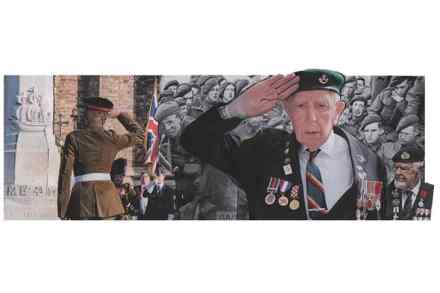
War analogies are a cherished football tradition. From chants of ‘Stand up if you won the war’ to the Daily Mirror’s infamous 1996 headline ‘Achtung! Surrender - For you Fritz, ze Euro 96 Championship is over!’ But the Euro 2020 tournament has been marked by restraint from the British tabloid media. It’s as if someone had told them not to mention the war. Unperturbed by the comparative quiet on the war-theme front this year, Gareth Southgate has gone out guns blazing in an interview with the Telegraph.

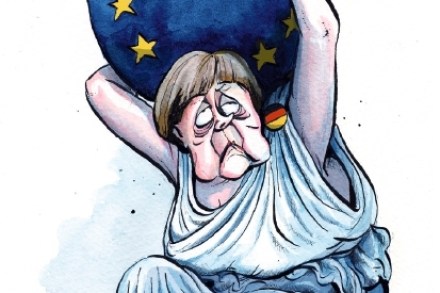
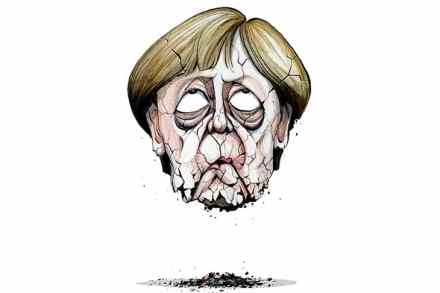
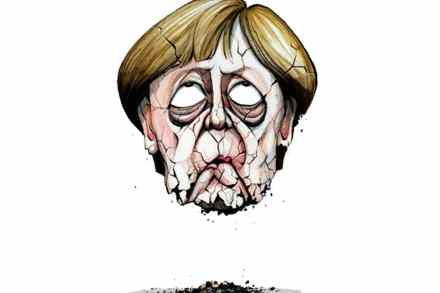
Angela’s ashes: Merkel is leaving the EU in chaos

From our UK edition

Perhaps the most absurd thing ever said about Angela Merkel is that she was the de facto leader of the western world. She has certainly been one of Europe’s most successful politicians, if you define success as political survival. But as she comes to the end of her 16 years in office, her luck is deserting her and the mess she has created is becoming horribly apparent. She leaves behind a split EU that is not just unled but might now be unleadable. Humiliating reminders of Merkel’s imploded authority come regularly. Take her latest idea to keep British tourists out of the EU this summer. Germany is imposing a mandatory 14-day quarantine for UK arrivals, whether they are vaccinated or not, and Merkel wanted other EU states to do the same.