Germany

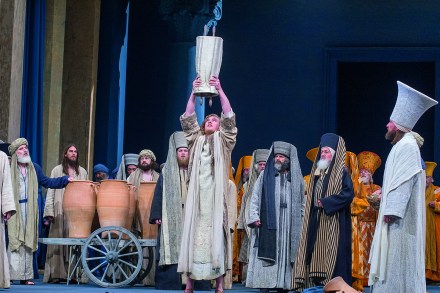
Christ stopped at Oberammergau

Getting there was penitential. The coach from my home in Bad Ischl, Austria, to Salzburg stopped a hundred times, to let on women in dirndls carrying shopping baskets. The train to Munich was subject to delays, messing up subsequent connections. The S-Bahn linking Ostbahnhof with a place called Pasing suffered a derailment, so I had to struggle backwards to the Hauptbahnhof, only to discover my alternative train to Murnau was canceled, then reinstated on a distant platform, resulting in mass confusion. (The Germans are bewildered very easily when things stop going to plan.) At Murnau there was a long wait for the two-carriage shunter service to Unterammergau, outside Oberammergau, where it was by now pitch dark and pouring with rain.

passion

Germany’s energy crisis is a warning to Britain

From our UK edition

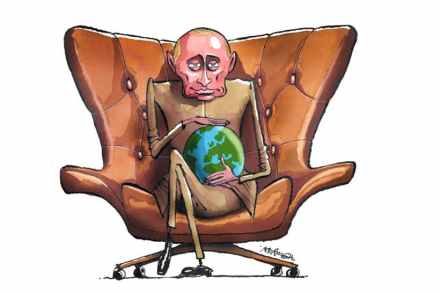
During the eurozone crisis, southern European states had to go cap in hand to Germany to stave off national bankruptcy. A decade on and it is Berlin doing the begging. Europe has reluctantly agreed a 15 per cent cut in gas use this winter in the hope that German factories can stay open and German citizens can keep from freezing. Meanwhile, Russia’s state-controlled energy giant Gazprom threatened to reduce the gas flowing through the Nord Stream 1 pipeline yet again so that Germany would receive only a fifth of the amount it did before the Ukrainian invasion. While Berlin has said it plans to wean itself off Russian gas over the next few years, Vladimir Putin is taunting Europe by cutting supplies faster than Germany can cut its dependence.

Putin has Europe where he wants it

From our UK edition

Have we reached the endgame of Vladimir Putin’s energy war against the West, the point at which he turns off the gas for good? This afternoon, Gazprom announced that from Wednesday morning it will cut the quantity of gas flowing through the Nord Stream 1 pipeline to Germany to 33 cubic metres per day. This will halve the current flow of 67 million cubic metres and is just 20 per cent of the 167 million cubic metres which flowed through the pipeline before the Ukraine invasion. Ostensibly, the cut is for reasons of ‘maintenance’. That is unlikely to wash. Nord Stream 1 relies on a compressor station powered by six turbines, but Russia was supplied with two spare turbines to prevent any need for reduction in flows during maintenance periods.

How Germany’s energy crisis could bite Britain

From our UK edition

For now, Berlin can breathe a sigh of relief: after a ten-day shutdown for maintenance, the Nord Stream 1 pipeline is back online. Russia is once again heating German homes, fuelling German industry, and using German money to finance its war in Ukraine. But this happy exchange may not continue; the pipeline is still operating at just 40 per cent of its usual capacity, and Vladimir Putin is warning this could fall to 20 per cent next week.

Why Putin still might shut off Europe’s gas

There was a time in the not-so-distant past when Europe and Russia had a mutually beneficial relationship with each other — at least in the energy field. Europe, a major oil consumer, received reliable supplies of crude and natural gas from Moscow, while the Russians received tens of billions of dollars in return. The European Union imported 155 billion cubic meters of natural gas from Russia last year, equivalent to about 45 percent of its total gas imports. There was an ingrained assumption in European capitals that, even if relations with the Russians were thorny, fossil fuels would continue to head west. War, however, can change things in a flash. European and Russian officials now talk past each other, and sometimes they leave the room when the other is speaking.

sanctions putin russia davos oligarch

Enlarging Nato will ostracise Russia (1997)

From our UK edition

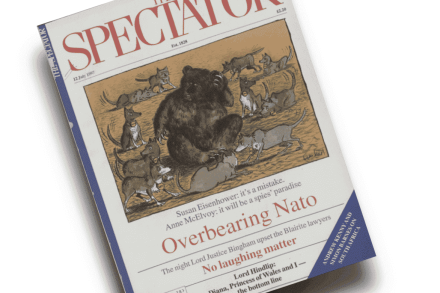
It's 25 years this month since Poland, the Czech Republic and Hungary were invited to join Nato. The Spectator’s cover story that week was this essay by Susanne Eisenhower, president of the Eisenhower Group and granddaughter of President Eisenhower. Explore The Spectator’s archive here. Washington, DC When historians, decades from now,  consider the 20th century they will probably be struck by how the major conflicts of the century were ultimately resolved. At the century's end, Germany, the country that wreaked more destruction on the world than any other power, is economically prosperous, unified and firmly locked within Nato — all due to the magnanimity of its victors.

Cold war: Putin’s plan to hold Germany to ransom

From our UK edition

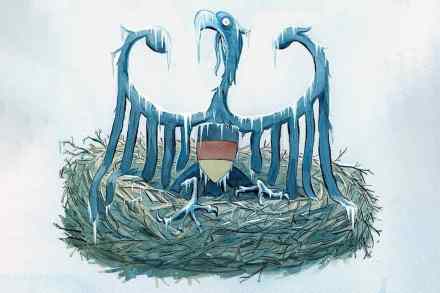
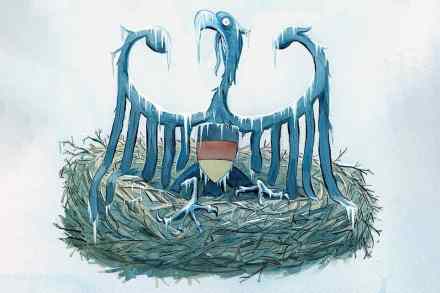
Russia has a long history of using the cold to defeat Europe. The winter of 1812 arrested Napoleon’s special military operation. Hitler’s troops hit the deep-freeze outside the gates of Moscow in December 1941. Now Vladimir Putin has the option to turn off the gas sent to Europe – a strategy against which Germany appears to have no defence. Gazprom, the monopoly supplier of piped Russian gas, has been giving Germany a taste of what life might be like, should Moscow play nasty. It recently halved the amount of gas sent through the Nord Stream 1 pipeline, using bogus technical excuses. Germany, which still relies on Russia for more than a third of its gas, is now realising it may have to cope with a total gas embargo – and a cold winter.

East Germans still find it hard to see Russia as the enemy

From our UK edition

Not all of Germany is against Vladimir Putin. Sahra Wagenknecht, a Left party MP, recently defended him, saying he is not ‘the mad Russian nationalist’ of caricature and sending weapons to Ukraine was a ‘US-driven policy’ which played a role in provoking his invasion. Her views are quite common in East Germany and not only among the left. The far-right party Alternative for Germany, which has most of its support in the East, opposes sanctions and providing weapons. A recent opinion poll asked whether Berlin should ‘be tough on Russia’: half of West Germans agree, but just a third of East Germans do. Some 58 per cent of East Germans want Berlin to take an approach that doesn’t ‘provoke Russia’. Only 40 per cent of West Germans agree.

Russia slogs through the Donbas

A brutal artillery battle: that’s what the latest phase of Russia’s war on Ukraine has become. Vladimir Putin failed in his original goal of seizing the entire country swiftly, beginning with the capital of Kyiv, and installing a puppet government. When Ukrainian resistance prevented that, Putin shifted to a smaller, more achievable objective: establishing complete control over two eastern provinces, Luhansk and Donetsk, which border Russia and are jointly known as the Donbas region. That’s where the war is being fought now, with an uncertain outcome. Victory will depend on who wins the artillery battle. Russia has more blunt firepower; Ukraine has more precise, longer-range weapons — or at least it will have them when more NATO supplies reach the frontlines.

artillery

Germany is failing Ukraine

From our UK edition

‘A giant step for German and European security,’ is how Chancellor Olaf Scholz described his government’s €100 billion cash injection for the country's depleted military. But while Germany’s newfound commitment to its own defence is welcome, its commitment to Ukraine’s is still questionable at best.   Over the weekend, the German newspaper Die Welt reported that it had seen documents showing that Berlin had reduced military support for Ukraine to ‘a minimum’. According to inside sources, only two German weapon deliveries have reached Ukraine since the end of March. Both contained light equipment such as mines, hand grenades and spare parts for machine guns.

Are sanctions making Russia richer?

From our UK edition

Before the invasion of Ukraine, it was by no means certain that there would be a united response from the West. The sanctions imposed on Russia after Vladimir Putin’s annexation of Crimea in 2014 were fairly limited, especially from the European Union. Germany pressed on with the Nord Stream 2 gas pipeline to Russia. But now, America, Europe and much of Asia have been united in applying severe sanctions against Russian banks, companies and oligarchs. Three months on, it’s time to ask: are the sanctions working? The answer from the Bank of Russia’s balance of payment data for January to April isn’t reassuring. It showed that the sanctions are emphatically not working, at least not in the way that they were intended.

Sanction Gerhard Schröder

From our UK edition

From the start of the war in Ukraine, the democratic world has shown striking unity in the economic boycott of Russia. But sanctions are always a blunt instrument: aimed at the regime, they end up harming the whole population. Ordinary Russians, too, are victims of Vladimir Putin’s corruption and misrule. Far better to target the Kremlin and those close to it. The system of targeted sanctions on named individuals is one way of doing this. Action has now been taken against 1,086 people, with assets suspended and travel bans imposed. To go after the rich and powerful is always a test for democracies, especially if such people are generous in their donations to political parties or have close political connections.

Olaf Scholz is tanking

From our UK edition

North-Rhine Westphalia is Germany’s largest state, almost as large as the Netherlands. It was a traditional SPD fiefdom during the time of Helmut Kohl, but in 2005 it became a CDU state. Surely, if the SPD was on the march, ready to turn Germany’s regional politics red as it did the chancellery in last year’s election, a state like North-Rhine Westphalia would return to the party? But the big news from yesterday’s federal state elections is that the SPD, the party of German Chancellor Olaf Scholz, scored its worst-ever result in Westphalia: less than 27 per cent of the vote. The CDU won with 35.5 per cent and will probably form a coalition with the Greens.

Merkel is turning into Blair

From our UK edition

Angela Merkel left the German chancellery at the end of last year with a bunch of flowers, a standing ovation in the Bundestag, a fist bump from her successor Olaf Scholz, and an approval rating of 68 per cent. Rarely for a national leader, she left office on her own terms, remaining Germany’s most popular politician until the week she stepped down, set to become the country’s elder stateswoman. Less than three months later, Russia invaded Ukraine – immediately throwing her legacy into doubt. The 21st-century Germany she built is extraordinarily dependent on Russian energy thanks to years of dovish engagement with Vladimir Putin’s regime, placing German business interests firmly above concerns from eastern EU allies.

Germany’s wilful ignorance is hurting Ukraine

From our UK edition

Berlin, Germany Germans have a complex relationship with their Erinnerungskultur, or ‘culture of memory’. Whenever the word appears, it almost invariably refers to how the country thinks about its difficult past. Determined never to forget the horrors of the Nazis, Germans have spent decades reflecting on the evil that their forbears unleashed upon the world. And yet this process isn’t helping us understand our present. As a German-Canadian whose grandparents spent their childhoods in bomb shelters, I’ve long respected German memory culture. But events in Berlin on VE Day this past Sunday have shaken my faith. Today, Ukraine is revealing how little we actually understand about our history in Germany.

The relentless march of Europe’s zombie centrists

From our UK edition

Journalists rarely had it so easy as when it came to writing up the final result of the French presidential election on Monday morning. The copy almost wrote itself: the triumph of moderation, demonstrated by a convincing win for centrist Emmanuel Macron over his far-right challenger Marine Le Pen; the clear defeat of disruptive extremist politics that might otherwise have threatened European stability; and the return to EU business as usual, with euroscepticism once again off the table and the re-establishment of a stable Franco-German axis in charge of Brussels. Easy, but ultimately unconvincing. Centrists who can be trusted not to be too radical may indeed be in power in France, as they have been in Germany since the installation of Olaf Scholz as Chancellor late last year.

How long can Olaf Scholz last?

From our UK edition

Just what exactly is going through German Chancellor Olaf Scholz’s head? ‘Russia must not win this war’, he says. But it is less certain about who Scholz wants to be the victor. Publicly, the Chancellor says that he is giving Ukraine the ‘strongest possible support’. But in a highly anticipated speech last week, he once again refused to deliver the heavy weapons Kyiv has been asking for. Many in Berlin were left wondering why Scholz chose to do the speech at all given that he had nothing new to say. He was disingenuous in his excuse that the G7 had agreed that the Ukrainian army needed Soviet-era technology. The Netherlands, Canada, the UK and US have all said they would provide western artillery or armoured vehicles.

Will economic pressures weaken the West’s alliance?

From our UK edition

This morning’s retail sales update isn’t pretty. Sales volumes fell by 1.4 per cent last month, following a 0.5 per cent drop in February (revised, and worse, than the original estimate of 0.3 per cent). The biggest fall came in non-store retail shopping: almost an 8 per cent month-on-month fall. However, the Office for National Statistics points out that overall sales volumes are still roughly 20 per cent higher now than they were pre-pandemic. But the recent drop indicates that the cost-of-living crisis is already worsening, as inflation – now at 7 per cent – is taking its toll on real incomes and is already prompting changes in consumer behaviour. As Capital Economics notes today, the 9.

Elon Musk and tweeting on a volcano

Of all the hilarious freakouts over Elon Musk's bid to buy Twitter, my personal favorite comes from journalism professor and self-styled "NYC insider" Jeff Jarvis (as noticed by The Spectator's Bill Zeiser last week). Jarvis tweeted — and I quote — "Today on Twitter feels like the last evening in a Berlin nightclub at the twilight of Weimar Germany." One imagines Mehdi Hasan and Molly Jong-Fast manically jazz-dancing as the Bruenigs belt out a song from a cabaret stage. And surely nothing calls down the specter of fascist totalitarianism quite like Musk's pledge to end Big Tech censorship. Because that's what the Nazis did, right? They kicked down the door to the nightclub, stormed through the horrified crowd, and barked, "ATTENTION PLEASE!

elon musk

The case against a European army

From our UK edition

The end of the Cold War was used by the victors to unite Germany. To balance this, Europhiles created a single currency which, by replacing the deutschmark, would ‘hold Germany down’. The reverse occurred. The euro made Germany the most important power in the European Union, and so it remains. Today, the same Europhiles want to use the rebirth of the Cold War to encourage Germany to re-arm. To balance this, they want to create a truly ‘European’ defence, of which Germany would be a vital part. The EU would prevent Germany from using its force for national needs. For this purpose, they say, Nato would be no good because it is intergovernmental.