Germany

German patriotism collides with All Quiet on the Western Front

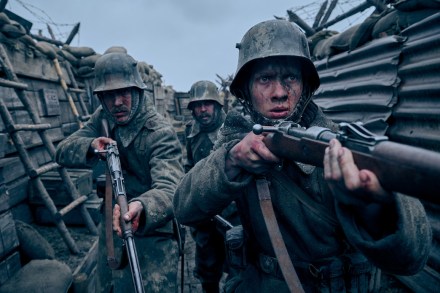
As the bewilderingly overpraised Everything Everywhere At Once continues its inevitable march to Best Picture at the Oscars, many of the films that were once tipped to defeat it have slipped away. The Banshees of Inisherin, Top Gun: Maverick, Tár — all have settled into their time-honored place of being forever the Academy’s bridesmaid and not the triumphant bride. Yet almost out of nowhere, Netflix’s All Quiet on the Western Front has emerged as a serious contender. It swept the BAFTA awards in February, and with nine Oscar nominations, including Best Film, Best Foreign Language Film and Best Adapted Screenplay, it looks certain to win at least a couple of them. Not bad for a two-and-half-hour adaptation of a 1929 German novel.

all quiet on the western front

Germany’s folly: Berlin has miscalculated on Russia and China

The notion that closer trade connections with the West will necessarily set less enlightened nations on a course toward prosperity and liberty is nonsense, but convenient nonsense. Germans have a phrase for it — Wandel durch Handel, change through trade — often given as a justification for their business dealings with Russia and China. Unfortunately, the change they triggered was in Germany. In one case it has been for the worse; in the other it appears to be headed that way. To start with Russia, it’s true that Germany’s ultimately disastrous dependency on natural gas from the east has its origins in the Ostpolitik years: by 1989 the Soviets were supplying West Germany with around a third of its gas.

germany
German

German philosophy and German wine: a sumptuous pairing

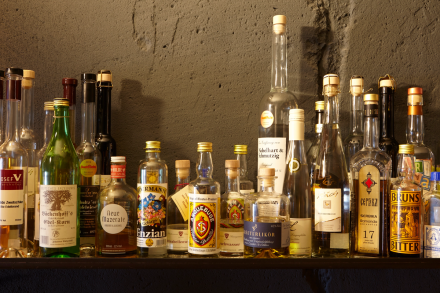
The best teacher I ever had in graduate school — or anywhere else, for that matter — was also the most dedicated. Most semesters he would offer a not-for-credit seminar one evening a week at his house. There, some half-a-dozen fledgling philosophy students would congregate, bottle of German wine in hand, to parse slowly through one text: Heidegger on Nietzsche, say, or Bishop Tempier’s condemnation of 219 propositions in 1277, a once-famous event that signaled the eclipse of the Aristotelian world view in favor of the Christian. We devoted one full semester to De li non aliud, “Concerning the Not-Other” (i.e., God) by the mystically inclined Renaissance philosopher, churchman and diplomat Nicholas of Cusa (1400-1464).

Kim Petras: who is Sam Smith’s ‘satanic’ trans sidekick?

More than 12 million people watched Sunday night as Sam Smith and Kim Petras performed their award-winning song "Unholy" on the Grammys stage. Smith, a male soul and pop singer who now identifies as nonbinary, fashioned himself as a bulbous Satan, prancing around in latex pants and heeled boots, a bedazzled cane, and a top hat with devil horns. Plenty has been said about Smith's cosplay — and the deterioration of his (their?) appearance since "coming out" — but many glossed over his sidekick, Kim Petras. Petras, thirty, sings the second verse of "Unholy" and spent the Grammys performance locked in a cage. She is signed with Republic Records and has released two albums and an EP called "Slut Pop". The German singer's tracks are rife with sexual imagery.

kim petras

Biden is the war president Ukraine needs

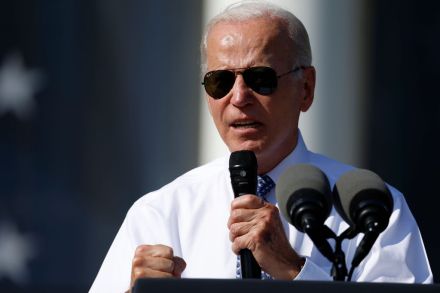
Joe Biden is upping the ante in Ukraine. Even as Vladimir Putin directs a fresh barrage of missiles, Biden is apparently planning a trip to Europe next month to deliver a major address on the anniversary of the Russian invasion and announce a substantial military aid package for Kyiv. Good for him. A speech in Poland or Lithuania — both leaders in the struggle against Russian aggression — will strengthen NATO and demonstrate that a year into the conflict, unity, not dissension, prevails when it comes to confronting Putin’s revanchist ambitions. At every step, Biden has checked Putin, who assumed he could invade and occupy Ukraine in a thrice.

What the US can do about Germany’s hardball on Ukraine

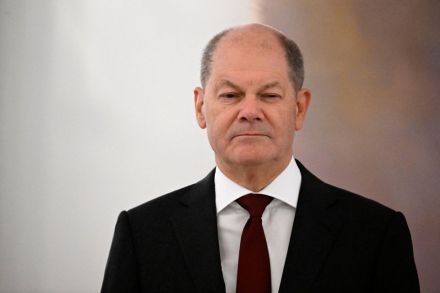
Once again, German Chancellor Olaf Scholz has crushed the hopes of NATO allies and, most of all, the millions of Ukrainians suffering under Russia’s assault. Originally, he refused to send tanks to Ukraine for fear that Russia would escalate the war. More recently, Scholz has said he'd only consider sending tanks if it was part of a coalition, not just Germany acting alone. Last week, the United Kingdom announced it would be sending Challenger 2 main battle tanks (MBT) to Ukraine, making it the first nation to supply modern, Western MBTs to Kyiv. Poland, Finland, and Denmark have also indicated that they would be willing to send their own Leopard 2 tanks. Those are German-origin weapons, so they first require a nod of approval from Berlin in order to export.

Germany’s broken promise to rebuild its military

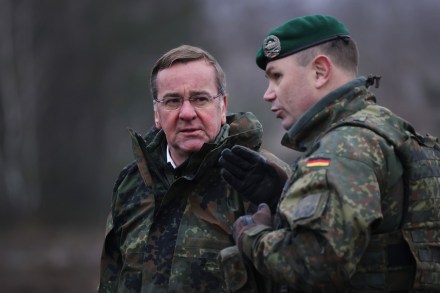
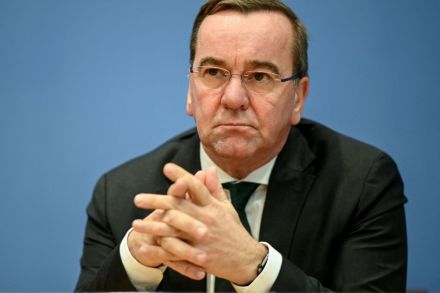
Germany has a new defense minister. The funny thing is that nobody really knows who he is, what he stands for, and whether he’s capable of doing his job. Boris Pistorius will take over the ministry from Christine Lambrecht, whose one-year tenure was about as embarrassing and gaffe-prone as the Bundeswehr itself. There are too many blemishes on her record to examine in a single post — we would be here all day. But one of the more notable misfires was her tone-deaf New Year’s Eve video, where she reminded viewers that a war was going on in Europe as a fireworks display went off behind her. For many in the German defense establishment, Lambrecht’s departure can be summed up in two words: good riddance. Not much is known about her replacement.

Germany’s missteps in Ukraine have left Scholz fighting for his political life

From our UK edition

Difficult though it may be to believe, there is chaos at the top of the German government over its mishandling of the war in Ukraine. Germany’s defence minister, Christine Lambrecht of the Social Democratic party, has quit her post after the most extraordinary series of unforced errors.  The war has brought all of this to a head. It has exposed Europe’s lax security and complacency. But German defence has been in a league of its own for many years. Over the course of the war, there has been no end to the amount of troubling information that has emerged.

Germany’s Faustian entanglement with China

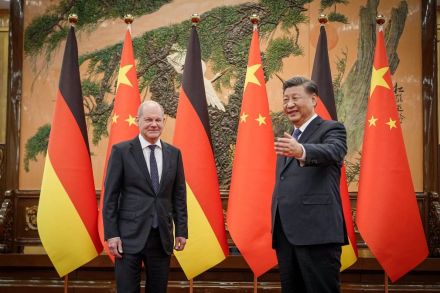
Back in November, German Chancellor Olaf Scholz met with Chinese Communist Party (CCP) chairman Xi Jinping. His visit to China was the first by a G7 leader in three years. Facing heated domestic and international pushback, Scholz framed his visit as an effort to “further develop” economic cooperation between Berlin and Beijing. In this context, such “further development” means further cementing Germany’s Faustian bargain with China, one in which European-based players, like Airbus and Volkswagen, claim immediate revenue — but at their long-term expense and at great strategic cost.

Herschel Walker’s loss shows Trump’s fortunes have gone south

Have Donald Trump’s presidential aspirations gone south? The failure of Herschel Walker to become the next senator from Georgia has further dented Trump’s image as the omniscient grandmaster of the GOP. One after another, his candidates in the midterm elections, ranging from Kari Lake to Doug Mastriano, from Dr. Oz to Blake Masters, have proved to be losers. The indictment of the Trump Organization on no less than 17 counts on Tuesday does not help Trump’s image either. Nor does Special Counsel Jack Smith who is relentlessly amassing evidence about Trump’s serial crimes as the leader of the January 6 failed coup and his illegal retention of top secret documents.

trump 2024 fox news iowa

Why Munich is the ideal Advent destination

From our UK edition

Ambling through the Christkindlmarkt, Munich’s biggest Christmas market, feeling distinctly tipsy after my third (or maybe my fourth?) mug of Glühwein, I experienced a strange sensation, something I hadn’t felt in ages. For the first time in a long while, I realised I was feeling rather festive. Back in Britain, I’m the archetypal Christmas grouch – but leave me in a German Christmas market for a few hours and I become a big kid again. This is the first year since Covid that Munich has been able to mount a proper Christmas market season. That might not sound like such a big deal to Brits, but it’s headline news in Bavaria.

The Europeans are complaining, again

All is not well in the transatlantic relationship. This might come as a surprise given that the United States and Europe have been remarkably unified on Europe’s most urgent security crisis in the post-Cold War era. Despite Russian President Vladimir Putin’s attempt to inject division into the pro-Ukraine coalition by throttling gas supplies to Europe, the West is sticking to its guns, maintaining sanctions on Moscow until either the war ends or Russian troops are forced to withdraw. This consensus, however, has masked disputes between Washington and its European allies that are becoming more difficult to manage.

WATCH: Germans are dancing to stay warm this winter

The world's eyes have been on America this week, thanks to the midterms. Cockburn, however has been gazing across the Atlantic with amusement. A new dance class is being offered in Germany called "Let’s Move — Tanzt Euch Warm," or "dance yourselves warm," to combat rising energy costs as the temperature falls. https://twitter.com/reuters/status/1590588816716242944 Watching the footage of the chilly krauts cha-cha-cha-ing, Cockburn can’t help but recall former president Donald Trump’s speech to the United Nations back in 2018, where he warned that "Germany will become totally dependent on Russian energy." At the time, the German delegation laughed and shook their heads at what they considered yet another absurd broadside from the American president. https://twitter.

tanzt euch warm

Steins and slogan tees at the Helen Oktoberfest

I am a Party City Bavarian: wearing Doc Martens, pulled-up cotton socks, a polyester smock and pair of buttock-hugging lederhosen. Drowning men have more breathing room. My range of motion is limited to a ceremonial waddle. Thankfully, I do not have far to travel — and there is plenty of beer. Allow me to explain: this weekend I took the trip ninety or so miles north of Atlanta to Helen, a small city not far from the North Carolina state line. In the late 1960s, city officials passed a zoning regulation to turn Helen into a replica of a Bavarian alpine town (hey, it was a weird decade). The result is a unique slice of Americana: an Oktoberfest in the foothills of the Blue Ridge Mountains, as Appalachian as it is alpine.

helen oktoberfest georgia

Europe is more bark than bite on Ukraine

Last Friday, President Biden signed a spending bill that will keep the government’s lights on until December 16, when lawmakers will have to cobble together a funding resolution to avert a shutdown. Tucked into that law was another tranche of security and economic assistance to Ukraine, to the tune of $12.3 billion. The signing came two days after the Defense Department announced the release of an additional $1.1 billion military package for Kyiv, which will include 18 more HIMARS systems, 150 armored vehicles, and ammunition of various calibers. The Biden administration has provided the Ukrainians with over $16 billion in security assistance since Russia’s invasion in February. Washington’s hands have been cramping up from writing so many checks.

macron europe blame

Why Putin might have attacked Nord Stream

As the world wonders what happened to the Nord Stream 1 and 2 pipelines, many suspect that Russian President Vladimir Putin is behind the sabotage. At first glance, it appears strange that Russia would damage pipelines that its own companies run. But Putin has several possible reasons for carrying out the attack. One reason could be that Gazprom (the Russian state-owned gas giant) wants to avoid paying penalties for failing to fulfill its contractual obligations. Since August 31, Russia has halted gas exports via both Nord Stream pipelines, which follows a similar move in July where the Kremlin cited erroneous maintenance issues as the cause of the short shutdown that month.

How the Queen helped to fix Germany

From our UK edition

The Brandenburg Gate has often reflected the state of the German nation. Throughout the centuries, Berlin’s iconic landmark has been a symbol of victory, defeat, unity, division and restoration. It has even reflected Germany’s energy crisis, no longer lit in order to save electricity. But on Friday night it shone brightly once more: in red, white and blue as Germany mourns the death of Queen Elizabeth II. This is much more than a gesture of condolence. ‘Expressing our sympathy and our mourning by lighting the symbol of our city and our country in the colours of the Union Jack to honour Queen Elizabeth II fully represents the sentiments of people in Berlin,’ said mayor Franziska Giffey.

Green parties are facing a reality check

From our UK edition

How pleasant it is to watch an idea fall apart. Especially when it is an idea held by people you don’t particularly care for. In recent years all of the democracies have been plagued by green parties. The kindest interpretation of them is that they provide a wake-up call of some sort: a reminder that we should be kind to our planet, that sort of thing. But in every country they got too free a ride. They ended up preaching catastrophism to a supplicant media. And they ended up demanding that we all get off fossil fuels yesterday without any satisfactory explanation of how we were meant to keep the lights on today. That pleasant period for them came to a halt this year, when that old friend of conservatives – reality – kicked in.

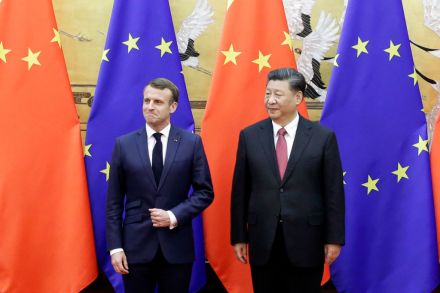
Is Germany afraid of China?

From our UK edition

The German air force has taken off for its first deployment in the Indo-Pacific region. It will take part in Australia’s biennial warfare exercise Pitch Black from Friday, side by side with other western nations as well as regional partners such as Japan, Singapore and South Korea. Berlin’s show of solidarity will be welcomed by Nato allies, but it will also draw pushback from China. It’s an opportunity for Germany to show that it can make a meaningful contribution to the deterrence of Chinese aggression in the Pacific. But in order to do so convincingly it will have to resist pressure from Beijing with more confidence than it has in the past. Germany’s commitment looks promising.

Berlin as the unreal city

"Berlin has too much [history]." Sinclair McKay cites this rueful observation in the preface to his new book about the city. Given that he is not simply discussing Berlin between the wars, or during the second of those wars, or in the Cold War that followed, but all of it, this may come off as a cry for help. History may — in those words attributed to, well, take your pick — be “one damned thing after another,” but when it came to Berlin, those things hurtled through time in a horde, colliding, overlapping and refusing to form an orderly line. And, in Berlin’s case, they had a way of mattering. Not for nothing does this book’s subtitle refer to Berlin as “the city at the center of the world.” Bad news for a writer aiming, presumably, at a degree of concision.

berlin