Germany

Britain’s defence declaration with Germany is pure waffle

From our UK edition

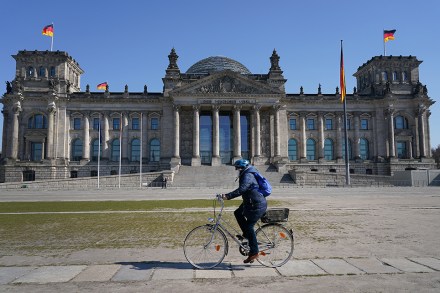
The new cabinet cannot be accused of laziness. John Healey, secretary of state for defence, has just been on a 48-hour tour of France, Germany, Poland and Estonia, all of them important military allies in different ways, trumpeting the new government’s ‘Nato-first’ defence policy. The highlight of Healey’s breakneck trip was his meeting with the German defence minister, Boris Pistorius. The two men have much in common: born 30 days apart in 1960, they worked as political advisers before achieving elected office. Both are solid, reliable, unshowy centrists within their parties. And on Wednesday, these two workhorses agreed a joint declaration on enhanced defence co-operation between the United Kingdom and Germany.

The era of ideological, overreaching and omnipresent government

It was a law of classical political philosophy that democratic polities devolve inevitably into tyrannical ones. This law is being validated in the twenty-first century, as liberal democracy creates societies antithetical to both liberalism and democracy by shaping citizens of a character for which neither was designed nor developed. In a parallel development over the past decade or so in Europe and the United States, liberals and democrats view their response to the problem as “reaction,” pure and simple, against the sort of thing they have been fighting since 1789. Only it is not reaction; it is apparently something new in history.

government

I lost to Harry Kane at darts

From our UK edition

Gareth Southgate has always been a man interested in life outside the football circus. When he played for England, I remember chatting to him at the carousel at Fiumicino airport before a vital France 1998 qualifier in Rome. As he waited for his bag (there’s always baggage with England), Southgate reflected on what he would see on this visit to the Eternal City. Sistine Chapel? Colosseum? La Dolce Vita? No chance. His itinerary was airport, hotel, training ground, hotel, stadium, airport; basically the External City. Southgate accepted his professional lot and looked forward to the day he could return and explore. He certainly made up for it when he moved to punditry.

Is Europe ready for Trump 2.0?

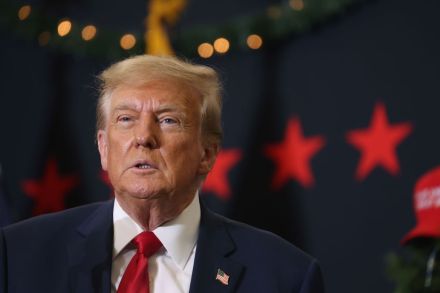
The 2024 presidential race between Joe Biden and Donald Trump is a dead heat. At most, a few percentage points separate them in the polls. Thousands of miles away, however, European leaders are operating as if Trump has already won, not wanting to be caught flat-footed yet again. When Trump defeated Hillary Clinton in 2016, European officials scrambled to establish contacts with the incoming administration. This time, the same wonks are proactively reaching out to Trump-friendly lawmakers and think-tankers, not only to understand what Trump’s foreign policy would look like in a second term but to press their own priorities. The Europeans, of course, are right to be worried.

Trump

Agent Zo: the Polish blonde with nerves of steel

From our UK edition

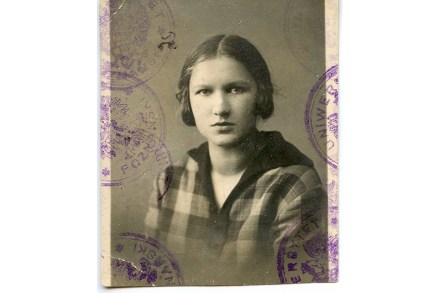
In recent years, far from diminishing, the number of books on the Nazis, Occupied Europe and the Holocaust – events that now lie three quarters of a century in the past – seem only to grow. New archives are opened and attics are raided for forgotten diaries and letters. One historian who has mined them with great skill is Clare Mulley, the author of books on spies and Hitler’s pilots. She has now unearthed a story about a bold and resolute Polish agent, Elzbieta Zawacka, who went by the name of Zo. Her adventures are extraordinary, and their background is no less fascinating.

The circus provides perfect cover for espionage

From our UK edition

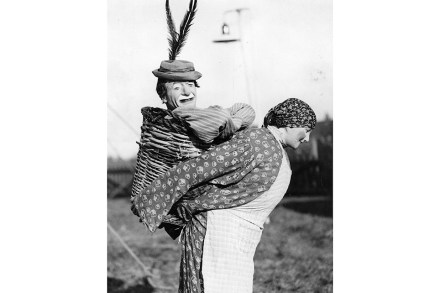
The hall was before me like a gigantic shell, packed with thousands and thousands of people. Even the arena was densely crowded. More than 5,600 tickets had been sold. Cyril Bertram Mills started his circus career accompanying his father to European horse fairs in the 1920s. The two of them were soon familiar faces on the German circus scene, travelling between shows to recruit acts for London. The Munich Circus was a particular draw; but sometimes they hired out their circular wooden building to other local acts. The opening quote of this review comes from Adolf Hitler. Mills was at first dismissive of the Munich Nazi party leader, pointing out that hippos, monkeys and pigs ‘also received enthusiastic receptions in the same circus arena’.

Why were Germany’s Covid files redacted?

From our UK edition

There are two kinds of long Covid. One is a medical syndrome, the other manifests as a healthy obsession – an urge to shed light on what happened during the pandemic crisis. Too many questions remain unanswered: why did Sweden come out of the pandemic better than other countries without having endured a lockdown? Why were masks imposed when scientific studies repeatedly demonstrated that they were unnecessary? Why was discrimination introduced between the vaccinated and the unvaccinated when it was clear that vaccines were incapable of blocking the transmission of the infection? And why, since the lockdowns, has there been such a high excess-death rate in Europe? Why were masks imposed when scientific studies repeatedlyshowed they were unnecessary?

The horrors of the Eastern Front

From our UK edition

Ten years ago David Cameron, as prime minister, pledged £50 million for the centenary of the first world war. The focus was on ‘capturing our national spirit in every corner of the country, something that says something about who we are as a people’. Beyond a celebration of the Tommy on the Western Front and a belated acknowledgement of colonial Britain’s sacrifice, it was a missed opportunity. There was little attempt to better understand the region where the war began – and where, according to Nick Lloyd’s exhaustive The Eastern Front, it never really ended.

Visiting Glashütte, the small town in East Germany that has mastered time

The view from my top floor room at the Steigenberger Hotel de Saxe looked out at the great dome of the Frauenkirche. It’s a huge Baroque church in the center of Dresden; I first saw the building on foot, when failing to find a local restaurant on my first night there. I turned a corner to see it towering above me. It looks like it’s always been there, but the original was destroyed in 1945, under the infamous British firebombing, and reconstruction only finished in 2005. I was eventually directed to the restaurant, past the Oktoberfest stands that began sprouting up during my visit in late September. However beautiful the town, I was not here for “Florence on the Elbe” and its grand buildings, but for smaller, more delicate wonders from a nearby town. And so, at 8 a.m.

Glashütte

Fighting every inch of the way: the Italian Campaign of 1943

From our UK edition

In Whitehall, visible to even the most short-sighted from the gates of Downing Street, stands an outsize statue of Lord Alanbrooke, the strategic adviser to Winston Churchill during the second world war. His job was to help the prime minister see the big picture and concentrate on the decisions that really mattered. This was no easy task. Churchill was both a tricky master and ‘tinkerman’, but Alanbrooke had Ulster blood and knew how to say no. One little village, San Pietro Infine, took more than a week and 1,500 American casualties to capture He also had a remarkable facility for explaining complex strategic problems in simple terms. There is good evidence of this in the BBC archive (and on YouTube) in a television interview he gave in 1957.

The radical mob is ruining Oktoberfest

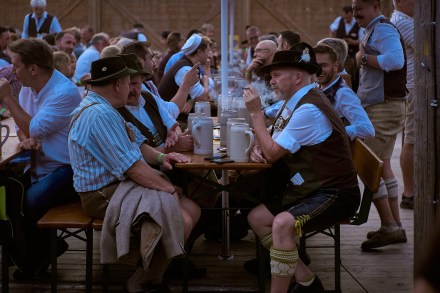
Cockburn wouldn’t be so skeptical of the radical left nearly as much if they didn’t have an insatiable need to suck the joy out of holidays. First they replaced the Christmas tree with the Kwanzaa bush. Then they told us that tofurkey tastes just as good as the real thing. Now, they are attempting to crush Oktoberfest too.   The two-century-old German tradition, which kicked-off in Munich on September 16, is under attack for its skimpy costumes and environmental impact. The man leading the charge: Luitpold Rupprecht Heinrich, the seventy-two-year-old Prince of Bavaria whose great-grandfather was the last Bavarian king.   “When I see Chinese-made folk costumes made of plastic, pseudo-costumes with tight dirndls, then the whole thing becomes a carnival.

How the British intelligentsia fell out of love with Germany

From our UK edition

An economic slowdown, the far right on the rise, even apocalyptic hailstorms – what on earth is happening in Germany? Is Europe’s industrial powerhouse on the slide? Well, yes and no. Germany is in recession, and Germany’santi-immigration party, Alternative für Deutschland (AfD), is growing stronger, but the bad news coming out of Germany indicates a more lasting sea change: liberal Britain has finally fallen out of love with the Bundesrepublik. It’s not just British Teutonophiles who are troubled by the rise of AfD. This week Germany’s domestic spy chief, Thomas Haldenwang, warned about growing right-wing extremism within the party and German President Frank-Walter Steinmeier has echoed these concerns. ‘Ban the enemies of the constitution!

You think British trains are bad? Try German ones

From our UK edition

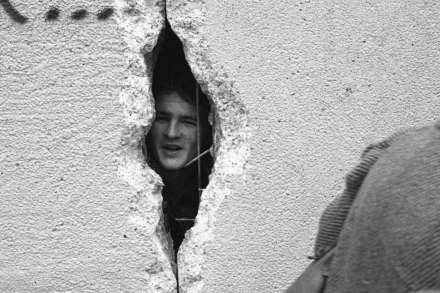
I found Jean-Pierre standing at a half-open window gulping down lungfuls of stale Dutch air as our night train chuntered, unseeing, through an expectoration of towns: Zutphen, Eefde, Gorssell. He was 79 years old, he told me, and returning to Berlin for the first time in 61 years for a meeting with an old friend. Our steward made it absolutely clear he couldn’t give a stuff that there was no buffet car Back in 1962, Jean-Pierre had been a very young Belgian Jesuit employed in smuggling hard currency from West to East Berlin, which he did by stuffing the notes inside a plaster cast which covered his right leg. There was nothing wrong with his leg, of course.

What does the European centre-right stand for?

From our UK edition

Friedrich Merz, the leader of Germany’s Christian Democratic Union (CDU), dropped the bomb last weekend. In a TV interview, Merz opened the door for collaboration with Alternative für Deutschland (AfD), the nationalist-populist party that is home to Germany’s cabal of crackpots and right-wing extremists. He didn’t say what form such co-operation would take, but talked about finding ways to run local councils when the AfD won democratic elections – which happened a few weeks ago when Hannes Loth won a mayoral race in a small town in Saxony-Anhalt. The reactions to Merz’s comments came thick and fast. Politicians from the left questioned his democratic credentials. He’s the ‘wrecking ball of democracy’, said Sara Nanni of the Greens.

What would Trump’s second-term foreign policy look like?

Former president Donald Trump is in a world of legal trouble. Not only is he the first president in history to be impeached twice, he holds the unenviable distinction of being the first president to be indicted. He doesn’t do things by half-measures — he’s been indicted twice. So far he faces a total of seventy-one criminal charges of various severity in two separate investigations, from falsifying business records and retention of national defense information to obstruction of justice. And as this magazine goes to press, we still haven’t heard from Fani Willis in Georgia, or from the second Jack Smith investigation. Yet despite his legal woes, Trump remains a top contender for the highest office in the land.

donald trump foreign policy

The unlikely rise of Germany’s defence minister

From our UK edition

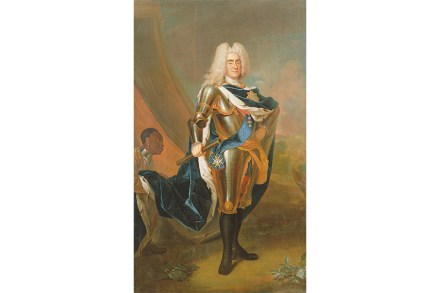
An unlikely political star has risen in Germany. Boris Pistorius, a 63-year-old father of two is a career politician and, as of January, defence minister, an office that has proved a dead end for many of his predecessors. On the face of it, Germany’s Boris has little by way of stardust. Yet he is the country’s most popular politician by a country mile and his department is set to increase its budget at a time when overall government spending is being sharply cut. It seems for the first time in decades, Germany is serious about security and defence – but how long will that seriousness last?

How divided is Europe on China?

From our UK edition

39 min listen

The word ‘West’ is often used as a shorthand to describe liberal democracies in Europe, and perhaps in Asia too, such that we’ll often talk about ‘the West’s attitude to China’, or the ‘West’s relations with China’. But this is at best a lazy shorthand – because when you dig a little deeper, it’s clear that there is no unified West on China. On this episode, I'm joined by Noah Barkin, senior advisor at the Rhodium Group and author of the Watching China in Europe newsletter with the German Marshall Fund, to disaggregate the idea of ‘the West’, focusing especially on the continent of Europe. How do different European nation states, institutions, and even political parties see China differently? Produced by Cindy Yu and Joe Bedell-Brill.

The Franco-Prussian war changed the map of Europe – so why are we so ignorant about it?

From our UK edition

Is there a single major European conflict of the past 200 years that gets so little attention in this country as the Franco-Prussian War of 1870-71? In 1961 Michael Howard brought out his history of the war, but Howard and the odd battlefield tourist apart, Rachel Chrastil’s bibliography – strong on contemporary memoirs, strong in fact on everything from the miraculous appearances of the Virgin Mary and the cult of St Radegund to the transmission of smallpox – is curiously thin when it comes to British interest.

Opening all the bottles at Berlin’s Nobelhart & Schmutzig

Quizzed on how best to assimilate a new culture, travel writer and celebrity chef Anthony Bourdain once uttered the famous line: “Drink heavily with locals whenever possible.” I never met the man, but still I miss him and his deft writing. The Opening a Bottle series is about getting pickled with people far cooler than I am, in whatever city I’ve washed up in. Lisbon to Berlin, December 2022. I was amazed to fly away unscathed as Storm Efraín reared its ugly head, with more than three inches of rain falling in twenty-four hours. Germany’s capital welcomed me with a cool 32 degrees Fahrenheit, dropping to a bone crunching thirteen degrees by the end of my stint. I kept my puffer coat on in techno clubs and danced in front of lit fireplaces.

(Nobelhart & Schmutzig) berlin

The case for cold weather

Pennsylvania experienced a heat wave last week, with temperatures soaring into the mid-80s. It was not to last. This morning it was a balmy 33°F, with that bone-chilling dampness and threat of snow showers that can only mean one thing: spring! When friends and family who live in warm places send me photos of the beach and brag about taking long walks in the sunshine, I block out their bragging with a defiant flip of my hood and insist that people who live in cold places are tougher. We have more character. True grit. And it turns out that may actually be true. "Cold temperature extends longevity and prevents disease-related protein aggregation," according to a new peer-reviewed study from Germany's University of Cologne. Longevity, i.e.

cold weather