Germany

Fighting every inch of the way: the Italian Campaign of 1943

From our UK edition

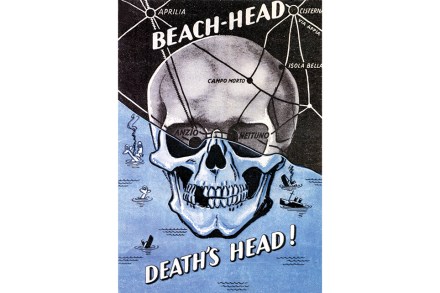
In Whitehall, visible to even the most short-sighted from the gates of Downing Street, stands an outsize statue of Lord Alanbrooke, the strategic adviser to Winston Churchill during the second world war. His job was to help the prime minister see the big picture and concentrate on the decisions that really mattered. This was no easy task. Churchill was both a tricky master and ‘tinkerman’, but Alanbrooke had Ulster blood and knew how to say no. One little village, San Pietro Infine, took more than a week and 1,500 American casualties to capture He also had a remarkable facility for explaining complex strategic problems in simple terms. There is good evidence of this in the BBC archive (and on YouTube) in a television interview he gave in 1957.
The radical mob is ruining Oktoberfest

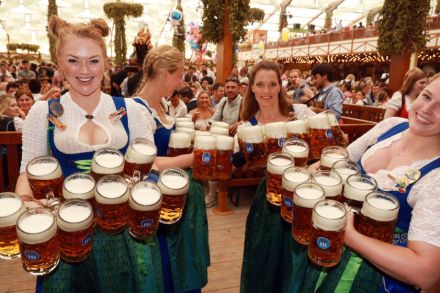
Cockburn wouldn’t be so skeptical of the radical left nearly as much if they didn’t have an insatiable need to suck the joy out of holidays. First they replaced the Christmas tree with the Kwanzaa bush. Then they told us that tofurkey tastes just as good as the real thing. Now, they are attempting to crush Oktoberfest too.   The two-century-old German tradition, which kicked-off in Munich on September 16, is under attack for its skimpy costumes and environmental impact. The man leading the charge: Luitpold Rupprecht Heinrich, the seventy-two-year-old Prince of Bavaria whose great-grandfather was the last Bavarian king.   “When I see Chinese-made folk costumes made of plastic, pseudo-costumes with tight dirndls, then the whole thing becomes a carnival.

How the British intelligentsia fell out of love with Germany

From our UK edition

An economic slowdown, the far right on the rise, even apocalyptic hailstorms – what on earth is happening in Germany? Is Europe’s industrial powerhouse on the slide? Well, yes and no. Germany is in recession, and Germany’santi-immigration party, Alternative für Deutschland (AfD), is growing stronger, but the bad news coming out of Germany indicates a more lasting sea change: liberal Britain has finally fallen out of love with the Bundesrepublik. It’s not just British Teutonophiles who are troubled by the rise of AfD. This week Germany’s domestic spy chief, Thomas Haldenwang, warned about growing right-wing extremism within the party and German President Frank-Walter Steinmeier has echoed these concerns. ‘Ban the enemies of the constitution!

You think British trains are bad? Try German ones

From our UK edition

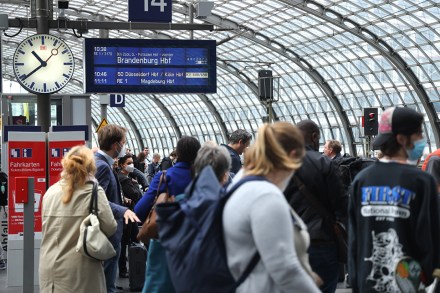
I found Jean-Pierre standing at a half-open window gulping down lungfuls of stale Dutch air as our night train chuntered, unseeing, through an expectoration of towns: Zutphen, Eefde, Gorssell. He was 79 years old, he told me, and returning to Berlin for the first time in 61 years for a meeting with an old friend. Our steward made it absolutely clear he couldn’t give a stuff that there was no buffet car Back in 1962, Jean-Pierre had been a very young Belgian Jesuit employed in smuggling hard currency from West to East Berlin, which he did by stuffing the notes inside a plaster cast which covered his right leg. There was nothing wrong with his leg, of course.

What does the European centre-right stand for?

From our UK edition

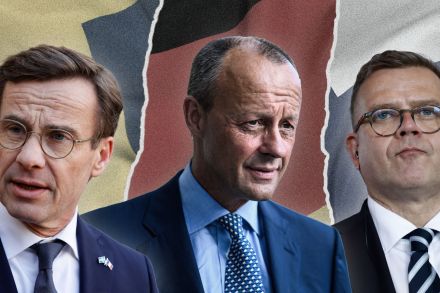
Friedrich Merz, the leader of Germany’s Christian Democratic Union (CDU), dropped the bomb last weekend. In a TV interview, Merz opened the door for collaboration with Alternative für Deutschland (AfD), the nationalist-populist party that is home to Germany’s cabal of crackpots and right-wing extremists. He didn’t say what form such co-operation would take, but talked about finding ways to run local councils when the AfD won democratic elections – which happened a few weeks ago when Hannes Loth won a mayoral race in a small town in Saxony-Anhalt. The reactions to Merz’s comments came thick and fast. Politicians from the left questioned his democratic credentials. He’s the ‘wrecking ball of democracy’, said Sara Nanni of the Greens.

What would Trump’s second-term foreign policy look like?

Former president Donald Trump is in a world of legal trouble. Not only is he the first president in history to be impeached twice, he holds the unenviable distinction of being the first president to be indicted. He doesn’t do things by half-measures — he’s been indicted twice. So far he faces a total of seventy-one criminal charges of various severity in two separate investigations, from falsifying business records and retention of national defense information to obstruction of justice. And as this magazine goes to press, we still haven’t heard from Fani Willis in Georgia, or from the second Jack Smith investigation. Yet despite his legal woes, Trump remains a top contender for the highest office in the land.

donald trump foreign policy

The unlikely rise of Germany’s defence minister

From our UK edition

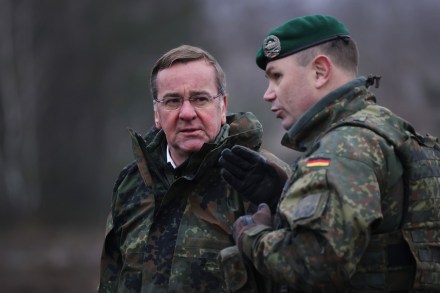
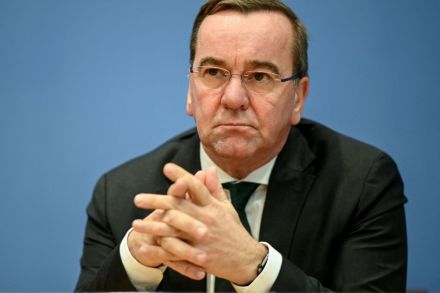
An unlikely political star has risen in Germany. Boris Pistorius, a 63-year-old father of two is a career politician and, as of January, defence minister, an office that has proved a dead end for many of his predecessors. On the face of it, Germany’s Boris has little by way of stardust. Yet he is the country’s most popular politician by a country mile and his department is set to increase its budget at a time when overall government spending is being sharply cut. It seems for the first time in decades, Germany is serious about security and defence – but how long will that seriousness last?

How divided is Europe on China?

From our UK edition

39 min listen

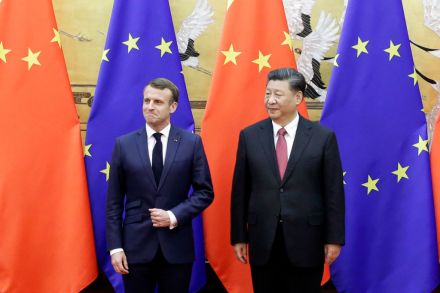
The word ‘West’ is often used as a shorthand to describe liberal democracies in Europe, and perhaps in Asia too, such that we’ll often talk about ‘the West’s attitude to China’, or the ‘West’s relations with China’. But this is at best a lazy shorthand – because when you dig a little deeper, it’s clear that there is no unified West on China. On this episode, I'm joined by Noah Barkin, senior advisor at the Rhodium Group and author of the Watching China in Europe newsletter with the German Marshall Fund, to disaggregate the idea of ‘the West’, focusing especially on the continent of Europe. How do different European nation states, institutions, and even political parties see China differently? Produced by Cindy Yu and Joe Bedell-Brill.

The Franco-Prussian war changed the map of Europe – so why are we so ignorant about it?

From our UK edition

Is there a single major European conflict of the past 200 years that gets so little attention in this country as the Franco-Prussian War of 1870-71? In 1961 Michael Howard brought out his history of the war, but Howard and the odd battlefield tourist apart, Rachel Chrastil’s bibliography – strong on contemporary memoirs, strong in fact on everything from the miraculous appearances of the Virgin Mary and the cult of St Radegund to the transmission of smallpox – is curiously thin when it comes to British interest.

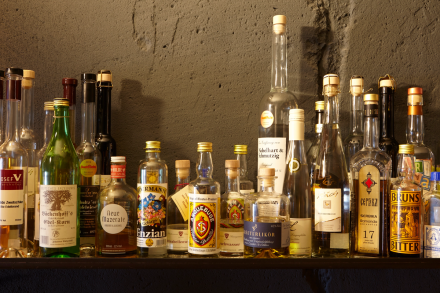
Opening all the bottles at Berlin’s Nobelhart & Schmutzig

Quizzed on how best to assimilate a new culture, travel writer and celebrity chef Anthony Bourdain once uttered the famous line: “Drink heavily with locals whenever possible.” I never met the man, but still I miss him and his deft writing. The Opening a Bottle series is about getting pickled with people far cooler than I am, in whatever city I’ve washed up in. Lisbon to Berlin, December 2022. I was amazed to fly away unscathed as Storm Efraín reared its ugly head, with more than three inches of rain falling in twenty-four hours. Germany’s capital welcomed me with a cool 32 degrees Fahrenheit, dropping to a bone crunching thirteen degrees by the end of my stint. I kept my puffer coat on in techno clubs and danced in front of lit fireplaces.

(Nobelhart & Schmutzig) berlin

The case for cold weather

Pennsylvania experienced a heat wave last week, with temperatures soaring into the mid-80s. It was not to last. This morning it was a balmy 33°F, with that bone-chilling dampness and threat of snow showers that can only mean one thing: spring! When friends and family who live in warm places send me photos of the beach and brag about taking long walks in the sunshine, I block out their bragging with a defiant flip of my hood and insist that people who live in cold places are tougher. We have more character. True grit. And it turns out that may actually be true. "Cold temperature extends longevity and prevents disease-related protein aggregation," according to a new peer-reviewed study from Germany's University of Cologne. Longevity, i.e.

cold weather

German patriotism collides with All Quiet on the Western Front

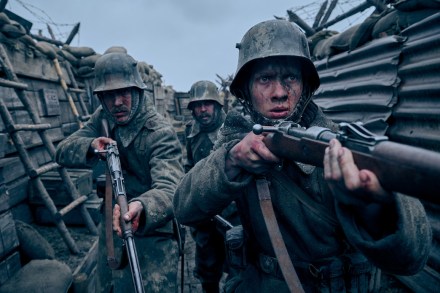
As the bewilderingly overpraised Everything Everywhere At Once continues its inevitable march to Best Picture at the Oscars, many of the films that were once tipped to defeat it have slipped away. The Banshees of Inisherin, Top Gun: Maverick, Tár — all have settled into their time-honored place of being forever the Academy’s bridesmaid and not the triumphant bride. Yet almost out of nowhere, Netflix’s All Quiet on the Western Front has emerged as a serious contender. It swept the BAFTA awards in February, and with nine Oscar nominations, including Best Film, Best Foreign Language Film and Best Adapted Screenplay, it looks certain to win at least a couple of them. Not bad for a two-and-half-hour adaptation of a 1929 German novel.

all quiet on the western front

Germany’s folly: Berlin has miscalculated on Russia and China

The notion that closer trade connections with the West will necessarily set less enlightened nations on a course toward prosperity and liberty is nonsense, but convenient nonsense. Germans have a phrase for it — Wandel durch Handel, change through trade — often given as a justification for their business dealings with Russia and China. Unfortunately, the change they triggered was in Germany. In one case it has been for the worse; in the other it appears to be headed that way. To start with Russia, it’s true that Germany’s ultimately disastrous dependency on natural gas from the east has its origins in the Ostpolitik years: by 1989 the Soviets were supplying West Germany with around a third of its gas.

germany
German

German philosophy and German wine: a sumptuous pairing

The best teacher I ever had in graduate school — or anywhere else, for that matter — was also the most dedicated. Most semesters he would offer a not-for-credit seminar one evening a week at his house. There, some half-a-dozen fledgling philosophy students would congregate, bottle of German wine in hand, to parse slowly through one text: Heidegger on Nietzsche, say, or Bishop Tempier’s condemnation of 219 propositions in 1277, a once-famous event that signaled the eclipse of the Aristotelian world view in favor of the Christian. We devoted one full semester to De li non aliud, “Concerning the Not-Other” (i.e., God) by the mystically inclined Renaissance philosopher, churchman and diplomat Nicholas of Cusa (1400-1464).

Kim Petras: who is Sam Smith’s ‘satanic’ trans sidekick?

More than 12 million people watched Sunday night as Sam Smith and Kim Petras performed their award-winning song "Unholy" on the Grammys stage. Smith, a male soul and pop singer who now identifies as nonbinary, fashioned himself as a bulbous Satan, prancing around in latex pants and heeled boots, a bedazzled cane, and a top hat with devil horns. Plenty has been said about Smith's cosplay — and the deterioration of his (their?) appearance since "coming out" — but many glossed over his sidekick, Kim Petras. Petras, thirty, sings the second verse of "Unholy" and spent the Grammys performance locked in a cage. She is signed with Republic Records and has released two albums and an EP called "Slut Pop". The German singer's tracks are rife with sexual imagery.

kim petras

Biden is the war president Ukraine needs

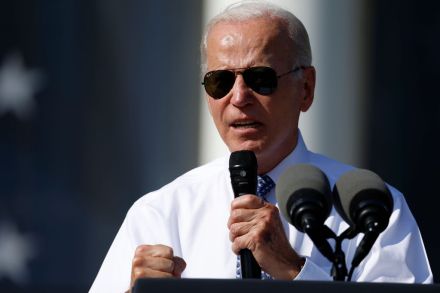
Joe Biden is upping the ante in Ukraine. Even as Vladimir Putin directs a fresh barrage of missiles, Biden is apparently planning a trip to Europe next month to deliver a major address on the anniversary of the Russian invasion and announce a substantial military aid package for Kyiv. Good for him. A speech in Poland or Lithuania — both leaders in the struggle against Russian aggression — will strengthen NATO and demonstrate that a year into the conflict, unity, not dissension, prevails when it comes to confronting Putin’s revanchist ambitions. At every step, Biden has checked Putin, who assumed he could invade and occupy Ukraine in a thrice.

What the US can do about Germany’s hardball on Ukraine

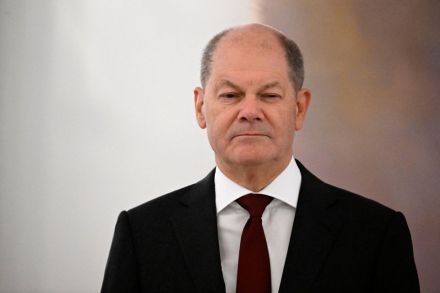
Once again, German Chancellor Olaf Scholz has crushed the hopes of NATO allies and, most of all, the millions of Ukrainians suffering under Russia’s assault. Originally, he refused to send tanks to Ukraine for fear that Russia would escalate the war. More recently, Scholz has said he'd only consider sending tanks if it was part of a coalition, not just Germany acting alone. Last week, the United Kingdom announced it would be sending Challenger 2 main battle tanks (MBT) to Ukraine, making it the first nation to supply modern, Western MBTs to Kyiv. Poland, Finland, and Denmark have also indicated that they would be willing to send their own Leopard 2 tanks. Those are German-origin weapons, so they first require a nod of approval from Berlin in order to export.

Germany’s broken promise to rebuild its military

Germany has a new defense minister. The funny thing is that nobody really knows who he is, what he stands for, and whether he’s capable of doing his job. Boris Pistorius will take over the ministry from Christine Lambrecht, whose one-year tenure was about as embarrassing and gaffe-prone as the Bundeswehr itself. There are too many blemishes on her record to examine in a single post — we would be here all day. But one of the more notable misfires was her tone-deaf New Year’s Eve video, where she reminded viewers that a war was going on in Europe as a fireworks display went off behind her. For many in the German defense establishment, Lambrecht’s departure can be summed up in two words: good riddance. Not much is known about her replacement.

Germany’s missteps in Ukraine have left Scholz fighting for his political life

From our UK edition

Difficult though it may be to believe, there is chaos at the top of the German government over its mishandling of the war in Ukraine. Germany’s defence minister, Christine Lambrecht of the Social Democratic party, has quit her post after the most extraordinary series of unforced errors.  The war has brought all of this to a head. It has exposed Europe’s lax security and complacency. But German defence has been in a league of its own for many years. Over the course of the war, there has been no end to the amount of troubling information that has emerged.

Germany’s Faustian entanglement with China

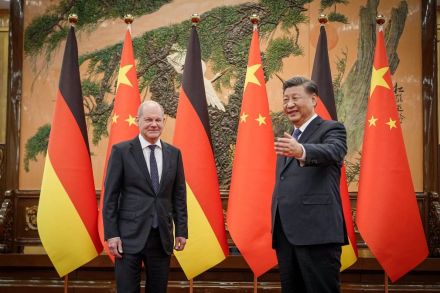
Back in November, German Chancellor Olaf Scholz met with Chinese Communist Party (CCP) chairman Xi Jinping. His visit to China was the first by a G7 leader in three years. Facing heated domestic and international pushback, Scholz framed his visit as an effort to “further develop” economic cooperation between Berlin and Beijing. In this context, such “further development” means further cementing Germany’s Faustian bargain with China, one in which European-based players, like Airbus and Volkswagen, claim immediate revenue — but at their long-term expense and at great strategic cost.