Germany

What was the first cyber attack?

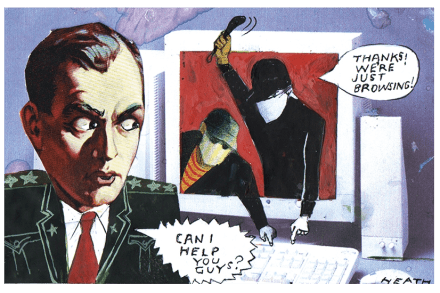
19th-century cyber crime M &S and the Co-op have suffered cyber attacks. Cyber crime didn’t quite begin with the internet. The first record of an attack on a communications network was in the city of Tours in 1834, where the Blanc brothers traded government bonds in Bordeaux and bribed the operator of the country’s telegraph system. He placed extra characters in the telegraphs before they were sent on to Bordeaux, providing secret messages that could be read by the Blancs watching the receiving station in Bordeaux. Unlike the M&S and Co-op attacks, however, the ‘hack’ went unnoticed for two years.  All change Friedrich Merz should become only the 11th Chancellor of Germany since 1945.  How does the turnover of leaders compare with other democracies?
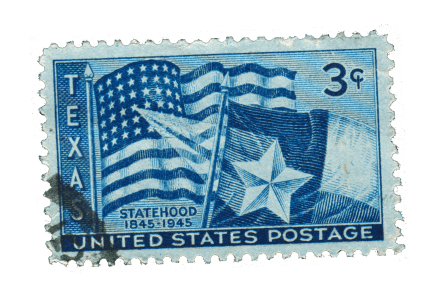
Texas is the perfect holiday destination

Business travel isn’t quite the perk it is cracked up to be. For one thing, you have no say about where you go or when (New Yorkers are rude about London weather, but their own city is uninhabitable for four months of the year). Even when the weather is perfect, you often have no opportunity to extend your stay, so most of your time is spent in airports and meetings. The taxi from the airport may be the cultural highlight of the whole trip. Nothing has a worse effort-to-reward ratio than staying in a hotel for a single night. And, worst of all, while you are awake at 3 a.m. watching BBC News 24 repeat itself, your colleagues assume you are lying in a hammock being brought pina coladas.

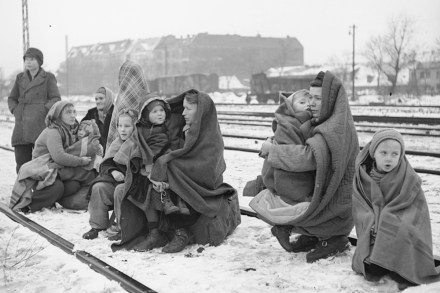
Orphans of war: Once the Deed is Done, by Rachel Seiffert, reviewed

In Rachel Seiffert’s searingly beautiful fifth novel, the author returns to Germany, 1945 – ground she previously explored in The Dark Room, her Man Booker-shortlisted debut. Once the Deed is Done opens with a boy, Benno, looking out of his window at night, having been woken by sirens from the munition works. Elsewhere in the town, Hanne and Gustav discover a runaway woman and young child sheltering in their shed. In the morning, the woman has fled, leaving just ‘the winter child’. Hanne decides to care for her, in secret, ‘because she was a child – just a child – left behind in this cold time... What else could she do but hold her?’ They call her Ditte, although ‘the child wasn’t theirs to be naming’.

Europe is its own worst enemy

From our US edition

Vice President J.D. Vance’s speech condemning Europe’s abandonment of basic western values was a seminal moment in US-European relations. It provoked immediate praise from American conservatives and disparagement from European leaders, including German Chancellor Olaf Scholz. Critics and admirers both recognized the significance of Vance’s message. The February 14 speech, which Mr. Vance gave on his first trip abroad as vice president, yielded millions of views on X and spawned dozens of op-eds in response. At the Munich Security Conference – typically a venue to discuss defense spending and the like – Mr Vance told the entire European leadership class that they themselves are the biggest threat to European security.

Can German cars survive Donald Trump?

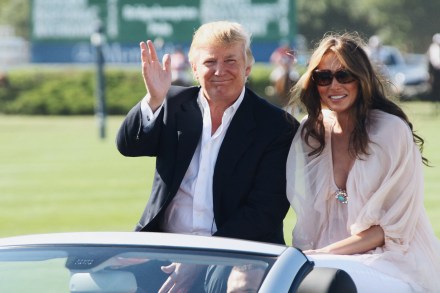
In 2003, Donald Trump took delivery of a Mercedes-Benz SLR McLaren, a $450,000 German supercar that blended precision engineering with Formula 1 bravado. Photographed grinning over its bodywork in Manhattan, he looked every bit the unabashed playboy flaunting a new toy. Two decades on, he’s threatening to hammer the very firm that built it – and Germany’s car industry as a whole – with a 25 per cent tariff on European auto imports. Germany’s post-Cold War boom was built on a single assumption: that ever-deeper globalisation was here to stay. As we explore in our book Broken Republik and its German sibling Totally Kaputt?, the country’s carmakers made an all-in bet on the so-called End of History.

Trump’s war on Europe should not surprise anyone

From our US edition

Has there been a more cataclysmic year for US-Europe relations than 2025? It began with J.D. Vance’s “sermon” to EU leaders at the Munich Security Conference last month, in which he berated Western Europe for its policies on immigration and free speech. This year has also seen the growing threat of NATO falling apart after 76 years of peace in Western Europe, with the White House seemingly tilting toward Russia and Trump demanding that alliance members such as Germany, France, and the U.K. dramatically increase their defense spending. This week, as the Trump administration imposes tariffs on Europe and Europe retaliates, there are even signs of a full-scale trade war.

Europe

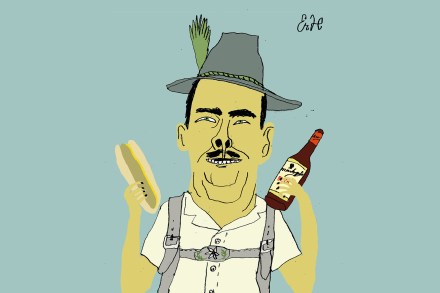
Why German-origin Americans keep quiet about their culinary contributions

From our US edition

Irish Americans are arguably the most ostentatious in their national celebrations. It is hard to imagine any other group getting a day off work and spending it turning the Chicago River green. I wrote of my own Irish pride in these pages last year. March 17 was the highlight of our social calendar. My grandfather inaugurated our city’s St. Patrick’s Day parade, which still runs in Great Falls, Montana, today. Montana — especially Butte — is famous for its Irish population, which makes up 15 percent of residents. But there is a significantly larger ethnic group in Montana, whose traces of national pride are almost imperceptible. According to a US Census Bureau survey in 2020, 24 percent of Montanans claim German ancestry.

German

What Europe gets wrong about the far right

The head of America’s ‘Department of Government Efficiency’ (Doge) has written to all federal workers in the US asking them to explain in a brief email what they did last week. The exercise is intended to take no more than five minutes but has already lead to howls from many employees. How could anyone expect them to perform such a task? How can one explain the intricacies of supporting transgender opera among the Inuit in such short order? Happily, the new editor is not putting those of us on The Spectator’s payroll through any similar exercise. Nevertheless, something in the global vibe-shift perhaps impels me to mention a little of what I have been doing with my time.

Portrait of the week: Foreign aid cut, Pope in hospital and King pulls a pint

Home Before flying to Washington, Sir Keir Starmer, the Prime Minister, said: ‘We have to be ready to play our role if a force is required in Ukraine once a peace agreement is reached.’ He told the Commons that Britain would raise defence spending to 2.5 per cent of national income by 2027, funded by cutting development aid from 0.5 per cent to 0.3 per cent of GDP. The government surplus for January, when much tax comes in, was £15.4 billion, the highest ever, but far below the £20.5 billion predicted by the Office for Budget Responsibility. Average household energy bills will rise from April by £111 to £1,849 a year. BMW said it was shelving reintroduction of electric vehicle production at its Oxford Mini plant. BP dropped its goal of cutting oil and gas production.

Letters: The brilliant uselessness of art

Wonderfully useless Sir: Michael Simmons overlooks some scandalous examples of frivolous funding right under his nose (‘Waste land’, 15 February). A few minutes from our offices, there are several vast buildings, all lavishly subsidised by the taxpayer, whose sole purpose is to allow hordes of strangers to stare at rectangular sheets of fabric on which are daubed various colours and shapes – most of which quite wastefully replicate things that we can already see with our own eyes in the real world.

How far-right might Germany go?

In the Thuringian city of Weimar, opposite the theatre where the National Assembly hashed out Germany’s constitution in 1918, stands the museum of the history of the Weimar Republic. ‘A spectre is rising in Europe – the spectre of populism,’ a plaque reads. ‘Forces long thought overcome seem to be returning to threaten the basis of democracy. The Weimar Republic and its neighbours knew the phenomenon only too well.’ It’s a warning that will be weighing on the mind of Friedrich Merz, the leader of the conservative Christian Democratic Union (CDU) party and the man who will probably become Germany’s next chancellor. The federal election this Sunday is the culmination of a messy and fraught campaign.

Letters: The real value of independent schools

Strength of service Sir: Matthew Lynn and Steven Bailey (Letters, 1 February) are quite wrong to deplore the decline of Britain as a manufacturing nation. Manufacturing – especially of the heavy sort – is best suited to a country with plenty of space, little regulation, cheap energy and cheap non-unionised labour. That was once the case for Britain but it is no longer; nor is it so for the majority of European countries. Germany epitomises the folly of mindlessly adhering to manufacturing, as is well explained in Wolfgang Munchau’s excellent book Kaput. Britain, on the other hand, has successfully diversified into services and is now the world’s second-largest exporter of this income earner.

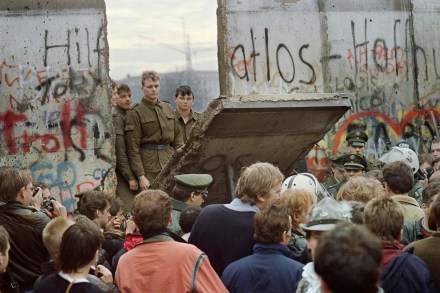
Who really lost when the Berlin Wall fell?

The fall of the Berlin Wall was meant to have been the crowning moment for the West, and for the principles of empowering liberation and freedom. Obviously so – I used to think. Now I’m more along the lines of, well, yes and no. The fall also seems in some ways to divide the former good times from the current bad times, both for Germany and for the rest of us. Such thoughts came to mind after I headed to Berlin to witness the New Year’s Eve fireworks display, during which the city is turned into the most attractive war zone you’ll encounter. I stayed with my brother, a creative type who, like many others artistically inclined, settled in Prenzlauer Berg, an area formerly in East Berlin. With the Wall down, people were drawn to the low prices and atmosphere of artistic liberty.

Labour’s Irish insurgent, Germany’s ‘firewall’ falls & finding joy in obituaries

48 min listen

As a man with the instincts of an insurgent, Morgan McSweeney, Keir Starmer’s chief of staff, has found Labour’s first six months in office a frustrating time, writes The Spectator’s editor Michael Gove. ‘Many of his insights – those that made Labour electable – appeared to have been overlooked by the very ministers he propelled into power.’ McSweeney is trying to wrench the government away from complacent incumbency: there is a new emphasis on growth, a tougher line on borders, an impatience with establishment excuses for inertia. Will McSweeney win his battle? And what does this mean for figures in Starmer’s government, like Richard Hermer and Ed Miliband? Michael joined the podcast alongside Starmer’s biographer Tom Baldwin. (1:04) Next: can the AfD be stopped?

‘Our side is significantly sexier’: an interview with Germany’s most controversial politician  

‘My knife is at your throat,’ says a Turkish barber, wielding a razor blade around Maximilian Krah’s face. Krah, one of the most controversial figures in Germany’s right-wing Alternative for Germany (AfD) party, sits for a shave – and a grilling. The TikTok video of the conversation has racked up 2.8 million views. Does Krah hate foreigners, the bearded barber asks. No, but ‘eight million have come since 2013’, he says, and ‘too many don’t work and don’t want to work’. Does he hate Islam? Religion is good but ‘not as a reason to blow up people’. This isn’t quite what you’d expect from a member of the AfD but Krah is not your typical politician.

Tomorrow belongs to the AfD

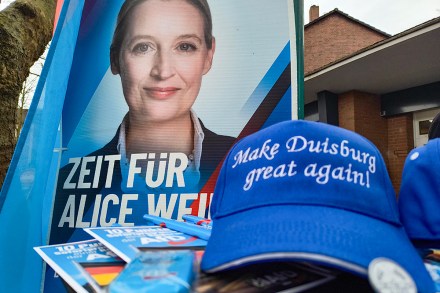
‘The firewall has fallen!’ Alice Weidel, co-leader of the far-right Alternative for Germany (AfD), posted on X, barely able to contain her excitement. The firewall (‘Brandmauer’) refers to the agreement by Germany’s establishment parties never to endorse or collaborate with the AfD. Last week, it was breached – for the first time in the history of the federal German parliament, a motion was passed with the AfD’s help. The person responsible was the man tipped to be Germany’s next chancellor: Christian Democratic Union (CDU) leader Friedrich Merz. Merz’s motion called on the government to reintroduce permanent border controls, block all attempts to enter the country illegally and prioritise the arrest and deportation of illegal immigrants.

Don’t believe the ‘Believe Her’ movement

I never expected to have strong feelings for a member of Germany’s Green party, but I really do feel extremely sorry for Stefan Gelbhaar, once (but not now or ever again) an MP for Berlin. Women should hang together, say some feminists. I couldn’t disagree with this more  Gelbhaar is a 48-year-old criminal defence lawyer who was, until very recently, running to be a candidate in the 23 February elections. He’s reasonably handsome if you like a Timothy Dalton chin dent. He has two young children and he’s a moderate, centrist Green, which is probably the root cause of his troubles.

A pleasant respite from the tumult in Cambridge

From our US edition

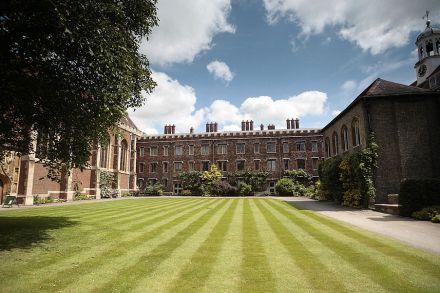
Cambridge, England Inscribed on the lid of a two-manual harpsichord in Holy Trinity Church at Hildersham in Cambridgeshire is the Latin tag Musica Donum Dei — music is a gift of God. It was a sentiment I could hardly quarrel with as I listened in the little twelfth-century church to a variety of baroque sonatas for violin, recorder, cello and harpsichord. They were expertly performed by the Azur Ensemble, which is comprised of recent graduates of the Royal College of Music. A particular standout was the French harpsichordist Apolline Khou, who has performed widely in Europe and in a solo concert for King Charles III.

Cambridge

Keith Jarrett’s accidental masterpiece

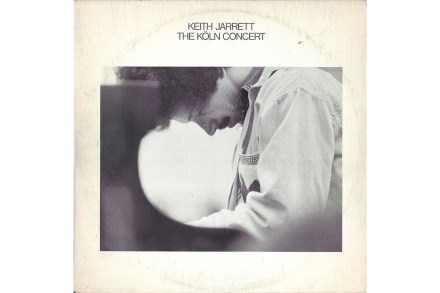
Shortly before midnight on the evening of Friday 24 January 1975, at Cologne Opera House on the banks of the Rhine, a wiry 29-year-old from Pennsylvania walked onto the stage in front of a crowd of 1,400 people and began to play the piano, alone. The 50th anniversary of what followed is being celebrated with a number of events and documentaries across the world this week. A recording of Keith Jarrett’s performance that night, released on 30 November 1975, went on to become the best-selling solo piano record of all time. The record was produced by ECM (Edition of Contemporary Music), a prog jazz label that was at its peak in the mid-1970s, with The Köln Concert its crowning achievement.

Why I’m voting for the AfD

On 23 February, I will vote for the Alternative for Deutschland (AfD) party in the German general election. As someone with an immigrant parent, a postgraduate degree, and who works in the liberal world of film and TV, this is the last thing I’m supposed to admit to in public. My fellow Germans might understand my not wanting to vote for the Social Democratic party (SPD), the left-wingers who lead our deeply unpopular coalition government. But as an ‘educated’ millennial, surely I ought to vote Green? After all, our shamelessly non-neutral public broadcasters ARD and ZDF acclaim them the ‘party of youth’.