Germany

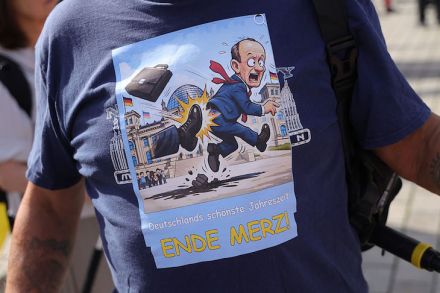
Time is up for Friedrich Merz

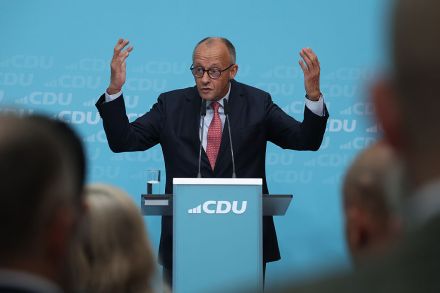
Friedrich Merz is the most tragic chancellor in the young history of the reunified Germany. It is time for him to step down. This was made very clear, when he faced the cameras after yet another election that was lost by his party, the CDU. After losing Saxony-Anhalt and then Mecklenburg-Vorpommern to the far-right Alternative for Germany (AfD) – while Berlin fell to the socialist far-left Die Linke – everyone here in Germany expected a speech with consequences. Would he declare the “Brandmauer” – the firewall, that would prevent the CDU from ever even getting majorities on bills through in parliament with the AfD – to be over? Would he step down and make way for a new chancellor? Painstakingly, nothing of the two happened: Friedrich Merz stated simply that he will stay.
Another AfD win could mean the end for Germany’s embattled chancellor

Just two weeks after the Alternative for Germany's (AfD) victory in the state of Saxony-Anhalt, two more state elections are taking place in Germany this Sunday. Friedrich Merz's government, already under pressure, is in for more bad news. Mecklenburg-Vorpommern and Berlin are both heading to the polls this weekend. The former could see yet another win for the AfD, though it remains a head-to-head race between the anti-immigration party and the Social Democrats (SPD). In Berlin, polls suggest that a total of four parties are in the running for the most votes on Sunday, with the socialist Left (Die Linke) leading the Christian Democrats (CDU), AfD and the Greens.

Germany

How full are Britain’s care homes?

From our UK edition

Before 9/11 11 September will always be remembered for the attacks on the World Trade Center and Pentagon 25 years ago. What else has happened on 9/11 through the ages? AD 9 Barbarians defeat the Romans at the Battle of Teutoburg Forest. 1297 William Wallace defeats the English at the Battle of Stirling Bridge. 1609 English explorer Henry Hudson arrives on Manhattan Island. 1852 Buenos Aires declares independence from the Argentine Confederation. 1857 The Mountain Meadows Massacre, when Mormons attacked a convoy of wagons driven by settlers travelling from Arkansas to California, killing 120. 1954 Hurricane Edna makes landfall in New England, killing 29. 1976 TWA flight 355, hijacked after taking off from LaGuardia airport, arrives in Paris.

Can Britain learn from Sweden’s immigration crackdown?

Should Sweden now replace Australia, with its famed points system for immigration control, as the overseas model of choice for the British Right? As Sweden prepares to go to the polls in a desperately close election this Sunday, it is well worth considering what Stockholm has achieved over the past four years – not just on migration, but also in the intimately correlated terrain of gang crime and extremism; in short, what the French call les aspects régaliens, those matters which lie within the exclusive competence of the State. Scandinavia is certainly in vogue.

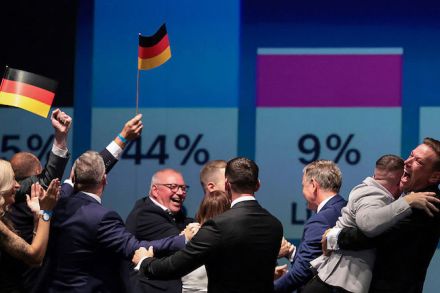
How the AfD made history by winning in Saxony-Anhalt

The Alternative for Germany (AfD) is on the verge of leading a state government for the first time in history. According to the preliminary results announced on Monday morning, the AfD achieved 43.8 percent in the state election of Saxony-Anhalt, more than doubling their voter share compared to the previous election in the state in 2021. The AfD achieved 43.8 percent in the state election of Saxony-Anhalt, more than doubling their voter share Meanwhile, the Christian Democratic Union (CDU), the party of chancellor Friedrich Merz, lost 20 percent and fell to 17.2. The election result from Sunday is not only damaging to the CDU, but to all historically established parties in Germany. They might not be able to prevent the AfD from governing for the first time.

Is Europe brave enough to keep pointing the finger at Putin?

Just under a month after three drones were discovered in quick succession at Leipzig airport, the German government took the unexpected step of publicly naming the country behind the incidents. Standing alongside foreign minister Johann Wadephul on Tuesday afternoon, the German minister of the interior, Alexander Dobrindt, announced: “The German government has concluded that Russia is responsible for the hybrid attack in Leipzig on 4 August.” According to Dobrindt, the German government was able to conclusively determine Russia’s involvement thanks both to a police investigation and findings made by the intelligence services.

putin russia

There’s still time to save the West

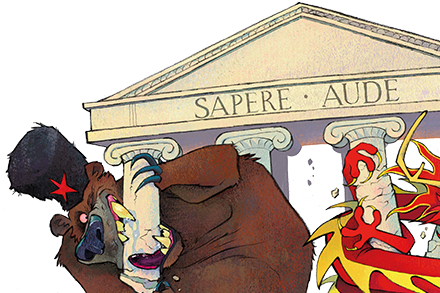
When The Spectator asked me whether I would write an essay on “Why we need to strengthen the West,” I was delighted – and bemused. Why is this even up for debate? That we must explain and justify “the West” at all indicates just how weak it has become. It would be better if it did not need strengthening but were simply strong. It is not. The West has become an invalid. What exactly, though, are we trying to strengthen? The West is an idea, not a location. It rests on four pillars: Athens – where democracy was born. Rome – the cradle of the rule of law. Jerusalem – where Judeo-Christian values placed the inviolable dignity of the individual at the center.

west

The best German music? It’s not Bach

From our UK edition

Outside of Germany, the virtues of ‘Schlager music’ are barely known and appreciated. Admittedly, the label ‘virtues’ is contestable. This style of German music, whose roots go back as far as the late 19th century, is characterised by catchy instrumentals with easygoing and usually sentimental lyrics. It serves as the country’s musical equivalent of Marmite: Germans seem to either love it or hate it. I fell in love with Schlager after encountering it at German beer festivals and dive bars during a long-range Camino pilgrimage that took me through Germany, France and Spain. The Pet Shop Boys are fans too (see their 2024 hit, ‘The Schlager Hit Parade’).  The music is cheesy but, set against the cynical blandness of modern pop music, it's a welcome tonic.

We should politicize the Berlin Pride attack

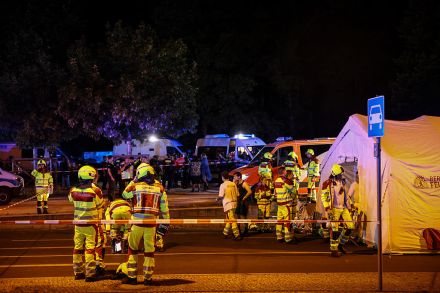
Of all the platitudes trotted out after an Islamist attack, the maddest has to be: “Don’t politicize this tragedy.” The bodies of our fellow citizens are barely cold before we’re being pre-emptively told off for “exploiting” their deaths for “political ends.” But it’s already political. When a religious hysteric takes up arms against innocents, that’s a political attack. ‘Don’t be divisive’ is a demand for self-censorship masquerading as a plea for social peace The “no politics” rule was swiftly enforced following the atrocity at Berlin Pride. The minute it was announced that the suspect was an ISIS fanboy known for mingling with other Islamists, the cry went out: “Don’t politicize this. Don’t let it divide us.

berlin pride

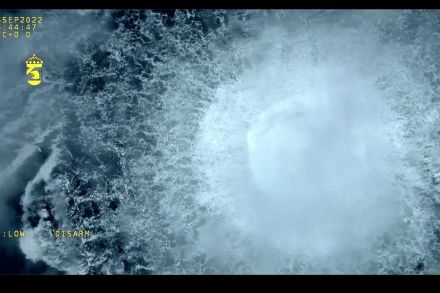
Who believes the latest version of the Nord Stream saga?

If you want to start a myth, make it a good one. Look at Odysseus. Imagine if the old liar had come home stony broke, a decade late, and told his wife: "Sorry, Penny, I got drunk, the ship was repossessed and the crew deserted, I gambled away all my money and I’ve spent the last ten years working in bars to pay my passage home." The tale would not have endured. Penelope would probably have kicked him out and married one of the suitors. It’s more or less the same with the unmysterious sabotage of Russia’s Nord Stream pipeline in September 2022. There’s a perfectly good, prosaic, obvious explanation. The giant undersea tube was able to supply cheap Russian gas to Germany, something the US government has disliked for decades.

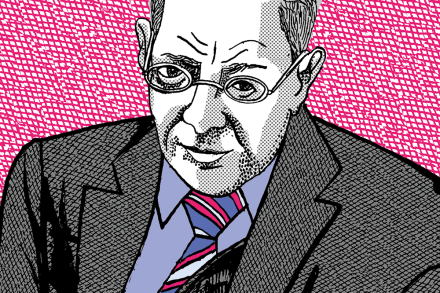
‘Make Germany normal again’: an interview with Germany’s exiled spy chief

Hans-Georg Maassen is an unlikely dissident. In his trademark three-piece suits and small glasses, he looks more like a law professor. Indeed, that is what he studied, earning a doctorate on the legal status of asylum seekers in international law. This bourgeois exterior is the perfect cover for a man who was Germany’s top spy, charged with protecting the country from the far-right and Islamists. But now he is no longer under the quiet protection of the German state; he is its victim. He is under investigation from the agency he once led, the Federal Office for the Protection of the Constitution (BfV). Like George Smiley, Maassen is a remnant of an older and more powerful country, soldiering on in spite of the decline, trying to preserve what he can.

hans-georg maassen

Pity us poor Celtic fans

From our UK edition

Although the past few footballing weeks have been dominated by the convulsive conclusion to Arsenal’s season – and the upcoming few will be dominated by the World Cup – I wonder if some of you might spare a thought for my own traumas north of the border. As a Celtic supporter, I’ve had one of the worst seasons imaginable. After years of victory in the relatively impoverished (and severely mocked) Scottish Premier League, my team has had one of their most disastrous stretches, knocked out embarrassingly early from all European competitions and then continually shamed and outperformed by a resurgent Hearts, who haven’t won the Scottish League since 1960.

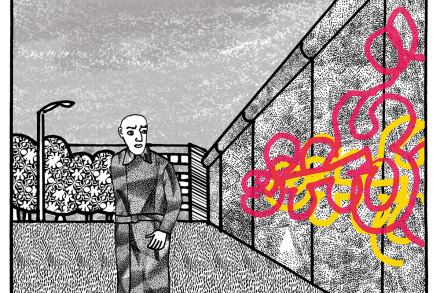
My annual pilgrimage along the route of the Berlin Wall

Each time I return to Berlin – that wonderful, awful city where I whiled away the best days of my misspent youth – I take a walk along the cobbled path that marks the route of the Berlin Wall. Half a lifetime since it came tumbling down, there isn’t much left to see. A few stretches have been preserved as memorials, but it’s mainly an absence not a presence – a ghostly gap between the backs of buildings, a fissure between past and present, between the hard truths of the last century and the uneasy ambiguities of today. Why do I persist with this melancholy Wanderung, year after year? Because a walk along the Mauerweg (as Berliners call that zigzag footpath) is the best way to take the temperature of this Faustian metropolis.

Berlin Wall

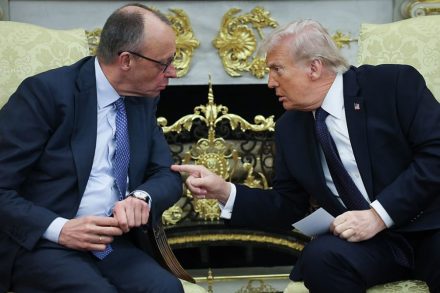
Trump’s missile cut has left Germany exposed

It has been a choppy 12 months for transatlantic relations since Friedrich Merz was sworn in as chancellor of Germany a year ago today. Fittingly, he is marking one year in office by dealing with the fallout of a spat with Donald Trump which has resulted in very real consequences for German – and potentially European – defense. On Friday, the Pentagon announced that 5,000 American troops would be withdrawn from German soil over the coming six to 12 months. Additionally, contrary to an agreement struck between Merz’s predecessor Olaf Scholz and Joe Biden, no new intermediate-range missiles would be stationed in Germany in the immediate future.

germany

For Trump, it’s lonely at the top

King Charles III and Queen Camilla were at their most emollient in Washington, where they exchanged a flurry of presents with Donald and Melania Trump. The King’s gifts to President Trump included a framed copy of the design plans for the Resolute Desk, which was originally given to President Rutherford B. Hayes by Queen Victoria in 1880. Trump appeared to shelve his hostility toward the United Kingdom for declining to participate in the Iran war, but he quickly made up for his forbearance by pummeling another NATO ally.

The unlikely link between Nuremberg and The Devil Wears Prada

In the aftermath of Peter Magyar’s victory in Hungary, while I watch people dancing in the streets as they celebrate Viktor Orban’s dramatic ousting, I think of my Hungarian grandparents. As Holocaust survivors, they were the lucky ones, and they remained proud Hungarians to the end. They would have greeted this election with characteristic realism: Minden csoda harom napig tart, as the saying goes. Every miracle lasts three days. Hungary is a country still feeling the long aftershocks of the second world war and the Holocaust. Those shocks seem clearer than ever after the years I have spent researching The Nuremberg Women, my new book on the trials.

Is it time for me to renounce the Devil?

From our UK edition

As I spent much of January in dry dock in Tommy’s hospital (‘dry’ being doubly appropriate), other avocations were needed. One friend said that it sounded as if I had spent much of the time gazing at the glories of Barry and Pugin, reading poetry or teasing pretty nurses: all pleasant activities. But there was one disappointment. Geoffrey Elton helped to introduce the civilisation of the Rhineland to East Anglia Assuming that hospital wards were good stalking grounds for chaplains, I would have been happy to discuss the Trinity, the meaning of the first verse of St John’s Gospel, or whatever. But only one clergy creature appeared. There is a good old Scots word, ‘mouthless’ (pronounce ‘oo’); that poor fellow fitted the description.

The German army’s drones disaster

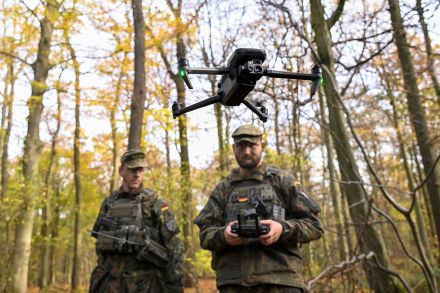
German politicians like to talk about Zeitenwende – the country’s great turning point in its defense policy since the invasion of Ukraine. And it has certainly turned: toward spending billions of taxpayer euros on drones that cannot fly in frontline situations, seemingly cannot hit their targets, and whose largest investors sit not in Berlin or Brussels, but in Silicon Valley boardrooms with direct lines to the White House and CIA. If this is European defense sovereignty, one could wonder what this dependency actually looks like. And if Europe really is serious about this change.

The citizens of nowhere adrift in the West

From our UK edition

We all know that an Englishman’s home is his castle, or at least it was. Looking back, it is easy to see how the castle walls were breached – first by mobile phones and wifi, then by the smart speakers and other gadgets that help and also harvest us. The idea that our homes are inviolate seems quaint nowadays. We know there are many other ways in which we are being uncastled, not least by government agents acting with impunity. And if you think that’s a problem, wait till you read the other home truths delivered by Ece Temelkuran in a book you’ll ignore at your peril. Temelkuran is a writer of rare gifts with an urgent message. Her first books, including the award-winning Women who Blow on Knots, appeared in her native Turkish.

The Kremlin’s plan to create a new wave of Ukrainian refugees

From our UK edition

What is the limit of Ukrainian civilians’ endurance? In nearly four years of relentless war, Ukraine’s people have faced summary executions, ‘drone safaris’ where unmanned aerial vehicles hunt people down city streets and constant bombardment of cities by swarms of drones and missiles. This winter their remarkable resilience faces its severest test yet as Russian forces reach a tipping point in their systematic attempt to knock out the country’s energy infrastructure. In each of the past three winters, Vladimir Putin has attempted to render Ukraine’s cities uninhabitable by plunging them into darkness and cold, without success. But this time it looks like the Kremlin’s campaign to weaponise winter may be succeeding.