Henry Donovan

Henry Donovan

Henry Donovan is an Anglo-German journalist and communications adviser based in Berlin

Friedrich Merz has become the new Angela Merkel

From our UK edition

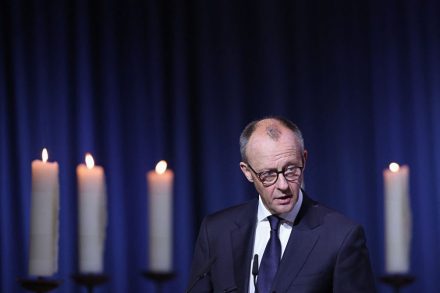
Germany's conservatives voted for decisiveness after the dreary Scholz years. Instead, they got another moderator-in-chief – one very much like Angela Merkel. On the campaign trail the promise was simple. Friedrich Merz would be everything Angela Merkel was not: decisive where she dithered, confrontational where she compromised, ideological where she triangulated. Conservative voters, exhausted by 16 years of Merkel's anaesthetic centrism and then three more of Olaf Scholz's leaden continuation of it, were ready to believe him. Germany had endured nearly two decades of chancellors who moderated rather than led, who treated conviction as a liability and caution as a virtue.

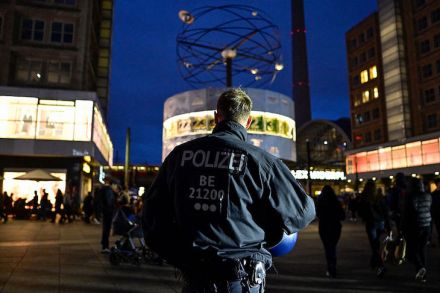
Why did the authorities turn a blind eye to the alleged rape of a Berlin schoolgirl?

From our UK edition

A 16-year-old schoolgirl was allegedly raped in the garden of a state-funded youth centre in Berlin-Neukölln last November. It was evening. The building was locked. She spent hours crouching in a corner of the grounds before climbing a fence to escape, breaking her ankle in the fall. Her alleged attacker, a 17-year-old, is said to have filmed the assault. In the weeks that followed, he allegedly used the footage to blackmail her into returning every Monday. Other young men from his group are said to have found out about the video and began pursuing her too. That alone would be horrifying enough. But what happened next is worse That alone would be horrifying enough. But what happened next is worse – because what happened next was nothing.

Why the AfD has fallen out of love with Trump

From our UK edition

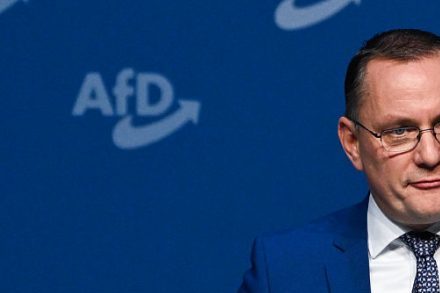
When the Alternative for Germany (AfD) condemned America’s strikes against the Iranian regime last week, the reaction in Washington must have been one of genuine confusion. For months, perhaps years, the party had presented itself as the natural German ally of the Trump movement. AfD politicians travelled to Washington; Alice Weidel was warmly received and endorsed by J.D. Vance at last year's Munich Security Conference. In Maga world, the AfD was increasingly spoken of as Germany’s conservative insurgency – a mirror image of how Trump sees his so-called revolt against liberal elites. Then came the first real test. Tino Chrupalla, the AfD’s co-chairman, declared last week that Donald Trump had 'started as a president of peace' but risked becoming a 'president of war'.

The German army’s drones disaster

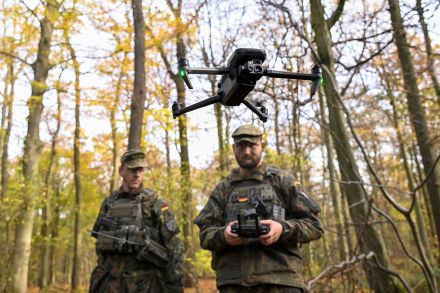
German politicians like to talk about Zeitenwende – the country’s great turning point in its defence policy since the invasion of Ukraine. And it has certainly turned: towards spending billions of taxpayer euros on drones that cannot fly in frontline situations, seemingly cannot hit their targets, and whose largest investors sit not in Berlin or Brussels, but in Silicon Valley boardrooms with direct lines to the White House and CIA. If this is European defence sovereignty, one could wonder what this dependency actually looks like. And if Europe really is serious about this change.

Friedrich Merz risks losing touch with the German people

From our UK edition

What a radically changing year 2025 has been: a year in which Germany’s new chancellor, Friedrich Merz, found himself fighting not merely the parliamentary opposition, the Russian threat and the brittle promise of European unity, but also his weakest and most self-confident adversary of all – his own coalition partner, the Social Democrats (SPD). After years of aborted ascents, Friedrich Merz has finally reached the summit. For more than seven months now, he has sat in the Kanzleramt in Berlin he once seemed destined never to occupy. His ascent, however, was ungainly. Two rounds of voting were required to crown him chancellor.

When will Europe’s leaders wake up to the Russian threat?

From our UK edition

Europe’s leaders flocked to London this week, determined to show the world a united front. Like school boys at a bus stop, Ukraine's president Zelensky stood beside Keir Starmer, German chancellor Friedrich Merz and French leader Emmanuel Macron in a carefully staged tableau of Western resolve. It was designed to send a message to Moscow: Europe is ready. Yet the spectacle only highlighted the uncomfortable truth: Europe talks like a military power, but behaves like a political debating society. The continent insists it has woken up to the new reality, yet it still refuses to build the armies required to confront it. Europe talks like a military power, but behaves like a political debating society For all the stirring rhetoric about stepping up, the hard numbers remain damning.

Why German conscription should worry Britain

From our UK edition

For years, Germany, like Britain, has drifted through history as though nothing could ever again disturb its peace. The world outside was assumed to be orderly, rational, restrained. Conflict was something that happened elsewhere. The Bundeswehr, neglected to the point of embarrassment, became a case study in strategic complacency. Germany’s political class preferred moral posturing to the dull, necessary business of national defence. Some fear that conscription is merely a prelude to sending Germany’s youth into war And as long as Russia was merely grumbling at its neighbours rather than invading them, Berlin convinced itself it could go on like this forever. Those days are over. And Germany, finally – belatedly – has admitted as much.

Germany’s rearmament puts Britain to shame

From our UK edition

Every 11 November, the United Kingdom stands still. Bugles sound, heads bow, and for two minutes the nation remembers – not just the fallen, but the idea that peace was bought at an impossible price. Yet remembrance, if it is to mean anything, must also be a warning. Europe is again unstable, deterrence is fragile, and Britain’s armed forces are once more the smallest they have been in generations. The difference is that, this time, it is not Germany that alarms us by arming – it is Germany that is doing what Britain will not. In Berlin, the ghosts of British tanks and troopers still linger. Drive a couple of hundred miles west of the city and you can still see the outlines of training grounds once churned up by the tracks of the British Army of the Rhine.

Only honesty can kill the rise of Germany’s AfD

From our UK edition

As Germany braces for economic hardship and the mounting danger of confrontation with Russia, its leaders appear preoccupied with the wrong battle. The coalition government, the social democratic SPD party, and even Chancellor Friedrich Merz seem more intent on finding ways to muzzle the AfD party than on facing the realities before them. Yet none of them has the slightest notion of how to succeed. Their so-called strategy has descended into farce – a self-inflicted culture war that barely exists. It is clear: the handling of the AfD by Germany’s centre political parties and the media is a disaster of historic proportions. Precisely because it is not an accident, not collateral damage – but a self-inflicted fiasco.

Can Friedrich Merz save Germany from becoming irrelevant?

From our UK edition

Friedrich Merz arrived in Washington this week alongside Europe's most senior leaders, ostensibly to coordinate the continent's response to Trump's Ukraine designs. Here was Germany's moment to demonstrate the leadership it perpetually claims to seek – a chance to shape the conversation that will determine Europe's security architecture for years to come. Instead, before the Chancellor could even present his case to the Americans, his own foreign minister Johann Wadephul delivered a masterclass in diplomatic self-sabotage from Berlin. Germany must play 'an important role' in any future peacekeeping mission in Ukraine, declared the CDU politician, before categorically ruling out German soldiers on Ukrainian soil.

Friedrich Merz’s reign of error

From our UK edition

We are 100 days into Friedrich Merz's chancellorship, and Germany has achieved something truly remarkable: a coalition government so perfectly dysfunctional that it appears to have been designed by the AfD's campaign strategists. The signs of trouble emerged from the very beginning. Merz, who could barely contain his eagerness to finally assume the chancellorship, stumbled at the first hurdle on 6 May when he failed to secure the necessary majority in the first Bundestag vote, only managing to cross the line later that day. Some observers already spoke of a botched start and they were not wrong. What we are witnessing is not mere political incompetence.

Merz’s Palestinian disaster

From our UK edition

Friedrich Merz may have restored Germany's diplomatic credibility internationally, but his latest foray into Middle Eastern statecraft shows the Chancellor has fundamentally misunderstood both the nature of the Palestinian project and Germany's own moral obligations. Like Keir Starmer, by threatening to recognise Palestinian statehood if Israel fails to meet certain conditions, Merz has managed the remarkable feat of getting the entire equation backwards – demanding concessions from a democracy under siege while offering rewards to the very terrorists holding German citizens hostage.

Friedrich Merz is coming to Britain to forget his troubles at home

From our UK edition

Friedrich Merz has managed something truly remarkable: he's simultaneously the most internationally successful German chancellor in decades and quite possibly the most domestically incompetent. While foreign leaders sing his praises and credit him with everything from Ukraine's weapons supply to Nato's renewed backbone, German conservatives are discovering they've elected a man who can charm Trump but can't outwit a Social Democratic Party that barely scraped 16 per cent of the vote. The damage extends far beyond one failed nomination The man who promised to clean up the catastrophic legacies of both his predecessors, Scholz and Merkel, has indeed delivered on the international front.

Can Germany control its borders?

From our UK edition

Two days. That’s how long Friedrich Merz’s signature border policy survived before walking into a perfectly laid ambush. While international economists celebrate Germany’s potential economic resurgence under new leadership, the country’s Chancellor is discovering that electoral victories mean little when faced with opponents who don’t need votes to wield power. The weapon of choice? Legal challenges so precisely timed and coordinated they make Swiss clockwork look amateur.

Merz’s new coalition is bad news for Germany

From our UK edition

Today, the CDU’s Friedrich Merz has signed a coalition agreement with the Social Democrats. In doing so he has formalised the most spectacular betrayal of centre-right voters in modern German history. The document might as well be written in red ink, given how thoroughly the SPD has dominated the negotiations despite suffering their most catastrophic electoral defeat since the Wilhelmine era.  In a press conference announcing the agreement, a stuttering and visibly uncertain Merz thanked the leaders of the SPD for the ‘great work’ of the past weeks. This is not how an election winner proudly presents his new government. There was fear in his voice.

What Denmark’s social democrats could teach Germany’s SPD

From our UK edition

Despite suffering their worst electoral humiliation since the 1890s, Germany's Social Democrat party (SPD) is displaying a remarkable combination of arrogance and delusion. Having collapsed to a mere 16 per cent in last month's election, the party has nonetheless strong-armed Friedrich Merz's victorious CDU into abandoning fiscal discipline and embracing ruinous debt policies. This audacious blackmail would be impressive if it weren't so dangerous for Germany's economic future.

How Friedrich Merz betrayed his voters

From our UK edition

German politics has delivered yet another masterclass in how to betray your voters while maintaining a straight face. This time it is Friedrich Merz, the supposedly steel-spined conservative who spent years critiquing Angela Merkel's drift leftward, who has now managed to outdo even his predecessor's talent for abandonment of what he promised. Merz's capitulation on Germany's constitutional debt brake – a cornerstone of his campaign – took precisely fourteen days. Not even Britain's most notorious policy flip-floppers could match such efficiency.

Russia is the big winner in Germany’s election

From our UK edition

The real winners of Germany's election are sitting in Moscow. Despite Friedrich Merz's Christian Democrats (CDU) technically claiming victory with a meagre 28 per cent showing, the truly remarkable surge belongs to the openly pro-Russian forces that now dominate the political landscape. The far-right Alternative for Germany (AfD) and the far-left party Die Linke (successor to East Germany's communist SED) have emerged from this record 85 per cent turnout election with unprecedented strength: both unapologetically aligned with Vladimir Putin's interests and fundamentally opposed to Germany's Western orientation.