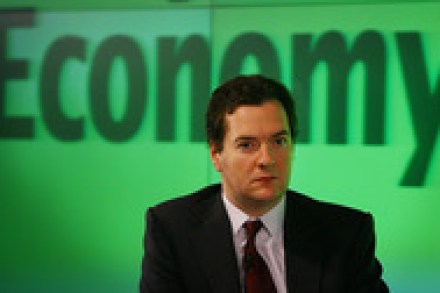
George osborne

Tensions in the Cameron circle over election strategy

There is a fascinating glimpse at the tensions inside the top echelons of the Conservative party in The Times today. Francis Elliott reports that Steve Hilton is trying to veto the appointment of James O’Shaugnessy, head of policy for the party, as head of the Downing Street policy unit should the Tories win the election. Francis writes that tensions between Hilton and O’Shaugnessy have been exacerbated by disputes about what should go in the initial slice of the Tory manifesto which will be published on Monday. O’Shaugnessy is one of politics' nice guys. But he has been the focus of negative briefing in recent months. Back in early September, I was told that Hilton was casting around for other candidates for the job in government.

The year in cuts

As we’re still in that period of the year for looking back as well as forward, I thought I’d share with CoffeeHousers a political timeline I put together. It’s not everything which happened in the political year, mind – but rather the important events in the debate over spending cuts. This debate has, at very least, been in the background to almost every political discussion in 2009, and it will dominate the years ahead – so this kind of exercise probably has some posterity value. But, aside from that, you can also draw a couple of conclusions from the timeline (and I do so below).

Balls’s election strategy is a hostage to Osborne’s pen

Make a note, CoffeeHousers: Labour won’t be fighting a class war against the Tories, after all.  That’s what Ed Balls tells us in this morning’s Times – so it must be true, mustn’t it?  Erm, well, perhaps not.  This is how the Schools Secretary continues: “‘David Cameron’s and George Osborne’s vulnerability is not their schools or their background but that they are prioritising tax cuts for the richest estates ahead of spending on the key public services,’ he said. ‘They have designed an inheritance tax policy which costs billions but which won’t benefit a single lower or middle-income family in Britain but will benefit themselves and a tiny percentage of other individuals.

Call yourself a PR man?

The latest Comres poll for the Independent indicates, as if we needed telling, that the Tories are yet to seal the deal. It’s far from panic stations – the lead remains at 9 points – but there are two figures that prove where the Tories are going wrong. The majority of respondents feel that a Conservative government would exclusively represent the interests of the rich, and the contention that the Tories represent an appealing alternative to Labour was rejected. If Cameron is merely a PR man I hope he’s cheap. Aside from Alex Salmond I can’t envisage anything worse than five more years of Gordon, and this suggests to me that Cameron is struggling to communicate with voters. Nowhere is this more palpable than the preposterous class war.

Simple but effective?

It's the most straightforward dividing line the Tories could draw: "Tories good, Labour bad".  But it's still striking to see it deployed quite so bluntly as in George Osborne's Telegraph article this morning.  His point is that four more years of Labour will lead us to ruin, whereas a Conservative government would pull us out of the mire.  Here are some snippets: "Down the path of least resistance lie economic decline, higher interest rates, high unemployment, and more social breakdown. This is the path down which a cynical and exhausted Labour Government tempts us. But there is another path that leads to lasting recovery, rising prosperity, social responsibility and a new way of doing things. ... If Labour get in again, that won't happen.

Tax cuts are a better form of stimulus than more spending

Greg Mankiw is one of the best academic economists out there and having been chairman of the Council of Economic Advisors has a good sense of how to turn theory into policy. His column last weekend in The New York Times is essential reading for anyone wondering about how Britain can avoid a double dip recession. In it, Mankiw summarises the recent academic evidence which shows that cutting business and income taxes is a more effective form of stimulus than increasing spending. The challenge for Osborne in drawing up his first Budget, if the Tories win, will be how to foster a private sector stimulus for the economy. Without that we could easily end up in double-dip recession, something that would doom the Tories.

The Tories should resist any temptation to go soft on debt

Of all the findings from today's ICM poll for the Guardian, I imagine this one will concern the Tory leadership most: "Just two months ago, 49 percent of voters said they thought Cameron and Osborne would do better than Darling and Brown, but that figure is 38 percent today." They're still ahead of Brown and Darling – who are langushing on 31 percent – but the drop is still pretty striking.  What's more, it seems to go against conventional wisdom about fixing the fiscal mess we're in.  While they could still go further in setting out a few specifics, the fact is that the Tory pair have spent the last couple of months railing against the the twin debt and deficit burdens, and stressing the need for spending cuts.

The Tories dust off their baseball bats

Is it just me, or have the Tories developed a slightly harder edge in the couple of days since the Pre-Budget Report?  We had an unusually acidic address from David Cameron yesterday, in which he likened Brown 'n' Darling to "joy-riders in a car smashing up the neighbourhood," and criticised the PBR for its "irresponsibility, basic deceit and complete lack of moral principle".  There have been a couple of quite powerful attack posters from CCHQ.  And now we've got George Osborne saying that Brown may have "betrayed the responsibilities of the office he holds." "So what?" you say, "they're the Opposition – it's their job to oppose."  Well, yes, of course.  But that opposition seems to have been concentrated over the past few days.

The unravelling continues apace

Has Brown got away with his horror Budget?  Reading the Populus poll in this morning's Times, you might be tempted to say he has.  Sure, there's some bad news in there for the government: trust in Dave 'n' George's ability to manage the economy has hit an all-time high, and only 12 percent of respondents think that the measures outlined in the PBR will be sufficient to deal with our country's fiscal woes.  But Labour types will also seize on those numbers which show quite high levels of support for the individual proposals annouced on Wednesday.  78 percent back the bonus tax.  61 percent back the capping of public sector pay increases.  And – surprisingly, to my mind – 51 percent back the national insurance increase.

One year on | 9 December 2009

Coffee House will be live-blogging Alistair Darling's PBR statement from 1230 on.  In the meantime, here's a brief video reminder of George Osborne's PBR response from last year – probably the Shadow Chancellor's finest moment at the Dispatch Box.

A significant endorsement for Osborne and Hammond

Bernard Gray, a member of the Tories’ Public Service Productivity Advisory Committee, explains why he has joined forces with the Tories. He writes in today’s Times: ‘From my experience of working in and with the Ministry of Defence over the past decade I know how strong such vested interests are and how much commitment is required to overcome resistance to change. It will take acts of extraordinary political will to take on these entrenched interests. The Shadow Treasury team, George Osborne and Philip Hammond, have persuaded me that they are have the determination, drive and belief in change to tackle this issue at this critical time. That’s why I’ve been persuaded to help them.

When did the Tories become an “alternative government”?

There are a couple of noteworthy snippets in today's FT interview with George Osborne: the claim that the Tories may not take corporation tax as low as it is in Ireland; the outline of a "five-year road map" on business tax policy, etc.  But, I must admit, it's this passage which jumped out at me:    "[Osborne] says his Tory conference speech in October, which included plans for a public sector pay freeze and an increase in the state retirement age, 'was an important moment' that showed a mental leap to being 'an alternative government, not just an opposition'." These self-bestowed titles – "alternative government," and the like – are silly, really.  The only thing that actually matters is whom the public regards as governing material.

The politics of distraction

If everyone concentrates on the actual numbers in the PBR then it will be a disaster for Labour. So, instead Labour will try and distract us all with small but eye-catching measures — a new rate of inheritance tax for estates worth more than £5 million, that kind of thing. The aim will be to move the debate from the grim reality of the country’s fiscal situation to Labour’s dividing lines. There will be a lot of pressure on Cameron and Osborne to denounce Labour’s soak the rich measures. But the most important thing for them to do is to get the debate back to the state of the public finances and that is inevitably going to involve side-stepping the arguments that Brown wants to pick.

Let’s Talk About Class

My posh Tory friends get really irritated when I talk about class. Almost as annoyed as my posh Labour friends. The idea that class was somehow excised from the political discourse by New Labour is absurd. We live in a country where the two dominant political parties are essentially representative of their class. And why not? It is completely understandable that a political coalition would coagulate around the interests  of business and big money. It would be a pretty rubbishy ruling class that didn't protect its position.

Bernanke trashes Brown’s tripartite system

Gordon Brown’s much heralded tripartite regulatory system failed the first time it was faced with a financial crisis, proof that taking away regulatory powers from the Bank of England was a massive mistake. Now, Ben Bernanke — who is trying to secure a second term as Fed Chairman and keep the Fed’s regulatory powers intact — is citing the Brown model as what not to do, telling the Senate banking committee: "[O]ver the past few years the government of Britain removed from the Bank of England most of its supervisory authorities.

Collective failure exposed

The National Audit Office’s report into the government's handling of the banking crisis and taxpayers’ continued exposure is a pandora’s box of financial horrors. The NAO estimate that taxpayers are underwriting liabilities exceeding £850bn and, buried in the document, is the revelation that the FSA and the Treasury gave RBS “a clean bill of health” in October 2008, days before the bank nearly collapsed. Details are scarce and I haven’t seen the relevant Treasury document to which the NAO refers; but this disclosure is astonishing, even by the standards of Fred the Shred, the FSA et al. This crisis was caused not by market failure but by systemic incompetence within the banking’s sectors most regulated arm – the commercial.

Who cares about the playing fields of Eton?

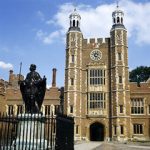
The Eton question came up on Question Time – is Labour right to use class in the run-up to the election? I have a piece in The Guardian tomorrow on this theme. The answer should be that which Andrew Lansley read out on Question Time:  that this shows Labour is living in the past, what matters is where you’re going to not where you came from. He’s right. But I do wish the Tories would believe it. The Eton taunt is still taken far too seriously by the Cameroons: it hurts them. It’s a piece of verbal kryptonite. They go to great lengths to defend themselves from such an attack: the 50p tax, for example, is embraced by the Conservatives just so Brown can’t say “Cameron’s looking out for rich folk, just like him.

Risky business | 3 December 2009

With the largest transfer of liabilities in British history – the insurance of the risk of loss on £240 billion of toxic RBS assets by taxpayers – proceeding, there is worryingly little information being given about either what these assets may be or what risks there are to the taxpayer. Rather than the parliamentary enquiry and detailed disclosure Swiss parliamentarians demanded when UBS needed similar assistance, a small press release noting such exotics as “structured credit assets “ has been issued. The spin continues to be that there is nothing to worry about and all this money will come back fine. Bank of England data shows that UK bank exposure to the US increased increased by over half a trillion dollars between 2004 and 2007 to 1.2 trillion.

Tory corporation tax plans become clearer

During the Tory party conference, I wrote about how the Tories were developing plans to radically cut corporation tax. In recent weeks, the Tories have been dropping plenty of hints about this agenda but giving little detail on it. After reiterating the Tories' existing plans to lower the rates of corporation tax at the CBI conference last week, David Cameron said: "and we want to go further." Today, in an interview with the FT, the Tory treasurer Michael Spencer reveals that he is "hopeful that, over the next parliament...we will get corporation tax down towards the 20 per cent level." Spencer is close enough to the leadership to know what he is talking about, and his comments track with what is being said in private.

Will Darling’s politicking make the Tories weaken their IHT pledge?

Ok, so the Age of Austerity means that promises made in sunnier times will need to be forestalled - or even cancelled altogether.  But it's still revealing that Labour are thinking about reversing their plan to raise the threshold at which inheritance tax is levied. After all, this is what Brown regards as The Great Dividing Line: the Tories implementing a tax cut for their "rich friends," on the one side, and Labour implementing policies "for the many," on the other.  Darling's decision to raise the IHT threshold to £350,000 for single people and £700,000 for married couples undermined that crude message.  Reversing the policy may, in Labour strategists' eyes, strengthen the dividing line.