Gaza

How Gaza became one of the biggest issues of the local elections

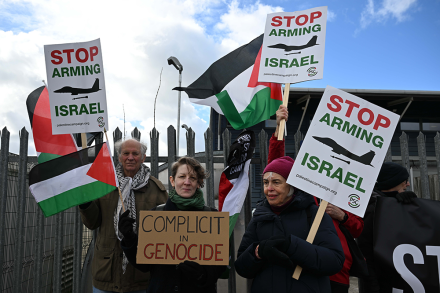
As Tony Blair contested a third election in 2005, the Labour government’s popularity was in tatters. The divisions in the country were running deep, following a United States-led war in the Middle East. The general election, held alongside the locals, saw the emergence of new radical political parties. They seized an opportunity to break the two-party consensus by opposing foreign wars and weaponising an increasingly politicised Muslim vote. Not much is written today about Respect, but it had some success fighting on an anti-Iraq war platform. George Galloway, the party’s leader, won in Bethnal Green and Bow. Although Respect’s staying power proved limited, what is emerging for next month’s local

‘Tea-towel-gate’: another British travesty

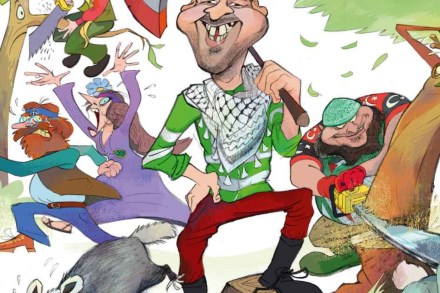
During last September’s freshers’ fair at Royal Holloway, University of London, two students got into a brief verbal tiff that became subject to the administration’s immediate alarm. Our characters: Brodie Mitchell, a self-described non-Jewish Zionist, and Huda El-Jamal, the female president of the Friends of Palestine Society who is of Palestinian descent. Mitchell says El-Jamal taunted him – ‘Here’s the wannabe Jew’ – and questioned why he wasn’t wearing a yarmulke. Referring to the keffiyeh El-Jamal was wearing as a headscarf, Mitchell taunted back: ‘You’re wearing a tea towel over your head.’ A monstrous exchange, we can all agree. Naturally, Royal Holloway suspended Mitchell for nine weeks – nine weeks!

Does British politics have a problem with the ‘omnicause’?

51 min listen

It is undoubtable that – under the leadership of Zack Polanski – the Green Party have soared to new heights. Having won their first parliamentary by-election in February, polls consistently show them as a force to be reckoned with on the left of British politics. Much of their success has come at the detriment of Labour, with disgruntled further-left progressive voices opting to vote Green. This, though, is a brand of eco-populism that comes at the expense of the Green Party’s roots, or so argues Angus Colwell in the Spectator‘s cover article this week. Have the Greens ceded the issue of the environment? For this week’s Edition, host William Moore

Does British politics have a problem with the 'omnicause'?

The real reason the left hates Israel

‘Listen to what the man on the left of the camera has to say about Israel, the man who is addressed as Nick,’ a radical Corbynista friend suggested to me the other day in a social media message designed to change my mind about the Middle East. It’s part of a sustained campaign on his part which dates back at least ten years and is usually conducted with good grace, if never accord. So I listened to what this chap Nick had to say, with growing hilarity. Not because of what he said – which was what you might expect from a rank anti-Semite, but because of who he was.

Cynthia Erivo’s Dracula is tiresome

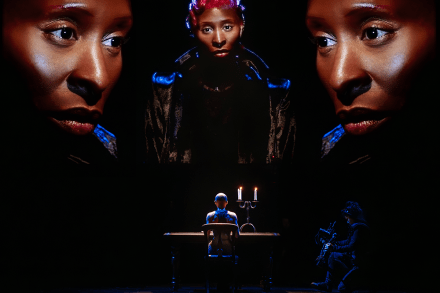
Interest in Dracula seems to go on for ever. Kip Williams has chosen Cynthia Erivo to star in his new version of the yarn about a clique of blood-quaffers who bite their victims’ necks and lick the seepings. The show is staged as a read-through of Bram Stoker’s text supplemented by costumes, wigs and a few orchestral hits recorded on tape. Erivo plays all 23 roles and her performance is simultaneously filmed and broadcast to the audience on TV screens dotted around the theatre. This creates two problems. First, Erivo can’t see or interact with the crowd because she’s encircled by wardrobe assistants and cameramen who swarm around her like

A commentary on the grim present: Glyph, by Ali Smith, reviewed

Glyph (whose sibling, Gliff, was published last year) is Ali Smith’s 14th novel and her fifth since 2016, when her ‘Seasonal Quartet’ saw the beginning of her project to use fiction to comment on contemporary events. It takes as its subject two sisters. Petra and Patricia (‘Patch’) negotiate their difficult childhood by retreating into a story world. Not that their escape is all unicorns and rainbows. The two stories they most often return to involve a horse blinded in the Great War and a man’s corpse flattened towards the end of the second world war. They call this flattened man ‘Glyph’: it’s ‘the sound he makes when he breathes out’.

You can’t trust the BBC

You may remember that in February the BBC found itself in a spot of bother regarding a film about the conflict in Gaza which, it transpired, had been narrated by the son of a Hamas minister. Some people, not least Jewish people, wondered if such an account perhaps might accidentally stray into the realms of partisanship, and the BBC was forced to withdraw the documentary forthwith. It then commissioned an internal report into why this young lad had been chosen to front the film, rather than, say, Rylan Clark or Clare Balding. As a consequence of the investigation, the BBC’s head of news, Deborah Turness, sent a round robin email

The Ultras: meet Britain’s new Islamo-socialist alliance

Ayoub Khan seemed delighted. Last Thursday, it was announced that fans of the Israeli football club Maccabi Tel Aviv would be banned from attending their match against Aston Villa next month, an outcome that Khan, the MP for Birmingham Perry Barr, had been lobbying for since September. That night, Khan took himself on a broadcast round to celebrate. Keir Starmer had said the ban was the ‘wrong decision’, but on Newsnight Khan told him to back off. ‘The Prime Minister should stay out of operational matters,’ he said. ‘That’s not a matter for him, sitting in No. 10.’ It has been a satisfying 15 months for Khan since his election.

The westerners helping Hamas win the propaganda war

After two years of war, and despite Israel’s many successes on the battlefield, Hamas can also claim a kind of victory – at least for now. The terror group has survived and is once again exerting control in the areas of Gaza under its authority. Public executions, whippings, stonings and kneecappings have returned. In the first five days of the ceasefire, Hamas executed at least 100 Gazans. Hamas’s survival was achieved not only through its remaining fighters and its holding of hostages, but also thanks to a chorus of western apologists. A coalition of so-called progressives and professional activists has excused, rationalised and defended the group’s actions across universities and

Lab leaks & spy scandals: was Cameron wrong about China?

48 min listen

This week on Quite right! Michael and Maddie turn their sights to Westminster’s latest espionage scandal – and the collapse of the case to prosecute two men accused of spying for China. Was the case dropped out of incompetence, or out of fear of offending Beijing? As Michael puts it, ‘Either we’re not being told the truth, or this is a government of staggering incompetence.’ They also unpick the growing row over Jonathan Powell, Keir Starmer’s National Security Adviser, and his alleged role in shelving the case. What does his re-emergence, along with Peter Mandelson and other ‘Sith Lords of Blairism’, tell us about the return of New Labour’s old

Has Trump secured peace in the Middle East?

20 min listen

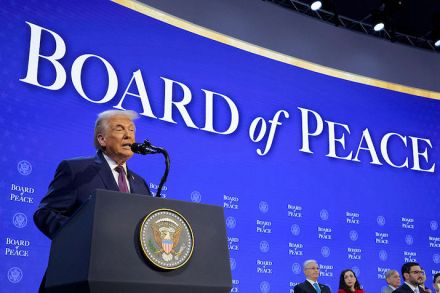
Following the ceasefire brokered between Israel and Hamas, Donald Trump arrived triumphantly in Israel and delivered a speech to a rapturous Israeli parliament – some of whom wore red MAGA-style hats adorned with the words ‘Trump the peace president’. Trump is now in Egypt for further negotiations over securing a long-term peace in Gaza – but how realistic is it? Dan DePetris, foreign affairs columnist for the Chicago Tribune, joins Freddy Gray to discuss Trump’s achievement. Dan argues that this is just phase one and, given he believes Netanyahu has ‘no long-term strategy’, peace is a long way off. Could Netanyahu still stonewall further progress? What about the Iranian issue?

Whisper it quietly, peace in the Middle East?

15 min listen

Donald Trump says Israel and Hamas have agreed to the first phase of his Gaza peace plan. During an extraordinary round table on the Antifa organisation last night, the US President was interrupted by Marco Rubio and given a hand-written message. He told those assembled at the White House: ‘I was just given a note by the Secretary of State saying that we’re very close to a deal in the Middle East, and they’ll need me pretty quickly.’ Details of the deal, including the finalised list of prisoners Hamas wants freed as part of an exchange, remain unclear. But the first part of the deal could be set in motion

Greta Thunberg and the ship of hate

I was amused to read about the spat that broke out on Greta Thunberg’s flotilla between conservative Muslims and members of the LGBTQ+ community. According to newspaper reports, the convoy stopped in Tunisia on its way to Gaza and picked up a self-described ‘communist queer militant’, along with other gay activists. This led to the departure of several devout Muslims. ‘Why involve these dubious activists serving other agendas that do not concern us and have nothing to do with Gaza?’ said one of the aggrieved participants. Linking the plight of Palestinians to every other woke cause is relatively new Why indeed? The surprise isn’t that this unlikely coalition fractured somewhere

Will Israel always have America’s backing?

Marc Lynch is angry. The word ‘rage’ appears six times on the first page, and comes in response to Israel’s war in Gaza. This should be sufficient warning to anyone expecting a cool, calm, dispassionate analysis of the Middle East that they might have picked up the wrong book. That is not to say that Lynch, who runs the George Washington University’s Middle East programme, is not worth reading. On the contrary, and despite the occasional lapse into the sort of political-science-speak favoured by academics, he is a fierce and compelling voice. Lynch dates the beginning of America’s Middle East to 1991, the conclusion of a swift military campaign against

Do Palestinians want Hamas gone?

Discussion of Donald Trump’s peace proposal for Gaza revolves around one question: who is for it and who is against it? Israel is for it, though mostly because it is backed into a corner and has no choice. The Arab states are for it, which is to be expected since they wrote it. The European Union is for it, which is to be expected since the Arabs are for it. Palestinian Islamic Jihad and the Houthis are against it, and Hamas is expected to be too. I don’t know what the UK government has said and, in concert with the rest of the world, I don’t really care. This is

Keir Starmer’s Palestine doesn’t exist

King Cnut is misremembered as a deluded fool who tried to subdue the sea. In fact, he was a wise and pious man who wished to demonstrate to his subjects the limitations of regal power. ‘You and the land on which my throne is standing are subject to me,’ Cnut admonished the tide. ‘No one has ever defied my royal commands and gone unpunished.’ When the waters began splashing at his feet, the monarch turned to the crowd and proclaimed: ‘Let all the world know that the power of kings is a vain and trifling thing.’ There was, Cnut said, only one true sovereign: ‘That King whose commands heaven, earth and sea obey, according to eternal laws’. Keir Starmer

The Romans would have been baffled by the Gaza protests

Why are people in the UK protesting about the situation in Gaza? Surely it should be because the helpless Gazans cannot protest about their plight, caused by Hamas, because if they did, Hamas would kill them. But in that case, why isn’t it Hamas that people are protesting against? Or are they in favour of Hamas and therefore hate Israel for wanting to destroy Hamas? But wouldn’t that free Gazans? The whole situation would have baffled the Romans. Romans protested only when their own interests were at stake. On one occasion around ad 50, the emperor Claudius was confronted by a mob in the forum, cursing him and pelting him

Portrait of the week: Palestine Action arrests, interest rate cuts and an Alaska meeting

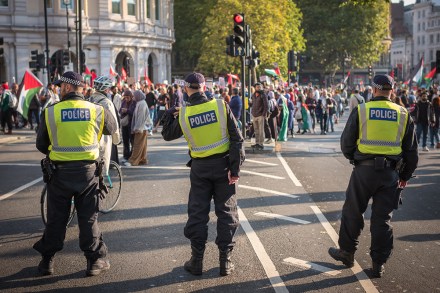
Home Sir Keir Starmer, the Prime Minister, said: ‘The Israeli government’s decision to further escalate its offensive in Gaza is wrong… It will only bring more bloodshed.’ Police arrested 532 people at a demonstration in Parliament Square at which people unveiled handwritten signs saying: ‘I oppose genocide. I support Palestine Action’; the group was proscribed by the government in July under the Terrorism Act of 2000. J.D. Vance, the Vice-President of America, stayed with David Lammy, the Foreign Secretary, at Chevening House in Kent before going on holiday in the Cotswolds at a house rented for £8,000 a week. Work began on removing 180 tons of congealed wet wipes near

Kemi Badenoch’s God Delusion

18 min listen

Conservative leader Kemi Badenoch has given a wide-ranging interview to the BBC’s Amol Rajan in which she touched upon her Nigerian upbringing, her feeling of identity and she even revealed she called out a peer for cheating at school. But perhaps her most interesting comments came when she revealed how she lost her belief in God. The Reverend Fergus Butler-Gallie, author of Twelve Churches, and Tim Shipman join Oscar Edmondson to discuss Kemi’s comments. Is it credible to call yourself a ‘cultural Christian’? And, with both an atheist Prime Minister and agnostic Leader of the Opposition, is the decline of religion in politics inevitable? Plus: with the news that Germany

Dinner party talk won’t help Gaza

I’m one of the Silent People who sit on the sidelines of the great political events and debates of the present. We Silent People don’t sign on-line petitions or go on protests to show solidarity with this group or that one. We don’t tweet our outrage, or blog our bile. We prefer to keep what we think to ourselves. When a verbal punch-up erupts over Gaza or trans rights at a dinner party, I stay silent and wonder what’s for pudding. The thing we Silent People are most silent about is our silence. It’s easy to see why: the silent are suspect The thing we Silent People are most silent