Gardening

Emily Dickinson was not such a recluse after all

From our UK edition

This is fanciful, I know, but I can’t help wondering about the great poetry that will surely be written in the early 2060s. Think about it: in the early 1960s, Sylvia Plath had her great creative outpouring, waking at 4 a.m. each day to work on the ‘Ariel’ poems that would make her name. Exactly 100 years earlier, Emily Dickinson was in full spate, writing 295 poems in 1863 alone. (Her total oeuvre amounts to nearly 1,800 poems, most of them unpublished during her lifetime.) The concentrated intensity with which these two women produced their best work has the quality of a natural phenomenon: a butterfly migration, or a swarm of plankton ablaze with bioluminescence. To read The Letters of Emily Dickinson is to experience this phenomenon in real-time.


The strangeness of Charles III

From our UK edition

There are two narratives in Robert Hardman’s Charles III. The first is an account of the King’s first year on the throne. This is superbly researched and fascinating. We learn, for instance, that when Queen Elizabeth II died, the state trumpeters were on a plane to Canada and the bearer party was in Iraq. (Their first order on their return was to get a haircut. Their second to carry a comb.) The second is about magic, but since Hardman doesn’t admit this explicitly, the book has the flavour of an intellectual trying to cast a spell. I don’t understand why royalists can’t just say that a monarch occupies a space to prevent something worse occupying it. Monarchism is practical, is the royalist line, considering what people are. It is republicans who are dreamers.

Dangerous secrets: Verdigris, by Michele Mari, reviewed

From our UK edition

In everyday life – on a garden path, flowerpot or lettuce – I back rapidly away from slugs. I didn’t expect to confront them in literature, but in Michele Mari’s Verdigris they are present in abundance, from the first line: Bisected by a precise blow of the spade, the slug writhed a moment longer: then it moved no more... slimy shame transformed into splendid silvery iridescence.  So, not a novel for one who shrinks from gastropod molluscs, you would think. Yet I quickly found myself drawn into a remote corner of rural north Italy in 1969 where a lonely, bookish boy, Michelino, spends long summers with his emotionally unreachable grandparents.

The best of this year’s gardening books

From our UK edition

What makes a garden is an increasingly pressing question, in the light of what Jinny Blom, in her witty and wise What Makes a Garden: A Considered Approach to Garden Design (Frances Lincoln, £35), calls ‘hairshirt hubris’. By that she means the refusal of some gardeners to call any native plant a weed or any slug or aphid a pest. She wishes to inject a little sense into what has become an ill-tempered dialogue between ‘traditional gardeners’ and the self-deniers who cannot see gardens as anything but parcels of sacrosanct earth, in which any major intervention by a human is to be regretted. But to Blom, garden-making is one antidote to the modern curse of solipsism. ‘Gardens insist we care for them as much, or more, than ourselves.

Nina Stibbe’s eye for the absurd is as sharp as ever

From our UK edition

Nina Stibbe is back in London. It has been 20 years since she left, and 40 years since she first arrived from Leicester to nanny, ineptly, for Mary-Kay Wilmers, the editor of the London Review of Books. Back then, she chronicled her adventures (minor car crashes; thinking Alan Bennett was in Coronation Street; inadvertently stealing Jonathan Miller’s saw) in deadpan letters to her sister Vic that became the delicious Love, Nina. This time she’s resolved to keep a diary of her year as ‘Debby’ Moggach’s lodger in a narrow Kentish Town terrace with an over-watered garden she already disapproves of.

Dear Mary: how should a newly single, fiftysomething man make a pass?

From our UK edition

Q. My friend kindly arranged for me to use her freelance gardener and, despite the gardener working only four hours a week, she has transformed my garden. Today I asked if she could do any more hours and she said only on an ad hoc basis. This evening I received a message from another friend asking for the gardener’s number, as hers has left. She has a superior garden to mine and I am terrified this wonderful gardener will give the ad hoc hours she has promised me to this potential new employer. I have tried to prevaricate but I can’t lie to this lady. Mary, what to do? – E.S., Sussex A. It would cause resentment if the treasure found you had blocked her access to another opportunity. Instead turn the situation into a comedy rather than a tragedy.

garden

On constant gardening

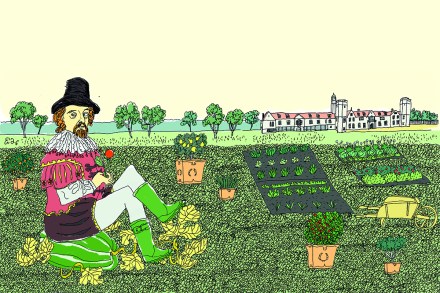
Let nobody sneeze at the horticultural arts. Francis Bacon devoted a moderately famous essay to the topic, beginning by pointing out that the very first garden designer was Almighty God. The garden, Bacon argues in his 1625 treatise, offers the purest of human pleasures. As a civilization approaches its peak, its creative geniuses tend to focus on perfecting architecture before finally, at the apex of its development, turning to the art of the garden. With a name like Bacon, Sir Francis might be pardoned for devoting especial attention to the kitchen garden, whence hail so many excellent pairings for salt-cured pork — roasted cabbage with bacon and pine nuts, for instance, or the inseparable bacon, lettuce and tomato.

Who’s afraid of giant hogweed?

From our UK edition

Giant hogweed is a troublesome and expansive species. But it is not, as the tabloids inevitably describe it every summer, ‘Britain’s most dangerous plant’. Many garden favourites – yew, laburnum, castor-oil plant (the source of ricin), for example – can actually kill you. The answer to living with these difficult but beautiful organisms isn’t knee-jerk eradication, but learning what they are and how they live... and then keeping a respectful distance.  Back in the early 1970s, meandering round the wastelands near Heathrow, I came across a giant hogweed wrapped round with ‘Keep Out’ tape. I wasn’t sure if it was a genuine security warning, or a jokey art installation.

Chelsea Flower Show: the winners, the losers and the weeds

From our UK edition

If you’d read the advance coverage of this week's Chelsea Flower Show, you might be forgiven for thinking the entire event had been choked by bindweed, dandelions and nettles. Yes, there are some show gardens that use plants commonly called ‘weeds’ as part of their designs, but the show gardens this year really aren’t radically different to the traditional Chelsea model. And regardless of the planting choices, there are some real gems to be seen. The highlights The RHS’s Best in Show award went to Charlotte Harris and Hugo Bugg's magnificent Horatio’s Garden design. This is the eighth garden provided by the charity to hospital spinal injuries units across the country, and the first full show garden that it has sponsored.

Blooming expensive: the growing cost of a garden

From our UK edition

As Cicero is often (mis)quoted as saying, if you have a garden and a library, that is all you need. And since the pandemic, our love of a garden has only got greater. Yet these days it’s often less about getting your hands dirty in the flowerbeds and more about having somewhere to kick back and enjoy a good book or drink rosé with friends. But while visitors are swooning over raised beds and begonias at the RHS Chelsea Flower Show this week, the price of having a garden of one’s own is higher than ever – especially if you want a generous one.

How common is your garden?

From our UK edition

As spring (finally) arrives, it’s time to turn our attention back to what’s outside the back door. Helpfully, garden designer Isabel Bannerman (Highgrove, Houghton Hall, Arundel Castle) has written a memoir, Husbandry, in which she declares there is no such thing as ‘U and non-U’ in gardening. She then undermines her argument by immediately setting out her shibboleths: variegated leaves, curvy paths, statues, fountains, tidiness. Anything, in effect, that is ‘suburban’ (bedding plants) or reminiscent of municipal planting schemes (ibid. those big, blowsy King Alfred daffodils you’ll see blaring from roundabouts at this time of year).

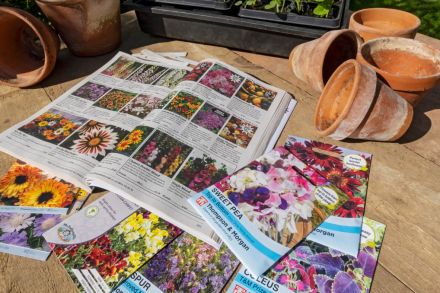
Seed catalogs and their rejuvenating power

Winter’s bleakest days have set in. “The holidays” are a distant memory. Rose-colored resolutions to wake up earlier, eat healthier and exercise have gone the way of Dry January — all a wash, as you quickly discovered the only antidote for your Seasonal Affective Disorder was something equally cold and dark. You glimpse the N/A beers in the back of the fridge the same way you spy the sun — in passing, and with a feeling of faded hopefulness. As you lug bags of empty bottles to your sidewalk, you glance up at the brightish blob lending a hazy glow to the grayscale landscape. You deposit your clanging bag of glass and cans beside your Christmas tree’s corpse and shuffle back inside to refill the fridge and cover up reminders of your dalliance with the sober-curious.

seed

Confessions of a lawn obsessive

From our UK edition

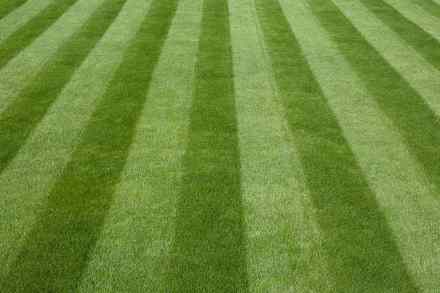
For the past few days I’ve been frantically watering my lawn in anticipation of the London hosepipe ban. True, there are other things in the garden that need watering – the roses, the magnolias, the rhododendrons, as well as the tomato plants, the rosemary bushes and the olive tree. But I can probably manage to get round them with my watering can once the ban kicks in and in any case it’s the lawn that’s my pride and joy. Gazing at the stripes after it’s just been mown is one of life’s great pleasures as I settle into late middle age. When Caroline and I first looked round our house in Acton as prospective buyers, the lawn, measuring about 45 feet by 30, was a selling point, but only as a space for our three boys to play in.

Fleeing paradise: eden, by Jim Crace, reviewed

From our UK edition

Since announcing his retirement in 2013, Jim Crace has had more comebacks than Kanye West, something for which we should all be thankful. Craceland is a compelling place to visit, full of hazy yet broadly recognisable locations (Tudoresque England in the IMPAC award winning Harvest; a vaguely Mediterranean town in Melody) and spanning indeterminate times (the post-apocalyptic future in The Pesthouse; the end of the Stone Age in The Gift of Stones). The specific non-specificity of his fiction reflects Crace’s view of himself as more of a storyteller than a novelist, and his sense of history as a largely unwritten – and therefore often forgotten – phenomenon. In this, eden is typical Cracian fare.

The little joys of growing corn in Connecticut

They were neighbors and friends. Harold Loeb, an economist, writer and heir to the Guggenheim and Loeb fortunes, and his wife Vera lived down the Saugatuck River from us on Snake Drive, at the end of Buttonball Lane. Harold was better known as having been betrayed by Ernest Hemingway in Paris in the 1930s — Robert Cohn in The Sun Also Rises was modeled after him. Harold got even in The Way It Was, published in 1959. He asked my father to sketch him for the book’s back cover. Among other things they had in common a gift for gardening. My father, known for his charcoal sketches of celebrated locals of Weston, Connecticut, planted a large, Walden-inspired plot surrounded by a white picket fence, where weeds were allowed as long as they didn’t interfere with the crops.

corn

How not to kill your house plants

From our UK edition

The year was 2015, and I was head over heels, completely obsessed with House of Hackney’s Palmeral wallpaper. The bold print features fans of colonial green palm leaves splayed across a soothing off-white background, and I fantasised about plastering it over all four walls of my London living room, thinking it was the closest I was going to get to living in a tropical paradise any time soon. But as it turns out, I was thinking small. Very small. Sproutl – a schmancy new gardening and outdoor living platform – have just launched a tropical plant collection in collaboration with none other than The Royal Botanic Gardens, Kew; so now we can all have our very own slice of their iconic Palm House in our living rooms.

Gardening’s bad girl: the genius – and malice – of Ellen Willmott

From our UK edition

In October 1897, the grandees of the Royal Horticultural Society gathered to bestow their highest award, the Victoria Medal of Honour, struck to commemorate the Queen’s Diamond Jubilee, to 60 of gardening’s greatest luminaries. For the first time, these included two women. One was Gertrude Jekyll, known by all as the Queen of Spades; the other was the 39-year-old Ellen Willmott. But Willmott did not turn up. This public snub was the beginning of her reputation as ‘gardening’s bad girl’, as Sandra Lawrence puts it, one that increased exponentially until it exploded in stories of daffodils being booby-trapped to deter bulb thieves.

Earthly paradises: the best of the year’s gardening books

From our UK edition

Important historic gardens fall into two main categories: those made by one person, whose vision has been carefully preserved down the years, sometimes for centuries, and those that are altered and developed by succeeding generations. Rousham, in Oxfordshire, is an example of the first and Bodnant, in the Conwy valley in north Wales, the second. Books on both have been published this year. Francis Hamel is an artist, whose studio is in an old stable close to ‘the big house’ at Rousham, which was built in 1635 by the Dormer family.

Fortifying snapshot of the gardener’s year: Saatchi Gallery’s RHS Botanical Art show reviewed

From our UK edition

Elizabeth Blackadder, who died last month at the age of 89, was probably the most distinctive botanical artist of our time. Her paintings of lilies and irises, of cats poking their heads imperiously between poppies and freesias, are more alive than any such chocolate-box description could convey. The first woman to be elected to both the Royal and the Royal Scottish academies, Blackadder showed that botanical painting did not need to be twee and parochial. It could be as vibrant and interesting as narrative. The 15 artists and 19 photographers participating in this year’s Royal Horticultural Society exhibition at the Saatchi Gallery follow in Blackadder’s tradition.

Letters: In defence of organic food

From our UK edition

A note about manure Sir: I am afraid Matt Ridley shows a lack of understanding about agriculture in general and organic production in particular in his argument against organic food (‘Dishing the dirt’, 24 July). Livestock production has involved the use of animal faeces — or farmyard manure as it is called when mixed with straw — ever since livestock was first housed in the 1800s. Bacterial infections are due to poor hygiene in the slaughter and processing chain, not how animals are fed, grass is produced, or the use of manure, which is an important by-product. Bean sprouts being infected with E.coli is probably down to poor hygiene of personnel, not organic vs non-organic systems. Yes, organic food is more expensive.