Gardening

The strange death of the English garden

From our UK edition

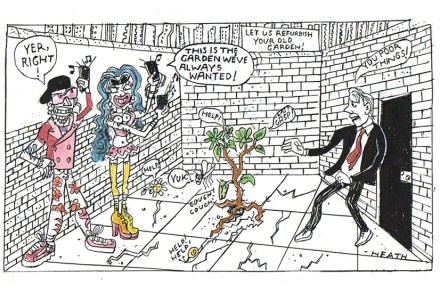
Gardening is dead. It had been ailing for a long time and it sometimes looked as though it might pull through. But I knew it had finally kicked the bucket when the last of the three patches of grass I used to be able to see behind my house was replaced with a plastic lawn. Then there was a ghastly death rattle: plastic ivy was draped over an electric gate which serves to let the owner’s car into the paved area formerly known as the front garden. And that came after the arrival of dozens of plastic balls in the neighbourhood. They are supposed to be imitations of Buxus sempervirens trimmed into a ball shape but their relentless perfection and over-vibrant colour means they don’t deceive anyone. They must be wonderfully low-maintenance.
garden yard

Yard envy

It is never easy to live next door to a retired Department of Agriculture employee. Quarantine has made it intolerable. I had always reassured the missus that our yard would look just like Mr Ray’s if I too spent all day at home. Coronavirus has exposed me as a liar. For four years I enjoyed my coffee and cigarette on the porch, digesting the New York Post’s reports of the calamities that had befallen the Mets in the previous 24 hours. Without baseball I spend my mornings staring out into the yard, reckoning with the fact that I am the New York Mets of landscaping. My wife has worked from home since 2011 and must have known all along. There’s a reason her office overlooks the front yard.

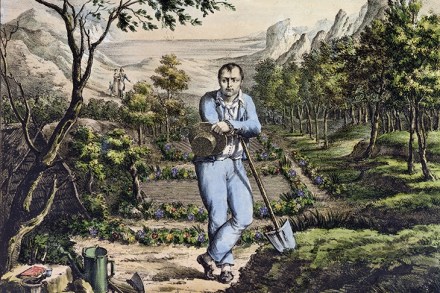
Straight lines and grandiose schemes — Napoleon the gardener

From our UK edition

On 1 January 1806, a little over one year after his coronation, the Emperor Napoleon ordered the abolition of France’s new republican calendar and a return to the old Gregorian model. Over the past seven years republicans had grown used to ‘empire creep’, but even for those who had been forced to watch the principles of the revolution dismantled one by one and a republican general metamorphose into Emperor of the French, this last insult carried a peculiarly symbolic charge. For all its engaging dottiness — each new year, coinciding with the autumnal equinox, would begin on a different date — the short-lived republican calendar had embodied some of the most attractive and fragile dreams of the revolution.

Sowing seeds of comfort

From our UK edition

If you had asked me a year ago how a pandemic-panicked world of stockpiles, curfews and social isolation would influence my life in the garden, I might have drawn you a picture of myself as a kind of prepper homesteader, proudly feeding my family from the veg beds, trading spuds for loo rolls in the lanes around my house. As it was, last year was all about flowers for me, and while the lettuces and tomatoes were indeed bountiful and welcome, it was the glory of the sweet peas — the first thing I smelt on recovering from Covid — and the roses and dahlias that meant most. When all the news was ghastly and life felt scarily provisional, the nurturing of seeds into beautiful life took on an almost religious symbolism. And the high priestess of that religion is Sarah Raven.

Why the Chelsea Flower Show shake-up is good news

From our UK edition

Is it really such a bad thing that the Chelsea Flower Show has been postponed to the autumn because of Covid?  Yes, we'll be missing out on the blousy, frothiness of early summer gardens that we see every year - not so many umbellifers, alliums or delphiniums - and yes, the Floral Pavilion will be strange without the heady scent of roses from the David Austin and Peter Beales stands. But the show will benefit enormously from a shake-up that forces designers to stop using the plants listed above until it seems there is nothing else you could possibly grow in your garden.

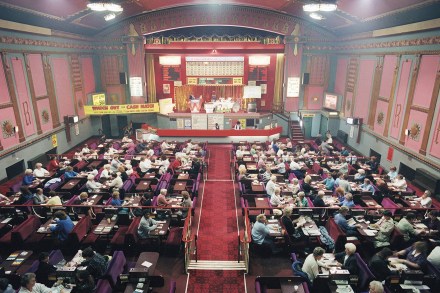
Defund theatres – and give the money to gardeners and bingo halls

From our UK edition

For nearly six months our subsidised playhouses, notably the National Theatre, have been dark. What have we missed? Not much. Some would say nothing at all. And this has come as a surprise to those of us who were led to believe that the subsidised theatre is critical to ‘the national conversation’. It turns out that the nation can happily debate political and social issues without the help of playwrights or actors. Perhaps it’s time to re-examine our state-funded theatres and the reasons we support them. The National Theatre was set up in 1963, soon after the establishment of the Royal Shakespeare Company in 1961, and both received funding from the Arts Council, which was founded in 1946.

The best podcasts for all your corona-gardening needs

From our UK edition

The American diet was probably at its healthiest in the second world war. Fearing interruption to supply chains, Washington launched a national Victory Gardening programme within a fortnight of Pearl Harbor, and saw two thirds of the population heed the cry to fill their backyards, rooftops and window boxes with veg. The scheme was so successful that, by 1943, home-gardeners were producing 43 per cent of all fresh food consumed. ‘Dig for Victory’, the latest episode of Gastropod, a superbly researched food and science podcast, opens with the co-hosts Cynthia Graber and Nicola Twilley rustling bags of manure as they attempt to plant tomatoes, peppers and ‘urbs’ in a tiny patch of earth in New York.

Gardening is a powerful antidote to grief, pain and loss

From our UK edition

Viewed from a purely private garden perspective, this has been a ver mirabilis. The blossom has been wonderful and long-lasting, the sun has shone on the daffodils and tulips, and there has been enough moisture in the ground for impressive growth in trees, shrubs and vegetables. Thanks to lockdown and all its confinements, I have enjoyed an intensity of engagement with my garden I’ve rarely experienced since the days when I was a young, mustard-keen apprentice gardener. I feel as if I have watched every leaf unfurl, every flower open, every bird swoop across the lawn. Spring gardening, with its pleasant, mindful monotony of pricking out seedlings and pulling up speedwell, has soothed my nerves, consoled my sadness, calmed my fears, and brought a welcome sense of proportion.

Letters: The joy of balconies

From our UK edition

The closing of churches Sir: Stephen Hazell-Smith is quite right in writing that churches should re-open (Letters, 18 April), however the issue is now more fundamental. Recent weeks have demonstrated a crisis of leadership in almost every aspect of national life, excluding the Queen, who has exercised a spiritual leadership made necessary by the failure of bishops. The closing of churches may be seen as a defining moment in the life of the Church of England. As the Archbishop of Canterbury broadcast from his kitchen on Easter Day, impervious to the damage his ‘leadership’ has caused, many Anglican clergy and people I know looked to the image of the Pope in an almost empty St Peter’s, and saw the true image of Christian service.

A tribute to the grandes dames of gardening — Beth Chatto and Penelope Hobhouse

From our UK edition

There is no longer much point buying strictly practical gardening books, such as were a staple of the publishing industry in years gone by. Those colourful, cheery, cheap volumes have been superseded by trustworthy websites, such as that of the Royal Horticultural Society, which can quickly answer any query you have about cultivation, plant identification or pest damage. Gardening books these days must offer something not to be found online, if readers are to shell out their precious British pounds: deep, hard-earned knowledge, elegant writing, attractive illustrations and, preferably, all three. This year, at least, there are a number that pass the test.

Cottage gardens

From our UK edition

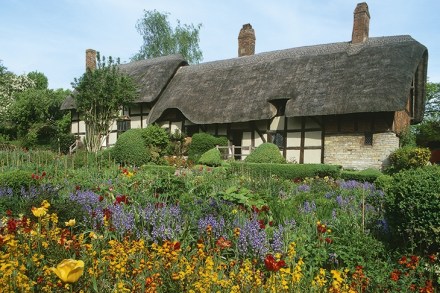
The confusion is understandable. You arrive at Anne Hathaway’s Cottage in Stratford-upon-Avon, keen to experience the quintessential cottage garden — only to be told that Shakespeare’s garden was, in fact, designed in the 1920s. The space in front of an Elizabethan cottage would have been used for keeping pigs or hens, with a patch for cabbages or onions. Any flowers or herbs would have had medicinal or practical uses, not least for strewing on the cottage floor to disguise the stench. By the 19th century, the garden at Hathaway’s Cottage had become more decorative, but it was the Edwardian plantswoman Ellen Willmott who filled the front with flowers and introduced the idea of mown paths through long grass in the orchard.

Diary – 6 June 2019

From our UK edition

Don’t you just love garden centres? You have to be mad to go on a sunny Sunday morning in the full bedding-out season but all human life is there, enjoying the full English breakfast or even kippers. They sell everything — sofas, lamps, barbecues, waterfalls, bread, toys, meat, mountaineering gear. Oh, and plants and Growmore and those little windmill things. I went to buy extra geraniums and lobelia because it is a truth universally acknowledged that whenever you buy far more than you can possibly need for your pots, those pots expand when you turn your back. It was a gladiatorial clash of trolleys, and I trampled on several old ladies in fighting for the last ivy-leafed Brilliant Scarlet. I got it of course. I am an old hand.

Chelsea Flower Show

From our UK edition

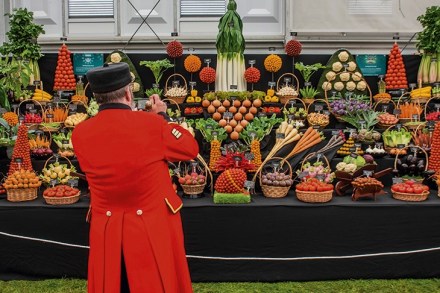
Chelsea, the most famous flower show in the world, pulled in its devotees once more this week, with its accustomed mixture of colour, scent and glamour. The continuing success of the Royal Horticultural Society’s ‘flagship’ show has much to do with the BBC’s need to fill schedules, the foreign media’s enduring fascination with ‘Englishness’ and royalty, and the desire of committed gardeners to worship in the company of their co-religionists. It cannot be any kind of fun for plant nursery people, who stage the exhibits in the Great Pavilion, since the logistical difficulties are fearsome, but they mostly cannot resist the buzz.

Letters | 11 April 2019

From our UK edition

All Cameron’s fault Sir: In this time of febrile political speculation, there can have been few more arresting subject headings on your Letters page than ‘Not Cameron’s fault’ (6 April). Your correspondent Mike Jeffes added to the sense of unreality by writing that ‘Cameron did nothing wrong’. You need to be neither a Remainer nor Brexiteer to follow in horror the painful result of Cameron’s opening of this Pandora’s Box in 2016. In the 2010 and 2015 elections, the subject of Europe was well down on the list of voter concerns, but with a mixture of hubris, stupidity, and narrow political interest, Cameron’s decision to call the referendum has driven us into this political quagmire.

Gardening books: Other men’s flowers

From our UK edition

There are probably no more gifted professional gardeners in England than Jim Buckland and Sarah Wain, husband and wife and joint head gardeners at West Dean in Sussex. On the verge of their retirement, after 27 years of effecting a renaissance in the gardens and grounds of this country house arts centre (bequeathed by Edward James), the couple have described their work and achievements in At West Dean: The Creation of an Exemplary Garden (White Lion, £40).

How does your garden grow?

From our UK edition

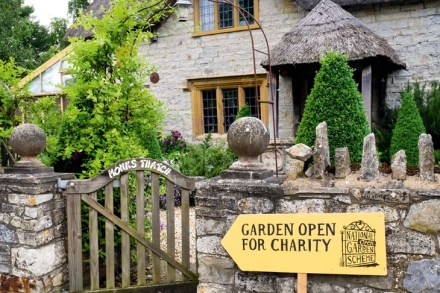
What could be more British than nosying around someone else’s private property while munching on a slice of cake? The National Garden Scheme allows you to do both, opening up people’s back gardens to the public and offering them a lovely homemade afternoon tea while they’re at it. I grew up poring over the pages of its famous Yellow Book of open gardens, envying the fat borders of geraniums and delphiniums in the rural area where we lived. But the NGS doesn’t just do big walled gardens and sweeping lawns; it has a London Yellow Book, too, and while the gardens are far smaller, the plants, the cakes and even the wine that some homeowners offer are no less lovely. ‘Lovely’ really is the best word to sum up the whole scheme.

Diary – 7 June 2018

From our UK edition

I know some people are fretting about Brexit, and others about the drive-by violence the President is doing to the US constitution, but what preoccupies me and the nation’s allotment-holders at the moment is news that the RHS is warning of a ‘bumper year for slugs’. The slimy little bastards not only ate every single lettuce seedling I planted last year, but they have taken to invading my kitchen in the night and dying extravagantly, and in a way that makes a stain, on hard-to-clean surfaces. The RHS is currently conducting trials on five different alleged slug repellents — copper tape, horticultural grit, pine bark, wool pellets and broken eggshells — to see if any of them actually works.

The greenhouse effect

From our UK edition

The glasshouses at Kew Gardens are so popular that they can be quite unbearably busy at weekends. And why shouldn’t they be? They’re beautiful structures and the plants they shelter are so marvellous that they deserve the attention they get, whether from botany nerds, schoolchildren, or millennials dressed for Instagram and posing for selfies in the steamy leafy heat. But for the past five years, the biggest member of the Kew family has been closed to the public. Hidden under an enormous awning that the botanic gardens boasts could have covered three Boeing 747s (one of those area-the-size-of-Wales facts that mean very little), the Temperate House has been undergoing a lengthy restoration.

Two enquiring minds

From our UK edition

Samuel Pepys, wrote John Evelyn, was ‘universally beloved, hospitable, generous, learned in many things’ and ‘skilled in music’. John Evelyn, wrote Pepys, ‘must be allowed … for a little conceitedness; but he may well be so, being a man so much above others’. Pepys’s assessment of Evelyn was made early in their relationship, in 1665, and Evelyn’s assessment of Pepys was made on the day that his fellow diarist died, in 1703. So rest the reputations of our two great recorders of Restoration England: Pepys, the middle-class son of a tailor, was a man of the people; Evelyn, the heir of a country gentleman, was a notch or two above.

A choice of gardening books | 1 December 2016

From our UK edition

Garden design usually breaks out of its confines to become part of the general consciousness only in Chelsea Flower Show week, but this year there have been so many events to mark the tercentenary of the birth of Lancelot ‘Capability’ Brown — the most prolific and talented designer of the 18th-century landscape garden — that even the general public has noticed. Most events have occurred under the umbrella of the Capability Brown Partnership, the brainchild of a landscape historian called John Phibbs, who has spent several decades studying Brown’s 170-odd landscapes and advising some of the owners on their recovery, care and conservation.