Gardening

Should I really have my parliamentary pass revoked over a short skirt?

From our UK edition

Labour MPs first tried to ban me from the Commons press gallery two decades ago, after I ridiculed Speaker ‘Gorbals Mick’ Martin. Jim Sheridan MP said I was ‘abusing the facilities’. Only later did we discover big Jim was the one abusing the facilities, sticking a £1,000 white leather bed on expenses. Now Derbyshire South’s Samantha Niblett wants my parliamentary pass revoked because I reported that a woman at Andy Burnham’s social-care speech was wearing a snortingly short skirt. She sat in front of Eyelashes Andy and crossed those pins Kenny Everett-style. I wondered if that might be why our new PM kept losing his philosophical thread. Cue a social-media hoo-hah. My comment was viewed more than a million times on X. This passed me by because I do not read X.


Letters: arise, Sir Rod!

From our UK edition

Keeping their promises Sir: Matt Ridley is right to assert the conservation role of gamekeepers (‘Ruffled feathers’, 30 May). They, like farmers and crofters, know wading birds are integral to Britain’s rich cultural landscapes. All ground-nesting birds benefit from culling generalist predators. I do this on my croft at my own expense because I love waders and passerines. Where costs cannot be borne by individual goodwill or taxpayer-funded grants, shooting provides a sound economic case for funding the vital combination of predator control and habitat management. A keeper’s livelihood depends on his ability to prove consistent competence in these two skills.

gardening

How I flouted a cardinal French gardening rule

“C’est ma faute,” I called up to the local old boys as they strolled past my potager, chuckling among themselves. I tried to match their levity, but it was obviously affected; they could sense my panic. It was late-April and my garden resembled an eccentrically out-of-season Halloween scene, with tomato plants standing eerily motionless like infant ghosts, wrapped from head to toe in protective fleece. Everyone knows that 41°F is too cold for tomatoes, but spring had been deceptively warm, and I couldn’t help myself. AccuWeather had issued a grim prediction for the night’s minimum temperature. Only a few days previously, I had been openly proud that my plants had been in the ground for two weeks. I felt foolish and impetuous.

Why I haven’t created a tomato-cannabis hybrid

Jean-Louis was leaning out of his second-floor window. “Bonsoir, Dan!” I could hear the rumblings of a social gathering behind him – no music, just a cacophony of French voices battling for supremacy. I bonsoired him back and that would have been that, only my dog took the opportunity to evacuate by his front gate. “Montes boire un verre!” Jean-Louis was clearly drunk, but after 12 years of cordial nods, I momentarily allowed myself to believe I’d cracked the inner circle of village winemakers. And so, poop bag in hand, I politely accepted. Right away, it was clear that the vibe was off. Everyone had stopped talking and was looking at me as I stepped into the kitchen.

tomato

My quest for the perfect Christmas broccoli

I adore broccoli, but I despise seeing it shrink-wrapped and kidnapped in the grocery store. The sight of those slightly compressed, yellowing florets sweating under fluorescent morgue lighting is a rude tap on the shoulder from dystopia. That’s why I was in my basement in late August, cleaning out the propagation tent while everyone else was still at the beach. My goal each year is to enjoy homegrown broccoli with Christmas dinner. In this corner of the Mediterranean, that’s about as likely as a French civil servant answering the phone after lunch. But with precision timing and bloody-mindedness you can pull it off. And after years of suffering those supermarket specimens, I’m determined to.

broccoli

My zucchini seedling scheme

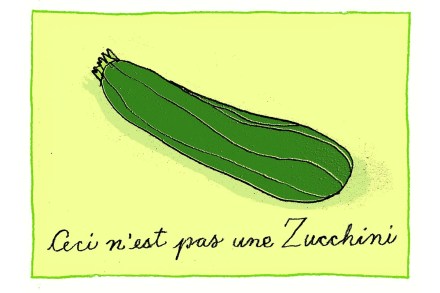
Véronique arrives 45 minutes late, a vision of practiced nonchalance and rustic affectation in a loose-fitting linen smock dress, clutching a wicker basket suspiciously devoid of wear. She regards my zucchini seedlings with mild distrust and incredulity, the way the French eye giant Spanish strawberries when they first start appearing in the local supermarket. The plants’ robust stems and glossy leaves look almost too healthy, especially given their minuscule nursery pots. Something is amiss. “C’est bio, ça?” she asks, though her tone suggests this isn’t really a question –more an ideological verbal tic than a genuine inquiry into my choice of potting mix. “Ben oui!” I smile with the practiced ease of a man who has told this particular lie many times before.

zucchini

Landscape designer Tom Stuart-Smith on mistakes, sand and weeds

From our UK edition

If you’re looking for an early example of Tom Stuart-Smith’s work, you’d have to go to a car park to find it. The now world-famous landscape designer started his career doing ‘awful supermarket projects’ where ‘landscape was perceived as just something they kind of had to do’. This was in the 1980s: today, if you want to see a Stuart-Smith landscape, you can go to St Paul’s Cathedral, where he has designed a public ‘reflection garden’, the walled garden at the Knepp Estate, or the Hepworth Gallery in Wakefield, where sculptures sit among naturalistic sweeps of grasses and perennials.

Truly awful: Roblox’s Grow a Garden reviewed

From our UK edition

Grade: D– There’s some scholarly research to be done, I fancy, on the strange psychological appeal of boringness in videogames. These gaudy things could be non-stop excitement, and yet many of the most successful are mega boring. ‘Grinding’ – repetitive tasks undertaken for incremental rewards – is a matter of pride and pleasure for serious gamers; and some games – I’m looking at you, interior-decorating Sims – really do offer a digital equivalent to watching paint dry.   Remember FarmVille, for instance? Here was a truly mind-numbing Facebook game where you managed a virtual plot of land and grew corn and tomatoes and whatnot, traded them for imaginary currency, bought seed to grow more crops, and so ad infinitum.

The cheapening of the Chelsea Flower Show

From our UK edition

‘I have died and gone to heaven,’ the gentle-faced, fortysomething American beside me murmured into her phone. I turned and stared. Too late I remembered the instructions repeated in childhood not to stand with one’s mouth open. But I couldn’t help myself. In the glorious sun at Chelsea Flower Show, I – unlike my neighbour – felt like I had died and gone to hell. Tuesday morning at Chelsea Flower Show is among life’s rare treats. At least, it used to be.

Death comes to the Chelsea Flower Show

From our UK edition

It’s a matter of life and death at the Chelsea Flower Show this year. No murders are planned as far as we know, but there will be gravestones and even a coffin. This is to be a celebration of death. The Royal Horticultural Society’s annual Flower Show will include funeral flowers in the Grand Pavilion for the first time since it moved to Chelsea in 1913. The display is being put together by the Farewell FlowersDirectory and, I’m told, there will be no tightly wired whorls of white carnations spelling out ‘LOVE YOU MUM’. Instead, passers-by will be left thinking of country churchyards, wild grasses and meadow flowers; species like campions, cornflowers and cow parsley.

Olivia Laing: The Garden Against Time

From our UK edition

33 min listen

A garden is a lovesome thing, God wot! On this week's Book Club podcast I'm joined by Olivia Laing to talk about her new book The Garden Against Time: In Search of a Common Paradise. Olivia explores what it is we do when we make a garden, through her own experience of restoring the beautiful garden in her now home. She tells me about what gardens have meant in literary history and myth, how they have occluded certain real-world injustices even as they stand in for utopias, and why Candide's injunction cultiver notre jardin will always be an ambiguous one.

Tomato-gate: how I reclaimed my garden

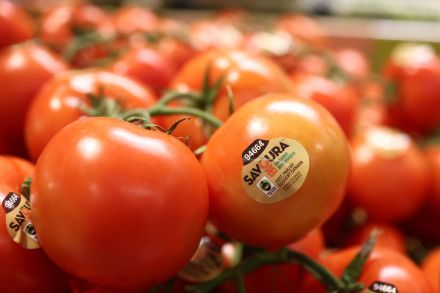
Nothing beats befuddling my French garden neighbors each year with ridiculously early, cold-resistant tomatoes. I live in a tumbledown village in the Languedoc, population just shy of 1,000, and come spring each year I make it my business to confound the local gardening orthodoxy. My secret weapon is a full-spectrum LED grow light in my basement. Shhhhh! It’s not as illicit as it sounds – yes, they really are tomatoes that I’m growing, officer. While the local vieux garçons are still sharpening their spades and waiting for the Tramontane wind to stop scaring the dogs, I’ve been working in my subterranean lair since January, coaxing my Solanum lycopersicum into early adolescence.

garden

The polarising poet, sculptor and ‘avant-gardener’ who maintained a private militia

From our UK edition

Not many artists engage in the maintenance of a private militia, and it seems fair to assume that those who do may be bound to polarise. The Scottish poet, sculptor, ‘avant-gardener’ and would-be revolutionary Ian Hamilton Finlay was just such a figure: and boy, did he polarise. To his fans, he is a cult figure in the true sense, a limitlessly inventive visionary whose Lanarkshire home and garden remain a site of pilgrimage. To his detractors – notably, a number of vocal Finlay-bashers in the English press – he was a crank, a provincial megalomaniac possessed of artistic, literary and dictatorial pretensions quite out of proportion to his ability.

The row over Chelsea’s AI garden

From our UK edition

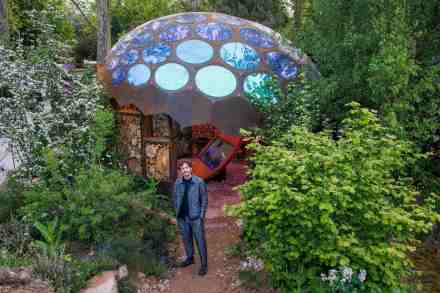
The gardening world is a gentle, friendly place. Rows are rare, with disagreements creeping in softly like moss, not blowing up the way they do in politics. Everyone is quite nice to one another, almost to a fault. Which is why the row over Tom Massey’s AI garden at the Chelsea Flower Show is quite so striking. Since the line-up for the 2025 Royal Horticultural Society version of London Fashion Week was announced last week, gardeners have been absolutely and abnormally furious about the first shoots of AI appearing. Massey's garden promises to be an ‘intelligent’ one, using AI trained on RHS plant data and advice to tell visitors how the plot is doing.

Why is the RHS so obsessed with diversity?

From our UK edition

Chekhov had no illusions about horticulture (‘It’s a nice, healthy business to be in, but there are passions and wars raging there too’) but even he might have been bemused by the zealotry of our Royal Horticultural Society (RHS) commissars. Last September I enrolled on an RHS Level 2 Certificate in Practical Horticulture. I was hoping to improve my gardening skills and learn more about the propagation of plants to save me forking out a small fortune at garden centres. Besides, I was tired of relying on my woefully inaccurate plant app to identify rogue forbs on my lawn.

Immersive and spectacular: Piet Oudolf’s new borders at RHS Wisley reviewed

From our UK edition

Piet Oudolf’s long borders at Wisley were worn out. The famous designer had in fact become a bit embarrassed by them: they’d done well for 20 years but in that time his own style had evolved – and so had people’s tastes. Oudolf is now such a household name that his pointillist landscaping is considered fine art on paper, let alone when actually planted up. (There are weighty coffee-table books exploring his art.) But the long borders had become, well, just borders, on either side of a long grassy walk up the hill from the Wisley glasshouses. Many of the people who visit Wisley for a walk – rather than to peer at plants – were perfectly capable of ignoring the whole lot.

Snobbery in the garden: U and non-U borders

From our UK edition

Richard Sudell is the forgotten hero of the gardening revolution in Britain between the first and second world wars. A Quaker, born in Lancashire in 1892, the son of a straw and hay dealer, he left school at 14 and became a gardener, worked at Kew, then went to prison as a conscientious objector in 1916. On furlough from his first prison sentence, he worked with the Vacant Land Cultivation Society to help create allotments for London’s poor. When the first world war ended, he moved to Roehampton with his first wife. There he began writing a monthly gardening column in the Roehampton Estate Gazette advising his neighbours, most of whom had never had a garden before, on how to ‘beautify’ the debris-strewn patches of mud outside their new front and back doors.

The truth about Paul Hollywood

From our UK edition

My husband and I are in New York, where everyone is talking about the approaching Trump-Biden debate. Well, I’ll be astonished if it deserves the name. True debate seems to be a thing of the past in the US as much as in the UK, with both sides of any argument (assisted dying, the Israel/Gaza war, immigration) shouting loudly but not listening. Civilised friends of ours tell us their university-student children refuse to engage in debate about gender identity. It’s ‘You’re just wrong, Dad. You don’t get it. That’s all.

A walled garden in Suffolk yields up its secrets

From our UK edition

In the hot summer of 2020, during the Covid pandemic, Olivia Laing and her husband Ian moved from Cambridge to a beautiful Georgian house in a Suffolk village and began work on restoring the neglected, extensive walled garden behind it. She was vaguely aware that the garden had been owned and loved by the well-known garden designer and plantsman Mark Rumary, who had died in 2010. He had been the landscape director for the East Anglian nursery of Notcutts, and I remember him as a genial man overseeing extensive, award-winning tree and shrub exhibits at the Chelsea Flower Show in the 1980s. I once owned a copy of the Notcutts Book of Plants, written by him, which was an indispensable reference book for garden designers before the advent of the internet.

How to live off the land for a year

From our UK edition

Could you live off the land for a year without buying a single thing to eat? This was the challenge a retired journalist set himself on Radio 4 this week. Max Cotton lives on a five-acre smallholding near Glastonbury in Somerset with his wife Maxine, two pigs, two dozen hens and a Jersey-Friesian cross named Brenda. He also has six adult sons who, as far as this project is concerned, ‘prefer to pontificate than help very much.’ Cotton’s hopes for peas by April were even less realistic than I thought Cotton conceded at the outset that he would allow himself to purchase salt as a necessity.