Fruit

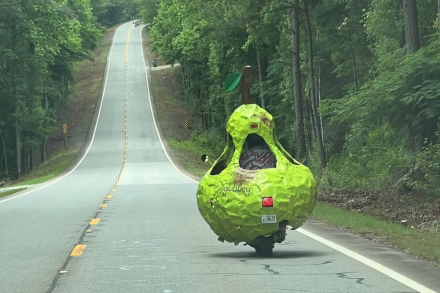
Meet the man road-tripping across America in a giant pear

From our US edition

Inflation drives us to think ahead: plan out grocery trips, buy in bulk, carpool. One young man had an unorthodox way of funding his summer road-trip across America as gas got more expensive: he constructed a life-size pear on his moped.  Twenty-four-year-old Andrew Glubbey has 19,000 followers on his Instagram account, @glubbey. His profile has grown since the start of the road trip as he adventures in his self-built pear car from Florida to Washington State.  “I've talked to a lot of people that are like, ‘I could never do that or I would never do that with that kind of thing’,” Glubbey tells me.
pear

I keep being fooled by ‘ripen at home’ 

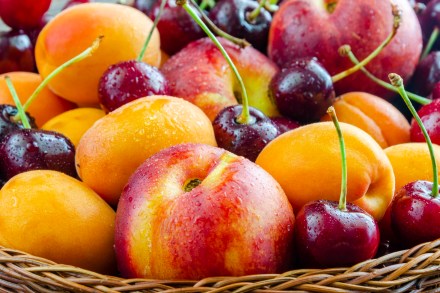
Is there a greater scam than the ‘ripen at home’ punnets of fruit that the supermarkets flog? Flimsy netted plastic of peaches, plums and apricots promise so much and deliver so little. When ripe, they need nothing doing to them at all; even cutting them with a knife feels like overkill. But, when they don’t, the result is miserable: their wooly flesh clings to the stone for dear life, and to call the flavour lacklustre would be giving it too much credit. In theory, these fruits should be a joy: representing the bounty of the season. All they should need is a day or two on the counter before they’re ripe for the taking.

Save England’s apples!

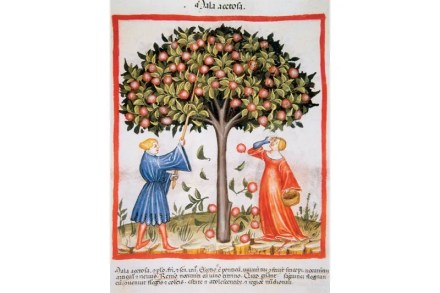
On a grey autumn morning, the apples in the National Fruit Collection look vivid. They pile up in pyramids of carmine, salmon and golden-orange around dwarf trees, which have been bred to human proportions. Their branches are well within reach but picking fruit is forbidden. These trees are part of the world’s largest fruit gene bank. Neil Franklin, an agronomist and a trustee of the National Fruit Collection in Kent, describes it as ‘the Victoria and Albert Museum of the fruit industry’. The collection holds several types of fruit, but the apple is queen of them all: of the 4,000 or so fruit varieties here, more than 2,200 are apples. They’re used mainly for research into breeding and resistance to pests and diseases.

The joy of preparing freezer jam

From our US edition

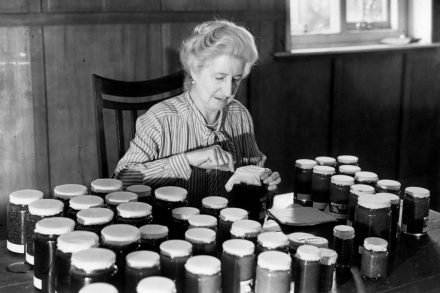
July, and the morning sun blazes over fields of pick-your-own strawberries. The black bears scope out the blueberry patches in the national parks. Skin-destroying raspberry canes trail across the path, ready to spring out and scratch the faces of passers-by. The berrying season is upon us: scratched faces and stained clothing are on the cards. Have you ever seen a child pack a handful of wild raspberries away into a shirt pocket for safe keeping? I hope so. It’s one of the joys of life. Their faces, on seeing the inevitable results, are completely worth the ruined outfit. However, if you don’t have any young relatives to cheer you up with their berrying misadventures, pick-your-own farms aren’t just pick-your-owns but pick-me-ups.

jam

A crisp and refreshing account of the apple

From our US edition

In Food for Life, Tim Spector’s book on the science of eating, the author gives the chemical makeup of a mystery food, listing more than 30 scary-sounding E numbers, sugars, acids and chemicals, before revealing that it is an… apple. Sally Coulthard’s book, The Apple, shows that it’s the apple’s complexity as well as its familiarity, that makes it the ideal punchline for Spector, and, for Coulthard, a perfect vehicle to carry the history of how we grow, trade, cook and eat together and take responsibility for each other and the environment (or not).

apple

Cherry baby

From our US edition

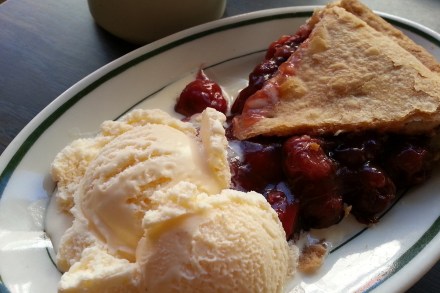
What do the works of Le Corbusier, driftwood on the beach and French cherry tart have in common? Well, all three are improved by being set on fire. That’s uncontroversial when it comes to two items on the list, but perhaps you’re inclined to quibble about the tart. Resist the temptation, messieurs-dames, for I have an irrefutable authority up my sleeve: Julia Child, the lady whose Mastering the Art of French Cooking (1961) was hailed by legendary restaurateur George Lang of Café des Artistes fame as the volume that ‘not only clarified what real French food is, but simply taught us to cook’.

cherries cherry

Strawberry yields forever

From our US edition

Looking to impress your girl in NYC? Order her some Omakase berries from Oishii. Although they’ll probably be the most expensive strawberries you’ll ever buy in the States, a pack of eight, hand-delivered to you at a secret rendezvous in the Oculus at the World Trade Center, will still only set you back $50. That, as you’ll know if you’re inclined towards thrift in courtship, is significantly less than a dinner date within the same city precincts. Word on the street is that these berries are so good (a subtle hint is provided in the company name, Oishii, which means ‘delicious’ in Japanese) that you can be served a single one as dessert at a Michelin-starred joint in Manhattan and not feel gypped.

strawberry