France

There’s nothing cowardly about the French

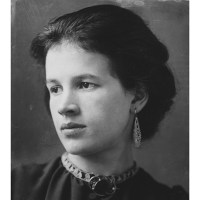
Several years ago I visited the village of Couillery in Lower Normandy to interview Juliette Girard for a book I was writing about the wartime SAS. She was 80, small, grey and bird-like. She still lived on the farm on which she'd grown up, the same farm where in the summer of 1944 she hid three members of the SAS. The Germans knew the British had parachuted into the area and for nearly two weeks they scoured the countryside. They came to the farm where Juliette lived with her parents; they searched it inside out, but the soldiers had been smuggled out of the back, across a field and into a copse. I've been thinking a lot about Juliette recently.

It is political correctness, not maniacal bigots, that will end civilisation

What does one do, attend or refuse a party after a tragic event such as the recent Paris outrage? My son happens to live next to Place de la République, where the massacre of innocents by those nice Islamists showing off their manhood took place. He was having dinner with his two little children when the shooting started. Luckily, they’re all OK, but I spent a terrible couple of hours trying to get through after the news came over the TV screens. The next evening in New York, at the Metropolitan Museum of Art, the Costume Institute was celebrating The Art of Style with a black-tie dinner honouring Jacqueline de Ribes, the international style icon whose dresses are being exhibited there. I was of two minds, then decency prevailed and the whole thing was called off.

The GP charged around to my side of the table and roved her hand all over my pubic area

On Friday morning I was peeing razor blades so I rang up the doctor and was given an appointment after lunch. The surgery was at the top of a dingy staircase in an ancient, dilapidated village house. Except for some magazines spread out on a table, the waiting room might have been a comfortably furnished private sitting room. The woman with whom I am staying speaks better French than me and she came along to translate if necessary. We sat down on one of the sofas, and while we waited she picked up a magazine and was immediately absorbed by beach photos of celebrity couples. I made a snobbish remark about her interest in such things. She defended herself by saying that she simply couldn’t help herself.

The pretend war: bombing Isil won’t solve the problem

[audioplayer src="http://rss.acast.com/viewfrom22/thegreatfakewar/media.mp3" title="Andrew J. Bacevich and Con Coughlin discuss the West's war with Isis" startat=35] Listen [/audioplayer]Not so long ago, David Cameron declared that he was not some ‘naive neocon who thinks you can drop democracy out of an aeroplane at 40,000 feet’. Just a few weeks after making that speech, Cameron authorised UK forces to join in the bombing of Libya — where the outcome reaffirmed this essential lesson. Soon Cameron will ask parliament to share his ‘firm conviction’ that bombing Raqqa, the Syrian headquarters of the Islamic State, has become ‘imperative’. At first glance, the case for doing so appears compelling.

Death watch | 19 November 2015

At the beginning of the summer of 1715 Louis XIV complained of a pain in the leg. In mid-August gangrene set in and by 1 September he was dead. He’d been on the throne for 72 of his 77 years. A new exhibition at Versailles looks at the elaborate rituals that followed. The Sun King died as he had lived — in public. Despite his illness, he carried on his daily routine until two days before his death, a decision made easier perhaps by the fact that he’d always conducted a good part of the affairs of France from his bedroom. It was no ordinary bedroom, and what went on there wasn’t ordinary either.

Low life | 19 November 2015

The car: a ’06 rosso red Seat Ibiza 1.9 TDI Sport, bought three weeks ago from a man who had bought the car from the Stig’s mum. If the Stig, with all his motoring experience, had carefully chosen the car for his dear old mum, it was an inspired choice. For an inexpensive, inoffensive-looking little two-door saloon, it is wonderfully quick. The route: from the north-western French port of Roscoff, in the socialist department of Finistère, down to Brignoles, the far-right, pied-noir capital of Provence; a 1,300-kilometre diagonal from the top left of the country to the bottom right.

Portrait of the week | 19 November 2015

Home After the killings in Paris, David Cameron, the Prime Minister, said that seven terrorist attacks on Britain had been prevented in the past six months. He met President Vladimir Putin of Russia at a G20 meeting at Antalya in Turkey. Mr Putin said: ‘We should join efforts in preventing terror. Unfortunately our bilateral relations are not of the best.’ Mr Cameron said in the Commons: ‘Raqqa, if you like, is the head of the snake… we need to deal with it not just in Iraq but in Syria too.’ He said funds from maintaining defence spending at 2 per cent of GDP would go to special forces, drones and fighter aircraft. MI5, MI6 and GCHQ would be able to recruit an extra 1,900 officers to their 12,700 staff.

The politics of terror | 19 November 2015

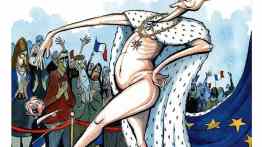
 Paris Unfortunately, like most things the president does, his big speech fell flat The terror attacks on Friday have given President François Hollande an opportunity to be statesmanlike, and he has tried his best. He quickly declared a state of emergency and summoned a special congress of the Senate and the National Assembly so that he could deliver a powerful address. ‘Terrorism will not destroy France, because France will destroy it,’ he said. Unfortunately, like most things the president does, the speech fell flat. Pictured on the front page of Monday’s Le Figaro, France’s conservative daily (as well as inside the left-leaning Le Monde), he looked a small man, flanked by his security guards.

France’s civil war…

In the wake of the massacre in Paris, President François Hollande said that France was ‘at war’ — and that it must be fought both inside his country and outside in the Middle East. As the French air force began dropping bombs on Raqqa in Syria, another operation was under way in towns and cities across France: 168 raids in two days. A battle on two fronts has begun. Chartres cathedral is one of the great monuments of western civilisation, but Chartres was also home to one of the Bataclan theatre suicide bombers. A man from the same area died last summer in Syria, fighting for Isis. In Lyon, theraids turned up a rocket launcher. On Tuesday night, a large-scale counter-terror assault was launched in St Denis in Paris.

Why I didn’t sing La Marseillaise last night

When Patrice Evra and the French national football team lined up at Wembley last night, it was a moment of poignant defiance which earned an instant place in sporting iconography. I shed a tear, but I didn’t sing La Marseillaise. When horrendous things like the attacks on Paris happen, our first instincts are to offer solidarity and what help we can. And, yes, to hit back. The night after the attack, France launched 20 separate air strikes on what it said were Isis strongholds in Syria. And at home, an extra 115,000 gendarmes were deployed across France, leading to hundreds of raids with dozens of arrests.  In the days following attacks on the West, there’s often a security snatch and grab, and this time was no different.

Michel Houellebecq’s vision of a France ruled by an Islamist regime is all too plausible

No question about the book of the year: it’s Michel Houellebecq’s Submission (Heinemann, £18.99) in Lorin Stein’s fluent translation. It’s France, 2022, when a moderate Muslim Brotherhood government takes charge. While the narrator submits to the new low-key Islamic regime, the liberal left collapses for want of coherence before an ideology intent on winning the battle of ideas through demography. ‘To them it’s simple — whichever segment of the population has the highest birthrate and does the best job of transmitting its values, wins.’ Following its publication, the Guardian asked brightly: ‘Does Houellebecq really hate women and Muslims, or is he just a twisted provocateur?

The strange relationship between Islam, violence and French football

It is not so surprising if the jihadists in Paris were targeting an international football match. There has for years been a strange relationship between football, Islam and violence in France. The French football team, les bleus, have long been held up as an emblem of harmony and hope in an otherwise bleak multicultural landscape. The world cup winning team of 1998 consisted largely of the children of African immigrants and was celebrated as a great symbol of how the modern multicultural fifth republic could work. Zinedine Zidane, a Muslim boy from Marseilles, was the star of that tournament.

France’s new reactionaries

When President de Gaulle was asked to authorise the criminal prosecution of Jean-Paul Sartre for civil disobedience during the Algerian war, he declined. ‘One does not lock up Voltaire,’ he added, unhistorically. In France, ‘public intellectuals’ have a quasi-constitutional status, so it’s not surprising that a furious bunfight has broken out over a handful of philosophers known as ‘les nouveaux réactionnaires’. The new reactionaries do not see themselves as a group, but they defend a common point of view about the causes of France’s diminishing status and influence.

Heathrow’s third runway could still be halted – here’s how

The Great British Runway final between Heathrow and Gatwick is beginning to look like a game of two halves. The visit of China’s President Xi Jinping is a bonus for the west London team, who can claim that Chinese investors with bulging wallets are more likely to be impressed by landing at an urban mega-airport than an expanded flying club in Sussex. But the Volkswagen emissions scandal has been a gift for Gatwick, because as chief executive Stewart Wingate said: ‘Heathrow’s poor air quality already breaches legal limits and it’s difficult to see how expansion could legally go ahead with the millions of extra car journeys an expanded Heathrow would generate.

Europe’s ever-looser union

Europhiles have warned us for years of the dangers of Britain leaving the EU. But all the while a different spectre has crept up on their other flank: which is that even if the UK votes to stay in the EU in 2017, we might be one of the only countries left. It’s a radical thought, but if they’d like to consider it, the Europhiles should look at what is happening across the continent. Pro-EU countries are proving harder and harder to find. The eastern European countries may still be financial net receivers, but they are now having to weigh up their honey pot against the demands that come with it. A project which was meant to bring free movement of labour for themselves is now forcing them to take in thousands of migrants they do not want from across Africa and the Middle East.

Merkel’s folly

[audioplayer src="http://rss.acast.com/viewfrom22/merkelstragicmistake/media.mp3" title="James Forsyth and Holly Baxter debate Merkel's offer to Syrian refugees" startat=38] Listen [/audioplayer]Of all the irresponsible decisions taken in recent years by European politicians, few will cause as much human misery as Angela Merkel’s plan to welcome Syrian refugees to Germany. Hailed as enlightened moral leadership, it is in fact the result of panic and muddled thinking. Her pronouncements will lure thousands more into the hands of unscrupulous people-traffickers. Her insistence that the rest of the continent should share the burden will add political instability to the mix. Merkel has made a dire situation worse.

France’s fight on the right

A year has passed since Nicolas Sarkozy announced his return to frontline politics, and the political landscape in France is still recovering from the shock. His rivals for the leadership of the French right have watched while their cordially disliked ex-leader consistently outmanoeuvred them. They had made the mistake of believing in the sincerity of Sarko’s farewell speech in May 2012 when, following his defeat in the presidential election by François Hollande, he said: ‘From now on I will seek to serve my country in other spheres.

Liberating Marianne

In Marianne in Chains, his last book on Occupied France, Robert Gildea offered an original view of life in that country between 1940 and 1944, arguing that outside the cities it had not always been as bad, nor had the Vichy regime always been as reactionary, as was subsequently claimed. Confining his research to three departments in the Loire valley, Gildea also suggested that for most people most of the time the Resistance was a dangerous irrelevance, to be avoided wherever possible. These conclusions were presented at a conference in Tours where they caused a minor uproar among French specialists. Gildea, professor of modern history at Oxford University, now turns to a much bigger subject.

High life | 20 August 2015

These are the languid, sensuous days of summer, and I’ve had another birthday, which is the bad news. But it’s the silly season, so I’m going to be silly yet again and tell you about Patrick and Isabelle Balkany, a couple who got into trouble last week in the land of cheese. I don’t know them, but I had the bad luck to run into the wife about 20 years ago in Rolle, Switzerland, where the Rosey school is located. It was September, the first day back at school, and my son J.T. was miserable at the prospect of going to boarding school for the first time. He had tried every trick in the book as his mother and I were driving him down from Gstaad.