Coffee Shots: Alex Salmond’s beautiful game
Alex Salmond is a deft political player, but perhaps he's best kept on the political pitch, rather than one involving footballs.
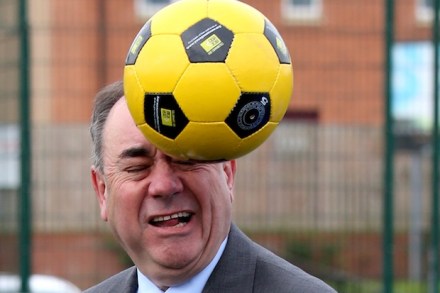
Alex Salmond is a deft political player, but perhaps he's best kept on the political pitch, rather than one involving footballs.
Summer is a difficult time for serious investments — it’s hard to be rational when hot — so why not try betting on the football world cup instead? Thanks to technology, sports gambling can feel a lot like investing these days. Internet betting exchanges are not bookmakers, but trading platforms. Any adult can buy or sell a bet — or position, if you prefer — and ‘trade out’ at a profit or loss before the match, race, or tournament even begins. Which means you are gambling less against sporting chance, more against the human whims of the market. Let me give you an example.
There is, you know, quite a bit to be said for having a personal email account for getting stuff off your chest, such as comparing a former girlfriend to a double-decker (don’t ask) and talking about big-titted broads. Any work inbox that your secretary automatically is privy to is, well, not quite the same as one that’s all yours. I’ve taken soundings on this sensitive subject from a friend of mine who is a really good PA, mixes with the mighty and all the rest of it, and she tells me that it’s actually difficult to do the job from her point of view if you don’t have access to the boss’s messages; you need to know what’s going on to keep on top of things.
It’s hard to love Saracens rugby club — their centre is called Bosch, a word that also describes their bulldozing style of play — but you have to admire the demolition job they did on Clermont Auvergne in the semi-finals of the Heineken Cup. The flamboyant French side, free-runners to a man, had 68 per cent of possession, 64 per cent of territory and yet were tackled into impotence. Clermont limped off the Twickenham turf, stuffed 46–6. The English club play Toulon, the defending champions, in the final in Cardiff on 24 May and again I will be supporting the French team, not just because this will be the last match of Jonny Wilkinson’s career.
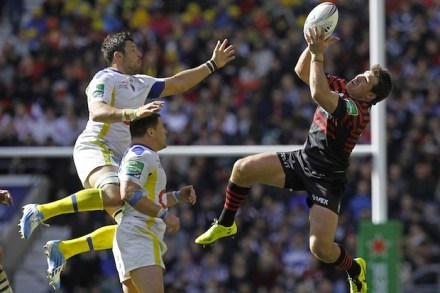
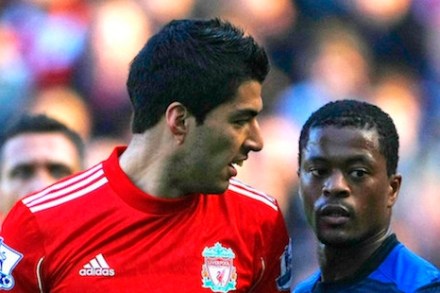
One of football’s many beauties is in encouraging us to forsake unfortunate strictures of accepted behaviour; as long as it’s at the game, we can sing, swear, cuddle strangers, and even care about stuff without fear of ridicule. And, perhaps best of all, we’re entitled to rejoice in the dastardly; it’s entirely justifiable to drool over the respective oeuvres of Roy Keane, Thierry Henry and Sergio Busquets, if they so tickle you. The game can also serve as a masking agent for off-pitch indiscretions, and remind people that personal matters are precisely that. Kenny Dalglish somehow wore links to the Clerkenwell crime syndicate, and though plenty of people dislike Wayne Rooney, it’s generally not on account of his nocturnal activities.
Praise where it’s due. This opening to Russell Brand’s Guardian column about David Moyes is very good: “(His) face has now experienced the fate for which it looks like it was designed. The deep grooves of grief in his brow, his sunken, woeful eyes and dry parched lips, a perspicacious sculpture carved in anticipation of this slap of indignity.” Very nice. I’ve written about the Moyes business this week for the magazine. I do think it is hilarious the speed with which all the football writers have moved from describing the bloke as the best young manager this country has ever seen to “disastrous” and “not up to the job” and so on. Clearly, he should have been given more time in the post, insofar as anyone cares.


Much like supporting Millwall or contracting Parkinson’s Disease, red hair has traditionally been seen by the prejudiced as an affliction worth avoiding. The biographies of Mary Magdalene, Van Gogh and Sylvia Plath will confirm this. Rod Liddle sticks it to the gingers in his column this week: ‘I took my youngest son to a football match on Easter Monday. It used to be something I wryly called a ‘treat’ when the kids were younger, but we usually lost in such depressing circumstances each time that I would then feel the need to give them another treat immediately afterwards, to alleviate the misery. Bowling or pizza or something. Not any more.
I took my youngest son to a football match on Easter Monday. It used to be something I wryly called a ‘treat’ when the kids were younger, but we usually lost in such depressing circumstances each time that I would then feel the need to give them another treat immediately afterwards, to alleviate the misery. Bowling or pizza or something. Not any more. They are old enough to know what they’re likely to be in for and conscious that their allegiance to the team, Millwall, is inescapable and probably genetic, like ginger hair or a susceptibility to Parkinson’s Disease. Actually, I say inescapable — the older one escaped by insisting that he had revision to do for his GCSEs.
As children, we learn very quickly that a blame shared is a blame halved - but in the long-term, the ruse works only with the co-operation of the co-opted. This is a lesson that must have escaped David Moyes, whose public pronouncements regularly identified unwilling conspirators, illustrating precisely why he failed at Manchester United. Which is not to say that liability resides solely with him. Most obviously, Moyes was let down by his players; their performances were his ultimate responsibility - not excusing the indolence, indignation and entitlement that defined them. Also at fault is Alex Ferguson, who bequeathed Moyes a midfieldless squad - a partial consequence of a takeover he welcomed.
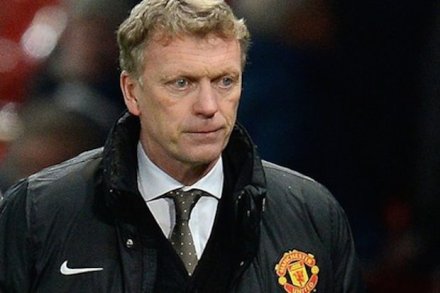
Poor David Moyes, sacked before the season ends. Living up to the standards set by Sir Alex Ferguson was always an impossible task, especially since Fergie left Manchester United in a shoddy state. Moyes inherited a squad stuffed with arrogant past-its like Rio Ferdinand and Ashley Young. It's testament to Ferguson's terrifying force of personality that United managed somehow to win the league last season with such a dodgy ensemble; but he deserves criticism too for leaving a mess behind. Yes, Moyes failed to handle the big ego players — which seems to be the essential skill for a top manager these days. Yes, he never seemed to know his best starting eleven.
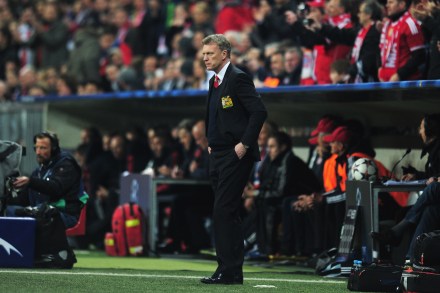
And so the axe fell and the crowd cheered for they loved nothing more than a good beheading. They had been waiting for this execution for some time and would have grown restless if they had been denied their head very much longer. Now the deed is done and they are booting David Moyes's napper up and down the Stretford Road. We all knew it was coming and Moyes, being an intelligent man, must have known it too. His ten month reign at Manchester United has been perhaps the greatest - and also grimmest - drama since Brian Clough's ill-fated 44 days in charge of Leeds United. Hello David Peace, you have your subject now. Paradoxically, one of the few souls to emerge from this Tragedy in the Theatre of Dreams with their dignity intact is Moyes himself.
My brother’s three Borders are called Roxy, Ruby and Taz. My one ambition in life is to own a terrier again, or rather three terrier bitches, just so that I can call them Tray, Blanch and Sweetheart. (Lear, mad on the heath: ‘The little dogs and all, Tray, Blanch and Sweetheart, see, they bark at me.’) I ask my brother for the latest news of his dogs. He says he recently took Ruby up to Yorkshire, to be served by a well-known pedigree Border stud dog. My brother is a regular customer there. It’s a ten-hour round trip. The moment he draws up in his car, he says, the dog’s owner comes out into the yard and unrolls his ‘mating mat’ and lays it down, and his stud dog goes ballistic with joy, knowing what’s in store.


Home In the Budget, George Osborne, the Chancellor of the Exchequer, said that the economy was working but the job was far from done. He expected further falls in unemployment and wages rising faster than prices this year. The economy, he suggested, would return this year to its size in 2008. Before the Budget, Nick Clegg, the Deputy Prime Minister, said that as many as 1.9 million working families could receive a tax-free childcare allowance worth up to £2,000 per child. Mr Osborne had announced that the help-to-buy scheme for new homes would be extended until 2020. He also let it be known that a garden city of 15,000 dwellings would be built near Gravesend on the high-speed line from the Channel.
São Paolo It was back in 2001 that my good friend Jim O’Neill of Goldman Sachs coined the acronym ‘Bric’, short for Brazil, Russia, India, China. These were the emerging markets that were going to surpass the developed economies. And so they have. Well, nearly. I, too, am partial to a good acronym and it has always seemed to me very unfortunate that there isn’t a matching one for the four biggest established economies. According to the International Monetary Fund, these are currently the United States, Japan, Germany and the United Kingdom (based on last year’s GDP figures). I therefore propose ‘Juugs’. The rise of the Brics and the fall of the Juugs has a good ring to it.

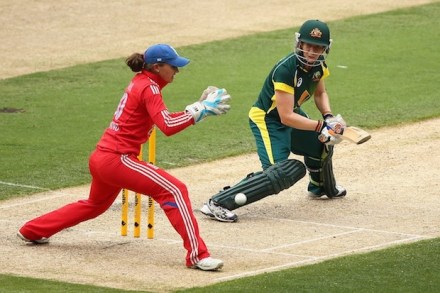
James Cook’s third voyage as an English captain ended in disaster, stabbed to death and disembowelled by a pack of angry Hawaiians in 1779. The latest Captain Cook’s third tour since taking charge of the national cricket team has been just as successful, with Alastair’s England given the Hawaiian treatment by Australia. But don’t despair: for the British sports fan there are plenty of reasons to be cheerful. Try these: 1. Our women cricketers are thumping the Aussies, and it’s the women’s Ashes that matters, right? Just remind any passing Australian of that, and last summer’s Lions tour too, if you’ve got the time.
For a quarter of a century Sir Alex Ferguson bestrode football’s narrow world like a colossus. Like his predecessor knight-manager, Sir Matt Busby, he ensured that it was England’s third city that was home to its top football club. His avowed aim in this reminiscence is to explain ‘some of the mysteries in my line of work’. In that he certainly succeeds. One does not need to know anything about football to recognise that Sir Alex knows everything about it. It is no more necessary to have been a great advocate to become a great judge than it is to have been a great player to become a great manager.

In sport, as in life, you just don’t know where you stand any more. Look at the Premier League: no club knows where they stand except for Crystal Palace, who are being stood on by all the others. Everyone else can beat everyone else. Manchester City, who must be one of the best teams, are eighth; Southampton are good for the Europa League but currently could end up in the Champions League. But it’s all good for business. The England football team are about to find out exactly where they stand after two friendlies and the World Cup draw next month. The England rugby team are about to find out exactly where they stand too.
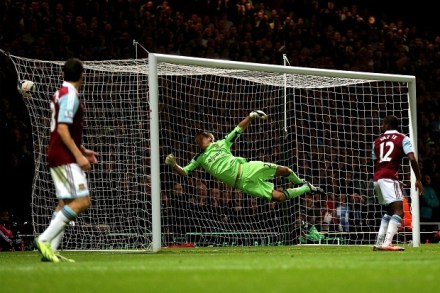
A successful gambler once told me: ‘Never bet on football, never bet on multipliers, and never ever bet on football multipliers.’ Multipliers, in case you don’t know, are those enticing combination wagers on bookmakers’ shopfronts: ‘Liverpool win 2-0 + Sturridge to score = 33/1.’ Mugs like me fall for them every time. My subconscious tends to add together the two probabilities — that of Sturridge scoring and that of Liverpool winning 2-0 — when really I should be multiplying them. Duh. The bookies don’t always triumph when it comes to football, however.

What a pleasure it is to bring you a good news story this morning, something uplifting. On Saturday afternoon, West Ham entertained Manchester City, but a substantial number of City’s ticket allocation was not taken up. So the West Ham board, which includes the lovely Karen Brady, decided to give the spare tickets, free of charge, to some “locals” who were not usually habituated to visiting the ground each week. The “locals” took up the offer and came along to Upton Park where they dutifully cheered for Manchester City and entertained regular supporters by dropping to their knees for prayers at half time. You can only imagine how delighted the West Ham supporters were by this show of generosity and indeed the way in which it was repaid.
Viewers of Saturday’s edition of Final Score on BBC 1 would have seen former Liverpool and England striker Robbie Fowler apologising (doubtless after a prompt from the voice in his ear-piece) for using the expression ‘like a couple of girls’. He was referring to Jan Vertonghen and Fernando Torres’s silly tussle during the 1-1 draw between Tottenham Hotspur and Chelsea, in which Torres was harshly sent off. Mr Steerpike is all for war on clichéd simile (and for telling preening footballers where to get off), but ‘like a couple of girls’ is not sexist. Fowler was picking at the pettiness of Vertonghen and Torres; he was not damning the massed ranks of the sisterhood or women’s football.