Food

Cool and underground

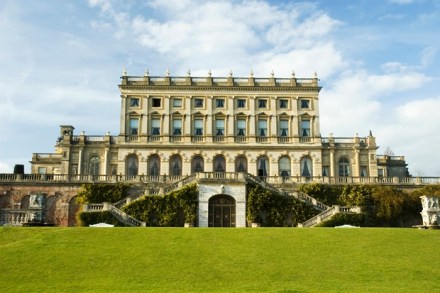
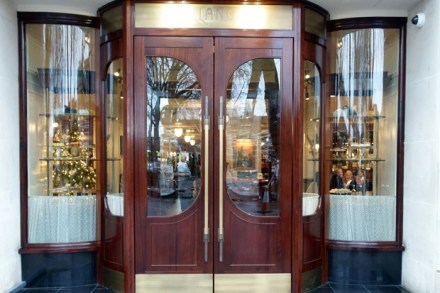
The Keeper’s House sits in the basement of Burlington House, a restaurant in disguise. It is quite different from the grand cafés of St James’s and Mayfair, which are raging exhibitionists with banquettes splayed like limbs. It is secretive and it knows, consciously or not, the tricks of children’s literature: the looking-glass, the wardrobe and the door. It is an 18th-century basement transformed, by magical whimsy, into a restaurant. To visit the loo is a quest for which you need a Gandalf, a hobbit and a lamp. Burlington House looks like an English mansion that stared at Palladio, had a panic attack and exploded.

Concept

‘It was nothing special, but it was a pub,’ said my husband, looking up from his copy of Bar magazine (which is not to do with the law). He was referring to the Grapes in George Street, Oxford. Obligingly, I asked him what it was now. ‘It’s a “craft beer and pizza bar concept”,’ he replied, snorting. Since he often snorts anyway, he put quite a stertorous effort into sounding dismissive. I was surprised, not by the snorting but by the reappearance of the vogue term concept, which I thought we had got rid of, along with situation. A kind friend of a friend with knowledge of the ‘hospitality sector’ confirmed that the word has swarmed, like ants on a muggy afternoon, all over the trade press.

Soho in Somerset

It is summer and the listless metropolitan thinks of grass. It cannot afford to stay at Durslade Farmhouse, Somerset, a branch of the Hauser & Wirth art gallery that serves food and plays cow noises in a former barn as authentic country folk rip their eyeballs out. Locals talk about Durslade Farm as a child that died. I think it is a Holocaust memorial for cows, but oblivious. Babington House is the country branch, and it is open to members, their friends, and hotel guests. There is a a spa called the Cowshed that sells ‘Lazy Cow’ and ‘Moody Cow’ beauty products (misogyny masquerading as irony), a restaurant and a church, which looks uneasy in the grounds, probably because it has to tolerate celebrity weddings.

Guilty displeasures

Strawberries. Ella Fitzgerald. Lying on the beach. They’re three of my ‘guilty displeasures’. You haven’t heard of the guilty displeasure? That’s because the concept hasn’t been invented yet. But it needs to be — and quick. The phrase ‘guilty pleasure’ is widely known. It was coined by the DJ Sean Rowley, who, not content with being the man on the cover of What’s the Story Morning Glory? by Oasis, applied a label to the songs we love despite them being uncool. The idea expanded, and now anything naff can be a guilty pleasure: chocolate spread, knitting, Countdown, you name it. But what about the opposite phenomenon, the supposedly cool things that we don’t like?

Lost in Piccadilly

Batman owned the Criterion in The Dark Knight, but could he do anything about British Telecom? Savini at Criterion, an Italian restaurant, waited four months for an internet connection and telephone line as they prepared to launch this year; when it arrived they gave BT what must be the worst review in the history of telecommunications: ‘This wouldn’t happen in Italy.’ It ruined the launch, they said. They couldn’t invite actors, except by pigeon post. And because actors are, in restaurant marketing terms, signposts — and they do look like signposts, specifically Monagasque signposts — no one knew Savini was there. It has no constituency. It is George Galloway, who has inexplicably blocked me on -Twitter. But I am too gloomy.

The bitter taste of victory

The Parliament Hill Café is a drab glass box at the bottom of Hampstead Heath, near the farmers’ market and the running track. But it is something else too. It is a paradigm. The Corporation of London announced that the D’Auria family, who have run the café for 33 years, would not get a new contract; instead, it would go to a firm called Benugo. This has been reported as a fable with universal meaning, which it is; the café is Cinderella, or the frog, or Anna Karenina. Benugo is Karenin, or consumer capitalism, or the ball. The north London intelligentsia organised a petition and a public meeting. Giles Coren added his voice, and I hope the gourmet inside him is ashamed of the other one.

The cult of clean

How clean are you? I ask not as a mother confessor. I’m not interested in the state of your soul. What I want to know is: how clean is your sock drawer? Your fridge? Your gut? These are the pressing questions of the new cult of clean. Its apostles urge us to divest ourselves of worldly possessions, to renounce ‘dirty’ food and alcohol and to dress in monkish grey or bleached white. Our sins are these: we have bought too much tat, eaten to filthy excess and stuffed our wardrobes with cheap, disposable rubbish. The clean cultist says no more. Everything must go. The most high and holy of the clean cultists is Marie Kondo, Japanese author of The Life-changing Magic of Tidying.

Send in the Alsatians

Islington is a bellwether, and also a joke: the most unequal borough in London, where social housing leans against £4 million terraces (for now, loyal Conservative voters, only for now), and also the holy font of Blairism as it appears in ‘It’s Grim Up North London’. Here, it is said, they sang the Blairite version of the Red Flag: ‘The People’s flag is deepest pink/ It’s not as red as people think/ So raise the scarlet banner high/ The college song, the old school tie.

Marco Pierre, why?

Wheeler’s is such a dreadful restaurant that I wonder if Marco Pierre White even knows his name is on it. I suppose, for legal reasons, we must assume he does, and was not held hostage in a cellar while they built and fretted and hung inflated photographs of their prisoner all over it, like the bedroom of a starlet in full madness.

Low life | 3 March 2016

Before we left for Sunday lunch at the Les Deux Garçons restaurant, Aix-en-Provence, I checked the reviews on Tripadvisor. I’m mildly addicted to Tripadvisor restaurant reviews — I enjoy their Pepys-like unselfconsciousness — and never before have I seen opinion so equally divided between praise and censure. According to the dissenters, Les Deux Garçons is ‘a worst nightmare’, ‘absolutely horrible’, ‘a fraud and a scam’, ‘a theatre of clowns’, ‘the perfect place to while away a few hours — if you are on death row’.

Easy to swallow

Pharmacy 2 is the reanimated child of Damien Hirst; it lives inside the Newport Street Gallery in a forsaken patch of Lambeth by the railway arches. This makes it look, inevitably, like the set of The Bill, but with a painting of Damien Hirst on a nearby wall, which would surely confuse the Bill. Pharmacy 1 was, for five years until 2003, in Notting Hill. So we are already doing better. It is said that the Royal Pharmaceutical Society of Great Britain complained about Pharmacy 1, and worried it would confuse people looking for a real pharmacy, but I do not know if this was true. If it was, they were too stupid to live, even if they did eventually find a pharmacy. The gallery looks like the interior of a shell. I ask a man behind a desk: is the gallery open?

The 5 per cent of people who get to decide everything

What happens when 95 per cent of people like something, but 5 per cent of people prefer something else? You might think natural democracy would prevail: that the 5 per cent would acquiesce and go along with the taste of the majority. Not necessarily. In many cultural settings, it is common for a small, intransigent minority to beat a much larger, tolerant majority. If you’re hosting a dinner party, for instance, all it takes is one git with a spurious ‘fenugreek intolerance’ to veto your best lamb curry. You might call this ‘the asymmetry of tolerance’, where certain social systems end up calibrated to suit their most inflexible component.

Italian cuts

Sartoria is a pale grey restaurant on Savile Row. As evidence that this is London’s destination street — if menswear is your compulsion — Bill Nighy walked past me as I searched for Sartoria; I had walked, obliquely, into his film and I was not dressed for it. But when am I ever? I wore Gap to the Valentino couture show in Paris, out of sheer spite. Sartoria — a preening name which I dislike — wafts on reams of praise. Male critics love it; and it is a masculine restaurant. It is long and wide, with dark woods, expensive lamps and what here are called ‘neutral colours’.

Game show

A few years ago, a distinguished cove in the diplomatic service was made High Commissioner to Australia. To prepare himself for the penal colony, he invited three predecessors to lunch, for advice. The first said that he should make contact with the Billabong institute in Sydney. They were experts on the transportees’ economy. The second advised him to befriend Ned Kelly, editor of the Convict Chronicle, who knew where the political bodies were buried, having often handled the shovel. Then it was Peter Carrington’s turn; Peter had held the post in the mid-1950s. ‘Watch out in late January,’ he warned. ‘When the shooting season ends, all your friends will try to invite themselves to stay.

Past Caring

Le Caprice is a monochrome patch of the 1980s behind the Ritz Hotel, in the part of St James’s that looks like Monaco. (There is a car park.) It was, along with Langham’s and the Ivy, the most fashionable restaurant of the Thatcher years, beloved of media slags and wankers; also of Princess Diana (the night after she died, her table was kept empty, which is a unique elegy), Princess Margaret, Mick Jagger and Jeffrey Archer, who ate his first meal here after he left prison, because he too is unique.

Brass tacks

The last time I reviewed a restaurant in Selfridges, a PR man rang up to ask what he could do to change my opinion of Selfridges. Don’t worry, I told him, Spectator readers don’t go to Selfridges to sit in a fake Cornish fishing village, because they are too busy eating the remnants of the Labour party. And they don’t care about shopping. You don’t dress a Spectator reader. You upholster it. I felt guilty about mocking the stupid fake Cornish fishing village so I avoided the next themed restaurant in Selfridges, which was a fake forest on the roof (‘inspired by an autumnal forest’… because who can be bothered to go to a real forest if they even still exist?). But I had to review the revamped salt beef bar in the food hall.

Carrots — and no stick

Never mind teaching children to cook: they need to be taught to eat. Obvious? Totally, but this is the choosing part of eating, not the chomping and swallowing we are born to do. Yet, terrific survivors that omnivores have proven to be, they do not know poison from medicine unless told so. So, if you were a cave baby all those eons ago, your cave parents would have pointed out the poisonous berries from the nutritious ones, and later on taught you which animals to hunt. Today’s infants face rather more complicated food lessons, and their parents a horrendous task if they are to bring up a brood with good eating habits and perhaps more importantly a relationship with food that is just as healthy.

Barometer | 7 January 2016

The outsiders Did the seven members of Harold Wilson’s cabinet who campaigned to leave the Common Market in the 1975 referendum damage their careers? Michael Foot, Employment Secretary. Made deputy leader by Jim Callaghan in 1976. Elected leader in 1980. Tony Benn, Industry Secretary. Challenged Denis Healey unsuccessfully for Labour deputy leadership in 1981. Barbara Castle, Social Services Secretary. Sacked from cabinet by Jim Callaghan when he became prime minister in 1976. Eric Varley, Energy Secretary. Swapped jobs with Tony Benn after referendum. Fifth in shadow cabinet elections in 1979. John Silkin, Planning and Local Government Secretary. Became agriculture secretary in 1976. Stood for Labour leadership in 1980 but was defeated. Peter Shore, Trade Secretary.

That sinking feeling | 7 January 2016

The Feng Shang Princess is a floating Chinese restaurant on the Regent’s Canal in north London, which flows from Little Venice to the Guardian to Limehouse, and in which they quite often find corpses in shopping trolleys and vice versa. I do not know if the restaurant moves, and could theoretically travel to Paddington. I hope it does. The Regent’s Canal is an ugly stretch of water, which reeks of sexual violence and cheap alcohol and cyclists, and it is desolate; place it near London Zoo and you have a peculiar cognitive dissonance that could only happen in London: a tapir near a canal featuring a floating Chinese restaurant. It is apparently Paul McCartney’s favourite Chinese restaurant, which I found insane until I thought about it.

‘Clean food’ is a dangerous fad

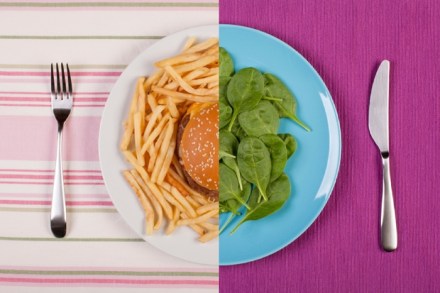
[audioplayer src="http://rss.acast.com/viewfrom22/thecleaneatingcult/media.mp3" title="Ian Marber, Isabel Hardman and Lara Prendergast discuss the cult of clean eating" startat=40] Listen [/audioplayer] Isabel Hardman and Lara Prendergast explored the unhealthy advice peddled by 2015's near-ubiquitous ‘wellness’ gurus in The Spectator's second most read article of the year: The supermarket aisle has become a confusing place. It used to be full of recognisable items like cheese and butter; now you find yourself bamboozled by all manner of odd alternatives such as ‘raw’ hummus, wheat-free bread and murky juices. You have to stay pretty alert to make sure you pick up a pint of proper milk, rather than a soy-based alternative or one free from lactose.