Food

Food of love

From our UK edition

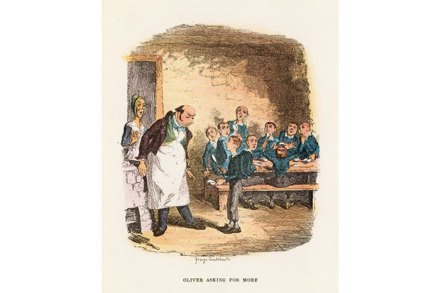
Modern Britain scratches its head over children who are overfed, not underfed, while guilt-ridden mothers stand accused of feeding children badly even if they are not obese. These are not insignificant troubles since childhood obesity is set to cost the NHS many millions in years to come. But as a new exhibition at the Foundling Museum in London will show, infant and child nutrition is not a new science and the challenge of nurturing, not least keeping children alive before the age of five, was taken just as seriously two centuries ago as it is now. Feeding the 400 is the first show at the museum, built on the site of the former Foundling Hospital (established in 1739, and closed in 1954), to examine how the many young boys and girls in the hospital were nourished.

Not much to smile about

From our UK edition

CBeebies Land is a small dystopia inside Alton Towers, a theme park where people sometimes get their legs chopped off by a rollercoaster called The Smiler. There is a gothic mansion by Augustus Pugin, the Nietzsche of cushions, which has been allowed to fall into ruin, because it is less important than the Runaway Mine Train and a ‘ride’ covered in plastic frogs. It broods like Manderley; around it, people play with water cannon and eat sugar until their eyes are dead. I was going to suggest that parliament convene at Alton Towers while the Palace of Westminster is repaired, so they could feel the Pugin; but they might be maimed by The Smiler.

Cooking the books | 15 September 2016

From our UK edition

Cooking really shouldn’t make good radio. On television, it’s already frustrating that you can’t taste what you’re seeing, but on radio you can’t even see it. ‘I’m just cracking an egg,’ they tell you. ‘And now I’ll crack another egg.’ The sounds — violent thuds, hissing gas, moist chewing — are more ominous than appetising and the commentary (‘I’m just mixing those eggs together now’) can’t help but be comically sedate (‘OK — they’re mixed’). So it’s a miracle that The Food Programme (Radio 4), after three decades of this sort of experiment, is as good as it often is, and Cooking for Poldark, this week’s ingenious episode, was really very good indeed.

Aga can’t

From our UK edition

Earlier this year my partner paid several hundred thousand pounds for an Aga. There’s no other way of putting it. A major cause of her excitement about our new house was the presence in its kitchen of the whacking great oven. I, on the other hand, was unsure how I felt about it — Aga-nostic, if you like. Six months later I’m sick of the bloody thing. What’s more, I’ve worked out why Aga lovers go on about them so much. For those of you fortunate enough never to have encountered one of these beasts, the facts are these. An Aga has to be kept on constantly, sapping your fuel source (ours is electric) 24 hours a day. My model has two ovens, one at a fixed high temperature, the other at a fixed low temperature. There are two hotplates, ditto. And that’s it.

A toast to Provence

From our UK edition

Friends have a house in Provence, near the foot of Mont Ventoux. Even in a region so full of charm and grace, it is an exceptional spot. Although nothing visible dates from earlier than the 18th century, the house is in the midst of olive groves and there has been a farm dwelling for centuries. I suspect that one would find medieval masonry in the foundations. Beginning life as a simple farmhouse, it has been bashed about, added to and poshed up. On the western side, the exterior has pretensions to grandeur. The other elevation is more feminine; you expect to find Fragonard painting a girl on a swing. At this season, the parasols act as the drawing room. There is a pool, and there were expeditions to Nîmes, Orange and Avignon.

Magic at St Michael’s Mount

From our UK edition

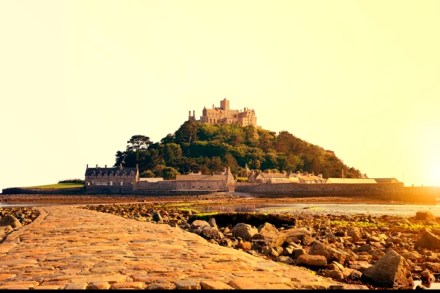
The Sail Loft is under a castle on a mountain on an island in the sea; for that, I could forgive it anything. It is on St Michael’s Mount in Marazion near Penzance, an island so charming and devoid of internet connection it almost strips me of words. If I lived here I would not write again; I would not need to. I would be happy, and who judges fish when they are happy and finds it not enough? It is accessible along a granite causeway for four hours each day — then the path goes back to the sea and one must take a boat; it is more ruthless than magic. I wish I lived here, and could drown my neighbours, who are customers at the betting shop in Camden. We do flood them, but only with the shower, and grouting does not have the malevolent possibilities of the Celtic Sea.

Barometer | 11 August 2016

From our UK edition

The end of an emperor — 82-year-old Emperor Akihito of Japan has announced that he wants to abdicate, partly, he said, because he doesn’t want Japan to come to a standstill in the event of him falling ill, as with previous emperors. — When Emperor Hirohito was diagnosed with duodenal cancer in 1987, the news was not reported; nor, it is said, was the emperor told. But within a year it became clear that he was seriously ill, because he had to cancel appearances. TV reporters camped outside the palace; weddings and autumn festivals were cancelled. When Hirohito died on 7 January 1989, aged 87, there were 48 days of mourning, though people seem to have grown weary by the funeral in February: only 200,000 turned up for the procession, when police expected 800,000.

In defence of dinner parties

From our UK edition

In or out? Almost two months on and I’m afraid the great debate shows no sign of abating, certainly not in our divided household. And while we’ve had several referendums over the matter, the result is always a stalemate. The only upside is that this argument has nothing to do with Brussels. It’s far more rudimentary. The battle in Palmer Towers is whether we eat in or out when wanting to see friends. My wife Joanna — who, as it happens, was for In over the country’s EU membership — is a firm outer, while I, who voted Out on 23 June, am a determined inner. As with the EU conundrum, there are good points to be made on both sides.

West End churls | 4 August 2016

From our UK edition

Piccadilly is ill-served by cafés, unless you consider House of Caviar a cafe. There is a Caffè Nero by St James’s church, which is Wren’s ugliest; either he leaked all his anger into it or bricks simply confounded him. There is a Starbucks by the Wolseley, a Costa across the road and an Eat off Jermyn Street; otherwise there is only Paul, which has good bread, enchanting service and a stupid name. But whimsical French patisserie doesn’t work in St James’s, which is very self-consciously English; it feels like a theme park in sugar. So tourists on a budget must go to Chinatown or, worse, Patisserie Valerie, whose window display is so fantastical it could be wrought by a bulimic Edwardian ghost. Better to eat at Putin’s polonium sushi bar, Itsu.

Barometer | 21 July 2016

From our UK edition

How Britannia got her trident Parliament voted to renew Trident as Britain’s independent nuclear deterrent. But what about Britannia and her trident? — Unnoticed by some, our coinage was unilaterally disarmed in 2008 when a new 50p was issued, with a crest, not Britannia. — But then Britannia didn’t always bear a trident. When she was first put on coins by the Romans she carried a spear in one hand and an olive branch in the other. — She retained her spear until 1797 when, to celebrate Britain’s naval power, the weapon was replaced by a trident. The inspiration came from Poseidon and Neptune, Greek and Roman deities of the sea. They carried a trident because it was used in the ancient world for fishing.

The naked dinner

From our UK edition

Bunyadi caters to folk for whom public nudity is somehow thrilling; I am here because A begged to go and bashed the steering wheel of the Honda Civic with his fist. I am not only nude, which is odd, because being sexually exciting is not my journalistic identity, but, worse, I have accepted a freebie. There was no other way to get in. I asked Rod Liddle, who fashioned an anti-Bunyadi polemic a few weeks ago, to accompany me. He muttered ‘skidmarks’. Then he said no. It is a glowering ex-nightclub in Elephant and Castle, south London; a black building on a corner with the windows taped up. It looks like a pub trapped in a bondage situation. There is an unnecessary velvet rope. (There is no queue.

A touch of class | 7 July 2016

From our UK edition

Cliveden is a good review for a divided country and I have waited, not too long, for it to feel resonant for Spectator readers; it aches with class-consciousness. It has food pens dependent on your status — whether you are eating in the National Trust grounds, or the swanky (I love this word; it’s so bitter) hotel inside the ‘manor’. And even if you are staying in the swanky manor, famous as the venue where John Profumo exploited the not-recovering child-abuse victim Christine Keeler — don’t call me a sighing Guardianista, I have done my research and she once aborted a child with a pen — in a swimming pool, you have signage to soothe your comparative class wretchedness, for you do not have a country house of your own.

Food for thought | 7 July 2016

From our UK edition

Elisabeth Luard has a fascinating and rich subject in the relationship between food and place. Humans eat differently according to where they live. Their diets both in daily life and in feast-day magnificence are influenced by seasonal and regional availability, sumptuary laws, convention, history and even political diktat. I was in Norway last week, and was repeatedly tempted by the offer of grilled whale, though less so by the pseudo-cheese Brunost or Gjetost. (When a lorry carrying Gjetost crashed and burst into flames in a tunnel in 2013, the load of sugar in the ‘cheese’ fuelled an inferno that the firefighters could not approach for four days.

Your problems solved | 22 June 2016

From our UK edition

Q. A friend’s daughter is marrying soon. She and her husband-to-be, both art-lovers, have dispensed with a wedding list, instead asking that each of the 200 guests give something they have made. My husband and I are loath to add to the mountain of garbage the young couple will feel honour-bound to find roomspace for. Would it be kinder to come empty-handed? — M.D., Wiltshire A. The request may be less naive than you think. It would be well worth storing 198 pieces of grot if, for example, David Hockney and Bridget Riley were to be among the guests and delivering something handmade. Meanwhile you could compromise by knocking up Lego brick constructions. These will fulfil the criterion of being handmade but the bricks can be recycled if and when the couple have children. Q.

Woolton’s war

From our UK edition

In wartime the housekeeping is a nightmare. While fighting Napoleon in Spain the Duke of Wellington sent an infuriated letter to the government in Whitehall. He complained that they had asked him to account for a petty cash deficit of one shilling and ninepence, and a ‘hideous confusion as to the number of jars of raspberry jam issued to one cavalry regiment during a sandstorm…’. The Duke, more concerned with training soldiers to fight, would not have got on too well with Lord Woolton, the British government’s Minister of Food in the second world war, whose office had the most onerous catering job in history.

Un-Italian job

From our UK edition

I have been waiting, like a heroine in fiction, for the specialist lasagne restaurant. London has long been heading this way for the benefit of the consumer-simpleton who can only process one piece of information at a time. It is clearly a response to the glut of choice in late capitalism, and so close to Karl Marx’s home in Dean Street that I can almost feel his cackling shadow. Less choice for your aching head, child, but isn’t it really more choice? The choice not to choose? That phenomenon brought us the pop-up Cadbury’s Creme Egg restaurant, which only served food made with Cadbury’s Creme Eggs. Because people are mad, and getting madder, it had queues around the block.

Even hungry migrants won’t eat the food in Italy

From our UK edition

A few months ago, Nigerian migrants housed at a government hostel in Milan suddenly refused to eat any more of the free food on offer. Italian food is monotonous and indigestable, they explained. Then they went berserk. This was not a one-off case. Far from it. There have been hunger strikes, demos, sit-ins and the odd riot in protest at the stuff. Recently, a group of mainly Pakistani migrants based in a Reggio Emilia hostel were given their own taxpayer-funded chef ‘specializzato in piatti pachistani e africani’. They had complained that Italian food was making them ill. Many migrants en route from Libya to who-knows-where are marooned in Italy for now, and they are getting fed up. They know that other EU countries have better food.

Blancmange is either ignored or despised: here’s how to make one that’s neither slimy nor bland

From our UK edition

Blancmange. Poor, maligned blancmange. The slimy, over-set staple of children’s birthday parties and school dinners, destined to be pushed around a plate and loathed for life. Blancmange has become shorthand for an age of blandness: the dessert equivalent of Chris de Burgh. Even its name sounds heavy on the English tongue. But we do the blancmange a grave disservice. It is, after all, essentially a panna cotta. Shouldn’t a milk jelly by any other name taste as sweet? It is slightly lighter than its Italian counterpart, yes, but that’s all to its credit. So why the bad reputation? The culprit, I think, is packet blancmange. No amount of careful preparation can mask the cornflour. In theory, English blancmange is set with cornflour and French with gelatine.

Great news for fatties: it’s really not your fault

From our UK edition

I’ve noticed for some time now that thin people, genuinely slim ones, have a secret loathing of fatties. Kindly though they may otherwise be, the sight of rolls and overhangs, jowls and bulges, makes them angry. One extremely thin woman I know finds it hard, she told me, even to have fat friends. Another shivers with horror if she catches some poor podge in the act of wolfing a treat. It’s not an aesthetic affront, she says, so much as a moral one. Where’s their willpower, where’s their grit? It’s hard to argue with a censorious thinny. We all know, these days, that there’s no excuse for being a lardarse. Faulty glands, slow metabolism — all tripe. The brutal truth is that if you’re fat it’s because you eat too much.

Diary – 26 May 2016

From our UK edition

Why do we assume all doctors are good? We don’t think there are no bad cooks or bad plumbers. But everyone thinks their surgeon is the best in the world. Recommended to one such, I booked an appointment. He rattled off his spiel about the pros and cons of surgery, physio or jabs for a bad shoulder, while looking at the ceiling and at his watch. He waved away my scan: ‘I never look at those. Just heaving oceans of muscle. They all look the same.’ He favoured surgery, but I asked for a jab. It hurt like hell and made no difference. So I went to another ‘top of his profession’ consultant, who gave me a jab, while looking at the scan on a monitor to hit the right spot. It worked. After nine months, I can move my arm. Yippee.