Food

The secret to making perfect chocolate chip cookies

From our UK edition

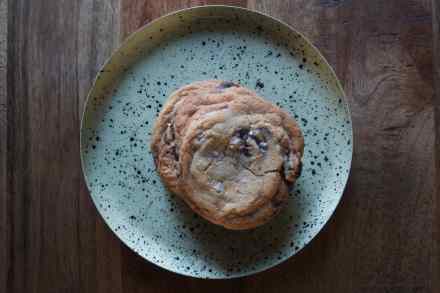
If these chocolate chip cookies are my only achievement for the entirety of last year's lockdown, I think I’ll be satisfied: crisp and buttery on the outside, fudgy and sweet within, with pools of dark chocolate, and just the right amount of salt. As ever, with baking, there are always substitutions you can make, if you don’t mind a slightly different (but still delicious) end product. Sub in the light brown sugar for dark brown sugar for an even deeper toffee flavour, or swap out the caster sugar for granulated or demerara. Strong white bread flour will work, if you can spare it, and rye or spelt flour will produce a damper but nuttier cookie (a delightful variation, in my books).
A week of winter dishes from The Vintage Chef

From our UK edition

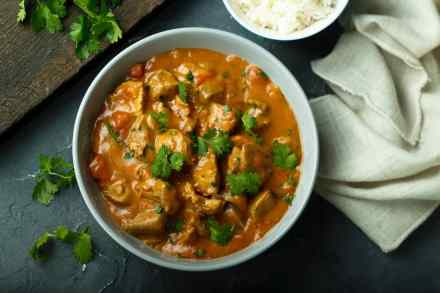
Chicken forestière Unlike loads of my other favoured stews, this one doesn’t take hours on the stove or in the oven. I can’t pretend it’s a ten minute start-to-finish dish, but it is one you can start after work and comfortably finish in time for dinner – and after the initial time investment, you can leave it to do its thing. Recipes differ as to the cut of chicken you use: I’ve used fillets here which are not normally my favourite cut, but here it helps the quick cooking process, and means that you don’t have to faff around with bones when eating. The ‘forestière’ in the dish title means ‘of the forest’ and is really a reference to the mushrooms in the sauce.

The best schnitzel in London: Schnitzel Forever reviewed

From our UK edition

It is a truism that there is never enough schnitzel (‘slice’, German); or, rather, schnitzel does not get the attention it deserves. Restaurants do serve it, of course. Fischer’s does a fine Wiener schnitzel, as part of its riotous pre-war Vienna tribute act, and elderly people, I am told, queue for it while wearing slankets. Brasseries sell it often: the perhaps unconscious desire to re-enact the meals of the Weimar Republic is one of the stranger things of the age. The Coffee Cup in Hampstead serves it with a jaunty side order of spaghetti pomodoro. But the (chicken) schnitzel has never had the stardust of the less interesting but more widely beloved hamburger; perhaps it is because cows are bigger.

How to spruce up your spice rack

From our UK edition

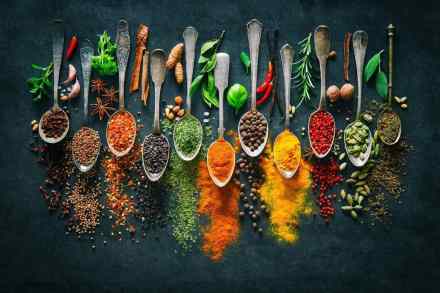
They sparked the Crusades, built Venice, and spurred European colonialism. In many ways, spices and the spice routes along which they were traded, made the modern world. And how many other ingredients can make that claim? Not avocadoes, not goji berries, not truffle, no matter how fashionable. No, when it comes to historical importance, spices are in a league of their own. In medieval times black pepper was so valuable it was used as a currency, and worth its weight in gold. As an excitable Rick Stein explained on his journey around India in 2013, unscrupulous merchants in days gone by would cunningly cut the valuable pepper with mustard husks and even chimney sweepings to increase their takings.

Galette des rois: a perfect epiphany pudding

From our UK edition

There’s always a bit of a post-Christmas sag, isn’t there? The presents have been piled up but not actually put away yet, the tree is dropping needles like there’s no tomorrow, and those final bits and bobs of leftovers in the fridge aren’t looking terribly appealing (a weary parsnip and some withered peas do not a Christmas sandwich make). So it’s no surprise that the French have made sure there’s something to look forward to before we pack away the festive season for another year: the galette des rois. Named after the three kings of the nativity story, galettes des rois are traditionally eaten on 6 January, or Epiphany, the day that the magi were supposed to have visited Jesus in his stable.

A rioja to beat the new year blues

From our UK edition

There was only one flaw in my Christmas this year. I did not spend enough of it with Santa Claus-age children. It is of course easier to delight in the charm if one does not live with the brats all year round. However adorable they may be, there are moments when they are also living instances of the doctrine of Original Sin. Moreover, in a Father Christmas household, it is helpful to have a bedroom some way from the parents. Admonitions will have been issued. The little ones will have been prohibited from invading the parents’ room until, say, 8 a.m. But admonitions do not automatically command obedience. Misrule is — and should be — one of the joys of Christmas Day. There can be pathos as well.

In praise of neighbourhood restaurants

From our UK edition

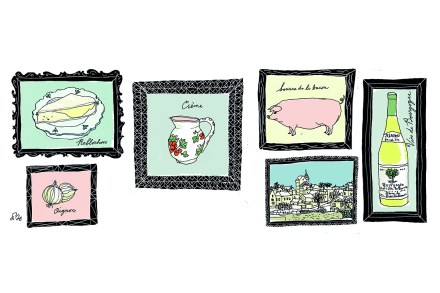
Living in Crouch End, a part of North London without a tube line and a distinctly villagy feel, you might imagine I would be spoilt for choice with excellent local restaurants. But Crouch End, like it’s posh neighbour Hampstead, has a bad reputation in that field. Too many coffee shops, the odd chain, and one or two overpriced gaffs that remind me of the phrase ‘All fur coat and no knickers’. I occasionally Google ‘Best restaurants near me‘ in case I’ve missed something, and one day, Table Du Marché popped up – a restaurant I had never heard of, despite it being just up the road in East Finchley.

How to survive eating out

Tennis — as the New England poet Robert Frost remarked in defense of formal verse — is more fun with a net. Creativity does indeed flourish within constraints. Soviet censorship brought about samizdat. Prohibition brought about bathtub gin and any number of fabulous cocktails designed to mask its unsubtle notes of paint thinner. The greatest human spirits would view the new era of show-your-papers dining not as a hardship, but as an opportunity. In our brave new world, some don’t mind handing over papers in exchange for a mess of restaurant-prepped pottage. And yet there are ancien régime sticklers for propriety who think that the use of QR codes to gain access to food indoors is not quite comme il faut (if you’ll pardon their French).

dining

Making a raclette

Cheese, potatoes, sausage and bacon for dinner? Let’s just throw in bread and heavy cream for the sake of it. Sounds like a recipe for a heart attack or stroke? Why do the Swiss and French then double up — or even triple up — on these carbs and calories when cold weather comes? The answer is easy and old; the combos are delicious, divine and de rigueur, filling the body’s need for cozy food and energy to shovel snow and ski. The French and Swiss still argue about which country invented raclette.

cheese raclette

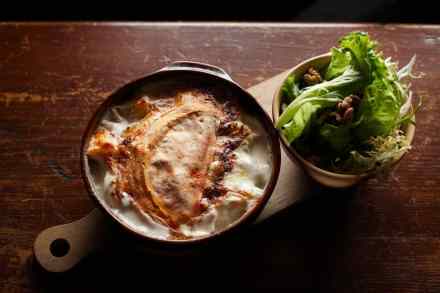
Tartiflette: a French winter warmer perfect for New Year

From our UK edition

Well, Christmas may be complete, but the festivities are far from over: the new year is just around the corner. As we stare down the barrel of the end of the decade, we’re not quite ready to give up the cheese board, the doorstep-sized leftover sandwiches, or remove our hand from the Quality Street box. But although the food might be the same post-Christmas, the tone of our eating has changed slightly. Christmas cooking (and eating!) can turn into a logistical marathon: juggling pans and hob space, reconciling wildly different cooking temperatures for items that need to be in the oven at the same time, catering to a raft of traditions and preferences, all of which need to be satisfied in this single, momentous meal. Preparing Christmas lunch can feel like a maths GCSE problem.

Hummingbird cake: a bake from America’s Deep South

From our UK edition

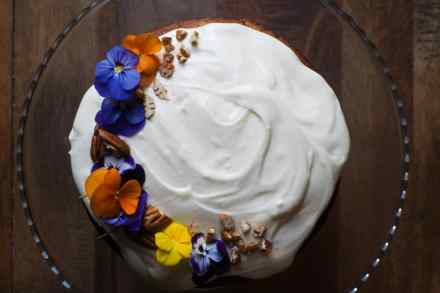
I’d always assumed that the hummingbird’s cake derived its name from its unapologetic sweetness: a cake so singing with fruit juice and soft caramelly sugar that it charms the (humming)birds from the trees. The origins may in fact be more prosaic: originally called the Doctor Bird cake, it was named after the national symbol of Jamaica, a type of hummingbird, only found on the island, and it first came to fame outside of Jamaica thanks to a bit of a PR stunt. It was a marketing tool, really: one of a number of recipes exported by the Jamaican Tourist Board in 1968 in little press packs sent to the USA.

The ultimate turkey curry

From our UK edition

Turkey curry, as a means of using up festive leftovers has become something of a joke: the turkey curry buffet in Bridget Jones is the true low point of Bridge’s festive calendar. The prospect can strike fear into the most Christmas-spirited of souls. But actually, on boxing day, or the day after, the last thing you really want is the same meal you’ve been eating for the past two days, looking a little tired and fridge-worn, all the best bits gone. Don’t get me wrong: I’ll be first to the table for cold roast meats and my fifth serving of stilton in 48 hours, and if you hesitate for a moment, you won’t see that final portion of trifle for dust.

The secret to making a Yule log

From our UK edition

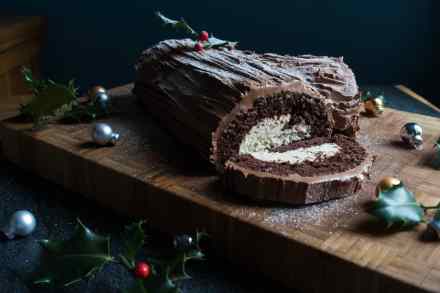
I watch a lot of Great British Bake Off. I’d like to say it comes with the baking territory, but the truth is, I’m simply hooked. I love all of it: the triumphs, the disasters, the crap jokes, the obscure technicals, all of it. My dedication to GBBO has taught me a couple of things: the Hollywood handshake has been so devalued in recent years as to be completely worthless; it’s probably worth breaking down and having a cry over your macarons just to get a hug from Noel Fielding, and swiss rolls are a bloody nightmare. They’re fiddly: they require whisking the yolks and whites separately, and then gingerly folding them together, before turning the whole thing out onto a tea-towel, doing some kind of weird pre-roll to set the shape, and then rolling again.

Gastro-nomics: a foodie’s guide to a changing world

From our UK edition

Twice recently I’ve been asked my opinion of ‘Doughnut Economics’. The first time, I was tempted to cover my ignorance with a Johnsonian impromptu riff on supply-chain issues in the deep-fried batter sector. But sensing seriousness I steered off and googled the phrase later, so I was ready the second time to discuss Kate Raworth’s 2018 book of that title, about why we should abandon pursuit of GDP growth in favour of a gentler model in which we take better care of nature and each other — illustrated by her ‘doughnut of social and planetary boundaries’.

The torment of a tasting menu: Hélène Darroze at the Connaught reviewed

From our UK edition

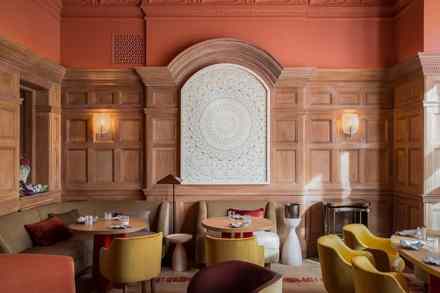
The Connaught Hotel’s formal dining room was always, to me, a place of childish myth; more comforting for being mythical. I am certain it is the dining room in Judith Krantz’s novel Princess Daisy, to which a Russian prince takes his daughter in the 1970s. In this tableau you find Robert Maxwell, Margaret Thatcher and people willing to pay for newspapers. I had, in a crowded field, my best ever celebrity encounter here, with the Netanyahus, in what used to be the breakfast room overlooking Carlos Place. ‘Shalom,’ I said, thrilling to the Waspy-ness we were subverting with our very presence. (I meant it. I meant it more than they did. I think that is clear.) ‘Shalom,’ Mrs Netanyahu said back. That was it.

How to create the perfect cheeseboard

From our UK edition

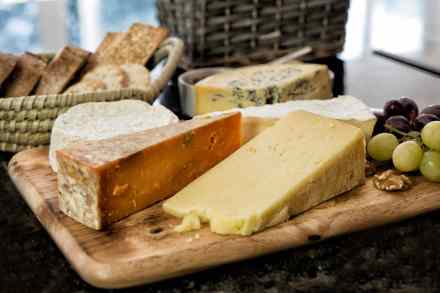
The cheeseboard is, arguably, the highlight of any dinner, but there’s an art to crafting a delectable selection. From selecting the right cheeses and serving them at their best to the ensuring a balanced pairing of sundries and sippers, the craft of the cheeseboard is a skill to learn. It’s time to do away with whipping out a Stilton wheel straight from the fridge. We asked top cheese experts, Hero Hirsh and Sam Wilkin, about the do’s and don’ts of Christmas cheese eating: How much cheese should you serve? As a rule, around 100g-150g per person should be plenty, but keep in mind that buying generously ensures your stock will last a few days over the festive period.

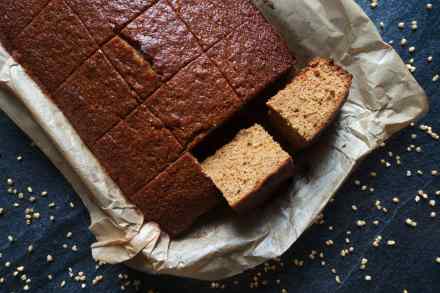
The joy of old-fashioned gingerbread

From our UK edition

Christmas baking should be a source of joy. It should be something we look forward to, a break from the hectic organisation of dozens of presents, reams of wrapping paper, cosy-but-thoughtful decoration, enormous meals, endless Christmas parties, and stressful hosting. But Christmas baking can take on a life of its own: fruit cakes that ‘should’ have been made months ago (that three members of your family will tell you loudly they do not like and will not eat), puddings that need hours on the hob, edible biscuity decorations with boiled sweet centres that will inevitably stale on the tree. It can just become another chore. Now, I love a Christmas pudding. I even love making one, when I have the time, energy and inclination.

Panforte: a sophisticated alternative to Christmas cake

From our UK edition

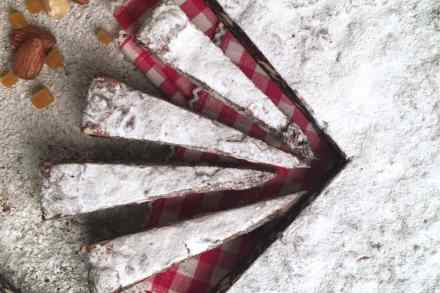
If you’re looking for an alternative to Christmas cake (or an addition to it), then panforte is the bake for you. Sufficiently similar to our traditional Christmas cake in its flavours of Medieval spice, dried fruit and candied citrus that it can’t fail to evoke the Christmas spirit, it is still entirely distinctive. Panforte is shallower than Christmas cake, and more solid; the honey in the mix means that it is chewy rather than crumbly, and where a Christmas cake is stuffed full of vine fruits and cherries, panforte majors in dates and figs. A slim wedge of the dense, spiced bake is more than sufficient and even, whisper it, more elegant than our homegrown Christmas cake.

How Bake Off conquered America

From our UK edition

From Gordon Ramsay to James Corden, predicting which Brits will make a splash in Hollywood has long been a fool's errand – even in the Netflix era. After all, what's the latest British export to conquer the greatest entertainment market on earth? The Great British Bake Off. Well, almost. Like Cary Grant (born in Bristol as Archibald Leach), our humble baking show needed a slight rebrand ahead of its launch stateside. Instead the show made its debut, in 2014, under a slightly different name: The Great British Baking Show. After becoming a ratings hit, the competition was then snapped up by a much bigger name altogether: Netflix. Within three years, the Baking Show had gone stratospheric: finally earning its place, last year, as one of the most streamed shows in America.

What’s good from the goose

One of the more curious habits of the British is their tendency to publish opinion polls in national newspapers about their own food habits. Which way round, for example, are you meant to dress your scone? Is it clotted cream first, then jam — or jam first and cream second? Well, the Queen does it jam first, so that must be the way. Or that other national debate, tea and then milk, or the opposite? When I first arrived in the UK thirteen years ago, I was amused to see how worked up the British get about such questions. Try asking them sometime and see what happens. A new poll reveals that 58 percent of the British public admit to preferring roast potatoes over turkey. “How could you?” we’re supposed to gasp. “Everyone knows Christmas dinner is about the turkey!

goose