Food

In defence of cruel foods

From our UK edition

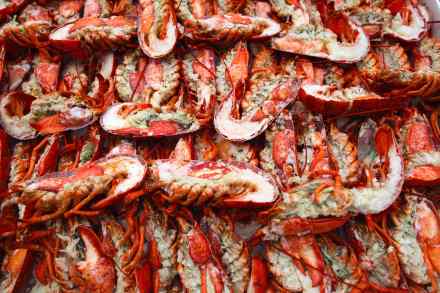
Fishmongers are an endangered species in London. Thankfully, 15 minutes walk across Westminster from The Spectator’s offices there is an excellent fish stall on Tachbrook Street market in Pimlico. Jonathan Norris’s stall — much frequented by 1990s Tory politicians — does a thriving trade in live lobsters. He will happily boil the crustaceans for you in his lobster kettle, but buying them alive is more fun, especially if you have children in tow. At this time of year the lobsters are Cornish; in the winter live lobster flown in from Canada will have to do. Buying — and then boiling — live lobsters is a sure way of getting children interested in their next meal, at least it is with my two boys.

Must all history programming be ‘relevant’?

From our UK edition

When it comes to history programming, television’s loss is increasingly audio’s gain. People moan to me most weeks over the lack of really good, rigorous, eye-opening documentaries on the screen, and I can only nod along in agreement. Oh for a Kenneth Clark-style lecture! More Michael Wood! There’s an especially strong appetite for the adventurous commissions of the 1990s and 2000s. It’s principally podcasts, now, that are pouring into this void. Stephen Fry’s Edwardian Secrets, a 12-episode sequel to his previous series on the Victorians, even sounds like an extended BBC4 documentary, replete with talking heads, choral background music and just a dash of Horrible Histories.

Bread is the staff of life

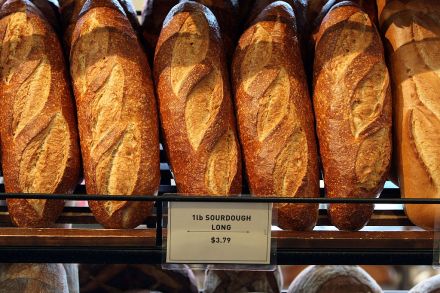
I cannot claim the gift of prophecy, but early in 2020 — before lockdown panic-buying and the warnings of a dire wheat harvest causing bread-price rises — I became a bread-maker. I dug around on the internet for a good recipe for sourdough, and found one padded out with the usual bloggery and waffle. Absent the philosophy and the pious musings, it gives a clear, sensible route to bread self-sufficiency. Sourdough doesn’t need bought-in yeast, only a ‘starter’ of flour and water. This is often called a ‘mother’, and attracts wild yeasts as it develops; after five days in the jar it is a gently bubbling ferment of living yeasts, and you keep it going by adding flour and water to it day by day.

bread
French

In search of lost French restaurants

Readers of a certain vintage will recall when any listing of fancy restaurants in a big city had a heavy French accent. Look at the ‘Let’s Eat Out’ section at the back of an old issue of Gourmet magazine from the 1970s for the evidence, at least for New York but, if memory serves, it was true for London as well. (The Italians probably ran second, then the Chinese, then a big falloff to other countries but still mostly European ones.) The way it worked at Gourmet — you got a listing if you bought an ad — only understated things. Lots of good places never advertised at all or simply did not aspire to the tony status that association with the likes of Gourmet conferred. Names like Le Chamberlin, La Caravelle, Le Chantilly, Mon Paris, announced their sole culinary allegiance.

The American dream has no time for offal

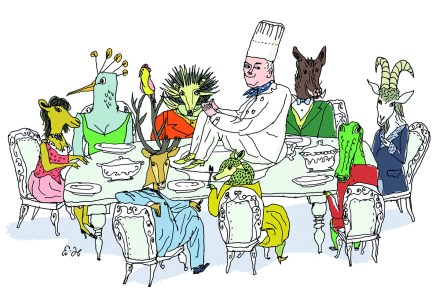
You can get goat in parts of New England. Consumers of Portuguese origin create a market unparalleled elsewhere in the US. In Boston, as I recall, Savenor’s used to sell camel and kangaroo. Few meats are too un-American for New York City. Ottomanelli, purveyors to whatever is left of the Four Hundred, still has venison of the quality they sold to the Upper East Side in the Gilded Age. Los Paisanos in Brooklyn stocks alligator, turtle and caribou. But the great days of the 1950s, when a club in New York served porcupine, caribou, muskrat and armadillo, are fled. With the closing of the American mind has come the narrowing of American appetites. Americans’ self-image is of enterprise, pioneering, innovation, adventure and the call of the wild.

offal

Tres leches cake: a soaked pudding straight from Latin America

From our UK edition

I confess, the idea of a tres leches cake did not initially appeal to me. A dry sponge soaked in a variety of tinned milks sounds, at best, like bland nursery food and, at worst, tooth-achingly saccharine. ‘Milky’ has never been one of the words that I hope to see in connection with anything other than ‘coffee’ or ‘Way’. But I saw it likened to trifle and curiosity got the better of me – and I’m so glad it did. Actually, a tres leches cake is not terribly like a trifle at all, although I can see where the comparison came from. Soaked puddings are nothing new, and that’s really what a tres leches cake is.

An intensely quiet and soulful performance from Nicolas Cage: Pig reviewed

From our UK edition

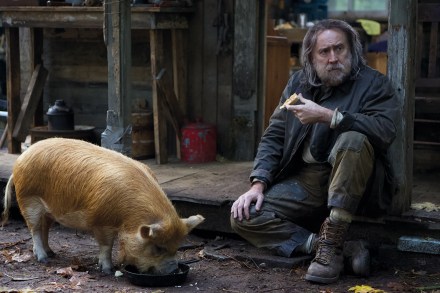
What use does a fallen and corrupted world have for a man of integrity? This was not the question I had anticipated walking away with after viewing the new Nicolas Cage indie Pig, but much of the film, from Cage’s intensely quiet and soulful performance to the new ideas it has to offer a very old narrative, was a satisfying surprise. The film is ultimately a story of revenge, but it plays out in unexpected ways. Cage is Robin Feld, a man living off the grid with only a truffle pig and a recording of his deceased wife for companions and a trade in the luxury food item as an income. But when his cabin is invaded and he is attacked and his pig is abducted, he’s forced to con-front his old life as a chef in Portland to get her back.

Watercress soup: the lunch that keeps on giving

From our UK edition

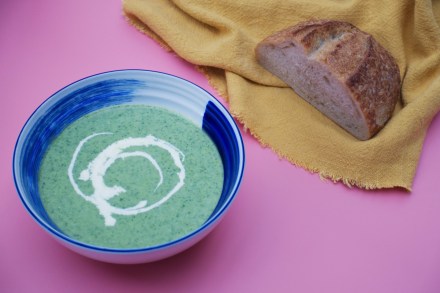
I’m normally averse to leftovers: it’s not a trait I like in myself. I’d far rather be able to eat the same thing for days on end, especially when it’s seasonal veg, or an enormous, hearty stew that I’ve spent ages making. It’s a sensible way of cooking: healthy, seasonal, cheap, time-saving. But I’m easily bored, and the best laid plans of mice and men the night before, clingfilmed or tupperwared up, no longer appeal the following lunchtime. I end up parcelling those thoughtful, carefully prepared dishes onto my husband and plumping instead for so-called novelty in the form of toast, or a sandwich. For some reason, soup is the one dish that doesn’t suffer this fate.

Who’d want to move to America now?

From our UK edition

There’s a biopic released this summer, Roadrunner, about the late great chef, writer, bon viveur and TV presenter Anthony Bourdain. It recounts the many invaluable lessons Bourdain taught, such as: never eat the lower colon of a warthog; never order fish in a restaurant on Monday (it will probably be three days old); and, most of all, the American Dream is over. This last fact may seem jarring. Bourdain was a proudly patriotic American. However, I firmly believe he reveals this truth in the 36th episode of his splendid food-and-travel TV show, No Reservations. In this particular episode Bourdain visits Cleveland, Ohio. In his boyish, enthusiastic way, Bourdain tries all manner of nosh.

Curry, colonialism and the problem with ‘cultural appropriation’

From our UK edition

The latest casualty in the culture wars is an innocent-sounding word: 'curry'. Apparently it's inappropriate to use it, and incorrect to use it to refer to all spicy Indian food. It's far too broad as to be misleading, doesn't even have pan-Indian usage, and it remains tainted by its colonial origins. This is the widely reported opinion of Chaheti Bansal, a Californian blogger who posts Indian recipes on Instagram.  'There's a saying the food in India changes every 100km and yet we're still using this umbrella term popularised by white people who couldn't be bothered to learn that actual names of our dishes', she writes, imploring people to 'unlearn' the term. The word was indeed made popular by colonialists: the Portuguese.

Have my suits shrunk in lockdown?

From our UK edition

I hadn’t noticed how much weight I’d put on during lockdown until I went out for a business lunch a couple of weeks ago. It was the first time I’d put on a suit and tie in 16 months. As I struggled to pull on the trousers, I thought: ‘Something’s wrong here. Did Caroline hang one of the children’s suits in my cupboard by mistake?’ But no. It was mine. To fasten the trousers I had to suck in my stomach like Mr Incredible trying to squeeze into his superhero costume. And my ‘slim fit’ white shirt wasn’t merely snug; it was more like a straitjacket. I looked like a bald Boris in his pre-Covid pomp.

High on the hog: The Pig at Bridge Place reviewed

From our UK edition

The Pig at Bridge Place is not a pig in possession of a country house, but I would be for it. You cannot have enough pigs, or any edible fauna. It is, rather, a hotel inside a Jacobean mansion — or, rather, part of a Jacobean mansion, the rest burnt down, and is all the better for it — in a pleasingly unkempt part of Kent, just beyond Canterbury. There are ten Pigs, dotted across the south coast as if in homage to Armada beacons. They are the successor to the Soho House brand, which is looking increasingly dusty, and in velvet. My main objection to Babington House is that it is for people with Peter Pan Syndrome: children who cannot grow up. They served fish-finger sandwiches and I think I saw a giant inflatable unicorn in the pool, but I have may have imagined it.

How to spice up your summer barbecue

From our UK edition

Summer barbecues open up a wealth of opportunity for culinary exploration. Here are four tips for taking your barbecuing to the next level, followed by three of my recipes to try for yourself: lamb cutlets with asparagus, garlicky prawns and the delightfully colourful Pepper Piedmontese. Each of these dishes have been paired with wine chosen by Andrew Peace so that you can bring out the very best of those barbecue flavours.  Choose your charcoal wisely Food cooked over an open fire has a different flavour altogether than food cooked on the stove or in the oven. For the best flavour use sustainably sourced British charcoal which burns longer so you’ll use less and isn’t packed with chemicals like mass-produced charcoal.

Letters: In defence of organic food

From our UK edition

A note about manure Sir: I am afraid Matt Ridley shows a lack of understanding about agriculture in general and organic production in particular in his argument against organic food (‘Dishing the dirt’, 24 July). Livestock production has involved the use of animal faeces — or farmyard manure as it is called when mixed with straw — ever since livestock was first housed in the 1800s. Bacterial infections are due to poor hygiene in the slaughter and processing chain, not how animals are fed, grass is produced, or the use of manure, which is an important by-product. Bean sprouts being infected with E.coli is probably down to poor hygiene of personnel, not organic vs non-organic systems. Yes, organic food is more expensive.

Coffee with Coleen

I’ve eaten a lot of breakfasts in my time — hell, it must be approaching 20,000 by now — and few if any have equaled those consumed at Coleen’s Kitchen on Main Street in the lived-in Erie Canal village of Brockport, New York. It takes a few minutes before you sense that there’s something not quite wrong about Coleen’s. Upon entering the restaurant you pour your own coffee at the beverage station. Maître d’ Coleen directs you to your seat. She hands you the extensive four-page menu, which warns that ‘you will be charged 59 cents if you ask what kind of bread I have’. Read it well and don’t waste Coleen’s time, you lazy bum! Waitress Coleen takes your order.

coleen

A Damascene moment in London: Imad’s Syrian Kitchen reviewed

From our UK edition

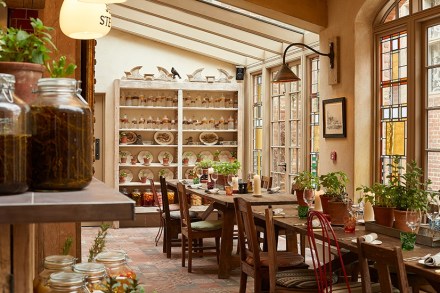
Imad’s Syrian Kitchen is an eyrie off Carnaby Street, a once-famous road which seems to exist nowadays to sell trainers to tourists who have fallen, as if by wormhole, out of the Liberty homeware department with its pathological dependence on florals. No matter. Nearby, in Kingly Court, which is like Covent Garden before it fell to Dior and Apple, more interesting things happen: the sort of things that London, so sunken, needs. Kingly Court is charming because it invokes an ancient coaching inn — London was once filled with them — and it is, due to the presence of independent eating houses, still palpably bright, pleasing and alive. The restaurant is likewise cheerful: wooden floors; pale walls; blue windowsills; blue tiles; a beamed ceiling; photographs of Damascus.

Organic food isn’t better for us – or the environment

From our UK edition

It is mystifying to me that organic food is still widely seen as healthier, more sustainable and, most absurdly, safer than non-organic food. Following the publication of part two of Henry Dimbleby’s National Food Strategy last week, the organic movement was quick to suggest that organic food and farming offer a way to achieve the strategy’s vision. ‘The recommendations of the National Food Strategy offer genuine hope that by embracing agroecological and organic farming, and adopting a healthier and more sustainable diet, we can address the climate, nature and health crises,’ said Helen Browning, chief executive of the Soil Association, Britain’s most vocal organic lobbying organisation.

The culinary wisdom of charity cookbooks

Joy’s Toasted Parmesan Canapés: mix four tablespoons grated Parmesan cheese with half a cup of grated Swiss (or any other mild cheese that will melt), add mayonnaise enough to make a spread, season with salt and oregano or basil, spread on bite-sized rounds or squares of thin-sliced white bread, top with a slice of green olive (optional), broil until bubbly, serve immediately. Caveat, sophisticates: the ‘Parmesan’ likely as not was that pale yellow powder dispensed from the green Kraft cylinder, the Swiss was from Wisconsin, the mayonnaise was aka Miracle Whip Salad Dressing, the spices dried ones from the McCormick jar and the bread courtesy of Pepperidge Farm (if you were lucky). Not a whiff of anything cordon bleu or ‘artisanal’ here, the latter a term not yet dreamt-up c.

cookbooks
white castle

The man in the White Castle

The world’s first fast-food restaurant chain. The first to sell over a billion hamburgers, to invent the carry-out and to offer discount coupons in the newspapers. Jewel of the American Midwest. Celebrating its centenary. Better burgers than McDonald’s, according to Consumer Reports. Still run as a family business. Some 377 US locations, and growing. Obsessively loved by some, faintly ludicrous to others with its trademark enamel-glazed, faux-brick architecture and miniature square patties, White Castle is the Rodney Dangerfield of greasy spoons. It gets no respect.

Al fresco dishes to serve outside

From our UK edition

We have all become rather used to socialising outside. Thanks to the pandemic, for perhaps the first time in our national history, al fresco dining has become the norm well outside of the summer months. We shivered under wraps for the last nine months only to finally be allowed to socialise indoors once more just at the moment when we’re all keen to light up the barbecue and enjoy the warmth outdoors. Nothing compares to the pleasure of a lunch or dinner en plein air in the summer months. It sharpens the appetite and provides happy opportunities for people or garden watching when the conversation bores. Sometimes you can even get away with taking off your shoes. The appeal lies above all in its novelty.