Food

If the choux fits: the secrets of perfect profiteroles

From our UK edition

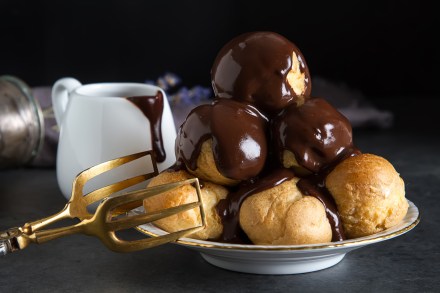
Choux pastry can inspire fear in even the most confident of cooks. There's a good reason for it: it’s difficult to give a very precise recipe for choux pastry, as the amount of egg needed to create the correct texture depends on the flour you’ve used, how long the choux has rested, and how fast and how thoroughly you have cooked the choux mixture out. It’s the water content in the egg that primarily causes the choux to rise and puff in the oven into those distinctive domes or elegant eclairs: not enough and they will fall flat, but too much and the pastry will be too sloppy to pipe properly. It’s the Goldilocks of pastry recipes. I am not unfamiliar with choux-dread.
The rise of the open-fire restaurant

From our UK edition

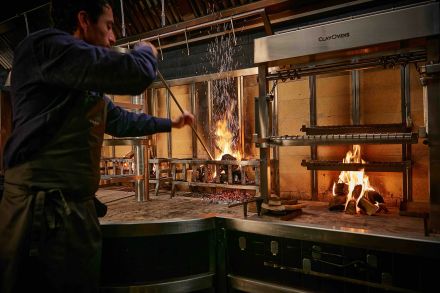
Burn the formal white tablecloths and fling open the kitchen doors. The latest craze in restaurant culture is open-fire cooking – where chefs sweat it out over roaring flames in full view of their customers. And the simple, raw nature of this method of food preparation seems to have set diners’ imaginations alight.  ‘Cooking outside over flames is primal and in our DNA as human beings,’ says Andrew Clarke, co-founder of Acme Fire Cult – one such restaurant in Dalston, north London. ‘The smell of woodsmoke and animal fats hitting the hot coals stirs up something deep inside.’ For Tomos Parry, chef and co-owner of Brat – another open-fire restaurant – the flavour that can be achieved from this style of cooking adds an extra dimension to most dishes.

My culinary journeys: restaurants worth travelling for

From our UK edition

Whenever it is suggested travelling south or north of the Thames to visit an ‘amazing’ restaurant I usually start conjuring up excuses. Across London seems a journey too far for food – but going across an ocean for it can be worthwhile. In NYC last year, I found myself with an evening off and, staying in the Lower East Side, made my way to the Bowery Meat Company. The menu was perfect: steak and seafood, excellent cocktails, and sides which included sublime creamed spinach and whipped potato that threatened to float off the plate. I usually eat oysters naked, but Bowery’s version – baked under a parmesan crust – was irresistible. The steak was thick, juicy and cooked to perfection, the fries hot and crunchy.

A taste of 1997: Pizza Express reviewed

From our UK edition

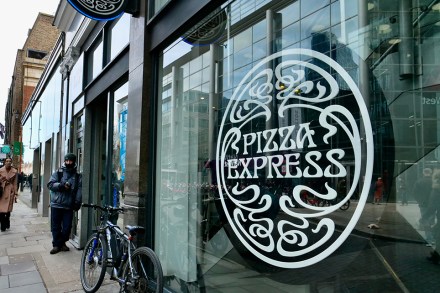
As the government withers this column falls to ennui and visits Pizza Express. As David Cameron, who left the world stage humming, said of Tony Blair: ‘He was the future once.’ So was David Cameron, and so was Pizza Express: I bet they meet often. It was founded in 1965 by Peter Boizot, who shipped a pizza oven from Naples and a chef from Sicily and opened in Wardour Street. That branch closed in 2020. Boizot grew up in Peterborough but lived in continental Europe for a decade, and he learnt three things: an Italian restaurant must be bright; good pizza must be slightly charred (burning food is underrated); children need restaurants too. These changes were sensational, and Pizza Express was launched on the stock exchange in 1993.

Where to find the best Michelin-starred meals on a budget

From our UK edition

Even Michelin-starred chefs, it seems, aren’t immune from the cost-of-living crisis. In a bid to make fine dining more affordable, Jason Atherton has cut prices across the board at Pollen Street Social, his flagship Mayfair restaurant (the three-course set lunch now costs £49.50 – down from £75 – and wines start from £7.50 a glass). At two Michelin-starred Kitchen Table on Charlotte Street, the cost of a 20-course set menu has come down by a third (from £300 to £200).  But even before we all started squeezing our belts, there were options for enjoying high-end food at not-so-high prices – if you knew where and when to go. Follow our guide to the best-value Michelin-starred meals around the UK.

How to survive summer in Andalusia

From our UK edition

Early on in his biography of the novelist Kingsley Amis, Zachary Leader quotes a hilariously misanthropic letter Amis wrote to the poet Philip Larkin, one of his closest friends. Amis, at the time in his early thirties, was complaining about a three-month stint he and his family – including his son Martin, then five years old - spent abroad, as required by the terms of the Somerset Maugham Prize, which he won in 1955 for his first novel, Lucky Jim (Martin would also win it in 1973 for his debut, The Rachel Papers).

How to barbecue like an American

From our UK edition

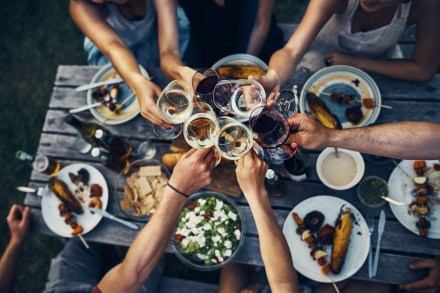
Barbecue is a fact of life in America. Long summer evenings and reliably good weather make it an easy choice – plus turning on the oven heats up the house to an intolerable level, so if you want a hot meal, outdoors it is. When I was a kid my mom wouldn’t turn on the oven for the entirety of July and August. It was burgers, salads or quick quesadillas on the grill every night of high summer. Americans have been barbecuing pretty much since before the nation was a nation. The tradition came up from South and Latin America with the invading Spanish. Barbacoa they called it, and they’d use green wood so it cooked long and slow. Americans in the pre-Civil War South had big barbecues for 4 July, just like we do today.

The 10 best wines for a summer barbecue

From our UK edition

The days when ‘barbecue’ meant a lukewarm beer, bun and burger are long gone.  We’re putting more effort than ever into our outdoor dining – from whipping up zingy marinades with ingredients you’d barely heard of five years ago to diligently waiting for that perfect halloumi char.  All this extra effort on the food front surely warrants some attention to your drinks choices, too. Here are the ten best wines to whip out for a summer barbecue – and the foods to pair with them.  A Growers Touch Durif 2020 Wickhams, £12.20 (or £10.

As good as pub food gets: The Red Lion, East Chisenbury, reviewed

From our UK edition

The Red Lion, East Chisenbury, is in the Pewsey Vale on the edge of Salisbury Plain. Wiltshire’s strangeness surpasses even Cornwall and its menhirs: it has the greater volume of ghosts. I once spent an eerie day in Imber, the deserted village on the plain – the inhabitants were given 47 days’ notice to leave in November 1943, so American soldiers could shoot up Imber in preparation for invading Normandy. Its church of St Giles, perfectly maintained, is open one day a year in September. Its pub, the Bell Inn, was sold to the Ministry of Defence, and is not a fine restaurant with rooms but a red-brick ruin, with the glass of the windows shot out: Daphne du Maurier’s ideal, the Manderley of pubs.

A dispatch from the olive oil capital of the world

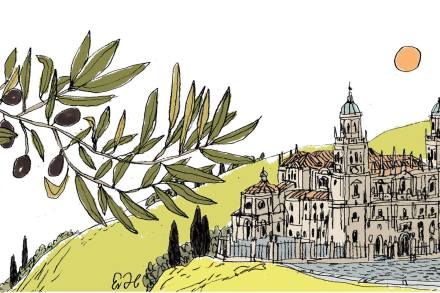
It was an extraordinary sight. For three days, and about seventy kilometers of hiking, there were just endless olive trees covering the fields, hills and mountains stretching to the horizon of the small Spanish province of Jaén. Tucked away in the southern region of Andalusia, this is the country’s powerhouse of olive-oil production. Many people assume Italy or Greece are the largest producers of olive oil. That’s a result of good branding and name recognition, a Jaén-based olive grower told me. After he pulled up alongside me in his dusty car, we walked through the endless olive groves as I was given a tutorial on olive oil production. Spain is the world’s top producer of olive oil.

olive oil
Swanson

Heidi Swanson, the whole food revolutionary

Heidi Swanson started her vegetarian food blog, 101 Cookbooks, in 2003. At the time, the Atkins Diet was sweeping the nation, even as schoolchildren still learned the carb-heavy Food Pyramid. It would take another year for a landmark study to link high-fructose corn syrup to the obesity epidemic, and another fifteen for the FDA to ban trans fats. Back then, granola was for tree-huggers, like organic produce, Whole Foods Markets and the Pacific Northwest. Times have changed. These days, everyone outside the Lion Diet community agrees that a plant-based diet is best, preferably free of hormones and artificial sweeteners. 101 Cookbooks is still active and popular, if less countercultural than at its inception.

Home cooking, but idealised: 2 Fore Street reviewed

From our UK edition

The restaurant 2 Fore Street lives on Mousehole harbour, near gift shops: the post office and general store have closed, leaving a glut of blankets and ice cream, the remnants of Cornish drama. It’s a truism that Mousehole is hollowed out – tourism changes a place, and no one knows that better than Mousehole. Eating at 2 Fore Street gives the visitor the opportunity to examine what they have done with what they call love. There’s a mania for creating 30 perfect soufflés a night thatI cherish  Mousehole is one of those cursed villages that gather in the south-west: haunted in winter and glutted in summer, to paraphrase ‘The Pirates Next Door’.

Price caps are a slippery slope

From our UK edition

Sometimes it’s the little things that depress most. I groaned last week to hear the news item. The government is contemplating a ‘price cap’ on ‘basic items’ in ‘supermarkets’. Forgive the quotation marks, but each of these terms is so horribly problematic that one has to start by asking what they even mean. Has Conservatism in the 2020s lost its ideological moorings? Or perhaps one should start with a quick recapitulation of the history of this idiotic idea, because price control has been tried before, first by a Labour government, and then by their Tory successors who went on to consolidate the folly.

The joy of cheese rolling

From our UK edition

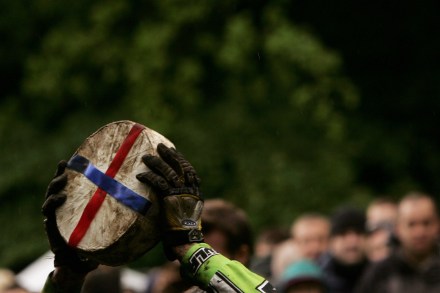
It’s unnerving being surrounded by a crowd in the woods. You can hear people but only glimpse their limbs or faces through the leaves. It triggers something primordial, similar to the feeling of being watched. Ideally, someone with a big strimmer would have given Cooper’s Hill a good going over before the cheese rolling. But cheese rollers don’t concern themselves with ideals.  My friends were shocked by the brutal pitch of the hill. Could someone really hurl themselves down that? On the last Monday of May, and for reasons lost to time, a wheel of Double Gloucester is thrown down the hill and a group of runners throw themselves after it. The first to reach the bottom gets the cheese.

How to make your own burger buns

From our UK edition

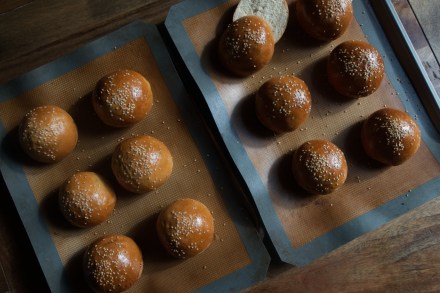
Do you ever find yourself holding forth on a topic you hadn’t realised you cared about? You know, someone asks you an innocuous question in passing about the merits of slow cookers, or the best way to grow cabbages, and before you know it, 20 minutes has passed and you're still grandstanding. There are a few topics that have crept up on me like this during my life: I have found out that I feel extremely strongly about pyjamas (pro), low-calorie cooking spray (anti) and the TV show Stars in their Eyes. And, it turns out, burger buns. I truly didn’t believe I had anything approaching an opinion on burger buns. But the moment I turned my mind to it, I realised that, to the contrary, I had very strong opinions on this apparently benign subject. So what is required of a burger bun?

Wuthering Heights in Devon: the Pilchard Inn, Burgh Island, reviewed

From our UK edition

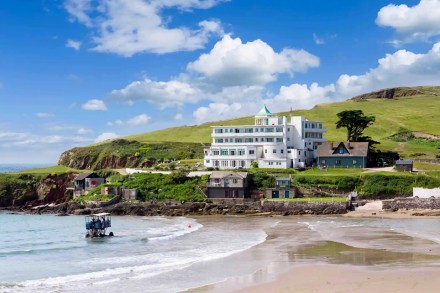
The Pilchard Inn sits at the entrance to Burgh Island, a minute tidal island off the coast of south Devon. The island is home to the Burgh Island Hotel, an eerie Art Deco masterpiece built by the son of a screw mogul, which dominates the view from Bigbury-on-Sea like Coney Island: it is more apparition than hotel. The hotel is faded, fascinating, plated in Art Deco and decorated with vast screws. I wonder if this is a joke: there is little information about the early years of the house, which vibrates with depravity and things unsaid. To compound the mystery, Agatha Christie wrote here in a shack by the sea, eating cream from a tub as she murdered people in her head, and wrote it down for money. The hotel inspired And Then There Were None and Evil under the Sun.

Save our cheese sandwiches!

From our UK edition

Sad things, cheese sandwiches, especially in their most basic form. Most would add a garnish: pickle, tomato and onion are the most popular. Cowards. The point of a cheese sandwich is its beigeness. This is fuel, not food. Consoling sad corporate workers at their desks. Rows upon rows of sandwiches on Tesco shelves: ‘Cheese – no mayonnaise.’ No mayonnaise is important. That would be too much fun. Everyone knows how the Earl of Sandwich repurposed bread and beef and started an eating revolution. No one really knows who first put cheese into the mix, however. The first mention seems to be from William Shakespeare’s The Merry Wives of Windsor, where Nym refers to a dish of ‘bread and cheese’. It’s hard to tell whether he meant a sandwich, of course.

Why now is the time to visit Aldeburgh

From our UK edition

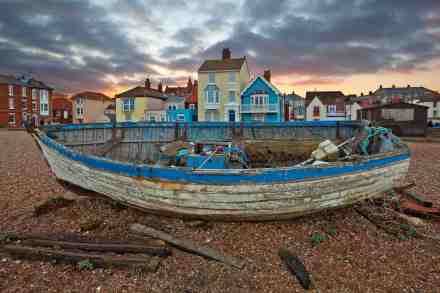
I have been reading Ronald Blythe’s Next to Nature which came out in October, just a few months before the great man’s death aged 100. And so a weekend holiday in Suffolk was calling to me. I went to Aldeburgh, on the coast, north of the river Alde. The town appears to be thriving – full of bustling cafés and London money. It is fashionable and chic. In many respects it is a world away from Blythe’s Akenfield. But there is much here to charm you. I lingered by a wonderful second-hand bookshop, Reed Books 4, its window display with Peter Kent’s Fortifications of East Anglia, George Ewart Evans’s The Farm and Village and Hugh Barrett’s recounting of a rural Suffolk morning in Early to Rise. Is this what Scruton meant by oikophilia? Here was heart-warming local pride.

Italian cooking lessons in the home of a Venetian chef

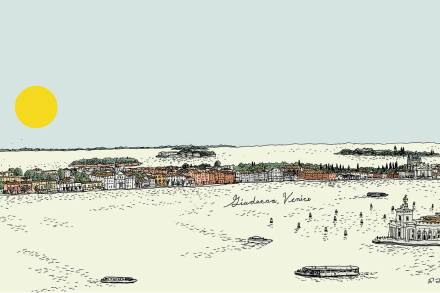
My mother advised that I get a plain wedding ring. Diamonds, she said, interfere with a woman’s ability to knead dough. “But I don’t knead dough,” I protested. “You will when you’re married.” I guffawed. And yet there I was, four days into my marriage, in an Albanian chef’s Venetian home, being told in no uncertain terms that while my husband Nick could keep his ring on, mine would need to come off. We had arrived in Giudecca, an island in the Venetian lagoon, by water bus, having spent the day in Padova. There, we’d visited the Basilica di Sant’Antonio, home to first-class relics of the great saint — bones, lower jaw, incorrupt tongue and cartilage from his larynx.

Venetian
swizzle

A parting salute to the swizzle stick

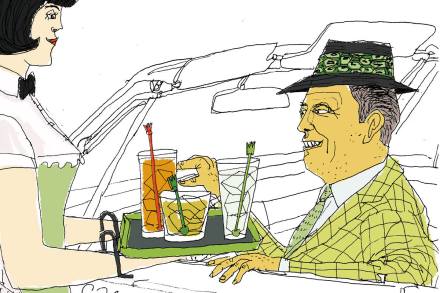
We live in the age of takeaway-everything, a phenomenon amplified since the late, great plague by another barbarism: the drive-thru. You need no longer even get off your derrière to collect the goods. Just lower the power window, flash your phone, then “grab-and-go.” That this is a powerful cultural proposition the conga-line of cars filling multiple lanes at your local Chick-fil-A, where they have it down to a science, will attest. I recall my first innocent meeting with drive-thru, then called drive-in, in 1959 when a bank in the small town where my family lived cut a hole in the wall and installed the requisite sliding drawer. Things have clearly gotten out of hand since. Not all takeaway is created equal.