Food

Back-room boys: Family Meal, by Bryan Washington, reviewed

From our UK edition

There are meals galore in Bryan Washington’s latest novel: those that Cam and his lover Kai cook for one another; those that Cam’s childhood friend TJ cooks for his Thai boyfriend’s cousins; those that TJ’s Vietnamese father Jin cooked for his neighbours every weekend; and those that the now bulimic Cam vomits up after Kai’s murder. There is also sex galore. Each of the novel’s three narrators – Cam, Kai and TJ – engages in ‘random hook-ups’, with Cam in particular using them to dull his pain. Working in a Houston gay bar, he takes customers to a back-room every few hours.

Fine food in a fine restaurant: Origin City reviewed

From our UK edition

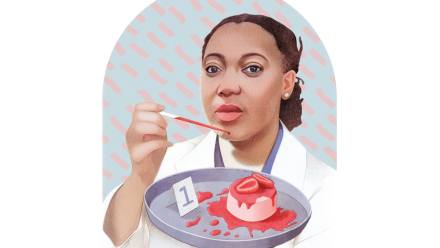
Origin City is a good name for this restaurant, whether it knows it or not. It is at West Smithfield, the only surviving wholesale market in the City of London (I do not count Borough, which is a snack shack impersonating a greengrocers and is only spiritually in the City). Covent Garden sells face cream – Eliza Doolittle didn’t need it – and Billingsgate awoke one morning to find itself on the Isle of Dogs. Somehow the cows hung on in West Smithfield. We owe them a lot but I would say that, I am a restaurant critic. Somehow the cows hung on in West Smithfield. We owe them a lot This is the most interesting part of the City of London: St Bartholomew the Great, of God and Four Weddings and a Funeral – the one where Charles was punched, fairly – and Cloth Fair.

With Diana Henry

From our UK edition

41 min listen

Diana Henry is a critically acclaimed, multi-award winning cook, food writer and author of 12 books including the classic cookbook 'Roast Figs, Sugar Snow', which has just been updated and re-released twenty years after it was first published. Diana also writes for newspapers and magazines, and presents food programmes on TV and radio. On this podcast Diana shares childhood memories of her mother's baking, how 'Little House on the Prairie' influenced her writing and when, on a French exchange trip, she learned how to make the perfect vinaigrette. Presented by Olivia Potts. Produced by Linden Kemkaran.

As gaudy as Versailles: The Duchess of Cornwall in Poundbury reviewed

From our UK edition

Poundbury is the King’s idealised town in Dorchester, built on his land to his specifications: the town that sprung out of his head. (‘My dream,’ says Harry Enfield in The Windsors, ‘was always to build a mixed-used residential suburb on the outskirts of Dorchester.’) It is so fascinating that I dream, briefly, of moving in for the completeness of the vision – who doesn’t want to live inside art? – and the portrait of the British class system in housing. Here it is, at last, laid out like a textbook: journey’s end. We order via app and pay in advance: there is a shortage of what tabloids call flunkeys It is becalmed on a Sunday evening, and sun saturated: there is almost no one about. Perhaps the residents are indoors, enjoying the lushness of their fittings.

The joy of baking your own bread

Flour furnishes most everyone’s kitchen. If you’re a baker or breadmaker, you will probably have several five-pound bags of it in the pantry alongside the yeast. If you don’t bake or don’t bake much, you will probably have at least a cup or two of it in the canister on the kitchen counter for thickening the gravy, frying the chicken or making the roux. Most likely, most of it will have come from wheat. Wheat has been with mankind for 10,000 years or so and was first domesticated somewhere in the Fertile Crescent, or, as our old geographies used to say, Mesopotamia, which also, it was hinted, was the neighborhood of the Garden of Eden. Wheat’s genetic diversity made it adaptable to a variety of climes and continents.

bread

Why I’m addicted to Australian MasterChef

From our UK edition

Why is Australian MasterChef so much better than the English version? You’d think, with a population less than a third of ours, the smaller talent pool would make the Antipodean edition look like thin gruel. But a bit like with the cricket and the rugby, size clearly isn’t everything. UK MasterChef now resembles one of those joyless austerity dishes you cobble together from crusty leftovers you found languishing in the fridge. But the Aussie one has had my entire family addicted and yearning for more for the past fortnight. I suppose it’s partly down to the way Australia sees itself.

Bruton is suddenly the place to be – and I have a theory why: At the Chapel reviewed

From our UK edition

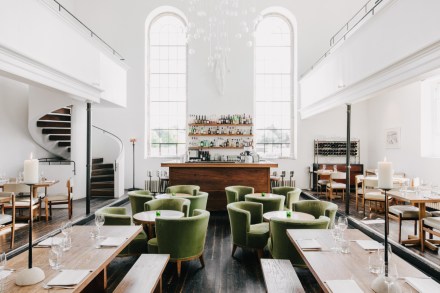
At the Chapel, Bruton, is a restaurant and hotel in a former chapel in Bruton. This was once an ordinary town in Somerset, with a note in the Domesday Book, a ruined priory and a famous dovecote on a hill. Bruton is known for a flood in 1917 – it was the second-largest one-day rainfall measured in the UK – but another calamity was coming. In 2014 the art gallery Hauser & Wirth, with branches in London, Zurich and New York, decided it needed a premises in Bruton, and a restaurant called the Roth Bar and Grill. There is also an Instagram-friendly farmhouse to rent on this site. When I toured it, the price was £666 a night, including the art and, I hope, a food gift basket and, I suspect, an ancient native Briton graveyard.

Flour power: a single ingredient can be life-changing

Growing up in a “mixed” American household, of Indian, Puerto Rican and Italian descent, was deeply confusing during my formative years. I came of age in a mostly white suburb just outside New York City. In addition to my foreign-sounding name, I looked nothing like any of my classmates or the kids around the neighborhood. My olive skin, bushy eyebrows and curly hair were more reminiscent of children you’d find in the more ethnically diverse neighborhoods of Queens or the Bronx. My family spent most of our weekends visiting family and doing our grocery shopping in such areas. The array of ingredients that my Puerto Rican and Italian-American mother, Loretta, was searching for didn’t exist in our local Pathmark.

flour

Fish and chips: the fast food that made me

From our UK edition

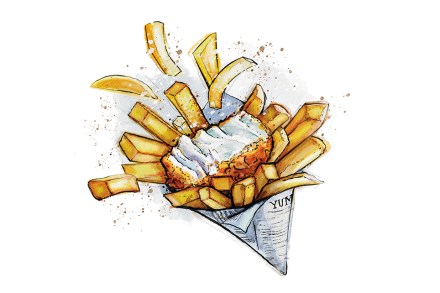
The last meal my parents had before I graced the world with my presence was fish and chips, so I like to think it forms part of my origin story. Growing up on the coast, fish and chips featured in all its forms: bags of chips clutched on windy beach walks; takeaway fish suppers brought home by Dad, steam escaping from cardboard boxes; and the ultimate luxury, a sit-in experience at Colmans, the South Shields king of fish and chip restaurants, accompanied by a slice of bread and butter and a cup of tea. I was built on fish and chips; salt and vinegar course through my blood. Battered fried fish was brought over to London by Jewish immigrants coming from Spain and Portugal, via the Netherlands, as long ago as the 16th century.

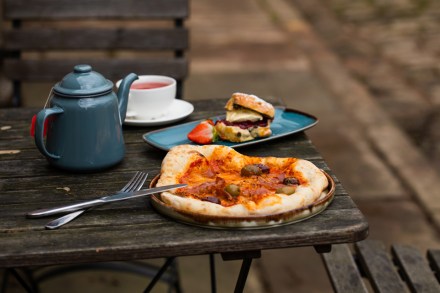
A Margherita in Tolkien’s Middle-earth: Pizza in the Courtyard at Sarehole Mill reviewed

From our UK edition

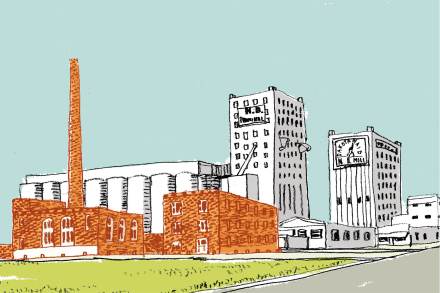
Sarehole Mill is four miles south of the centre of Birmingham. If this were a fairy tale, and it should be, it would follow that Birmingham swallowed Sarehole a century ago, like a dragon and its prey. I like Birmingham: I like its optimism, its violence and its multiplex, which can match any American Midwest mall in competitive dystopia and idiocy. Birmingham has energy, and that swallowed Sarehole, but unfortunately for Birmingham, there was a writer who cared: John Ronald Reuel Tolkien.Sarehole was his childhood palace, and now, more reluctantly I would imagine, his memorial pizzeria.

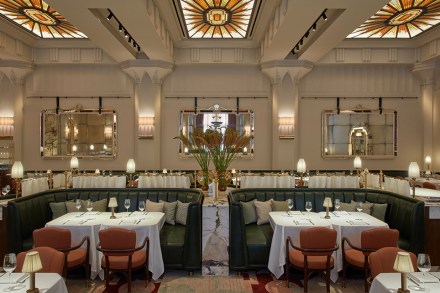
‘Thinks of the diner, not the chef’: Claridge’s Restaurant, reviewed

From our UK edition

The BBC made a very odd documentary about the renovation of Claridge’s: The Mayfair Hotel Megabuild. They filmed, agog, as the hotel grew eight new storeys – three above, and five below – between 2014 and 2021 while staying open: guests slept and ate, unaware of ‘Narnia doors’ to the building site. (That Narnia is where guests aren’t indicates what Claridge’s employees cannot put into words without spontaneously combusting.) Labourers dug the basement by hand and impersonated the Artful Dodger when management toured. The BBC described the new penthouse at length without mentioning that it is gross, with a grand piano in a glass box on a terrace like a Richard Clayderman-themed nightmare. A roof was assembled off-site and stuck on as for a doll’s house.

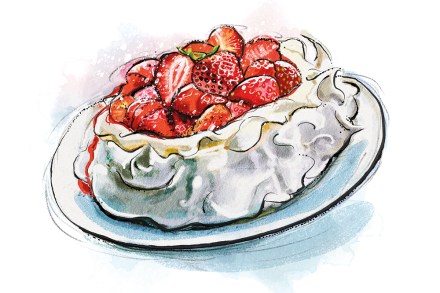
Pavlova: the crumble of summer

From our UK edition

Whenever I tell someone that I’m making a pavlova the response is the same: sheer joy. Even the most fervent pudding-denier struggles to resist a slice of pav. It makes sense – fragile, crisp meringue with a tender, mallowy centre, soft waves of cream and some kind of fruit is such a brilliant combination. You can turn whatever you have to hand into a glorious, celebratory pav You don’t often see pavlovas on restaurant menus. There’s a good reason for that. A little like a trifle, part of the joy of a pavlova is that it arrives at the table looking unruffled: fruit perched perkily on clouds of cream atop a mountain of meringue. Then, as soon as the spoon hits it, it’s a mess.

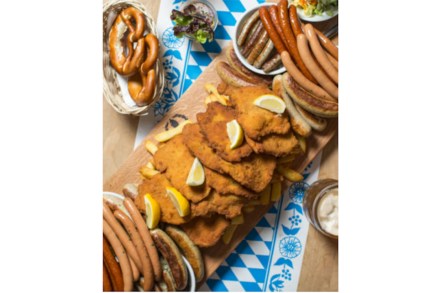
Big Little Bavaria on Thames: Bierschenke bierkeller reviewed

From our UK edition

I am not sure the vast Bierschenke bierkeller in Covent Garden is successful, even if it is skilful: I worry it is the wrong place for it. People go to Covent Garden to buy gym clothes, watch musical theatre and pick up men, not to find Wagner and pigs and the drumbeat of the earth: Covent Garden is more Kit Kat Club than Twilight of the Gods with sausage. I am not saying you must be into Götterdämmerung to enjoy this restaurant. It just helps. There is no atmosphere I can find, and I think this is deliberate: a beer hall is an existential void to fill  It used to be in the City of London, and that worked. City men are savages, mining for gold: they would absolutely kill a pig. That is what beer halls are, base: wheat, fat, sweat.

How chefs cut costs in the kitchen

From our UK edition

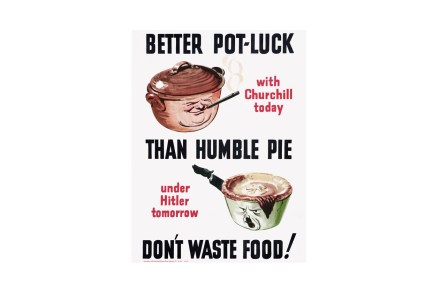
My grandmother, and many like her, kept an account book for household spending. This was not the product of an overbearing marriage or mistrust on anyone's behalf – it was simply how things were done at a time when habits had been formed during rationing after the second world war, and banking was manual and slow. I spent a lot of time observing her kitchen on childhood visits. It was where my lifelong obsession with cooking began, and I can still recall a sense of balance in how she shopped and cooked; she was fond of naughty treats and lavish cuts, but she kept a stock pot, knew her way around basic butchery and was reluctant to let anything go to waste.

A new war on obesity is underway

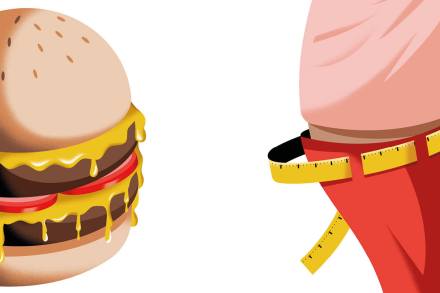
Consume American media for more than five minutes, and sandwiched between advertisements for KFC $5 Fill-Ups and a dramatic Golden Corral short pondering the age-old question, “Chicken tenders or baby back ribs?,” you’re bound to behold at least a half-dozen ads for prescription drugs. They tend to last longer than the straight-to-the-glutton-button fast-food commercials, and they play over and over and over again (who doesn’t know the Oh, Oh, Oh, Ozempic! jingle by now?) — and airtime ain’t cheap. “When Oprah Winfrey’s bombshell interview with Prince Harry and Meghan Markle aired in March 2021, the British tuned in, and many were gobsmacked at the number of drug commercials they saw,” Vox reported earlier this year.

obesity
roadside

Road-trip picnics are a casualty of our interstate system

Signs announcing roadside picnic tables once peppered America’s secondary roads and highways. Or so we call those byways now. Before the limited-access interstate system arrived in the 1960s, these roads were primary. America then was laced with a tangle of serviceable two-lane, hard-surfaced highways. Look at an old oil-company roadmap, if you can find one, to get the idea. Some roads were federal, some state, but all were emphatically open-access: get on anywhere, pull over wherever you like. They led through cities and towns, not around them; they traversed the countryside more than they cut through it. They required two-hands-on-the-wheel alertness in drivers, who got to know and respect the lay of the landscape.

avocado

The rise of avocado anxiety

When the gastronomes of the future come to choose the food that best represents our age, they will choose the avocado. The ubiquitous fruit is everywhere: in smoothies, on toast, served at breakfast, lunch and dinner, on t-shirts and all over social media. It represents our ingenuity in supplying exotic fruit to every corner of the globe all year round, our obsession with “clean” eating, our aspiration to eat brunch and our love of anything that — even passingly — tastes a little bit like butter. But it also represents our greed, our hypocrisy, our vanity and our overwhelming anxiety.

Lambert

Cooking with a country music star

A few years ago, I came across a delightful bit of Americana in Hobart Book Village in the Catskills: Naomi’s Home Companion, a 1997 cookbook/ scrapbook from Naomi Judd, the late matriarch of the famous country music family. Because I’m not a country listener and I don’t eat a lot of meatloaf, I didn’t buy the book, its kitsch appeal notwithstanding. Nineties fashion may be back, but its nutritional standards are permanently out of style. Right? I thought of that old Naomi Judd book when a new cookbook landed on the New York Times bestseller list: Y’all Eat Yet? Welcome to the Pretty B*tchin’ Kitchen by country music star Miranda Lambert. The book purports to share recipes from Lambert’s downhome roots and humble upbringing in East Texas.

Against the grain: why the Japanese are losing their taste for rice

From our UK edition

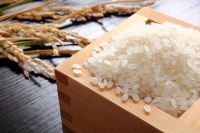
It would be an insult to call rice the staple food of Japan. For centuries it has been so much more than that. In Japan, rice has long been treated with a respect that borders on reverence. The emperor blesses the rice crop each year and in Shinto culture rice and rice-based sake are two of the most common ceremonial offerings to the gods. Rice has supernatural power: the red glutinous variety will protect you from evil and bring good luck. And it must be handled with great care: the worst thing you can do during a Japanese meal is plant your chopsticks in the rice – a symbol, if not harbinger, of death. Rice, prepared and served in the correct manner, has been called the essence of Japan. For purists, occidental curiosities, such as instant rice and rice pudding, are abominations.