Film

What The Theory of Everything doesn’t tell you about Stephen Hawking

Stephen Hawking is a misogynist; and also, quite possibly, a narcissist. You wouldn’t know it from watching The Theory Of Everything, the new biopic from Working Title, in which you are invited only to weep when he discovers he has motor neurone disease at 21, and then marvel at his achievements in physics. It goes wild on the obvious cognitive dissonance of Hawking’s life and work — trapped in his body, yet transported in his mind to the stars. I cried as Eddie Redmayne — as Hawking — falls, rises and is redeemed with medals too numerous to type; he is very good, but he only goes where the script allows him.

Foxcatcher: piercing, shattering, spellbinding

Foxcatcher is a crime drama (of sorts) that has already been dubbed ‘Oscarcatcher!’ as it barely puts a foot wrong. It is tautly directed, deftly written, thoroughly gripping and offers psychological heft as well as sublime performances all round, even from Steve Carell’s prosthetic nose, which deserves a nomination in and of itself. (Schnozzle of the year?) It’s also based on a fascinating true story, although the less you know about this story, particularly how it ends, the better. I would even advise you to stop reading right now, but I need the money, plus the abuse in the comments section below. My life wouldn’t be worth living without that. How would I even know I was alive?

Birdman: plenty to see, little to feel

Alejandro González Iñárritu’s Birdman, which stars Michael Keaton as a one-time superhero movie star (just like Keaton himself), is audacious technically, and so meta it may well blow your mind, but it is also weird, maddening, wearing and exhausting. It is so frantically fast-paced it feels as if you are on a theme-park ride that just won’t stop, or slow down, if only for a minute, so you can take a breather, collect yourself, come up for air. It is already a critical smash. It has garnered seven Golden Globe nominations. It is widely tipped for the Oscars. It has received five-star reviews everywhere.

Deborah Ross’s top five films of 2014

1. Mr Turner Mike Leigh’s infinitely superior biopic starring a sublime, if grunty, Timothy Spall. 2. 12 Years A Slave Harrowing - you’ll be harrowed to within an inch of your life - but it’s unflinching look at American slavery will stay powerfully with you unlike, for example, Django Unchained or The Butler 3. Boyhood Richard Linklater’s epic, heart-warming observational chronicle explores  the banality of everyday life without ever being boring; a rare achievement in cinema. 4. Twenty Feet From Stardom A host of extraordinary women and a sensational soundtrack take this documentary about backing singers to another level, and will take you with it. 5.

100 years of Pyrex, processed cheese and nudes in movies

Marking a century Some things which celebrate their 100th birthday in 2015: 3-D films The first was shown at the Astor Theater in New York on 10 June, featuring the Niagara Falls. Nude scenes in films Audrey Munson played an artist’s model in Inspiration, a film by George Foster Platt released by the Mutual Film Corporation on 18 November 1915. It didn’t lead to a long career. By 1920 she was selling kitchen goods door-to-door. The following year she tried to take her life and in 1931 was consigned to a psychiatric hospital where she spent the rest of her life before dying, aged 104, in 1996. Pyrex, which was introduced in the buffet cars of American trains. Compulsory voting It was introduced for the first time in state elections in Queensland.

Michael Seresin – from film noir to pinot noir

Michael Seresin claims, rather modestly, to ‘have no palate’, choosing instead to describe wine with light, colour and form. These are not your typical winemaker’s terms, but they make perfect sense given his unusual back story. Born and raised in New Zealand, Seresin emigrated to Europe in 1966 to pursue a career in cinematography. Movie buffs will know what happened next — Seresin, in his own words, ‘did really well, really quickly’, making a name for himself with a series of Alan Parker flicks: Bugsy Malone, Midnight Express, Fame. It was during this period that he leased a house in Italy — still his ‘favourite country in the world’ — and fell in love with wine.

St. Vincent: too much lovability and not enough roguishness from Bill Murray

Is Bill Murray fit for sainthood? Certainly his fans have him figure as some sort of lesser divinity, maybe one of the more saturnalian Greeks or pagans, with a taste for crashing karaoke parties with a pretty Dutch girl on their arm. How else to explain his mysterious deus-ex-machina drop-ins at random points around the globe — driving golf carts around Stockholm, reading poetry to construction workers in New York, acting as roadie at a rock festival in Texas? Where else does Murray’s power of deadpan derive if not the omniscience of a melancholic and slightly bored God, trying his best to wile away eternity? That’s why his best role continues to be Groundhog Day, in which he played just that. More recently he’s started to show up in more earthbound form.

How Hollywood is killing the art of screenwriting

Writing is dead. Long live writing. What do I mean when I say writing is dead? That’s a whole other article, but in brief: cinema killed the novel, email killed the letter, CGI killed cinema and Twitter killed email. The good news is that, despite this bloodbath, writing is actually alive and well and living in Texas. And the reason I know that is that I was there at the end of last month. The Austin Film Festival, where I had a script in the competition, is the only major film festival in the US that focuses primarily on the writers (as opposed to directors or actors). The result is that, for those few days while the festival takes place, you can’t stir an elbow in Austin without knocking over a writer’s pint. The place is crawling with them, seething with them.

Paddington review: put your mind at rest – no one gets marmalade up the bum

‘Please look after this bear,’ reads the famous label hanging round Paddington’s neck, and this film does that, admirably, handsomely, endearingly, lovingly and not at all sexily. Such a furore, when the film was awarded a PG instead of a U certificate for ‘sexual references’ — oh no! What have they done to the bear? — but it was just the BBFC being somewhat over-enthusiastic, as it would later admit, when it downgraded it to ‘innuendo’. Still, I wanted to put your mind at rest, wanted you to know the bear is safe and this isn’t Paddington: the Sex Pest or anything, even though that’s a film I’d probably quite like to see.

The Spectator’s original review of The Graduate, directed by Mike Nichols

This review first appeared in The Spectator on 15 August 1968. In the United States The Graduate is already as much a phenomenon as a film. Critics have been treating it as an essential communiqué from the war between the generations; box- office takings are climbing towards the ultimate heights occupied by Julie Andrews and The Sound of Music; across the campuses they seem to have stopped identifying with Clyde Barrow and to be claiming as their own Benjamin Braddock, little Yankee brother of the Morgan who was a suitable case for treatment.

Just because The Homesman has a few women in it doesn’t make it a ‘feminist western’

The Homesman, which stars Hilary Swank and Tommy Lee Jones and is set in the Nebraska territory in the 1850s, is being sold as ‘a feminist Western’, which is a bit rich. This is not a bad film. It’s modestly entertaining, in its way. And it does portray the harshness of life for the early women settlers. But feminist? When, at around the midway mark, it goes all John Wayne on us? ‘Oh please, don’t go all John Wayne on us,’ I begged the film. ‘Please be more interesting than that.’ But it was determined. And I suppose the clue was in the title all along. This is not, ultimately, a story told through a woman’s eyes. It is told through a man’s eyes. And it’s not a story in which any woman’s character takes a journey.

Why Paddington is anti-Ukip propaganda

Well, I’ve just been to see the new Paddington film – the one Colin Firth bowed out of on account of not feeling up to being the voice of the most famous bear in literature, not including Winnie the Pooh. And yep, there were marmalade sandwiches at the launch. Two things. One, it’s nothing like the book, apart from a couple of episodes. In the original, Mr Brown spots Paddington among the bicycles and both he and Mrs B are willing to take him on. In this version, Mr Brown, as played by Hugh Bonneville, is an ol’ curmudgeon, a risk assessor who regards bears as trouble and this one in particular as a threat to the children’s health and safety.

Kajaki review: never have I seen a more gruesome depiction of war

On September 6th, 2006, a mortar unit from 3rd Battalion, 3 Para, defending the Kajaki dam over the Helmand River in Afghanistan, spotted an illegal road block set up by the Taliban. The enemy were too distant for the unit’s sniper, Lance Corporal Stuart Hale, and to call in an airstrike would have caused civilian casualties, so Hale set out with two other paratroopers to get close enough for his sharpshooting talents. En route, Hale walked into an old Soviet minefield which had not been marked on their maps and lost his leg. Hale survived, but by the time he and his comrades were rescued four hours later, another six men were seriously injured, two other losing legs, and one, Corporal Mark Wright, his life.

When Arnie met Ross

Arnie mania struck the capital last night. A thousand fans crowded into the Lancaster London Hotel to see Schwarzenegger in conversation with Jonathan Ross. He came bounding on stage, in a Club Class business suit, and peered out at us with a glazed, lipless smile. He has dark tufty hair, an ochre tan, and a hint of cruelty about the anvil jawline and the small unflickering eyes. A deferential Ross gave him an effusive welcome. They sat opposite each other, like bores in a Pall Mall club, in matching armchairs upholstered in blood-red velvet. Arnie compels our attention because his career is unparalleled. He began as a bodybuilder which is technically a sport even though it looks like narcissism communicated to the muscles via steroids and dumb-bells.

Citizenfour: the paranoia of Snowden & co will bore you to death

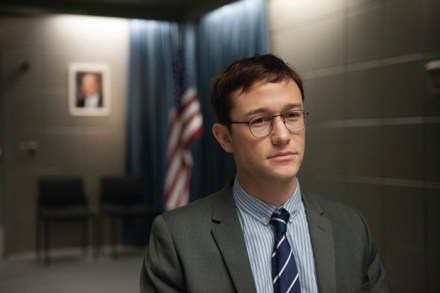
In simple entertainment terms Citizenfour isn’t as interesting as watching paint dry. It is more like watching someone else watching paint dry. People with opinions on Edward Snowden tend to divide into those who think he’s one of the biggest heroes of all time and those who think he’s at least one of the worst patsies or traitors of all time. Either way it’s hard to imagine why either party would want to watch two hours of footage of him typing on a keyboard. And then typing some more. While the camera focuses on him from the other side of the keyboard. For a very long time. Neither is it obvious why we should wish to watch footage of him staring out of a window. Or gelling his hair.

The Imitation Game: a film that’s as much in the closet as Alan Turing was

The Imitation Game is a biopic starring Benedict Cumberbatch as Alan Turing, the brilliant mathematician who broke the German’s Enigma code during the war, created the blueprint for the modern computer and was then hounded to death by the authorities for being gay, the bastards. It’s a fascinating story, as well as one of those stories that needs to be told, over and over if necessary, but I just wish it had been told here with a little more guts and flair. This is solid, sturdy and offers a few great moments. But it is rather formulaic, and as much in the closet as Turing ever was.

Leviathan: the anti-Putin film the Russians tried to ban that’s tipped for an Oscar

The funny thing about a film like Leviathan, which many expected to win the Palme d’Or at Cannes earlier this year (it didn’t), is that suddenly an awful lot of people become experts in things they knew nothing about before reading the press notes. Some people may be familiar with the Bible’s Book of Job, of course, and with Leviathan, the sea monster used to demonstrate to Job the futility of questioning God. Several may even have read Thomas Hobbes’s tome of the same name about conceding power to the state. A few may genuinely be well-versed in both. A big pat on the back to them. They read a lot.

Interstellar: like Star Trek – but dumber and more tiring

Christopher Nolan’s futuristic epic Interstellar isn’t a clever film, or even a dumb film with a clever film trying to get out. Instead, and no matter what the hype may say, this is a dumb film with an even dumber film trying to get out. Even the tag line, which is also the basic premise, is super-dumb. It goes: ‘Mankind was born on earth. It was never meant to die here.’ Who says? How can anyone know what nature’s intentions might be? What did it intend for dinosaurs, for example? The golden toad? The use of ‘mankind’, rather than ‘humankind’, is also telling, as this is very much in the tradition of the alpha-male American superhero who single-handedly saves us (ladies too!; thanks!

Mr Turner: the gruntiest, snortiest, huffiest film of the year – and the most beautiful too

[audioplayer src="http://traffic.libsyn.com/apollomagazine/Apollo_final.mp3" title="Tom Marks, editor of Apollo magazine, talks to Mike Leigh"] Listen [/audioplayer]Mr Turner may be the gruntiest film of the year, possibly the gruntiest film ever. ‘Grunt, grunt, grunt,’ goes Mr Turner (Timothy Spall) as he sketches, paints, gropes his housekeeper, woos a Margate landlady, winds up John Constable something rotten. But what I now know is that when you have Spall doing the grunting, and Mike Leigh at the helm, as both writer and director, such gruntiness can be quite sublime, as can snorting and huffing. This is a biopic of the painter J.M.W. Turner, ‘master of light’, and the greatest painter that ever lived according to many, but it is not a regular biopic.

Fury: the men blow stuff up, then Brad Pitt takes his top off

Fury is a second world war drama that plays with us viscerally and unsparingly — I think I saw a head being blown off; I think I saw a sliced-off face, flopping about — but is still just another second world war drama. That is, Americans good, Nazis bad, and a man doesn’t become a man until he has abandoned all mercy and learned how to kill. ‘It’s Saving Private Ryan, but with tanks,’ I heard someone say as I left the screening, and although I would never steal someone else’s opinion, it is Saving Private Ryan, but with tanks, and also sliced off faces. I added that last bit myself. Written and directed by David Ayer (Training Day, End of Watch), this stars Brad Pitt as battle-hardened Sergeant Don ‘Wardaddy’ Collier who commands a Sherman tank.